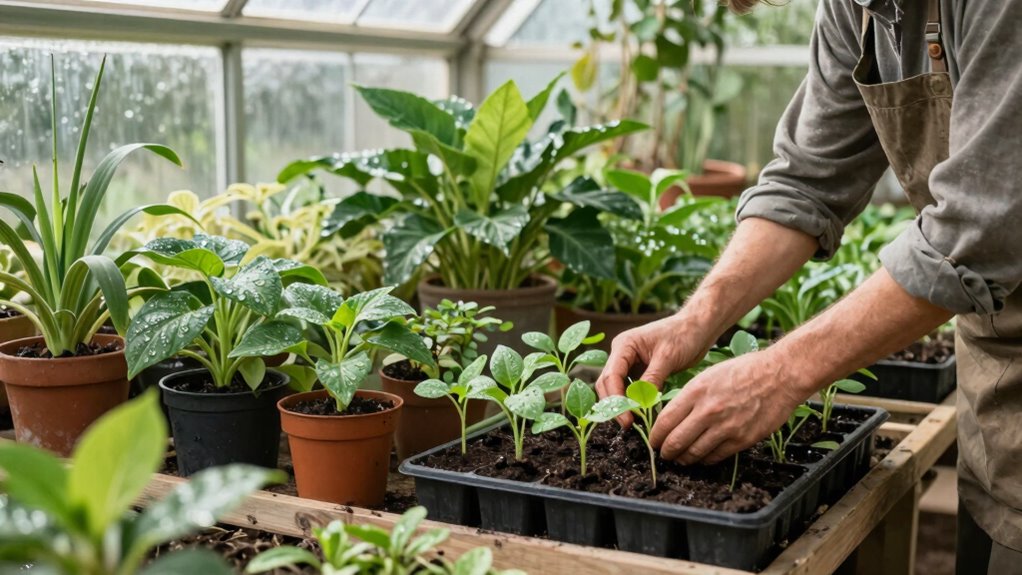

To prevent overdoing it with feeding in your greenhouse, adopt a mindful mindset that focuses on nurturing healthy soil rather than just plants. You should observe your plants closely and respond to their true needs, avoiding the urge to constantly add nutrients. Prioritize organic amendments, compost, and mulching, which support soil microbes and nutrient cycling. By fostering patience and understanding natural rhythms, you’ll establish balanced systems that promote long-term plant health. Keep exploring to discover more ways to cultivate thriving, resilient plants.
Open a free Amazon Business account
Business pricing, bulk buying and tax-exempt orders.
As an affiliate, we earn on qualifying purchases.
Key Takeaways
- View feeding as part of a natural nutrient cycle, promoting patience and avoiding excessive supplementation.
- Prioritize soil health and microbial activity to support plant vitality sustainably.
- Use organic amendments and composting to recycle nutrients naturally, reducing reliance on synthetic fertilizers.
- Observe plant responses closely and adjust feeding practices accordingly to prevent overfeeding.
- Foster a mindset focused on long-term soil and plant health rather than immediate fixes.
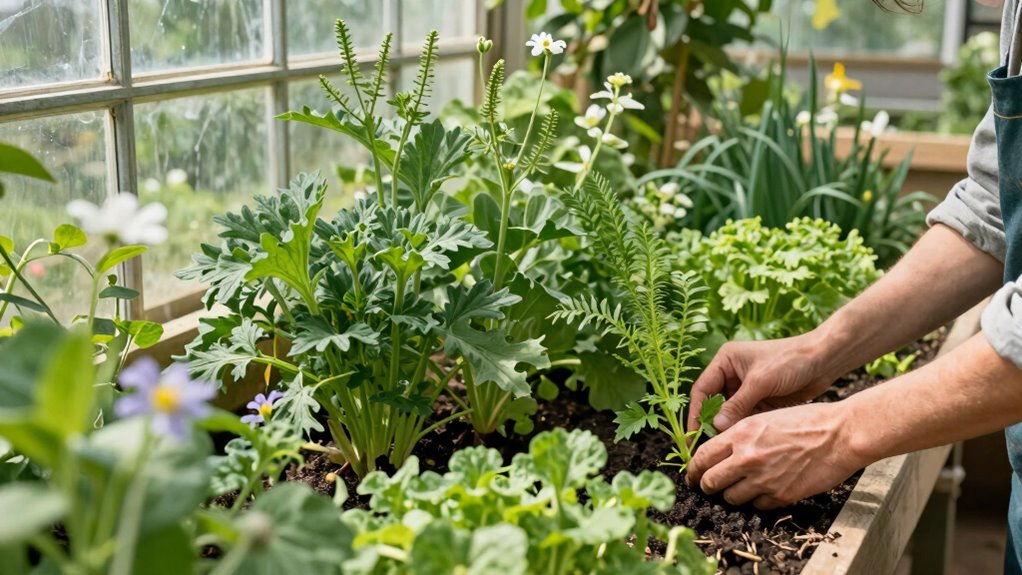
Have you ever wondered how your mindset about feeding influences your growth and success? The way you approach feeding your plants shapes not only their health but also the long-term vitality of your greenhouse environment. When you adopt a green greenhouse feeding mindset, you start to see feeding as an essential part of maintaining soil health and supporting nutrient cycling. Instead of rushing to give plants everything they might need at once, you focus on creating a balanced, sustainable system that encourages natural processes to do their work. This perspective helps prevent overfeeding, which can harm soil structure and disrupt nutrient availability.
Soil health is the foundation of a thriving greenhouse. If you overdo it with fertilizers or supplements, you risk damaging the delicate balance of microorganisms that keep nutrients cycling properly. Healthy soil isn’t just about adding nutrients; it’s about fostering an environment where beneficial microbes thrive, breaking down organic matter and releasing nutrients steadily over time. When you understand this, you realize that feeding should be a measured, mindful process. It’s not about immediate results but about supporting ongoing soil vitality that sustains your plants season after season. By prioritizing soil health, you naturally promote a resilient growing system that requires fewer interventions and minimizes the risk of chemical buildup or nutrient imbalances.
Healthy soil fosters beneficial microbes, ensuring steady nutrient release and long-term plant vitality.
Nutrient cycling plays an essential role in this mindset. Instead of constantly supplementing, you learn to leverage the natural flow of nutrients within your greenhouse. Composting, mulching, and organic amendments become integral parts of your strategy, helping nutrients recycle efficiently and reducing the need for synthetic fertilizers. This approach encourages your plants to develop a healthy root system and vibrant foliage, all while maintaining the soil’s integrity. When you respect the cycles of nature, you understand that overfeeding can interrupt these processes, leading to issues like salt buildup or nutrient lockout, which ultimately hinder plant growth. Recognizing the importance of soil microbiome helps you nurture a balanced ecosystem that sustains plant health naturally.
Adopting a greenhouse feeding mindset rooted in soil health and nutrient cycling means you’re less likely to overdo it. You become more observant, noticing how your plants respond and adjusting accordingly. Your focus shifts from just feeding to nurturing a living system that sustains itself. This mindset requires patience and a nuanced understanding that true growth comes from balance and respect for nature’s rhythms. By doing so, you set the stage for a healthier, more productive greenhouse that thrives on sustainable practices instead of quick fixes.
organic compost for vegetable garden
As an affiliate, we earn on qualifying purchases.
As an affiliate, we earn on qualifying purchases.
Frequently Asked Questions
How Can I Recognize if I’M Overfeeding My Plants?
You can recognize if you’re overfeeding your plants by observing their leaves for yellowing or wilting, which indicates excess nutrients. Regularly check for signs of overwatering or nutrient buildup. Incorporate companion planting to naturally deter pests, reducing the need for heavy fertilization. Proper pest management helps maintain plant health without overfeeding, ensuring your plants grow strong and vibrant without risking nutrient overload.
What Are the Signs of Nutrient Deficiency Despite Frequent Feeding?
If your plants show yellowing leaves or stunted growth despite frequent feeding, they might have nutrient deficiencies. Check soil pH, as too high or low levels hinder nutrient uptake. Signs like leaf curling or brown edges may indicate nutrient toxicity. Even with regular feeding, imbalanced soil pH or excess nutrients can block absorption, leading you to believe your plants need more food when they actually need pH adjustment or detoxing.
How Does the Greenhouse Environment Influence Plant Feeding?
You see that your greenhouse environment impacts plant feeding by influencing soil pH and microbial activity. A balanced soil pH guarantees nutrients are accessible, while healthy microbial activity helps break down organic matter, releasing essential nutrients. If your environment becomes too acidic or alkaline, or microbial activity declines, plants may struggle to absorb nutrients despite frequent feeding. Adjusting pH levels and maintaining ideal conditions promote better nutrient uptake and healthier growth.
Is There an Optimal Frequency for Feeding Different Plant Types?
Yes, there’s a ideal fertilizer schedule tailored to each plant’s growth rhythms. You should adjust feeding frequency based on the plant type—fast-growing plants may need weekly feedings, while slow growers might only require biweekly or monthly applications. Monitoring your plants helps you refine this schedule, ensuring they get the nutrients they need without overdoing it. This approach keeps your plants healthy and thriving within a balanced feeding routine.
How Can I Prevent Overwatering While Maintaining Proper Nutrition?
Think of your plant like a knight guarding its castle; overwatering is like flooding the battlements. To prevent this, check soil pH regularly and guarantee it’s within the ideal range, which supports root health. Water thoroughly but infrequently, allowing the soil to dry out slightly between watering. This way, you nourish your plant without drowning it, keeping roots strong and soil conditions balanced.
Conclusion
Embracing the greenhouse feeding mindset means trusting your plants and resisting the urge to overdo it. Remember, overfeeding can lead to nutrient imbalances and stress, hindering growth. Did you know that over-fertilizing can reduce crop yields by up to 20%? By focusing on moderation and observation, you’ll create a healthier environment for your plants to thrive. Stay mindful, adjust thoughtfully, and enjoy the rewarding process of nurturing your greenhouse ecosystem.
Pool season Picks
robotic pool cleaners
As an affiliate, we earn on qualifying purchases.