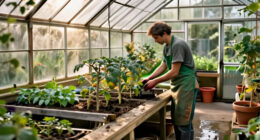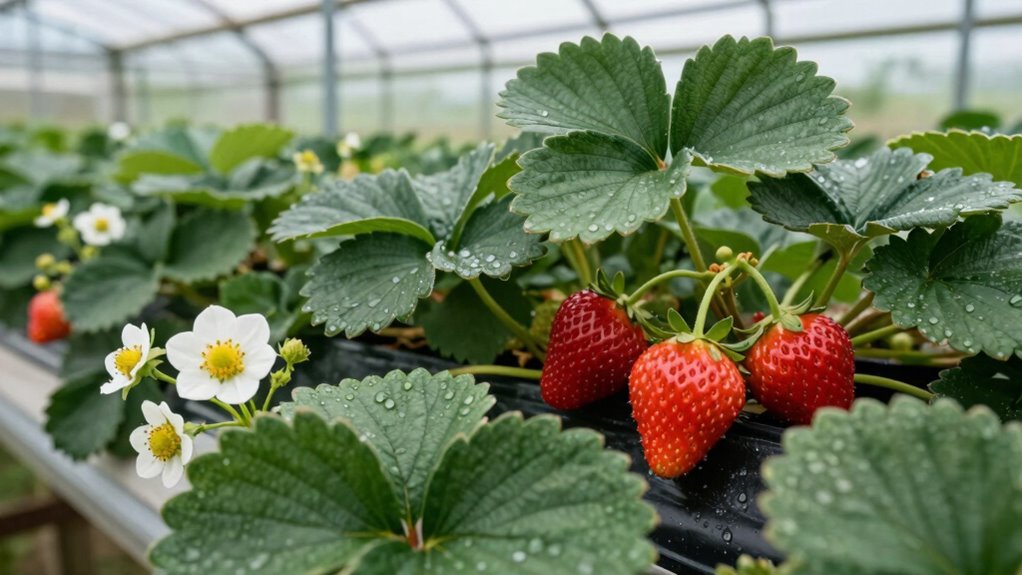

To encourage your greenhouse strawberries to bloom instead of just growing leaves, guarantee they get enough sunlight and maintain ideal temperatures around 70-75°F with cooler nights. Manage soil pH and nutrients carefully, avoiding excess nitrogen that promotes leafy growth. Control pests, prune excess runners, and use mulch to retain moisture. With proper environmental adjustments and plant care, your strawberries will reward you with beautiful flowers—explore more tips to maximize blooms.

Get garden gear delivered free with Prime
- Fast, free delivery on millions of items
- Prime Video, Amazon Music and more included
- Member-only deals all year
Key Takeaways
- Ensure optimal light exposure and supplemental lighting to promote flowering over excessive leaf growth.
- Maintain balanced fertilization, reducing nitrogen to encourage flower development.
- Manage soil pH between 5.5 and 6.8 and address deficiencies to support bloom production.
- Control pests like aphids and spider mites that stress plants and inhibit flowering.
- Prune runners and old leaves to direct energy toward flower and fruit development.
greenhouse strawberry grow lights
As an affiliate, we earn on qualifying purchases.
As an affiliate, we earn on qualifying purchases.
Why Isn’t My Strawberry Plant Blooming? Diagnosing Common Causes
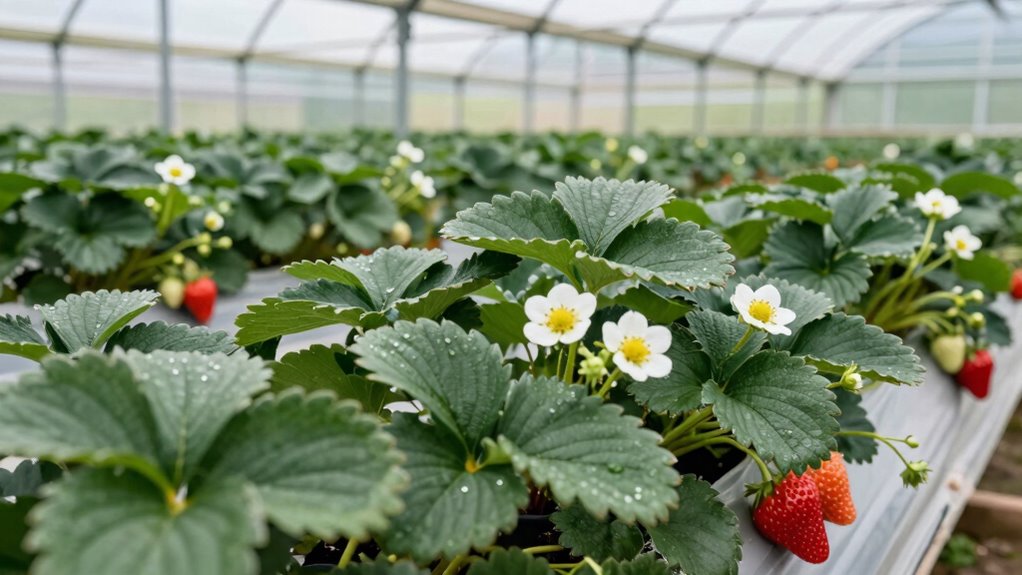
If your strawberry plant isn’t blooming, several factors could be to blame. One common issue is pests that stress the plant, making it conserve energy instead of flowering. Regular pest management helps keep insects like aphids and spider mites at bay, encouraging healthy blooms. Additionally, soil conditions play a vital role. Conducting soil testing reveals nutrient levels and pH balance, ensuring your strawberries have what they need to produce flowers. Poor soil quality or deficiencies can prevent blooming altogether. Overwatering or improper drainage can also hinder flowering. Address these issues by practicing pest management and adjusting soil health. With the right care, your strawberry plant will be more likely to bloom and produce the vibrant flowers you’re aiming for.
How to Choose the Best Strawberry Varieties for Greenhouse Flowering
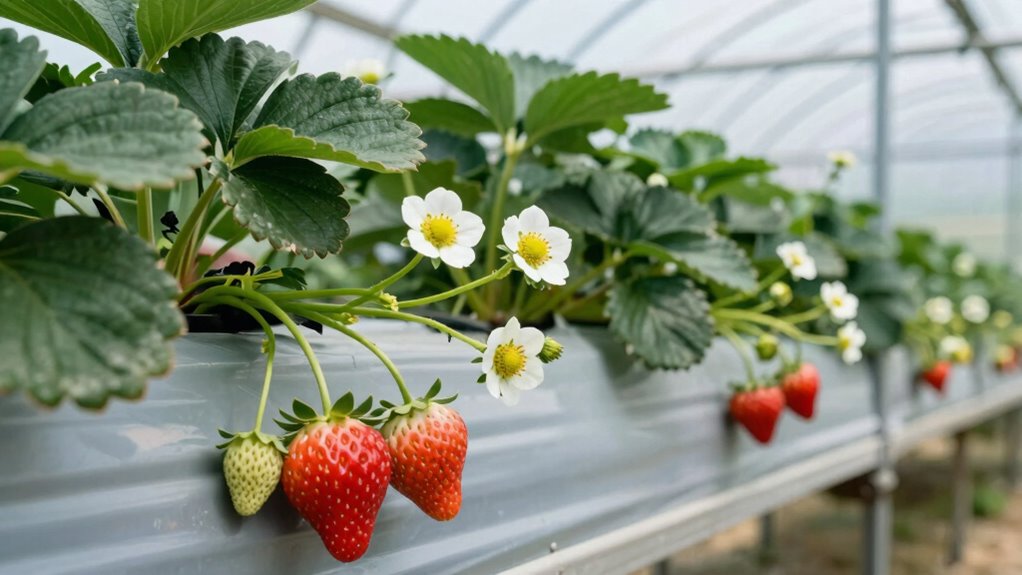
Choosing the right strawberry varieties for greenhouse flowering is essential for a successful crop. When selecting, focus on cultivars known for their flower production and adaptability to controlled environments. Consider these factors:
Selecting strawberry varieties with high flower production and adaptability ensures a thriving greenhouse crop.
- Pollination techniques: Opt for varieties that respond well to natural pollinators or manual pollination, ensuring better fruit set and flower development.
- Strawberry cultivar selection: Choose cultivars bred specifically for greenhouse growth, which tend to produce more flowers and have shorter flowering cycles.
- Disease resistance: Select varieties resistant to common greenhouse pathogens to minimize disruptions during flowering.
- Sustainable practices: Incorporating energy-efficient cloud servers can optimize greenhouse monitoring and management, promoting environmentally friendly cultivation.
Optimizing Light, Temperature, and Humidity to Promote Blooms
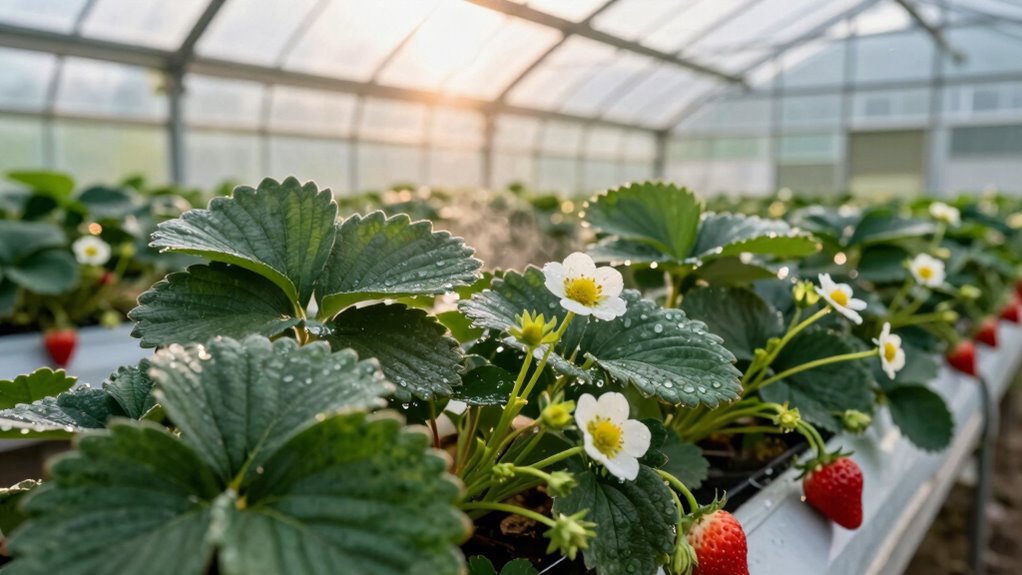
To promote abundant blooms, you need to give your strawberries the right environment. Maximize light exposure by placing plants where they get plenty of sunlight or supplement with grow lights. Keep temperature and humidity levels steady to encourage healthy flowering and prevent stress. Additionally, maintaining optimal recovery techniques can help reduce plant stress and support vigorous blooming.
Maximize Light Exposure
Maximizing light exposure is essential for encouraging healthy blooms in your greenhouse strawberries. To do this effectively, you should employ strategic lighting techniques and manage greenhouse shading. First, guarantee your plants receive consistent, direct sunlight by positioning them optimally within the greenhouse. Second, use shading materials or retractable shading to prevent overheating and excessive light during the hottest parts of the day. Third, consider supplemental lighting during shorter days or cloudy periods to maintain adequate light levels. Additionally, adjusting the lighting schedule can help simulate natural conditions and promote flowering. These steps help promote flowering, rather than just leaf growth. Properly balancing lighting techniques and shading creates an ideal environment for your strawberries to produce abundant, vibrant flowers. Consistent light exposure is key to a bountiful, flowering strawberry crop.
Control Temperature & Humidity
Maintaining essential temperature and humidity levels is crucial for encouraging your strawberries to produce abundant blooms. Keep daytime temperatures around 70-75°F and nighttime slightly cooler to simulate natural conditions. Proper humidity levels, around 60-70%, prevent stress and fungal issues. Use soil amendments like composted organic matter to improve soil structure, aiding root health and moisture retention. Good pest management is vital; pests can weaken plants and hinder flowering. Regularly monitor humidity and temperature with a reliable thermometer and hygrometer, adjusting ventilation or using fans as needed. Ensuring air circulation is adequate helps prevent fungal diseases and promotes healthy growth. By controlling these factors, you create an optimal environment that encourages flower development over excessive leaf growth, ensuring your strawberries bloom profusely and produce higher yields.
Fertilizing Your Strawberries for Better Flower Production

To boost your strawberry flowers, choosing the right fertilizer is key. You should also pay attention to when and how often you feed your plants for the best results. Let’s explore the most suitable types, timing, and frequency to maximize flower production. Incorporating proper fertilization techniques can help ensure your strawberries develop healthy flowers rather than just leaves.
Optimal Fertilizer Types
Choosing the right fertilizers can substantially boost your strawberry plants’ flower production. To achieve ideal results, focus on fertilizers that support flowering. Consider these options:
- Organic amendments like compost or kelp meal provide essential nutrients and improve soil health.
- Balanced synthetic fertilizers with equal parts nitrogen, phosphorus, and potassium promote flowering without excessive leaf growth.
- Micronutrient supplements, such as zinc or magnesium, ensure your plants receive trace elements crucial for flower development.
- Proper fertilizer timing and application techniques, guided by soil health, can optimize nutrient uptake and enhance flowering.
Using a combination of organic amendments and micronutrient supplements encourages strong flowering. Avoid over-fertilizing with high nitrogen, which may favor leaves over flowers. Instead, aim for steady, targeted feeding that enhances flower production while maintaining overall plant health.
Timing and Frequency
Timing and frequency of your fertilization schedule play a key role in maximizing strawberry flower production. Apply fertilizer regularly during the active growing season, ensuring nutrients are available when plants need them most. Boost flowering by aligning fertilization with pollination strategies, such as introducing pollinators or manual transfer, to improve fruit set. Be mindful of pest management techniques; healthy plants are more resilient and produce more flowers. Avoid over-fertilizing, which can lead to excessive leaf growth at the expense of flowers. Instead, use a balanced fertilizer at intervals, typically every 2-4 weeks, adjusting based on plant response and environmental conditions. Consistent, well-timed feeding encourages robust flowering and fruiting, helping you achieve a plentiful strawberry harvest in your greenhouse. Proper soil nutrition management is essential for supporting healthy plant development and maximizing flower production.
Watering and Soil Tips to Encourage Strawberry Flowers
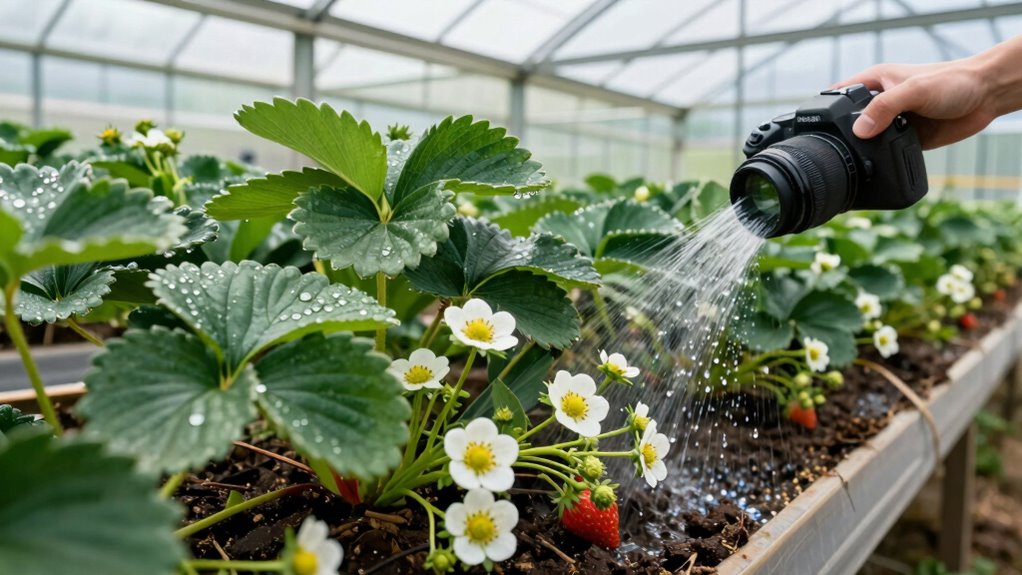
Proper watering and soil management are essential for encouraging strawberry flowers in your greenhouse. Maintaining the right watering schedules prevents stress and promotes bloom production. Typically, water your strawberries consistently to keep the soil evenly moist but not soggy. Use soil amendments such as compost or organic matter to improve drainage and nutrient availability. To optimize results, consider these tips:
- Establish a watering routine that keeps the soil consistently moist, avoiding both drought and waterlogging.
- Incorporate soil amendments to boost fertility and improve soil structure, encouraging healthy root growth.
- Mulch around plants to retain moisture, regulate soil temperature, and reduce evaporation.
Pruning and Pinching Techniques to Boost Blooming and Fruit
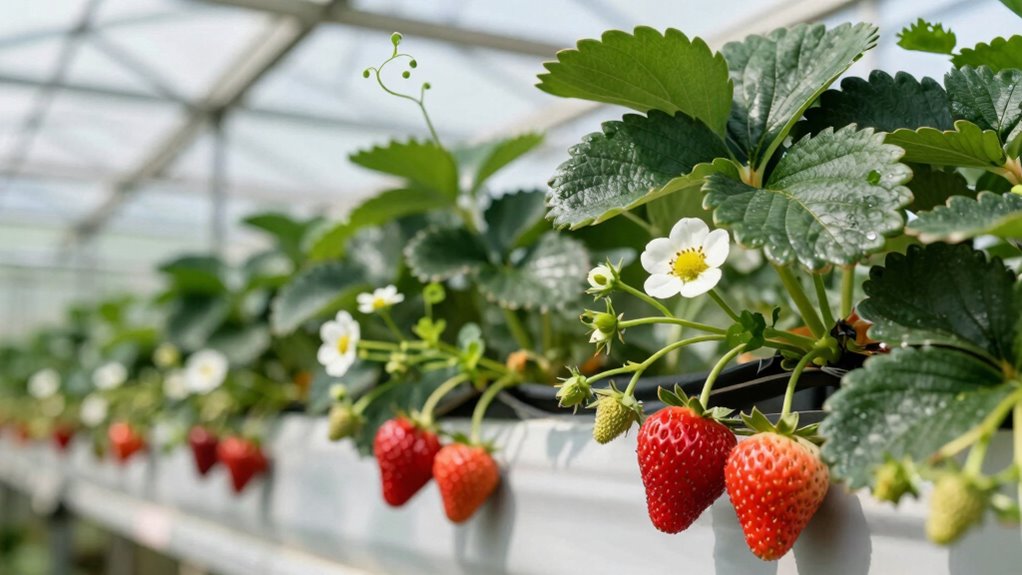
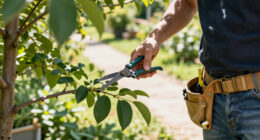
To maximize blooming and fruit production, you need to master pruning and pinching techniques that promote healthy growth and prevent the plant from becoming overcrowded. Regularly remove any runners that aren’t leading to new plants, as these divert energy from fruit production. Pinch off old or yellowing leaves to improve air circulation and reduce the risk of garden pests. Proper pruning encourages the plant to focus energy on developing flowers and berries. Additionally, consider soil amendments like compost or organic fertilizers to support vigorous growth. Healthy soil helps the plant resist pests and diseases, ensuring better flowering. Keep an eye out for signs of garden pests, and remove affected leaves promptly. Consistent pruning combined with soil health maintenance boosts your strawberry plants’ blooming and fruiting potential. Understanding plant health can help you recognize early signs of stress or disease, allowing for timely interventions.
Troubleshooting Why Your Strawberries Still Won’t Bloom

If your strawberry plants refuse to bloom despite your efforts, the issue often stems from environmental or cultural factors that hinder flowering. First, check your soil pH; strawberries prefer slightly acidic soil around 5.5 to 6.8. If it’s outside this range, adjust accordingly. Second, ensure proper pest management—pests can stress plants and prevent flowering. Regularly inspect for aphids, spider mites, or other pests, and take action promptly. Third, consider your growing conditions: too much nitrogen encourages lush leaves but suppresses flowers. Use a balanced fertilizer with lower nitrogen levels. Additionally, providing adequate sunlight is crucial for flowering. Addressing these factors can help your strawberries shift from producing leaves to blooming, resulting in a more fruitful harvest.
Frequently Asked Questions
Can Strawberries in a Greenhouse Produce Flowers Year-Round?
Yes, strawberries in a greenhouse can produce flowers year-round with proper care. You should practice seasonal pruning to encourage flowering and remove excess leaves. Additionally, pay attention to fertilizer timing; use a balanced fertilizer to support flowering during different seasons. Maintaining consistent temperature and light levels also helps promote continuous blooming, ensuring you enjoy fresh strawberries and vibrant flowers throughout the year.
Do Different Strawberry Varieties Require Different Care for Flowering?
Surprisingly, not all strawberry varieties demand the same care for flowering. Your strawberries’ genetic differences influence their flowering triggers, meaning some need more precise conditions. You might think one size fits all, but different types respond uniquely to light, temperature, and nutrients. So, to get flowers, you’ll need to tailor your care, matching each variety’s specific needs rather than relying on a generic approach.
How Does Greenhouse Ventilation Affect Strawberry Flowering?
Greenhouse ventilation directly impacts strawberry flowering by influencing airflow management and temperature regulation. Good airflow reduces humidity and prevents fungal diseases, encouraging healthy flower development. Proper ventilation also helps maintain an suitable temperature, preventing heat stress that can inhibit flowering. By balancing airflow and temperature, you create an ideal environment that promotes flowering over leaf growth, ensuring your strawberries produce abundant blooms and fruits.
Can Natural Pollinators Be Used Inside a Greenhouse for Strawberries?
Yes, you can use natural pollinators inside a greenhouse for strawberries. To do this, focus on pollination methods that attract pollinators like bees by planting companion flowers or providing habitat features. You should also guarantee proper ventilation and minimize pesticide use to encourage pollinator activity. By creating an inviting environment, you enhance pollination methods naturally, which helps increase flower production and fruit set, leading to a healthier, more productive strawberry crop inside your greenhouse.
What Are Common Pests That Hinder Strawberry Flowering Indoors?
You’ll often face pests like aphids, spider mites, and thrips that hinder strawberry flowering indoors. These pests attack healthy foliage, reducing flower production. To protect your plants, implement pest management strategies like regular inspection, introducing natural predators, or using organic insecticides. Keeping your foliage healthy helps resist pests and encourages flowering. Consistent monitoring and proactive care make certain your strawberries develop flowers instead of just leaves.
Conclusion
Just like a gardener tending a delicate bloom, patience and proper care are your best tools. By diagnosing issues, optimizing conditions, and giving your strawberries the attention they need, you’ll turn your greenhouse into a springtime sanctuary. Remember, even the most stubborn plants can bloom with the right touch—think of it as coaxing a Cinderella into her glass slipper. Keep nurturing, stay attentive, and soon you’ll be rewarded with vibrant, fruitful flowers.
Halloween Picks
halloween
As an affiliate, we earn on qualifying purchases.