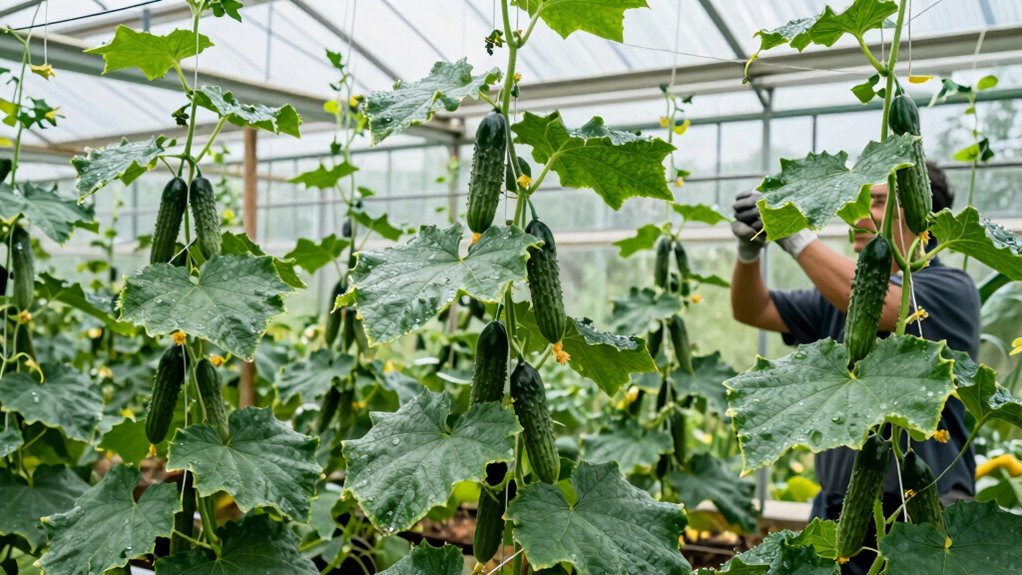

You might think vertical planning just saves space, but it actually does much more for your greenhouse cucumbers. By supporting plants upward, you improve airflow, making pest management easier and reducing the need for broad pesticides. It also helps keep the soil healthier by concentrating roots in manageable areas, allowing better nutrient and water management. This strategic setup fosters healthier, more prolific plants, boosting your overall yield. Keep going to discover how to make this work best for your crop.

Get garden gear delivered free — and shop member deals
- Fast, free delivery on millions of items
- Access to Prime Big Deal Days deals on October 6–7
- Prime Video, Amazon Music and more included
Key Takeaways
- Vertical planning maximizes space and boosts productivity by optimizing plant arrangement in limited greenhouse areas.
- It enhances pest control by reducing hiding spots and enabling targeted, efficient treatments.
- Vertical systems improve soil management through better root zone control and reduced disease risks.
- Structured support promotes healthier growth, easier maintenance, and consistent fruit development.
- Overall, vertical planning leads to more efficient, manageable, and high-yield greenhouse cucumber cultivation.
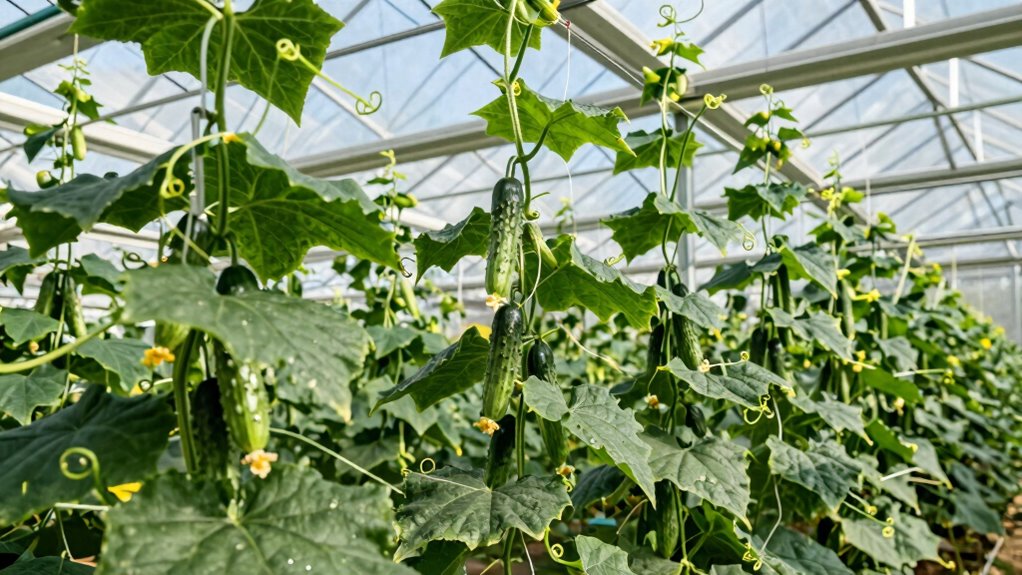
Growing greenhouse cucumbers can be highly productive when you incorporate vertical planning techniques. Unlike traditional farming methods, vertical planning maximizes space and encourages healthy growth, but it also requires careful attention to pest control and soil management. When you think vertically, you’re not just saving room—you’re creating a structured environment that makes it easier to manage pests and maintain soil health, both essential for thriving cucumber plants.
Effective pest control becomes much simpler with vertical planning because you can monitor and access plants more easily. When cucumbers grow upward on trellises or cages, you reduce the chances of pests hiding in dense foliage or on the ground. This setup minimizes pest infestations and makes it easier for you to spot and eliminate common pests like aphids, spider mites, or cucumber beetles early. Using vertical systems also enables you to apply targeted treatments, whether organic or chemical, directly to affected plants without risking harm to other areas of your greenhouse. This focused approach keeps pest populations in check, protecting your crop and reducing the need for broad-spectrum pesticides.
Soil management is equally essential in vertical cucumber cultivation. Because plants grow upward, their roots are concentrated in a limited soil volume, which can lead to quicker depletion of nutrients and increased risk of soil-borne diseases. You need to be proactive in replenishing nutrients through regular fertilization and ensuring proper soil pH. Additionally, vertical planning allows you to optimize soil drainage and aeration, preventing waterlogging and root rot. Using high-quality, well-draining soil mixes helps maintain a healthy root environment, promoting vigorous growth and fruit development. Mulching around the base of your vertical trellises can also conserve moisture, regulate soil temperature, and suppress weeds, all of which contribute to better soil management. Implementing appropriate soil amendments can further enhance soil health and nutrient availability, supporting your plants’ overall vigor.
In addition, incorporating proper soil management techniques can help prevent common issues like nutrient deficiencies and soil degradation, further supporting plant health. In essence, vertical planning for greenhouse cucumbers isn’t just about maximizing space; it’s about creating a smarter, more manageable environment. It simplifies pest control by making pests more visible and easier to treat, and it supports robust soil management practices that keep your plants healthy from the roots up. By adopting these strategies, you set yourself up for a more productive, healthier cucumber crop. You’ll find that managing pests and soil becomes less of a chore and more of a strategic advantage, ensuring your greenhouse cucumbers thrive and produce bountiful yields.
As an affiliate, we earn on qualifying purchases.
Frequently Asked Questions
How Does Vertical Planning Impact Cucumber Fruit Quality?
Vertical planning directly impacts cucumber fruit quality by optimizing canopy management, ensuring proper sunlight exposure, and promoting even fruit ripening. When you manage the canopy effectively, you prevent overcrowding, which reduces disease risk and improves airflow. This leads to healthier plants and better fruit ripening. Proper vertical planning also facilitates easier harvesting and consistent fruit size, ultimately enhancing overall cucumber quality and yield in your greenhouse.
What Materials Are Best for Vertical Cucumber Supports?
You should choose support materials that offer both strength and flexibility, like galvanized steel or durable bamboo, to guarantee structural durability. These materials provide reliable support for climbing cucumber vines, preventing sagging or breakage. Avoid flimsy options like thin twine or plastic, which lack the necessary strength. Proper support materials help maintain plant health and maximize fruit quality by keeping vines upright and well-supported throughout the growing season.
How Often Should Vertical Structures Be Maintained or Replaced?
Your vertical structures are the backbone of a thriving cucumber crop, so don’t let them fail! Check supports monthly for signs of wear, damage, or structural rigidity. Replace or reinforce them as needed to support support longevity and maintain structural flexibility. Regular maintenance prevents disaster, ensuring your plants stay healthy, productive, and upright. Think of it as giving your cucumbers the strong foundation they deserve for a bumper harvest!
Can Vertical Planning Reduce Pest Issues in Greenhouses?
Yes, vertical planning can reduce pest issues in greenhouses. By optimizing plant spacing and using natural pest control methods, you create an environment that’s less inviting for pests. Proper vertical structures improve airflow and light distribution, making it harder for pests to thrive. When you plan vertically, you also make it easier to monitor and manage pests early, reducing the need for chemical treatments and promoting healthier cucumber growth.
What Are the Costs Associated With Advanced Vertical Planning Systems?
The costs of advanced vertical planning systems include a detailed cost analysis of equipment, installation, and ongoing maintenance. You might face implementation challenges like training staff and adapting your current setup, which can increase initial expenses. While these systems demand significant investment upfront, they often lead to higher yields and better pest control, ultimately offering long-term savings. Carefully evaluate these factors to determine if the benefits outweigh the costs for your greenhouse.
Conclusion
To maximize your greenhouse cucumber yield, you need a solid vertical plan. Did you know that properly trained plants can increase space efficiency by up to 30%? By carefully managing trellising and plant height, you’ll not only boost production but also improve airflow and reduce disease risks. Remember, good vertical planning isn’t just about saving space—it’s about creating the ideal environment for healthy, abundant cucumbers. So, invest time in your plan; your harvest will thank you.
Fall yard work Picks
leaf blowers
As an affiliate, we earn on qualifying purchases.