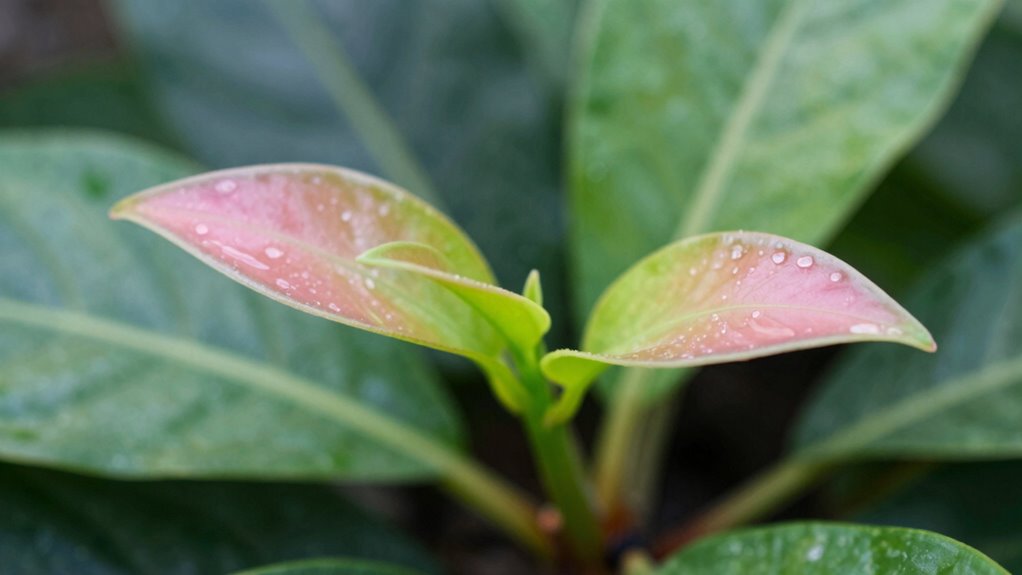
New growth on your plant offers crucial clues about its health and environment. Lush, green, and healthy-looking leaves suggest proper care, while pale or weak growth signals stress or deficiencies. Overly stretched or fragile new leaves indicate insufficient light or water issues. Texture changes, like crisp edges or softness, reveal watering problems. Observing these subtle signals helps you adjust watering and lighting effectively, ensuring your plant stays healthy. Keep exploring to discover more insights into nurturing your plant better.
Listen free for 30 days with Audible
Thousands of audiobooks and originals — cancel anytime.
As an affiliate, we earn on qualifying purchases.
Key Takeaways
- New growth color, size, and texture reveal nutrient levels, watering adequacy, and environmental stress.
- Healthy, lush new leaves indicate proper light, water, and nutrient balance.
- Pale, weak, or overstretched growth signals insufficient light, overwatering, or poor soil conditions.
- Changes in growth rate and pattern highlight adjustments needed in watering or lighting.
- Texture cues like brown edges or mushy leaves help identify watering issues or dry air problems.
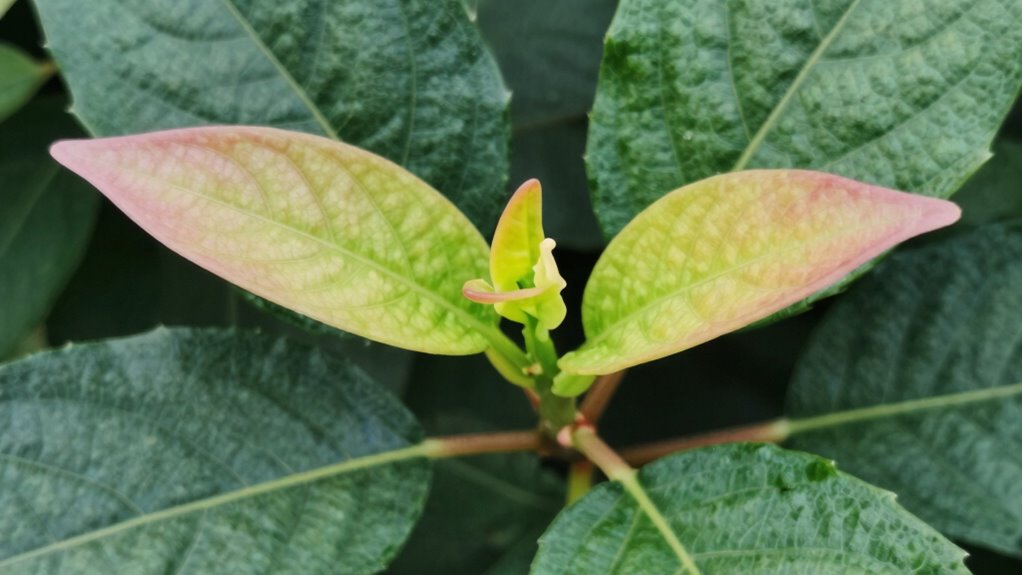
Understanding your plants’ signals is essential for providing proper care. When you observe new growth, it offers valuable clues about how well your plant is adapting to its environment. Recognizing these signals helps you adjust your watering schedule and sunlight requirements, guaranteeing your plant remains healthy and vibrant. New leaves or shoots often indicate that your plant is actively growing, but the quality and appearance of this growth reveal whether it’s thriving or struggling. For instance, lush, green new leaves suggest your plant is getting enough nutrients, water, and light, while pale or yellowing new growth may signal deficiencies or stress.
Observing new growth reveals your plant’s health and guides you to adjust watering and light for optimal thriving.
Pay close attention to the texture and size of new growth. If the new leaves are smaller than usual or appear weak and fragile, it could mean your plant isn’t receiving enough sunlight or is overwatering. Conversely, overly large or stretched-out new growth might indicate that your plant is reaching for more light, signaling that you need to improve its sunlight exposure. Adjusting your sunlight requirements based on these signals can promote stronger, healthier growth. If your plant is indoors, consider moving it closer to a window with ample indirect light; outdoors, ensure it’s in a spot that receives the right amount of sun for its species. Observing these growth patterns can help you identify underlying environmental issues that might not be immediately obvious. Additionally, monitoring growth patterns can provide insights into whether your plant’s environment is well-balanced.
New growth can also inform you about your watering schedule. If the new leaves are crisp or brown at the edges, it might be a sign that your plant is underwatered or that the air is too dry. On the other hand, if the new growth is soft, mushy, or appears waterlogged, you may be watering too often or not draining properly. Consistent observation of these signs helps you fine-tune your watering schedule, preventing overwatering or underwatering, which are common issues. A proper watering routine based on these cues keeps your plant healthy and prevents stress. Recognizing how watering impacts new growth can also help you develop more sustainable plant care practices that benefit both your plants and the environment.
Additionally, the timing of new growth can tell you about your plant’s overall health. Rapid, continuous new growth usually indicates a well-balanced environment, while stagnation or irregular growth might mean adjustments are needed. If growth slows down, review your watering schedule and sunlight requirements to see if they meet the plant’s needs. Sometimes, giving your plant a slight change in environment can stimulate healthy new growth, signaling that it’s on the right track. Moreover, understanding the growth signals your plant exhibits can help you create a more sustainable and supportive environment for it. Recognizing these subtle cues allows for proactive care, which can significantly improve your plant’s vitality over time.
In essence, paying attention to the signals in your plant’s new growth isn’t just about aesthetics; it’s about understanding its needs at a deeper level. By observing these subtle cues, you can make smarter decisions about watering and lighting, fostering stronger, more resilient plants.
As an affiliate, we earn on qualifying purchases.
Frequently Asked Questions
How Do I Distinguish Between Healthy and Unhealthy New Growth?
You can tell healthy new growth by its vibrant color, firm texture, and consistent size, while unhealthy growth often appears yellow, wilted, or spots. Use proper pruning techniques to remove weak or damaged parts, encouraging strong growth. Keep an eye out for pests that may cause damage, and practice pest prevention to protect your plant’s health. Healthy new growth signals your plant is thriving, while unhealthy signs indicate it needs attention.
What Environmental Factors Influence New Growth Signals?
Did you know plants can grow up to 30% faster with proper sunlight? Environmental factors like sunlight exposure and temperature greatly influence new growth signals. Sunlight activates growth hormones, encouraging healthy development, while inconsistent conditions can stunt growth or cause weak, unhealthy leaves. Make sure your plant gets enough light and maintain stable temperatures to promote the best growth signals, resulting in vibrant, strong new leaves and stems.
Can New Growth Signals Vary Between Plant Species?
Yes, new growth signals can vary between plant species, affecting growth patterns and responses. You’ll notice different species exhibit distinct signals, like leaf color changes or stem elongation, which indicate their unique needs. Signal variations help you identify when to water, fertilize, or prune. By observing these differences, you can tailor your plant care to each species, promoting healthy growth and preventing stress or damage.
How Often Should I Monitor New Growth for Signs?
You should monitor new growth weekly to catch signs early. Watch for pests or discoloration that might indicate problems. Use proper pruning techniques to promote healthy development and prevent disease. Regular inspection helps you identify stress or deficiencies before they worsen. Incorporate pest prevention measures, like natural repellents, during your checks. Staying attentive guarantees your plant stays healthy and vibrant, making it easier to address issues promptly.
Are There Specific Nutrients That Promote Healthy New Growth?
You need a powerhouse of nutrients to boost new growth! Use a balanced fertilizer with the right fertilizer balance—rich in nitrogen, phosphorus, and potassium—to fuel vibrant, healthy shoots. Soil amendments like compost or organic matter also work wonders by enriching nutrients in the soil. This combo guarantees your plants get everything they need for explosive, lush new growth, turning your garden into a verdant paradise!
Conclusion
By tuning into the subtle whispers of your plant’s new growth, you become a gentle gardener listening to nature’s secret language. Each sprout and leaf is a tiny compass, guiding you to what your plant needs to thrive. When you decode these signals, you nurture a bond rooted in understanding and love. So, embrace these quiet messages—they’re the heartbeats of your green companion, revealing the story of growth waiting to unfold under your caring touch.
Baby shower & registry season Picks
baby registry must-haves
As an affiliate, we earn on qualifying purchases.