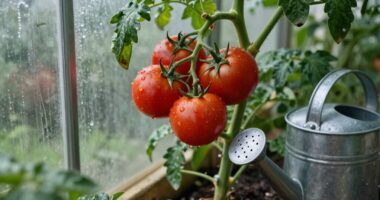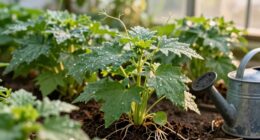

To feed your greenhouse plants effectively, start with healthy, well-amended soil that provides essential nutrients. Use organic matter like compost or peat moss to boost fertility and improve moisture retention. Consistent watering helps your plants absorb nutrients efficiently, while regular testing ensures you only supply what’s needed. Adjust fertilization based on plant growth stages for vibrant blooms and vigorous development. Keep these strategies in mind, and you’ll uncover even more tips for thriving greenhouse plants.
Listen free for 30 days with Audible
Thousands of audiobooks and originals — cancel anytime.
As an affiliate, we earn on qualifying purchases.
Key Takeaways
- Use balanced, water-soluble fertilizers to provide essential nutrients throughout the plant’s growth cycle.
- Follow specific fertilization schedules tailored to plant species and growth stages for optimal results.
- Incorporate organic amendments like compost to enhance soil fertility and nutrient availability.
- Regularly monitor and test soil to adjust fertilization and prevent deficiencies or nutrient imbalances.
- Avoid over-fertilizing, which can harm plants and disrupt soil health, by applying nutrients in moderation.
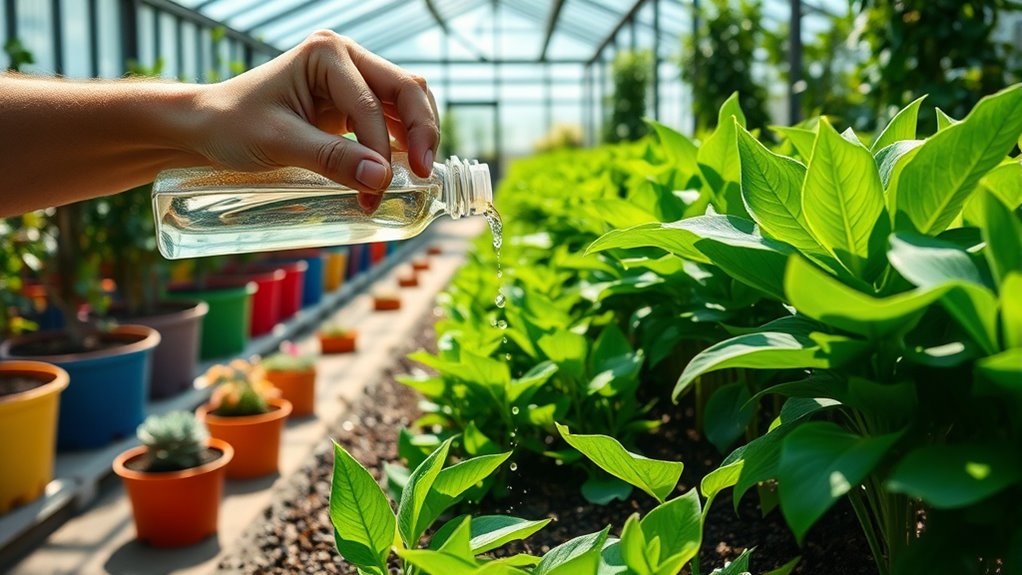
Feeding your plants is indispensable for healthy growth and vibrant blooms. When you’re managing a greenhouse, understanding how to effectively nourish your plants can make all the difference. One of the key components to successful feeding is ensuring your soil is properly prepared. Soil amendments play an essential role here. They improve soil structure, boost nutrient availability, and help retain moisture, creating an ideal environment for your plants to thrive. Whether you’re adding compost, peat moss, or specialized organic amendments, these materials can enhance your soil’s fertility and overall health. Before planting or during the growing season, incorporate soil amendments thoroughly into your planting beds or pots. This step is critical because healthy, well-amended soil reduces the need for excessive fertilization later, providing a steady supply of nutrients as your plants grow.
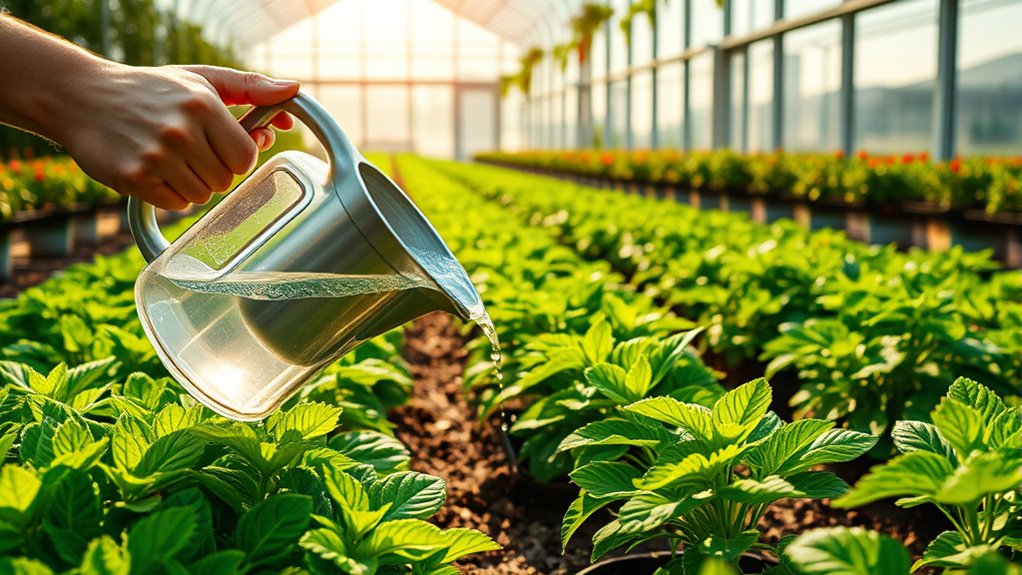
Equally important is establishing a consistent watering schedule. Proper watering helps your plants absorb nutrients more efficiently, especially when combined with the right soil amendments. Overwatering can wash away essential nutrients, while underwatering stresses plants, limiting their ability to take up what they need. Striking the right balance involves paying close attention to your plants’ specific water requirements, which can vary depending on species, pot size, and environmental conditions within your greenhouse. Generally, you want to keep the soil evenly moist but not soggy, watering deeply to encourage strong root development. Consistency is key—setting a regular watering schedule ensures your plants aren’t stressed by irregular moisture levels, which can hinder nutrient uptake. Additionally, understanding the importance of soil health can help you maintain optimal conditions for plant growth. Maintaining good soil aeration is also crucial, as it allows roots to access oxygen efficiently, promoting healthy development.
When you combine soil amendments with a thoughtful watering schedule, you create a nurturing environment that promotes vigorous growth. For instance, after amending your soil, you might observe that your plants require less frequent feeding because they can efficiently access nutrients stored in the improved soil. Regular monitoring is essential; it helps you understand your plants’ needs and fine-tune your approach accordingly. Remember, the goal isn’t just to feed your plants but to do so in a way that sustains their health and boosts productivity over the long term. Incorporating soil testing can provide valuable insights into nutrient levels and deficiencies, enabling more precise fertilization tailored to your plants’ needs.

Dr. Earth Organic 5 Tomato, Vegetable & Herb Fertilizer Poly Bag
- Enhances vegetable nutrition and flavor: For more nutritious and tasty vegetables
- Balanced plant nutrients: Optimum levels of primary plant nutrients
- Non-GMO and natural ingredients: Contains no GMOs, chicken manure or sewage sludge
As an affiliate, we earn on qualifying purchases.
As an affiliate, we earn on qualifying purchases.
Frequently Asked Questions
How Often Should I Fertilize Different Plant Species?
You should adjust your fertilization schedule based on each plant’s needs, which you determine through soil testing and observing watering frequency. Generally, fast-growing plants require more frequent feeding—about every 1-2 weeks—while slow growers need less. Remember, over-fertilizing can harm your plants, so monitor their response and adjust accordingly. Consistent watering and soil testing help you fine-tune how often you fertilize for healthy, thriving plants.
What Are Signs of Over-Fertilization in Greenhouse Plants?
Over-fertilization is like overwatering a plant—both can drown its roots. You’ll notice signs like leaf discoloration, where leaves turn yellow or brown, and nutrient toxicity, which causes leaf burn or spots. If your plants seem stressed, with wilting or stunted growth, it’s a clear warning. Regularly check the foliage and adjust your fertilization schedule to prevent damage and keep your greenhouse thriving.
Can I Use Homemade Fertilizers Safely in My Greenhouse?
You can use homemade fertilizers safely in your greenhouse if you understand their composition. Organic mixtures like compost tea or fish emulsion are generally safe and enrich your soil naturally. However, be cautious with chemical solutions, as they may contain salts or synthetic ingredients that could harm your plants if not properly diluted. Always test homemade fertilizers on a small area first, and monitor your plants for any adverse reactions.
How Does Fertilization Vary Between Flowering and Foliage Plants?
Think of your plants as a symphony—each needs a different note to shine. For flowering plants, you focus on fertilizers rich in phosphorus to fuel blooms, applying them through liquid feeds or slow-release options. Foliage plants thrive with nitrogen-heavy fertilizers to promote lush leaves, with fertilizer application methods like foliar sprays or diluted mixes. Adjusting these based on plant nutrient requirements keeps your greenhouse vibrant and healthy.
What Is the Best Time of Day to Fertilize Greenhouse Plants?
The best time of day to fertilize greenhouse plants is early morning or late afternoon, when the temperature is cooler. This timing aligns well with your watering schedule, ensuring nutrients are absorbed effectively without risking leaf burn or rapid evaporation. Avoid fertilizing during the heat of midday, as it can stress plants. Consistently fertilize at these times to promote healthy growth and maximize nutrient uptake.
Conclusion
Now that you’re armed with all the secrets of greenhouse fertilization, go ahead—feed those plants like a gourmet chef at a buffet. Imagine each plant as a tiny, spoiled celebrity demanding the finest nutrients—because who doesn’t want their green friends to sparkle brighter than a disco ball? With proper feeding, your plants will flourish, turning your greenhouse into a lush jungle of envy. Just remember: overdo it, and you might end up with a jungle gym of root rot!
Grilling season Picks
grills
As an affiliate, we earn on qualifying purchases.