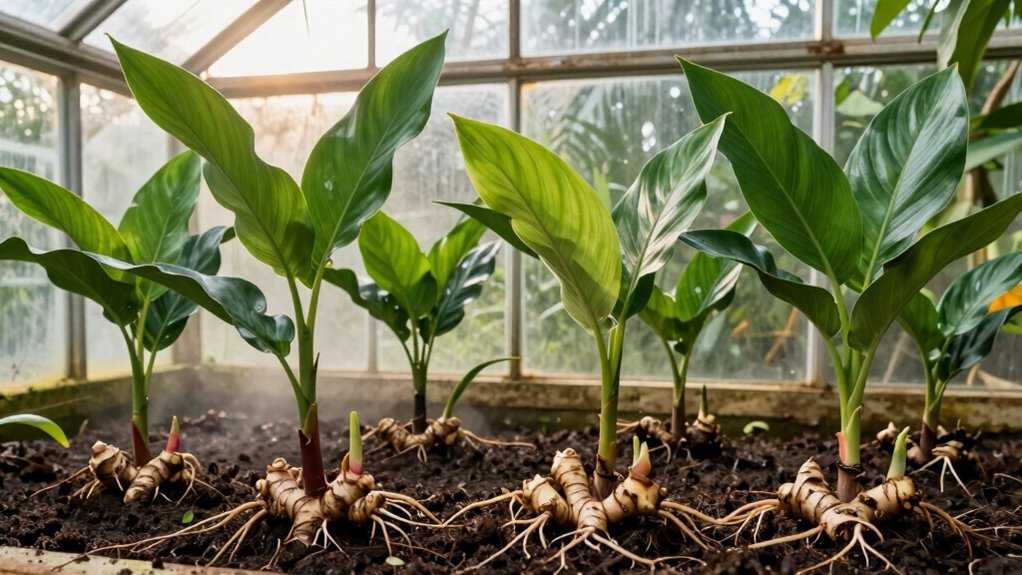
To grow ginger in your greenhouse, choose healthy, plump rhizomes with visible buds and plant them in well-draining, organic soil. Maintain warm temperatures around 75-85°F, humidity of 70-80%, and provide indirect light or shade as needed. Keep soil moist but not waterlogged, and fertilize regularly. Monitoring and adjusting environmental conditions help prevent pests and diseases. Continuing with these steps will reveal the secrets to a thriving, year-round ginger crop.
Key Takeaways
- Maintain warm temperatures (75°F–85°F) and high humidity (70-80%) for optimal ginger growth in the greenhouse.
- Select healthy, plump rhizomes with visible buds for planting and prepare well-draining, rich soil.
- Regulate light levels with grow lights or shade cloths to prevent overheating and ensure adequate photosynthesis.
- Keep soil consistently moist, fertilize organically every few weeks, and monitor environmental conditions regularly.
- Harvest after 8-10 months when foliage yellow and die back, ensuring continuous production with proper climate management.
Why Grow Ginger in Your Greenhouse?
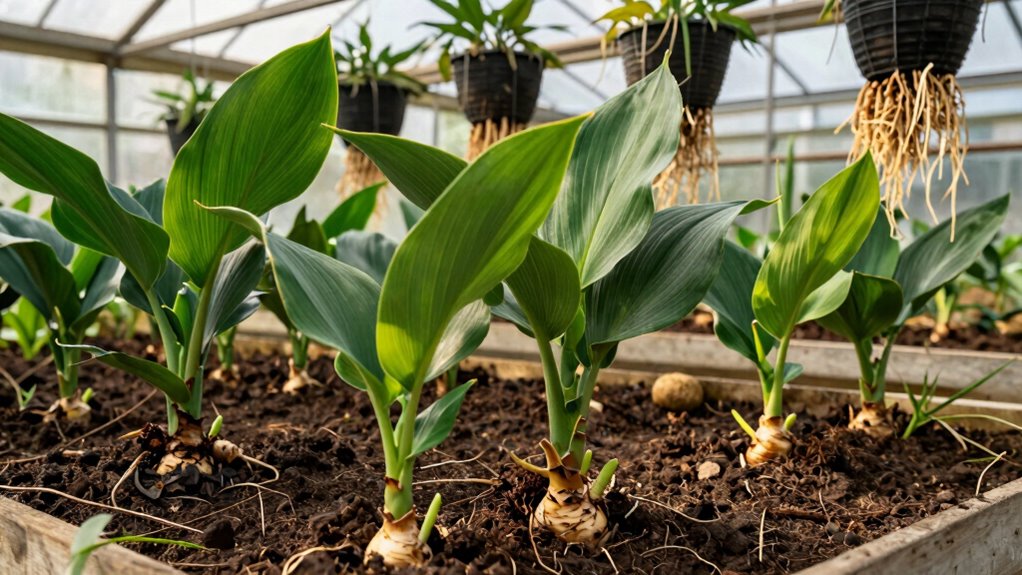
Growing ginger in a greenhouse gives you greater control over its environment, which can lead to healthier plants and better yields. This controlled setting allows you to optimize temperature, humidity, and light, ensuring your ginger develops robustly. With healthy ginger, you can explore a variety of ginger recipes, from teas to stir-fries, that highlight its fresh flavor. Plus, growing your own ginger means you can enjoy its numerous health benefits, such as anti-inflammatory properties and digestive support. By cultivating ginger indoors, you reduce exposure to pests and diseases, resulting in higher-quality rhizomes. This consistency encourages more frequent harvesting, so you can continually enjoy the fresh ginger that enhances your culinary and health routines. Growing ginger in a greenhouse truly maximizes its potential.
How to Choose Healthy Ginger Rhizomes for Indoors
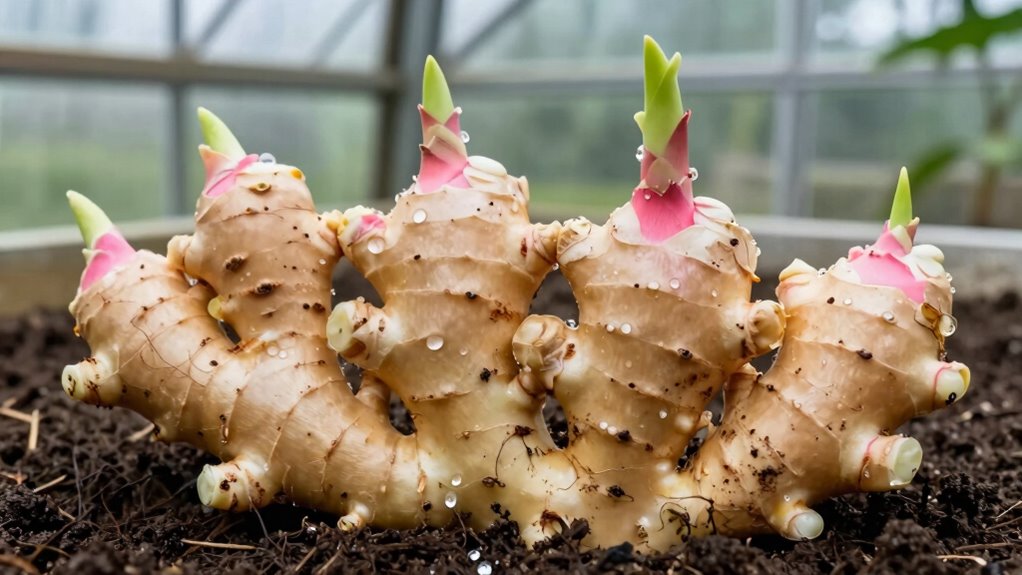
Choosing healthy ginger rhizomes is essential for successful indoor cultivation, as strong planting material sets the foundation for vigorous growth. When selecting ginger rhizomes, focus on ginger rhizome selection to ensure quality. Look for pieces with healthy root tips, indicating active growth potential. Avoid rhizomes with mold, soft spots, or signs of disease. Opt for plump, firm rhizomes that feel heavy for their size. Ensure the skin is intact without cuts or bruises, which could invite rot. Consider pieces with visible buds or shoots, as these will sprout faster. Remember, starting with the right ginger rhizomes boosts your chances of a bountiful, healthy crop. Proper selection process is your first step toward thriving ginger plants indoors.
Create the Perfect Greenhouse Environment for Ginger
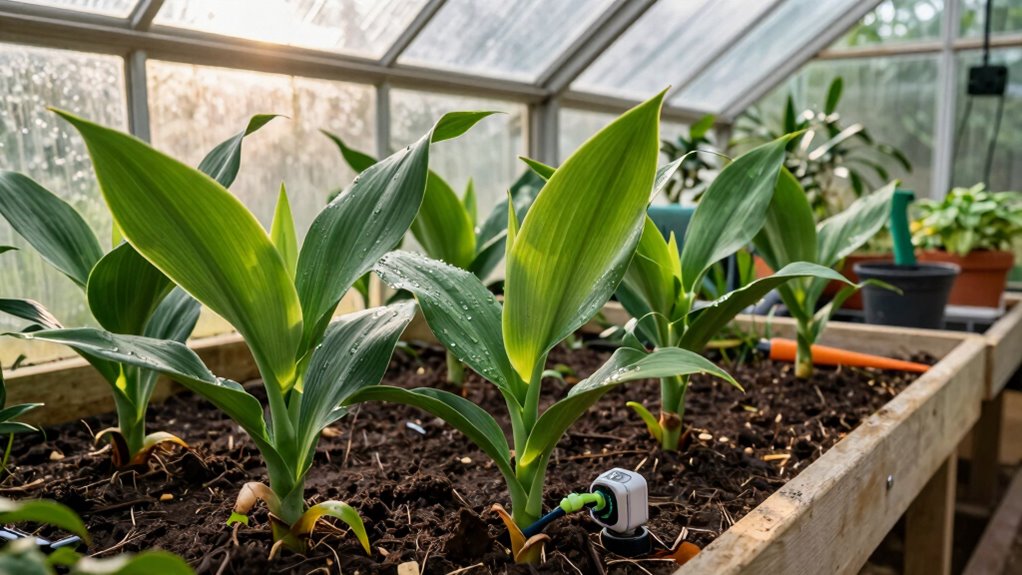
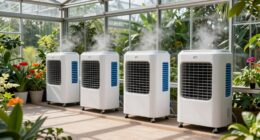
To create the ideal greenhouse environment for ginger, you need to keep the temperature between 75°F and 85°F. Humidity levels should stay around 70-80% to promote healthy growth. Monitoring and adjusting these conditions will help your ginger thrive indoors. Additionally, maintaining good air circulation can prevent diseases and support robust root development proper airflow management. Incorporating support breakfast options such as ventilation systems can optimize airflow and maintain consistent climate conditions in your greenhouse. Regularly inspecting your greenhouse’s climate control systems will ensure your ginger remains in the optimal environment for vigorous growth. Ensuring reliable temperature monitoring will help you make timely adjustments to keep conditions ideal for your plants.
Optimal Temperature Range
Maintaining the right temperature is essential for healthy ginger growth in your greenhouse. Ginger thrives best between 75°F and 85°F (24°C to 29°C), which helps develop its rich flavor. If temperatures drop too low, your ginger may become stunted or susceptible to greenhouse pests. Conversely, excessive heat can cause stress, reducing ginger flavor and increasing vulnerability. Keep a thermometer handy to monitor conditions closely. Here are some tips:
- Use fans or heaters to maintain consistent warmth.
- Avoid sudden temperature fluctuations that can stress the plants.
- Provide shade during the hottest parts of the day.
- Ensure good air circulation to prevent pests from thriving.
- Adjusting the temperature range appropriately can significantly improve ginger quality and growth rate.
- Regularly checking your greenhouse’s climate control systems can help maintain optimal conditions.
- Proper environmental control is crucial for maximizing ginger yield and quality.
- Understanding the ideal temperature for ginger growth helps optimize your greenhouse setup.
- Maintaining a stable microclimate within the greenhouse supports healthy development and flavor profile.
Sticking to this temperature range creates a conducive environment for ginger, helping it develop its signature flavor while keeping pests at bay.
Maintain Humidity Levels
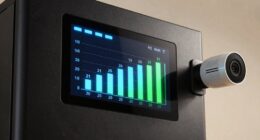
Maintaining humidity levels just right is essential for healthy ginger growth in your greenhouse. Proper humidity control ensures moisture levels stay consistent, preventing the plant from drying out or becoming too soggy. To maintain ideal moisture, monitor the environment regularly with a hygrometer. If humidity drops below 60%, increase moisture by misting the plants or using a humidifier. Conversely, if humidity rises above 80%, improve air circulation with fans or open vents to prevent mold and rot. Consistent humidity helps the ginger develop strong roots and vibrant shoots. Remember, fluctuating moisture levels can stress the plant, so aim for a stable, moderate humidity environment. Additionally, using air purifiers can help remove airborne contaminants and maintain a healthier greenhouse atmosphere. Incorporating free floating techniques in your greenhouse setup can further optimize airflow and humidity regulation. Regularly adjusting humidifier settings based on environmental readings can also help maintain the ideal conditions for ginger growth. Monitoring environmental humidity with reliable tools ensures your ginger plants stay healthy and productive.
Step-by-Step: Plantting Ginger in Your Greenhouse

To get started, you need to select healthy ginger roots that are firm and free of mold or disease. Next, guarantee your greenhouse environment is properly prepared with the right temperature, humidity, and lighting conditions. Proper environmental control is crucial to mimic the plant’s natural habitat and promote healthy growth. Monitoring microclimates within your greenhouse can help ensure consistent conditions. Additionally, understanding AI ethics can be beneficial for implementing sustainable and responsible gardening practices. Once these steps are complete, you’re ready to plant and give your ginger the best chance to thrive. Ensuring optimal indoor gardening conditions can significantly improve your crop yields and plant health. Additionally, maintaining proper airless paint sprayer techniques during setup can help ensure your tools and environment stay clean and functional, supporting a healthy growing space.
Selecting Healthy Ginger Roots
Choosing healthy ginger roots is essential for a successful greenhouse crop. Healthy roots give your ginger the best chance to thrive and resist common issues like ginger pests and root rot. When selecting roots, look for plump, firm pieces with smooth skin and no signs of mold or shriveling. Avoid roots that are soft, discolored, or have dark spots, as these can harbor disease or pests. Always inspect for signs of damage or disease, since unhealthy roots can introduce problems into your greenhouse. Proper plant selection is crucial for establishing a healthy crop from the start. Additionally, understanding quality assessment techniques helps ensure you’re choosing the best roots for planting. It’s also helpful to consider disease resistance traits that can help your ginger withstand environmental stresses. By starting with robust roots, you reduce the risk of pests and diseases impacting your crop. Proper root quality assessment ensures you’re setting yourself up for success from the very beginning. For optimal results, it’s recommended to select roots that have been properly stored and handled to prevent deterioration before planting.
Preparing the Greenhouse Environment
Before planting ginger in your greenhouse, you’ll need to prepare the environment to guarantee ideal growth. Focus on soil health by ensuring it’s well-draining, rich in organic matter, and slightly acidic to neutral in pH. Healthy soil promotes strong root development and reduces disease risk. Additionally, set up pest control measures to prevent common issues like root gnats or soil-borne pests. Use clean containers, sterilize tools, and consider organic barriers or beneficial insects if needed. Maintain proper humidity and temperature levels to mimic ginger’s natural tropical climate. Good airflow helps prevent mold and fungal diseases. By creating an optimum environment, you’ll give your ginger the best chance to thrive from the moment you plant it.
How to Manage Light, Temperature, and Humidity for Healthy Ginger
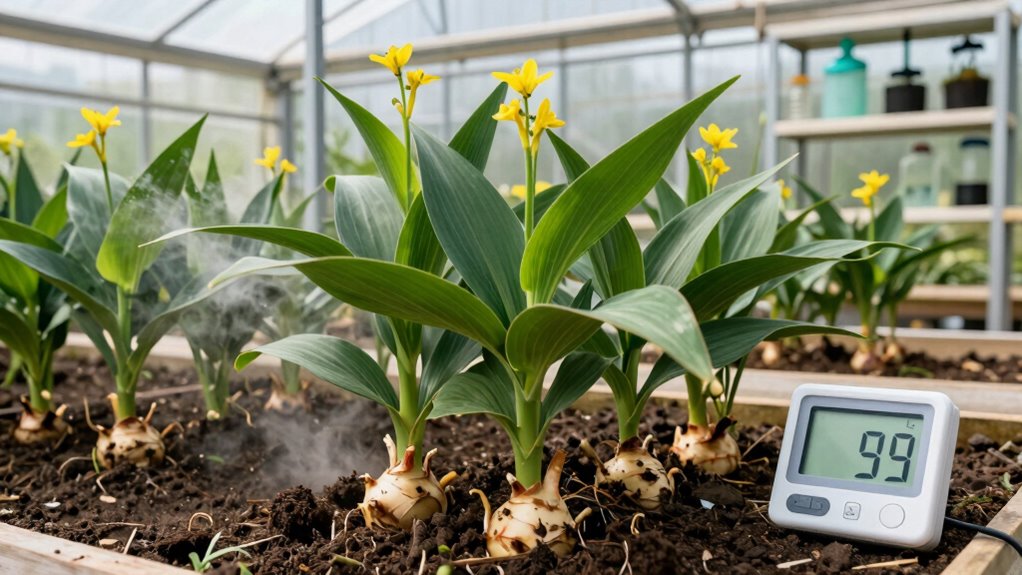
Maintaining the right light, temperature, and humidity levels is essential for healthy ginger growth in your greenhouse. Proper lighting control guarantees your ginger receives enough indirect sunlight without overheating. Keep temperatures between 75-85°F during the day and slightly cooler at night to promote healthy development. Humidity should stay around 70-80%, so mist regularly or use a humidifier if needed. Consistent conditions help prevent pests and diseases.
- Use grow lights or shade cloths to manage light levels
- Monitor and adjust temperature with vents or heaters
- Maintain humidity with misting or humidifiers
- Practice pest management by inspecting plants regularly and keeping the environment clean
Watering and Fertilizing Tips for Better Roots
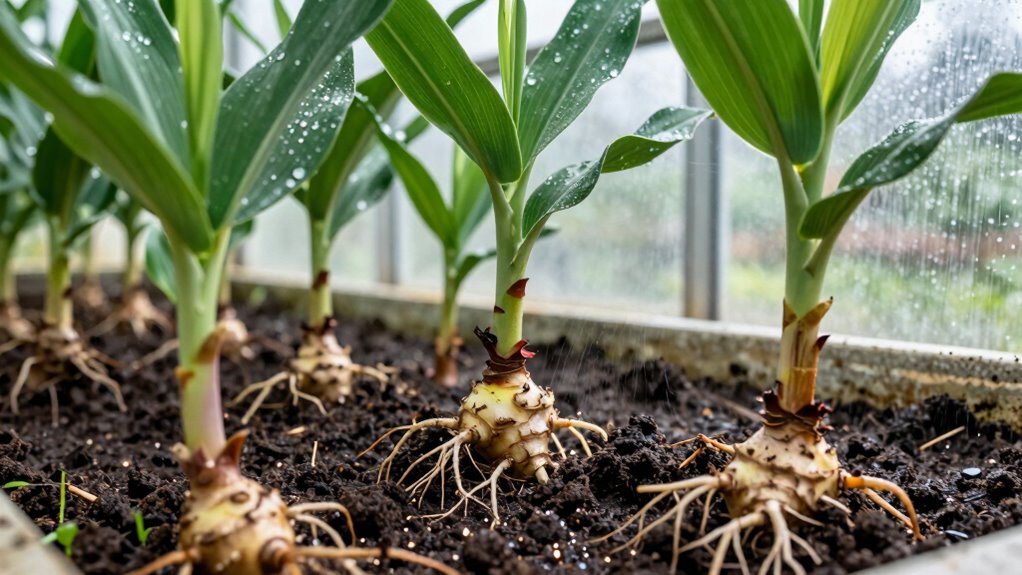
Proper watering and fertilizing are essential for developing strong, healthy ginger roots. Consistent moisture keeps the soil evenly moist, promoting steady root growth without waterlogging, which can cause rot. Water deeply when the top inch of soil feels dry, but avoid overwatering. Fertilize regularly with a balanced, organic fertilizer rich in nitrogen, phosphorus, and potassium to support root development. During active growth, use a diluted liquid feed every few weeks to supply essential nutrients. Be mindful of nutrient balance; too much nitrogen can encourage leafy growth at the expense of roots, while phosphorus supports root expansion. Adjust watering and fertilizing routines based on soil moisture and plant health, ensuring your ginger develops robust, flavorful roots.
Common Problems When Growing Ginger Indoors: And How to Fix Them
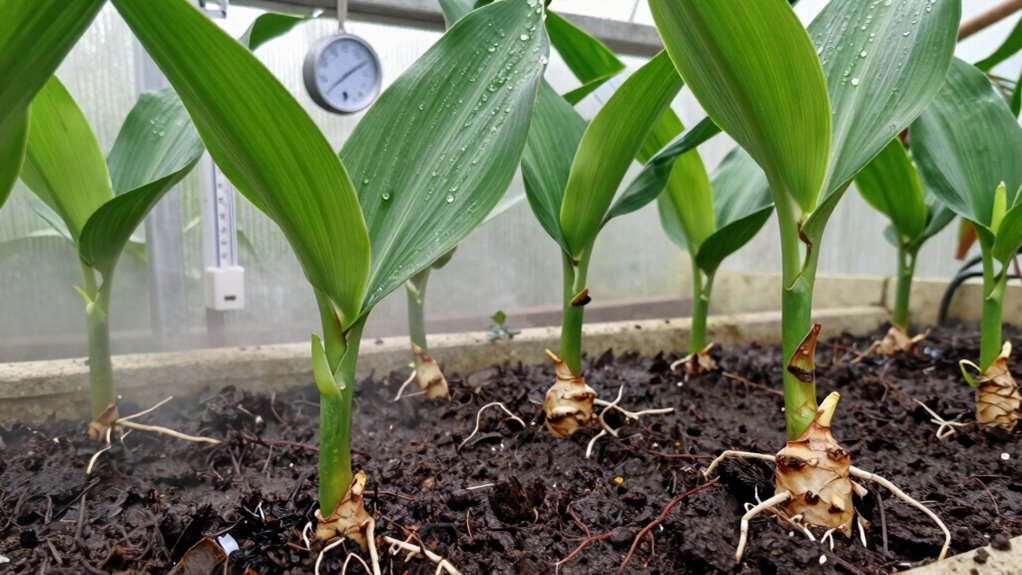
Growing ginger indoors offers control over its environment, but it also introduces specific challenges. Common issues include pests, poor soil quality, overwatering, and inadequate light. To tackle pests, regularly inspect your plants and use pest control methods suitable for ginger. Soil testing helps ensure your soil has proper nutrients and drainage, preventing root rot and other problems. Overwatering can lead to fungal issues, so water only when the top inch of soil feels dry. Insufficient light stunts growth, so make sure your ginger receives enough indirect sunlight or supplement with grow lights. By monitoring these factors and acting promptly, you create a healthy environment for your ginger to thrive indoors.
When and How to Harvest Your Greenhouse-Grown Ginger
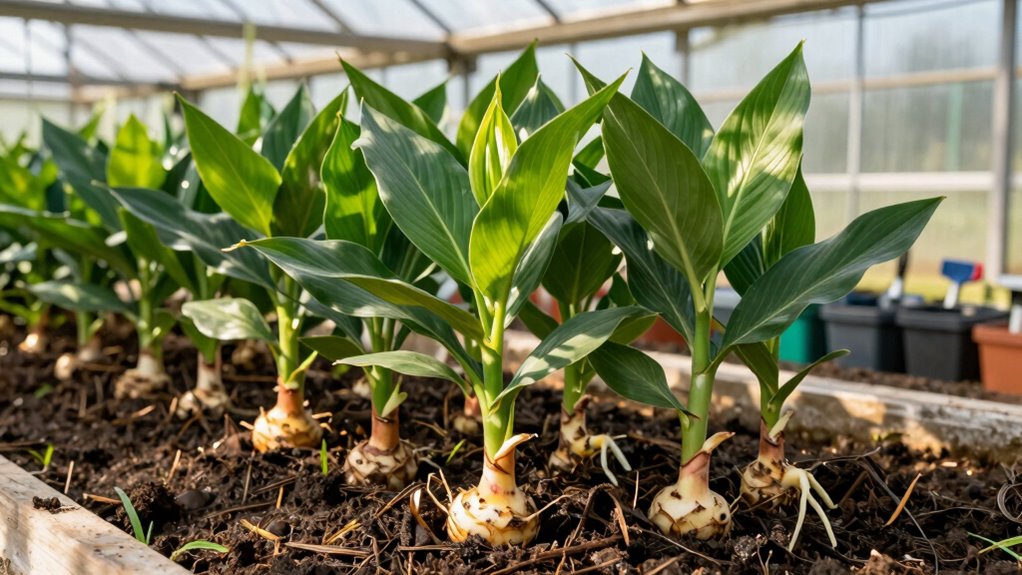
You should harvest your greenhouse-grown ginger when the leaves start to turn yellow and die back, usually around 8 to 10 months after planting. At this stage, the ginger’s flavor will be at its peak—rich and pungent—perfect for cooking or brewing. Gently dig around the root clump, being careful not to damage the rhizomes. Different ginger varieties may mature slightly earlier or later, so observe the plant’s overall health and leaf condition. If the stalks appear thin or the foliage is fully yellowed, it’s a clear sign to harvest. Using a sharp spade or fork, lift the entire root mass, then clean off excess soil. Harvesting at the right time guarantees you get the best ginger flavor and maximum yield from your greenhouse crop.
Tips to Grow Ginger Year-Round in Your Greenhouse

Maintaining ideal conditions in your greenhouse allows you to cultivate ginger year-round without interruption. To do this, select the right ginger varieties suited for greenhouse growth, such as hardy or tropical types. Keep temperatures steady between 75-85°F and maintain high humidity levels. Use soil amendments like compost and organic matter to improve drainage and fertility, ensuring healthy root development. Regularly monitor soil moisture to prevent drought stress or overwatering. Provide ample indirect sunlight or supplemental grow lights to support continuous growth. Additionally, rotating your ginger crops and adjusting watering schedules based on seasonal changes helps sustain productivity. By paying attention to these details, you’ll create an optimal environment for ginger to thrive all year long.
Frequently Asked Questions
Can Ginger Be Grown Hydroponically in a Greenhouse?
Yes, you can grow ginger hydroponically in a greenhouse. Use hydroponic systems like nutrient film technique or deep water culture to provide your ginger with ideal growth conditions. Guarantee the nutrient solutions are rich in potassium and phosphorus, and maintain the right pH levels. Keep the environment warm and humid, and monitor the roots regularly to prevent rot. With proper care, hydroponic ginger thrives indoors.
What Are the Best Companions to Grow With Ginger Indoors?
You can’t underestimate the power of smart companion planting with ginger indoors. Grow it alongside turmeric, which boosts growth, or with basil, which acts as a natural pest preventer. These companions help create a balanced environment, preventing pests from attacking your ginger. Plus, they improve soil health and flavor. By choosing the right plants, you maximize your ginger’s health and flavor, making your indoor garden truly unstoppable.
How Do I Prevent Pests Specific to Ginger Plants?
To prevent pests on your ginger plants, start with pest-resistant varieties to reduce vulnerability. Use natural pest repellents like neem oil or insecticidal soap regularly to keep bugs at bay. Keep your greenhouse clean, remove fallen leaves, and avoid overwatering, as pests thrive in damp environments. Regular inspection helps catch issues early. Combining pest-resistant varieties with natural repellents creates a strong defense, ensuring your ginger stays healthy and pest-free.
Is It Necessary to Prune Ginger Plants Regularly?
You should prune your ginger plants regularly to promote healthy growth and improve yields. Use proper pruning techniques like removing dead or damaged leaves and trimming back overly tall stems to maintain good airflow and prevent disease. Regular plant maintenance helps keep your ginger vigorous and productive. Keep an eye on new shoots and prune as needed, ensuring your plant stays healthy and strong throughout the growing season.
How Do I Store Harvested Ginger for Long-Term Use?
To store harvested ginger for long-term preservation, start by cleaning and thoroughly drying it. You can keep ginger in a paper bag in a cool, dark place for a few weeks, but for longer storage, consider freezing, pickling, or drying it. Ginger storage methods like freezing or drying help maintain flavor and texture, ensuring you have fresh-tasting ginger whenever you need it. Proper storage is key for long-term preservation.
Conclusion
With your greenhouse humming softly, you watch ginger roots swell beneath the warm, humid embrace. As you gently lift your harvest, fragrant ginger awakens memories of tropical breezes and sun-drenched soil. Your cozy space becomes a lush sanctuary, where vibrant green shoots reach toward the glass, promising future harvests. With patience and care, you’ve turned a simple greenhouse into a personal paradise—an oasis of flavor and growth just waiting to be enjoyed.