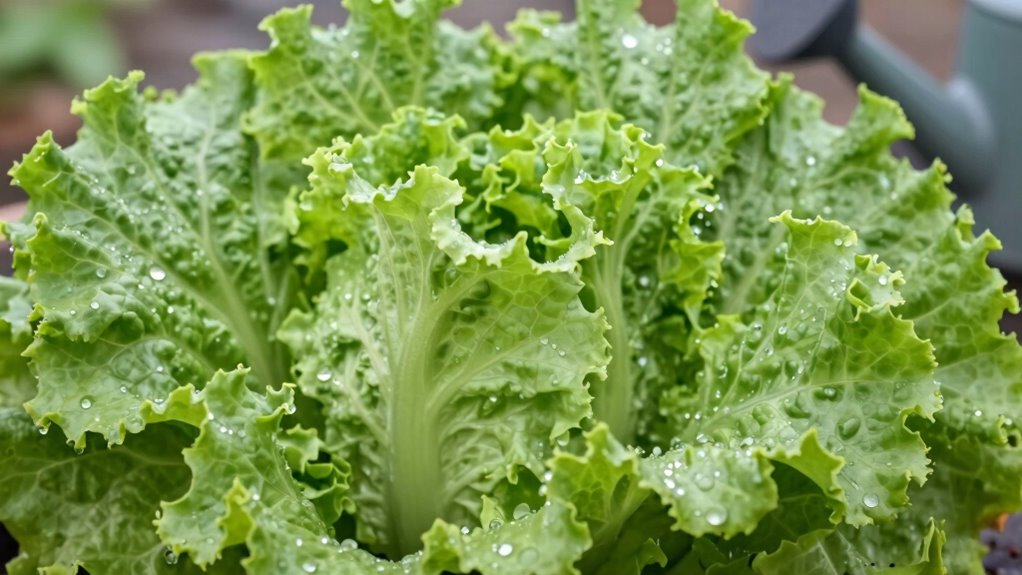

To keep winter lettuce crisp and prevent soggy leaves, avoid overwatering by applying consistent, moderate amounts and ensuring well-draining soil. Water early in the day to let excess moisture evaporate, and loosen the soil to improve aeration. Mulch around your plants to retain moisture without oversaturating. By following proper watering techniques and maintaining good soil health, you’ll enjoy crunchy, fresh lettuce—discover more tips to perfect your watering routine as you continue.
Key Takeaways
- Water lettuce early in the day to allow excess moisture to evaporate before night.
- Use consistent, moderate watering to keep soil moist but not waterlogged.
- Apply mulch around plants to retain moisture and prevent rapid soil saturation.
- Improve soil drainage by aerating and choosing well-draining soil mixes.
- Regularly check soil moisture levels to avoid overwatering and maintain crisp, healthy leaves.

2 Gallon Watering Can, Garden Watering Can Outdoor, Plant Water Can with Removable Long Spout and Stainless Steel Sprinkler Head, Large Plastic Outdoor Watering Cans for Gardening Flower Plants
[A THOUGHTFUL ASSISTANT FOR GARDENING LOVERS]-Compared with most of the large watering can on the market, our watering…
As an affiliate, we earn on qualifying purchases.
As an affiliate, we earn on qualifying purchases.
Why Overwatering Makes Your Winter Lettuce Soggy

Overwatering is one of the main reasons your winter lettuce becomes soggy and less crisp. When the soil stays too moist, it hampers root health, leading to weak, waterlogged roots that can’t support healthy growth. Excess soil moisture creates an environment where roots can rot or become susceptible to diseases, reducing their ability to absorb nutrients properly. This over-saturation results in leaves that remain wet and limp, losing their crunch. To keep your lettuce crisp, you need to maintain balanced soil moisture—moist enough for roots to thrive, but not so wet that it drowns them. Proper watering encourages strong root development, which supports healthy, crisp leaves and prevents the sogginess caused by overwatering.

Back to the Roots 100% Organic Mulch, 58 Quart, Expanding Coconut Husk Block for Gardening
Includes 10lb block of Back to the Roots compressed Coconut Husk Mulch that expands to over 2 cubic…
As an affiliate, we earn on qualifying purchases.
As an affiliate, we earn on qualifying purchases.
How to Spot Signs of Over- or Underwatering in Your Lettuce

Knowing how to recognize the signs of over- or underwatering your lettuce is essential for maintaining its crispness. Pay attention to soil moisture; if it feels too dry or soggy, it’s a clear indicator. Leaf wilting can signal either issue—wilting from underwatering looks more droopy, while overwatering may cause leaves to feel soft and limp. Proper watering techniques can also prevent issues like root rot, which is linked to contrast ratio and affects overall plant health. Watch for these signs:
- Leaves turning yellow or brown
- Excessive leaf wilting or drooping
- Soil feeling overly dry or waterlogged
- Leaves appearing crisp or brittle (underwatering)
- Mushy, slimy leaves (overwatering)

Walensee Lawn Aerator Spike Metal Manual Dethatching Soil Aerating Lawn with 15 Iron Spikes, Pre-Assembled Grass Plug Aerator Tools for Yard, Lawn Aeration, Garden Tool, Revives Lawn Health, Patented
EFFECTIVE LAWN REVIVAL TOOL:Walensee manual lawn aerator helps you loosen soil and thatch to let air, water, and…
As an affiliate, we earn on qualifying purchases.
As an affiliate, we earn on qualifying purchases.
Watering Techniques to Keep Your Winter Lettuce Crisp and Well-Drained

To keep your winter lettuce crisp and well-drained, it’s essential to use watering techniques that provide consistent moisture without oversaturating the soil. Mulching benefits your lettuce by helping retain moisture while preventing rapid evaporation, which supports even watering. Apply a layer of organic mulch around your plants to maintain soil temperature and moisture levels. Additionally, proper soil aeration is key—avoid compacted soil by gently loosening it and ensuring proper drainage. This allows excess water to escape, preventing sogginess. Water your lettuce early in the day, applying only as much as the soil can absorb without pooling. Regular, moderate watering combined with mulching and good soil aeration keeps your winter lettuce crunchy and healthy. Understanding your soil’s drainage capacity can further optimize watering practices to prevent soggy leaves.

Craft Organic Houseplant Potting Mix, Elite House Plant Soil, Chunky, Well Draining Potting Soil for All Indoor Plants, Tropical Plants & Flowers, Sustainable & Peat Free, Less Prone to Gnats, 2QT
COMPLETE INDOOR POTTING SOIL FOR HEALTHY ROOT DEVELOPMENT: A premium potting soil for indoor plants designed to replace…
As an affiliate, we earn on qualifying purchases.
As an affiliate, we earn on qualifying purchases.
Easy Tips to Prevent Sogginess and Maintain Crunchy Leaves
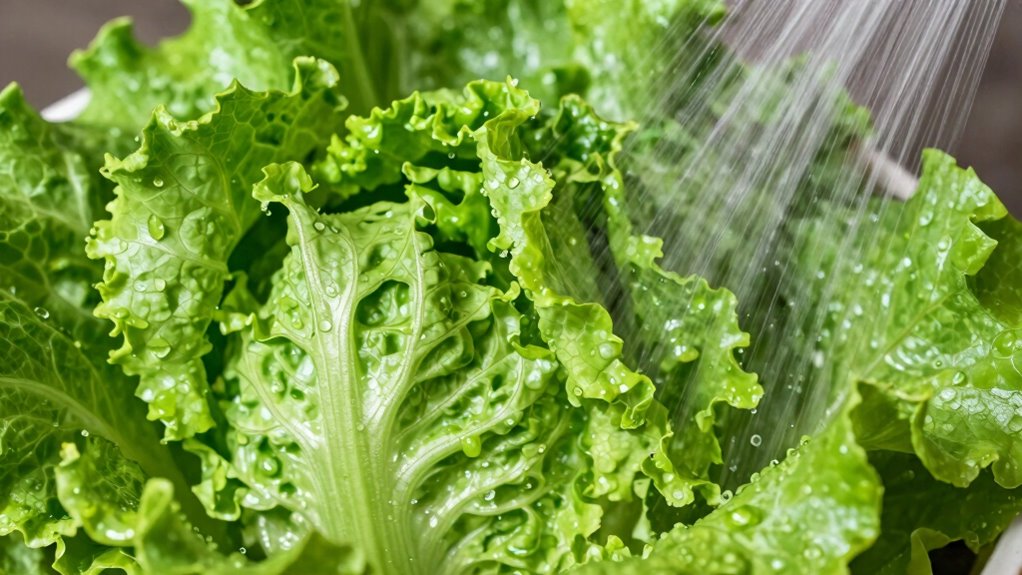
Keeping your winter lettuce crisp requires more than just careful watering; it also involves preventing sogginess that can lead to wilted leaves. To maintain crunchiness, focus on improving soil aeration, which helps excess moisture escape and keeps roots healthy. Guarantee a proper nutrient balance, as over-fertilizing can cause soggy, weak leaves. Use well-draining soil and avoid overwatering, letting the topsoil dry slightly between watering sessions. Regularly loosen the soil around your plants to promote airflow and prevent water from pooling. Additionally, harvest leaves promptly once they reach the desired size to prevent them from becoming waterlogged and losing their crisp texture. Proper watering techniques are essential for healthy growth and crisp leaves. These simple tips will help keep your winter lettuce fresh, crunchy, and delicious.
Additional Ways to Keep Your Winter Lettuce Healthy and Soggy-Free
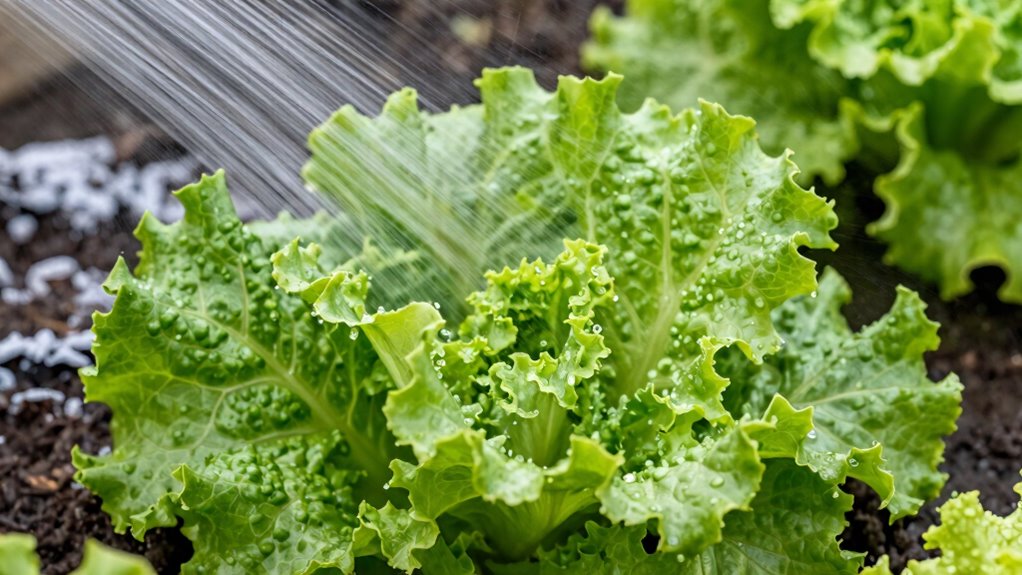
Ensuring your winter lettuce stays healthy and free from sogginess involves more than just watering practices. Mulching benefits your plants by maintaining consistent soil moisture, reducing the risk of overwatering and soggy leaves. It also insulates roots from cold temperatures, promoting healthy growth. Additionally, mulching helps prevent pests by creating a physical barrier and discouraging soil-borne invaders. Use organic materials like straw or shredded leaves for best results. Consider this table to guide your mulching choices:
| Mulching Material | Pest Prevention Benefits |
|---|---|
| Straw | Deters slugs and beetles |
| Shredded Leaves | Discourages aphids and ants |
| Wood Chips | Blocks pest entry points |
| Compost | Maintains moisture, deters pests |
Using these strategies ensures your winter lettuce remains vibrant, crunchy, and free from sogginess. Proper mulching materials can also enhance soil health by adding organic matter that supports beneficial microbes.
Frequently Asked Questions
Can Temperature Affect How Much Water Winter Lettuce Needs?
Yes, temperature affects how much water your winter lettuce needs. When it’s colder, you should reduce watering frequency because lower temperatures slow evaporation, helping maintain proper soil moisture. Conversely, warmer days may require more frequent watering to keep the soil moist without overwatering. Keep an eye on soil moisture levels, and adapt your watering schedule accordingly to prevent soggy leaves and ensure healthy, crisp lettuce in winter.
What Soil Types Are Best for Preventing Soggy Winter Lettuce?
Think of your soil as a sponge—best when it drains well, so excess water doesn’t drown your lettuce. Opt for sandy or loamy soil with good soil drainage, ensuring roots don’t sit in water. Incorporate organic matter like compost to improve texture and aeration. This balance helps prevent soggy winter lettuce leaves, keeping them crisp and healthy, much like a well-tuned orchestra avoids discord.
How Often Should I Water Winter Lettuce During Cold Months?
You should water winter lettuce about once every 4 to 7 days, depending on soil moisture levels. Check the soil regularly; it should be kept consistently moist but not soggy. During cold months, the watering frequency decreases because the soil retains moisture longer. Always make certain you’re not overwatering, as soggy soil can lead to rot. Adjust your watering based on your specific climate and soil conditions for healthy, crisp lettuce.
Are There Specific Mulching Options That Help Maintain Crisp Leaves?
If you want to keep your winter lettuce crisp, try using mulch materials like straw or shredded leaves. These options excel at moisture retention, creating a protective barrier that prevents excess water from seeping in and causing sogginess. Carefully spread your chosen mulch around your plants, and you’ll notice how it stabilizes soil moisture and shields delicate leaves from cold, ensuring your greens stay fresh and crunchy all season long.
How Does Humidity Influence Winter Lettuce Watering Requirements?
Humidity impact plays a significant role in your winter lettuce watering needs. Higher humidity levels help keep leaves crisp by reducing evaporation, so you can water less frequently. Conversely, low humidity causes leaves to lose moisture faster, requiring more consistent watering to maintain leaf crispness. Monitor your environment closely, and adjust your watering schedule accordingly to prevent soggy leaves or dryness, ensuring your lettuce stays fresh and crunchy.
Conclusion
So, next time you water your winter lettuce, remember — giving it too much love can turn crisp leaves into soggy messes. Ironically, that’s exactly what you’re trying to avoid. With the right watering trick, you’ll keep your lettuce happy, crunchy, and thriving. Just don’t drown it, or you’ll end up with a salad you’d rather toss out than enjoy. Keep it balanced, and your winter garden will thank you.