
To help young plants thrive, guarantee your propagation space has well-draining, organic-rich soil and provides bright, indirect light or supplementary full-spectrum grow lights. Maintain consistent moisture without waterlogging, and keep the environment humid at moderate temperatures. Good airflow prevents mold, and proper monitoring of soil moisture stops root issues. By balancing light, humidity, and air circulation, you’ll create an ideal environment for healthy growth—keep going to discover more tips for success.
Key Takeaways
- Well-draining, organic-rich soil mixes promote healthy root development and prevent waterlogging.
- Bright, indirect light or supplemental grow lights support optimal photosynthesis.
- Consistent moisture levels with proper drainage avoid root rot and ensure nutrient uptake.
- Moderate humidity (50-70%) and stable temperatures (65-75°F) foster vigorous growth.
- Good airflow and ventilation reduce disease risk and maintain a healthy environment.
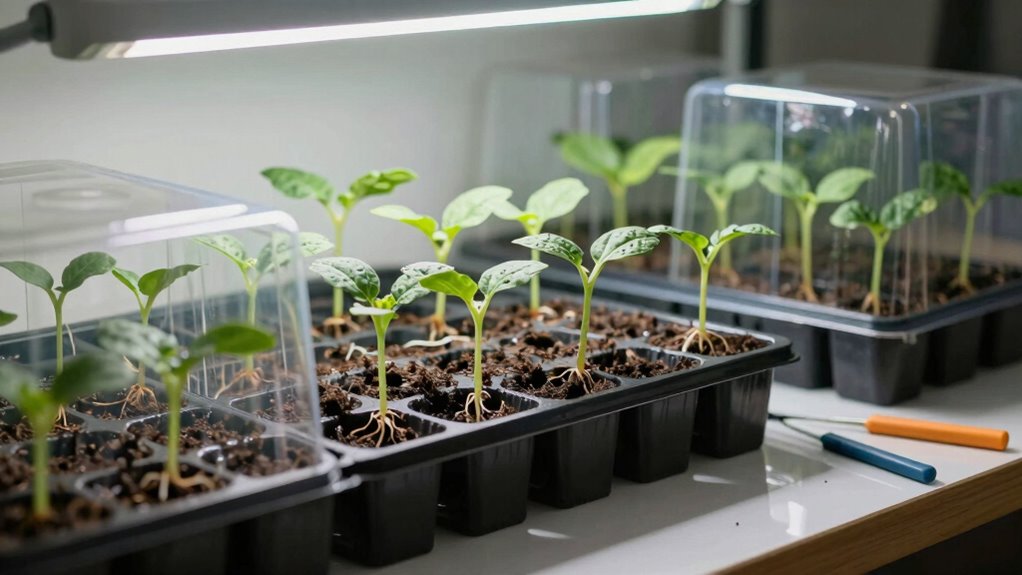
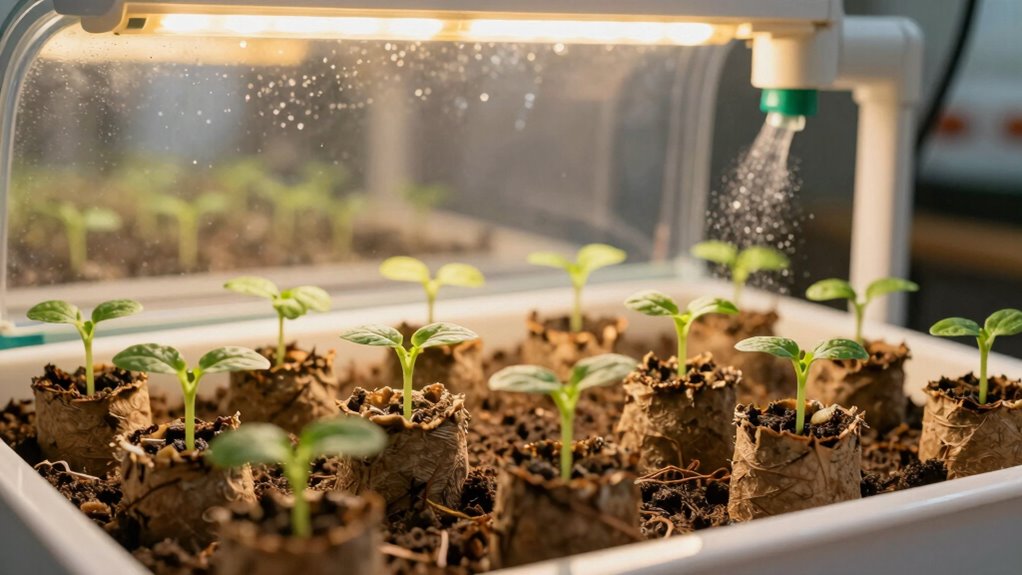
Creating an ideal propagation space is essential for nurturing healthy young plants. When you’re setting up this space, paying close attention to soil composition and lighting conditions makes a significant difference in plant development. The soil you choose should be light, well-draining, and rich in organic matter. It’s best to use a mix designed specifically for seedlings or young plants, which guarantees proper aeration and moisture retention. Avoid compacted or heavy soils that can hinder root growth or cause waterlogging. Instead, opt for a balanced blend that provides nutrients and supports healthy root establishment. This foundation allows your young plants to access the nutrients they need while preventing issues like root rot, which can be detrimental during early growth stages. Additionally, incorporating proper soil mixture techniques ensures your plants develop strong root systems from the start. Maintaining consistent moisture levels and avoiding water stress are also crucial for healthy growth. Ensuring proper soil drainage is vital to prevent water accumulation around roots, which can lead to disease. Adequate soil aeration facilitates healthy root respiration and prevents compaction, supporting overall plant vitality.
A well-draining, nutrient-rich soil mix is key to healthy young plant growth and strong root development.
Lighting conditions play a pivotal role in the success of your propagation space. Young plants need ample light to develop strong stems and healthy leaves. Position your setup where it receives bright, indirect sunlight for most of the day, such as near a south-facing window. If natural light is limited, supplement with grow lights that emit the full spectrum of light needed for photosynthesis. Keep the light source at an appropriate distance to avoid overheating or burning the tender foliage. Consistent and adequate lighting encourages vigorous growth and helps prevent leggy, weak seedlings. Remember, too much direct sunlight can dry out the soil quickly or scorch delicate plants, so balance is key.
Beyond soil and light, maintaining proper humidity and temperature enhances your propagation efforts. Young plants thrive in environments with moderate humidity levels—around 50-70%. Use a humidity tray or mist lightly if the air is dry, especially in heated indoor spaces. Temperature control is equally indispensable; aim for a warm environment around 65-75°F (18-24°C), avoiding cold drafts or sudden temperature fluctuations. These conditions foster healthy root development and prevent stress that can stunt growth or cause disease. Additionally, good airflow around your plants helps reduce mold and fungal issues, which can be common in damp conditions. Keep the space well-ventilated but avoid drafts directly on the plants. Regularly monitor moisture levels in the soil, watering only when the top inch feels dry, to prevent overwatering or underwatering. Proper air circulation contributes significantly to preventing disease and promoting healthy growth. With these considerations—proper soil composition, ideal lighting, humidity, and temperature—you create a thriving environment where your young plants can grow strong and resilient, setting a solid foundation for their future development.
seedling propagation soil mix
As an affiliate, we earn on qualifying purchases.
As an affiliate, we earn on qualifying purchases.
Frequently Asked Questions
What Light Conditions Are Ideal for Young Plant Propagation Spaces?
You should provide your young plants with bright, indirect light, combining natural sunlight and artificial lighting. Natural sunlight offers essential energy, but too much direct sun can harm tender plants. Supplement with artificial lighting if natural light is limited, ensuring they receive consistent, gentle illumination. Maintain a light cycle of about 12-16 hours daily, adjusting to your plants’ specific needs, to promote healthy growth and strong development.
How Often Should the Soil Be Watered in Propagation Areas?
Think of watering as a gentle rainfall nurturing a budding tree. You should water your young plants when the top inch of soil feels dry, usually every 2-3 days. Consistent moisture encourages root development and nutrient absorption, essential for healthy growth. Avoid overwatering, as soggy soil hampers roots’ ability to breathe and absorb nutrients. Balance is key—keep the soil evenly moist to support strong, thriving plants.
What Materials Are Best for Constructing Propagation Containers?
You should choose propagation containers made from breathable materials like plastic or biodegradable options that guarantee proper container drainage. Opt for containers with drainage holes to prevent waterlogging, which is essential for climate control and healthy root growth. These materials help maintain ideal moisture levels and prevent excess water from accumulating, creating a stable environment that encourages young plants to thrive. Proper container selection sets the foundation for successful propagation.
How to Prevent Pests in Propagation Environments?
Think of your propagation space as a fortress guarding delicate seedlings. Start by pest identification, recognizing common invaders early. Use natural deterrents like neem oil or beneficial insects to fend off pests without harmful chemicals. Keep the environment clean, removing dead leaves and debris, and guarantee proper air circulation. These steps create a resilient shield, helping your young plants thrive while maintaining a healthy, pest-free haven.
What Temperature Ranges Optimize Young Plant Growth?
You should keep the temperature between 65-75°F to optimize young plant growth. This range promotes healthy root development and encourages vigorous growth. Maintain proper humidity control to prevent stress and dehydration, ensuring the environment stays moist but not overly damp. Consistent temperatures and balanced humidity levels create ideal conditions, helping your seedlings develop strong roots and thrive as they grow, leading to healthier, more resilient plants.
full spectrum grow lights for seedlings
As an affiliate, we earn on qualifying purchases.
As an affiliate, we earn on qualifying purchases.
Conclusion
Just as a master gardener understands the importance of a nurturing environment, you too can create the perfect propagation space for young plants. By incorporating features like proper drainage, ample light, and controlled humidity, you set the stage for growth and resilience. Remember, even the greatest forests started as tiny seeds in the right soil. With your attentive care, your plants will flourish, echoing the timeless truth that every mighty oak begins as a humble acorn.
plant humidity tray
As an affiliate, we earn on qualifying purchases.
As an affiliate, we earn on qualifying purchases.
indoor plant fan for airflow
As an affiliate, we earn on qualifying purchases.
As an affiliate, we earn on qualifying purchases.