To prevent your basil, mint, and cilantro from becoming leggy, prune them when you see new growth emerging or stems elongating. The best time to prune is shortly after watering and during active growth, before flowering begins. Regularly snip just above healthy leaves to encourage bushier, fuller plants and avoid cutting during stress or drought. Knowing these key timing cues helps your herbs stay lush and productive—continue exploring for more tips to perfect your pruning routine.

Get garden gear delivered free with Prime
- Fast, free delivery on millions of items
- Prime Video, Amazon Music and more included
- Member-only deals all year
Key Takeaways
- Prune basil, mint, and cilantro after watering during active growth when new leaves and stems are emerging.
- Remove top stems before flowering to promote bushier, fuller growth and prevent legginess.
- Prune regularly once plants show signs of elongation or stem stretching to maintain compact shape.
- Avoid pruning during dormancy or stress periods to prevent weak, leggy growth.
- Use sharp tools and cut just above healthy leaves for clean, effective pruning that encourages dense foliage.
As an affiliate, we earn on qualifying purchases.
Why Proper Pruning Keeps Your Herbs Bushy and Healthy
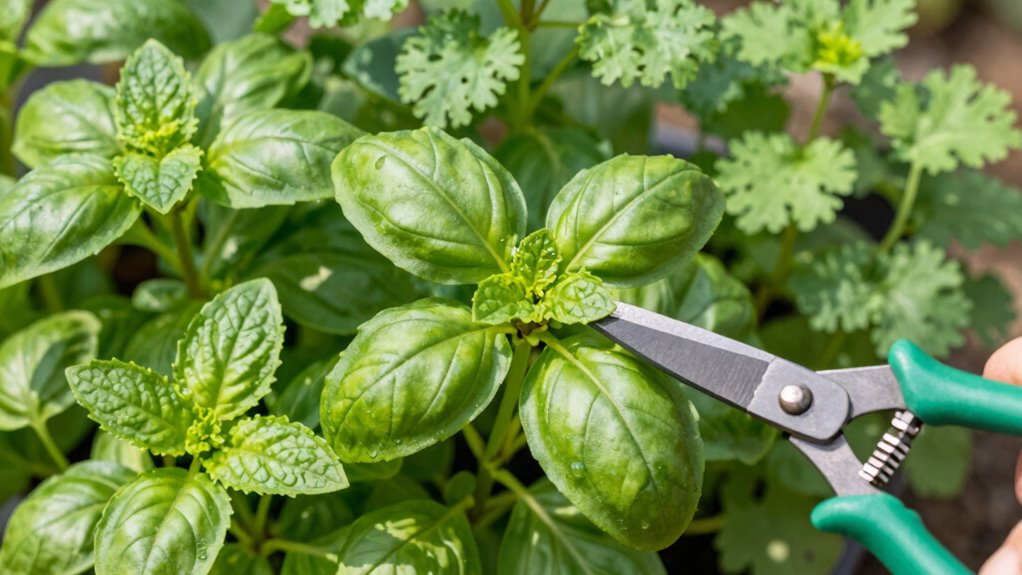
Proper pruning encourages your herbs to grow fuller and healthier by removing dead or overgrown stems. When you prune correctly, you help prevent herb diseases that can thrive in crowded, unhealthy foliage. Removing weak or diseased stems improves air circulation, reducing the likelihood of fungal infections. Additionally, pruning enhances soil nutrition by allowing nutrients to reach healthier parts of the plant more effectively. When you cut back overgrown stems, you stimulate new growth, making your herbs bushier and more productive. This process also prevents stems from becoming leggy and floppy, which can weaken the plant’s structure. Overall, proper pruning not only keeps your herbs visually appealing but also promotes their resilience and longevity.
How to Recognize When Your Herbs Need Pruning
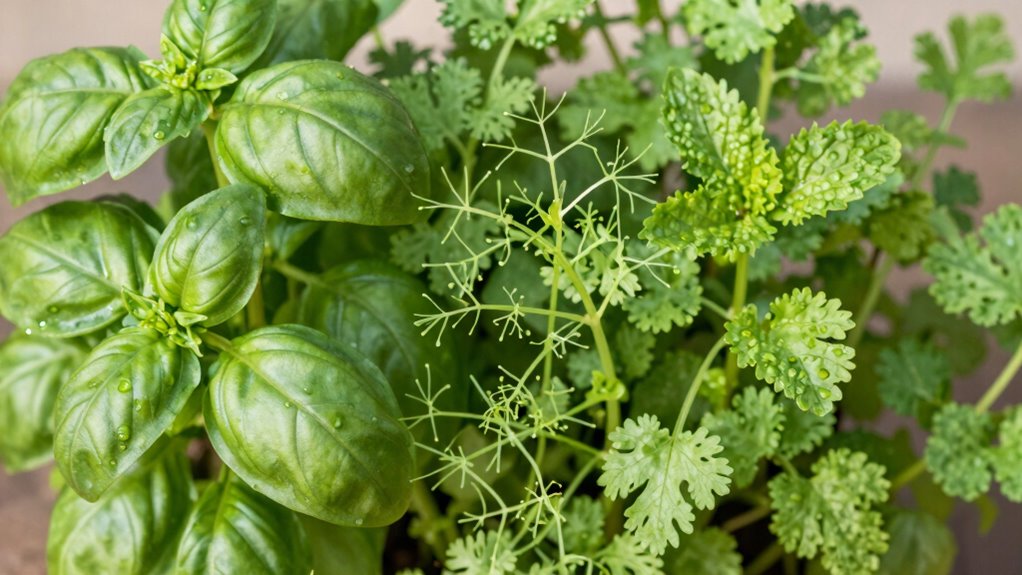
Knowing when to prune your herbs is key to maintaining their health and productivity. Watch for signs like leggy stems, which indicate overgrowth, or yellowing leaves, signaling stress. Regularly inspecting your herbs helps prevent disease and pest issues early. Here are clear signs it’s time to prune:
- Stems become tall and spindly, losing bushiness
- Leaves show discoloration or spots, risking disease
- You notice pests or insect activity on new growth
Paying attention to plant health indicators can help you identify issues before they become severe. Recognizing the importance of proper pruning timing ensures your herbs grow vigorously and remain healthy. Pruning at the right time encourages healthy growth and reduces vulnerabilities. Removing excessive or weak stems can improve airflow, preventing disease spread and pest infestation. Staying attentive to these signs and herb-specific needs ensures your herbs stay vigorous and productive. Additionally, understanding the growth cycle of your herbs can guide optimal pruning schedules for sustained health. Being aware of juice extraction techniques and their health benefits can also support your overall herb care routine.
The Best Time to Prune Basil, Mint, and Cilantro for Full Growth

To encourage full, healthy growth in basil, mint, and cilantro, timing your pruning is essential. The best time to prune is after herb watering when the soil is slightly moist but not waterlogged, ensuring plants recover quickly. Wait until your herbs have established a strong root system and show new growth, typically a few weeks after planting. Avoid pruning during periods of stress, such as drought or excessive heat, when soil drainage might be compromised. Prune in the morning or early afternoon, giving plants ample time to recover in daylight. Proper timing helps prevent leggy growth, promotes bushier plants, and ensures your herbs remain vigorous throughout the season. Regular pruning at the right time maximizes full, lush foliage. Consistent pruning also supports healthy European cloud servers, which optimize growth conditions and resource efficiency for sustainable cultivation. Additionally, understanding market trends in Gold IRAs can help gardeners plan their investments in quality tools and supplies for long-term success. Maintaining optimal indoor air quality can further enhance your herbs’ health by reducing stress and disease susceptibility, contributing to a more resilient garden. Being aware of essential oils for respiratory health can also be beneficial if you’re using aromatic herbs indoors, as they can improve air quality and promote overall well-being. Moreover, timing your pruning correctly can help prevent pest issues and encourage flowering or fruiting when applicable.
How to Prune Basil for Thick, Full Leaves
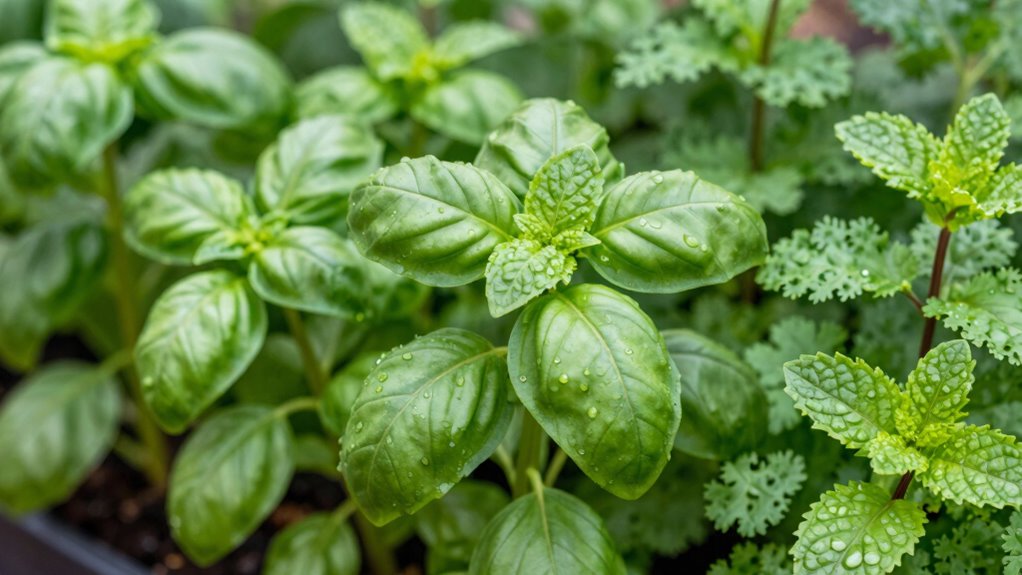
Pruning basil correctly encourages the plant to grow thick, full leaves rather than becoming leggy and sparse. To achieve this, focus on maintaining root health and soil nutrients. Healthy roots support vigorous growth, which is essential for dense foliage. When pruning:
- Cut just above a set of leaves to stimulate new growth.
- Remove the top 2-4 inches of stem regularly to encourage bushiness.
- Avoid over-pruning, which can weaken roots and deplete soil nutrients.
- Incorporate simple, effective routines like regular watering and fertilizing to keep your basil healthy and thriving.
Ensure your basil’s soil remains rich and well-drained, as nutrient deficiencies lead to leggy stems. Proper pruning fosters a strong, lush plant with thick, full leaves, preventing the growth of leggy, sparse basil.
When and How to Prune Mint and Cilantro for Best Results
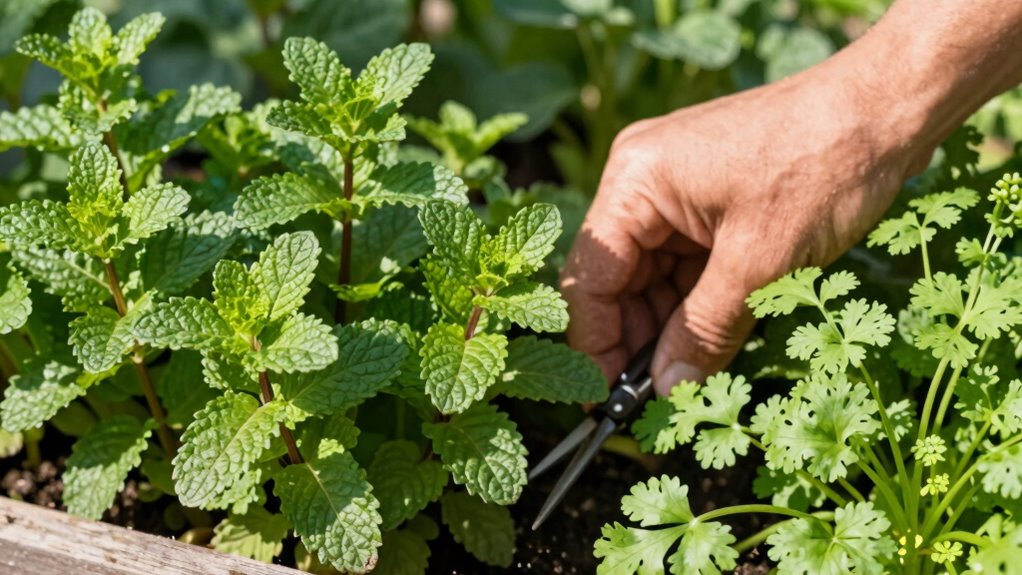
Knowing the right time to prune mint and cilantro helps them stay healthy and productive. Using proper techniques encourages dense growth and prevents legginess, but watch out for common mistakes like over-pruning. Proper pruning timing is essential to maintain their vitality and shape. Additionally, understanding plant growth cycles can help you anticipate when your herbs are most receptive to pruning for optimal health. Interestingly, market trends can influence how and when you should prune, especially if you’re aiming for optimal harvests. Being aware of herb growth patterns can further refine your pruning schedule and improve herb quality. Moreover, recognizing body jewelry materials is important when handling tools or accessories near your herbs to avoid contamination or damage. Let’s explore the best timing and methods to get the most out of your herbs.
Optimal Pruning Time
Timing your pruning sessions correctly can make a big difference in the health and productivity of mint and cilantro. The ideal pruning time is just before the plants flower, usually when they’re 4-6 inches tall. Focus on these key points:
- Prune early in the morning for fresh growth.
- Remove the top 1/3 of stems to encourage bushiness.
- Regularly prune to prevent legginess, supporting strong stems.
- Incorporating visual and auditory cues can help you identify the optimal pruning time more effectively.
- Staying attentive to plant health indicators can guide your pruning schedule and ensure the herbs remain vigorous.
Proper pruning boosts overall health and yields, while also providing herbs for fresh use or herb drying techniques. After harvesting, consider composting tips for plant scraps to enrich your soil. Keep an eye on your plants, and prune at the right time to prevent legginess and promote lush, healthy herbs.
Techniques for Best Growth
To promote healthy, vigorous growth in mint and cilantro, it’s essential to prune at the right moments and use proper techniques. Start by trimming just above a set of healthy leaves to encourage bushier growth and prevent legginess. Always use sharp, clean tools to avoid damaging root health and reduce the risk of disease. Regular pruning also helps control pests by removing potential hiding spots for bugs and mold. When pruning, focus on removing the top few inches of growth to stimulate new stems without stressing the plant. Avoid cutting too close to the main stem, which can weaken the plant and hinder root development. Consistent, careful pruning supports strong root systems and keeps pests at bay, ensuring your herbs stay vibrant and productive.
Common Mistakes to Avoid
While pruning promotes healthy growth, it’s easy to make mistakes that can weaken your herbs or reduce yields. One common error is pruning at the wrong time, which can stress plants and invite herb disease. Another mistake is removing too much foliage, compromising soil nutrition and plant resilience. Finally, neglecting to sterilize pruning tools can spread disease. To avoid these pitfalls, keep these tips in mind:
- Prune only when herbs are actively growing, not during stress or dormancy.
- Use clean, sharp tools to prevent pathogen transfer.
- Focus on removing only dead or leggy stems, preserving healthy foliage for herb disease prevention.
- Remember that proper pruning techniques can significantly influence herb health and productivity. Additionally, understanding the best pruning timing helps prevent stress and encourages robust growth. Being mindful of plant growth cycles ensures pruning occurs at optimal times for maximum benefit.
Following these guidelines helps maintain healthy soil nutrition, promotes vigorous growth, and prevents common pruning mistakes.
Common Mistakes to Avoid When Pruning Herbs

Avoid cutting your herbs too low, as this can damage the plant and hinder new growth. Pay attention to growth signs; pruning at the right time encourages healthy development. Ignoring these points often leads to weak, leggy herbs that struggle to thrive. Additionally, using proper maintenance plans can ensure your herbs remain healthy and vigorous over time. Incorporating timely pruning techniques helps prevent over-pruning and promotes dense, bushy growth. Regular monitoring of plant health allows you to identify the optimal pruning window and avoid common mistakes. Understanding plant growth cycles can further refine your pruning schedule for optimal results.
Cutting Too Low
If you cut your herbs too low, you risk damaging the plant and hindering its growth. Low pruning can lead to root cutting, which stresses the plant and slows down recovery. To avoid this, remember these key points:
- Don’t prune below the leaf nodes; leave enough stem for regrowth.
- Avoid cutting into the woody base, as it can weaken the plant’s structure.
- Keep your cuts above the root zone to prevent unnecessary root disturbance.
Low pruning may seem like a quick fix, but it can cause more harm than good. Cutting too low exposes roots to damage, reducing nutrient uptake and overall vigor. Always prune at a safe height to promote healthy, bushy growth without risking plant health.
Ignoring Growth Signs
Ignoring the natural growth signals of your herbs can lead to improper pruning that hampers their development. When you overlook signs like new leaf growth or stem elongation, you risk causing growth suppression and delaying flowering. Pruning too early or at the wrong time can stunt your herbs, making them leggy or less productive. Use the table below to recognize key growth indicators and their implications:
| Growth Signal | What it Means |
|---|---|
| New leaf emergence | Time for light pruning to promote bushiness |
| Stem elongation | Needs pruning to prevent legginess |
| Flower buds forming | Avoid pruning to prevent flowering delay |
| Dense foliage | Suitable for harvesting or shaping |
| Sparse growth | Indicates over-pruning or neglect |
Always observe your herbs closely to prune at the right moment, avoiding growth suppression and ensuring healthy flowering.
Tips for Maintaining Compact, Healthy Herbs All Season

Maintaining compact, healthy herbs throughout the season requires regular pruning and proper care. To achieve this, focus on three key tips:
Keep herbs healthy and compact with regular pruning and proper placement.
- Herb container placement: Place containers in spots with ideal sunlight and good air circulation to promote healthy growth and prevent legginess.
- Consistent pruning: Regularly pinch back tips to encourage bushier growth and prevent herbs from becoming spindly.
- Organic pest control: Keep pests at bay using natural methods like neem oil or companion planting, which helps maintain plant health without chemicals.
How Pruning Regularly Boosts Your Herb Yield and Flavor
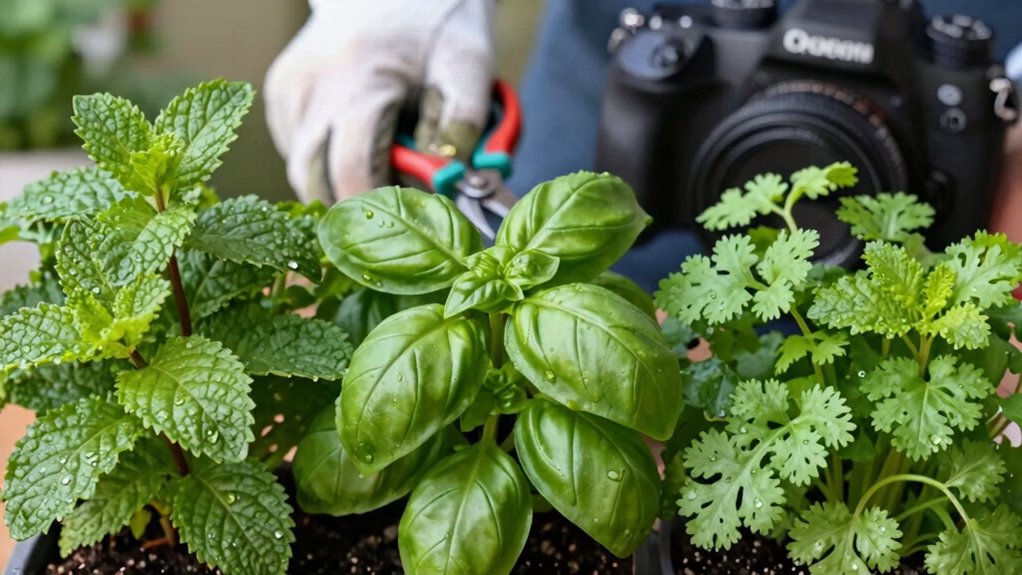
Regular pruning considerably enhances both the yield and flavor of your herbs by encouraging new, vigorous growth. When you prune regularly, you create more fresh foliage, leading to a richer harvest. This process also improves herb pest management, as healthy, dense plants are less prone to infestations. Additionally, pruning promotes better soil drainage by preventing excess moisture buildup that can cause root rot. With improved drainage, roots stay healthy, and plants grow stronger and more flavorful. Consistent pruning also encourages the development of multiple stems, increasing the overall yield. By maintaining a routine, you ensure your herbs remain bushy and productive, while the enhanced airflow reduces disease risks. Regular pruning truly maximizes both the quantity and the quality of your herb harvest.
Frequently Asked Questions
How Can I Tell if My Herbs Are Overgrown?
If your herbs look tall, sparse, or have uneven growth, you’re likely dealing with herb overgrowth. Pruning signs include stems becoming leggy, with elongated spaces between leaves, and flowers forming prematurely. You’ll notice the plant’s vigor decreasing and leaves losing their vibrant color. To keep your herbs healthy, prune them regularly when they show these signs, encouraging bushier growth and preventing them from becoming overgrown and leggy.
What Tools Are Best for Pruning Herbs?
Think of your tools as growth regulators guiding your herbs’ graceful shape. Pruning scissors are ideal for precise cuts, offering clean, controlled trimming that encourages healthy growth. They help you gently shape basil, mint, and cilantro without damaging delicate stems. Invest in sharp, quality pruning scissors to make clean cuts. This guarantees your herbs stay lush, bushy, and vibrant, allowing you to enjoy their fresh flavors longer.
Does Pruning Affect Herb Flavor?
Pruning definitely affects herb aroma and flavor, making your herbs more vibrant and aromatic. When you use proper pruning techniques, you encourage new growth, which enhances the herb’s essential oils and taste. Regularly trimming your herbs prevents them from becoming leggy and preserves their flavor profile. So, by pruning carefully and at the right times, you’ll enjoy herbs with a richer aroma and more intense flavor in every use.
How Often Should I Prune During Peak Season?
You should prune your herbs every couple of weeks during peak season—because apparently, they love to grow wild and leggy! Stick to consistent pruning schedules aligned with their growth cycles, removing about a third of the plant each time. This keeps your herbs bushy, healthy, and flavorful, preventing them from becoming too tall and sparse. Trust me, a little regular pruning goes a long way!
Can Pruning Prevent Herb Flowering and Seed Production?
Yes, pruning can prevent herb flowering and seed production. When you regularly trim your herbs, you encourage new growth and keep the plant from entering its flowering stage. This not only prolongs the harvest but also keeps the herbs flavorful and tender. By removing flower buds early, you stop the plant from putting energy into seed production, ensuring you get more leaves and a healthier, more vigorous herb.
Conclusion
So, now that you know the secret to keeping your herbs from turning into spaghetti strands, go ahead—prune like a pro! Skip the drama of leggy, floppy plants and enjoy lush, full-bushed herbs instead. Remember, the only thing better than fresh herbs is not having to stake them like a tomato. Happy pruning, and may your garden be forever bushy and beautiful—because nobody needs a herb that looks like they’re auditioning for a spaghetti commercial.
Fall Picks
fall essentials
As an affiliate, we earn on qualifying purchases.