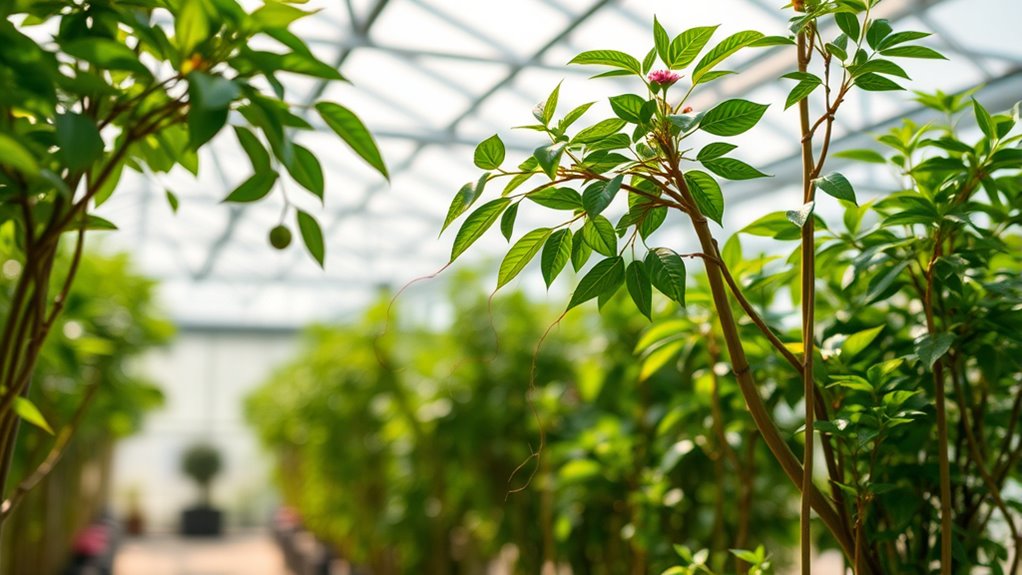

To improve growth in your greenhouse plants, focus on proper pruning and training techniques. Remove dead or damaged parts to keep your plants healthy and direct energy for better development. Use training methods like trellises to maximize light and airflow, reducing pests and disease risks. Timing is key—prune at the right stage to support quick recovery and productivity. Continuing with these practices helps create a thriving, resilient environment for your plants.
Key Takeaways
- Proper pruning removes dead or damaged parts to improve plant health and promote vigorous growth.
- Training techniques like trellising optimize light exposure, airflow, and space utilization for better development.
- Timing pruning to growth stages enhances recovery, reduces pest risks, and supports continuous productivity.
- Balanced nutrition and pest management strengthen plants, making pruning and training more effective.
- Maintaining clean tools and purposeful pruning ensures plant health, higher yields, and easier pest control.

Have you ever wondered how to keep your greenhouse plants healthy and productive? Proper pruning and training are essential tools you can use to achieve this. When you prune, you’re not just removing dead or damaged parts; you’re helping your plants direct their energy more efficiently, which directly impacts their overall health and yield. To do this effectively, you need to understand plant nutrition. Well-fed plants are stronger, more resilient, and respond better to pruning. Making sure your plants receive the right nutrients through balanced fertilization enhances their ability to recover from pruning cuts and promotes vigorous new growth. Additionally, healthy plants are less susceptible to pests and diseases, which makes pest management much easier. Regular inspections, combined with proper pruning, keep pests at bay and prevent infestations from spreading. Recognizing the importance of plant resilience can help you develop a more effective care routine. Training your plants is equally important. It involves guiding their growth pattern to maximize space, light exposure, and airflow within your greenhouse. By training plants vertically or along trellises, you can improve light penetration and prevent overcrowding. Better air circulation reduces humidity levels and creates an environment less hospitable to pests and fungal diseases. Training also makes it easier to spot and manage pest issues early, contributing to more effective pest management strategies. When you prune and train simultaneously, you help your plants develop a strong structure that supports healthy, productive growth. This combined approach minimizes the risk of broken stems or unbalanced growth, which can lead to stress and vulnerability to pests.
Another critical aspect to think about is timing. Pruning at the right stage of growth ensures your plants recover quickly and continue to thrive. For example, removing unwanted shoots or branches before flowering directs energy toward fruit production rather than unnecessary foliage. Proper timing also helps you stay ahead of pest problems, as many pests target specific growth stages. By integrating plant nutrition, pest management, and strategic pruning, you create a healthy, productive environment for your greenhouse plants. Keep your tools sharp and sanitized to prevent disease transmission, and always prune with purpose—removing only what’s necessary to promote better growth. Remember, well-pruned and trained plants are easier to maintain, resist pests better, and produce higher yields. With patience and consistent effort, you’ll see your plants flourish, making your greenhouse a thriving hub of healthy, productive growth.
Frequently Asked Questions
How Often Should I Prune My Greenhouse Plants?
You should prune your greenhouse plants every 4 to 6 weeks to maintain plant health and guarantee proper growth regulation. Regular pruning helps remove dead or diseased foliage, encourages new growth, and keeps your plants manageable. Keep an eye on your plants’ development and adjust the frequency if they need more or less attention. Consistent pruning promotes healthier plants and better yields, making your greenhouse more productive and vibrant.
What Tools Are Best for Pruning Greenhouse Plants?
A stitch in time saves nine, and the right tools make all the difference. For pruning greenhouse plants, you should use sharp pruning shears for clean cuts and precision. If you’re training plants on trellises, consider using specialized plant trellising clips and ties. These tools help promote healthy growth and prevent damage. Keep your tools sharp and clean, ensuring your plants stay healthy and vigorous.
Can Pruning Damage My Plants Permanently?
Pruning can pose risks if you’re not careful, but it doesn’t usually cause permanent damage if done correctly. You might temporarily stress your plants, but with proper technique, they can recover quickly. To minimize risks, use sharp tools, make clean cuts, and avoid over-pruning. Proper pruning encourages healthy growth and plant recovery, so don’t fear it—just be mindful and gentle to protect your plants’ long-term health.
What Training Techniques Improve Fruit Production?
You can boost fruit production by using effective training methods like espaliering, trellising, and staking. These techniques improve airflow, sunlight exposure, and space management, which directly increase fruit yield. Regularly guiding plant growth directs energy toward fruit development rather than excessive foliage. Implementing these training methods guarantees healthier, more productive plants, maximizing your harvest and ensuring better fruit quality throughout the season.
When Is the Best Time to Prune Different Plant Species?
You should prune different plant species during their specific dormant or active seasons for ideal growth. For seasonal pruning, do it in late winter or early spring before new growth begins. For plant rejuvenation, prune heavily in late winter to encourage fresh growth. Always consider the plant’s individual needs and growth cycle to avoid stress or damage, ensuring healthy, vigorous development year-round.
Conclusion
By mastering pruning and training, you’re nurturing a symphony of growth within your greenhouse. Think of your plants as enthusiastic dancers, each step guided by your careful hands, weaving a graceful choreography that promotes health and abundance. With patience and precision, you’re shaping a vibrant masterpiece from delicate sprouts into lush, thriving greenery. Embrace this art of cultivation, and watch your greenhouse flourish like a garden of living poetry, full of life and promise.