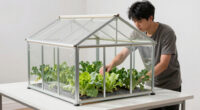
To determine when to pot up your seedlings, do the “root peek” test by gently removing one from its container and checking the roots. Healthy roots are white or light tan, but if they’re densely circling or reaching the container’s edges, it’s time to transplant. Make sure the seedlings have sturdy stems and vibrant leaves before proceeding. Keep your soil moist and handle plants carefully—continue with our tips to master transplanting success.

Get garden gear delivered free with Prime
- Fast, free delivery on millions of items
- Prime Video, Amazon Music and more included
- Member-only deals all year
Key Takeaways
- Check roots by gently lifting seedlings; healthy roots are white or light tan and may circle container edges.
- Roots reaching or circling container edges indicate it’s time to transplant or pot up.
- Roots should be slightly more mature and not tightly tangled before transplanting.
- Seedlings with sturdy stems and vibrant leaves are generally ready to be potted up.
- Ensure soil is moist but not waterlogged to handle seedlings safely during the root peek test.
As an affiliate, we earn on qualifying purchases.
How to Use the Root Peek Test to Time Transplanting
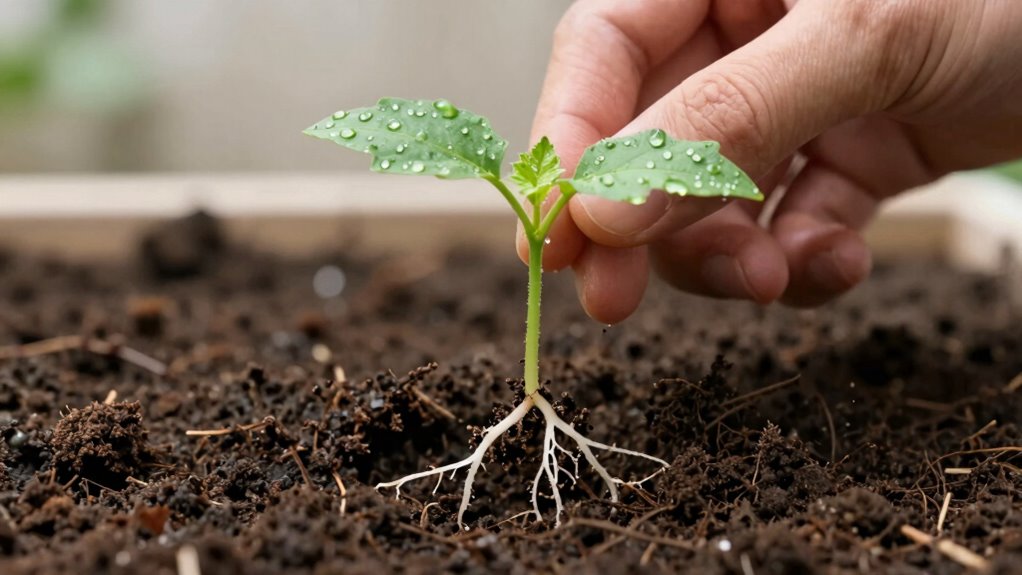
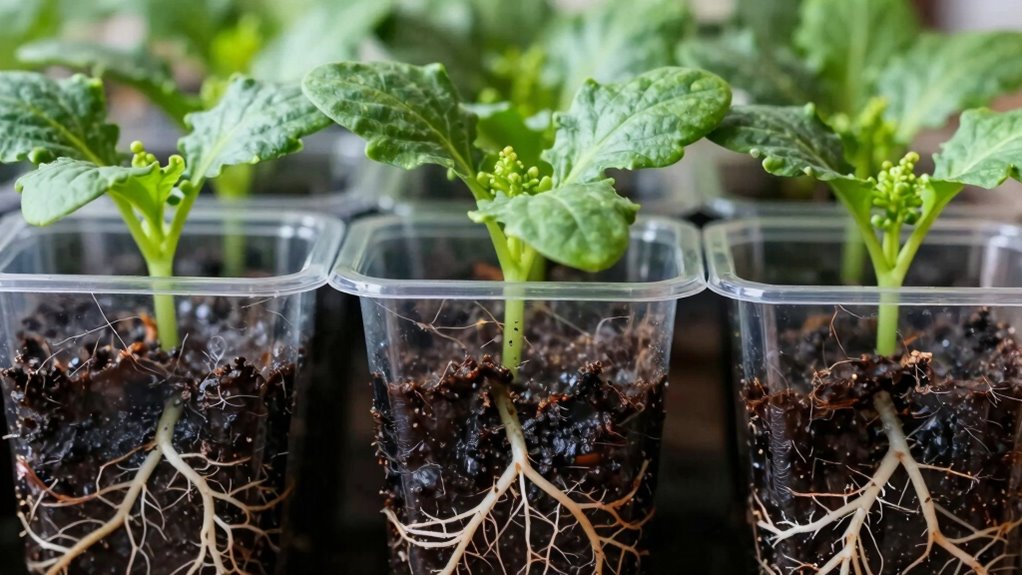
To determine the right moment to transplant seedlings, you can perform the root peek test. Gently lift the seedling from its container to check the roots. If you see roots circling the container or reaching the edges, it’s time to transplant. During this process, consider seedling pruning—remove any dead or overly tangled roots to encourage healthy growth. Also, check the soil moisture; it should be moist but not waterlogged, making it easier to handle the roots without damage. If roots are just beginning to fill the space, and the soil moisture is appropriate, you’re ready to pot up. This test helps guarantee your seedlings are strong enough for transplantation, reducing transplant shock and promoting faster establishment in their new home. Additionally, understanding the seedling’s growth stage can influence your timing for optimal transplanting success.
Recognizing the Signs Your Seedlings Are Ready to Pot Up
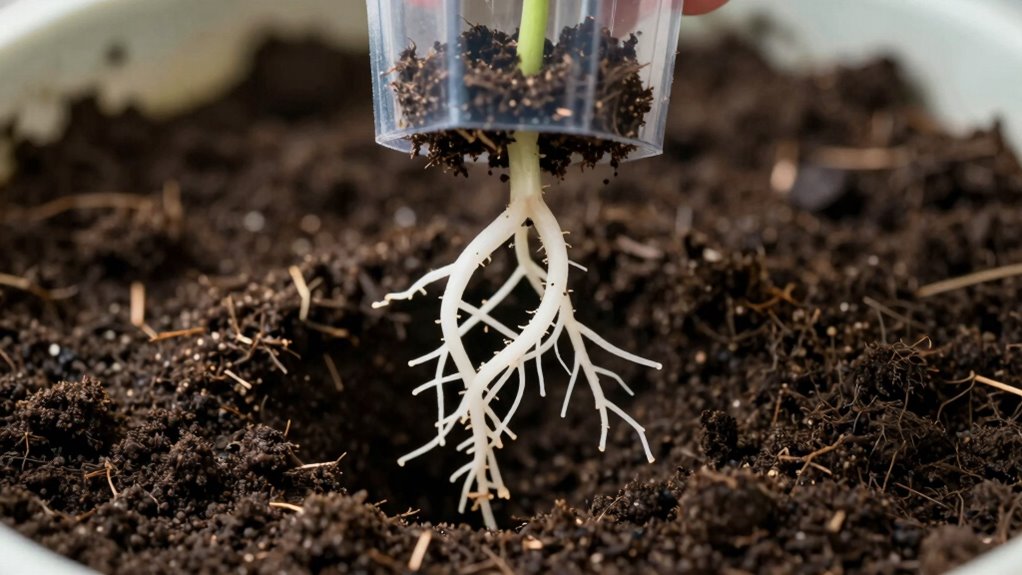
Once you’ve performed the root peek test and confirmed your seedlings are ready for transplanting, it’s important to recognize other signs that indicate they’re truly prepared to be potted up. Look for sturdy stems, vibrant leaves, and consistent growth. Healthy seedlings will also display strong seedling nutrition, with no signs of yellowing or legginess. Additionally, check their watering schedules; seedlings should no longer dry out quickly but remain evenly moist. Monitoring plant health indicators can help ensure successful transplantation.
How to Do the Root Peek Test Step-by-Step

Before transplanting your seedlings into their new pots, it’s essential to check their root development with a root peek test. Gently remove the seedling from its current container, supporting the base to avoid root damage. Look at the root health—roots should be white or light tan, not dark or slimy. Check the container size: if roots are circling densely or reaching the edges, it’s a sign they’re ready for a bigger pot. Carefully loosen any tightly wound roots to encourage outward growth. Avoid forcing the seedling into a new container if roots are underdeveloped; wait until they’re slightly more mature. This step guarantees your plant will have enough space to grow healthy, strong roots and thrive in its new environment. Engaging with community sharing and creative expression can also inspire new approaches to plant care and gardening success.
Preparing Your Containers for Transplanting Seedlings
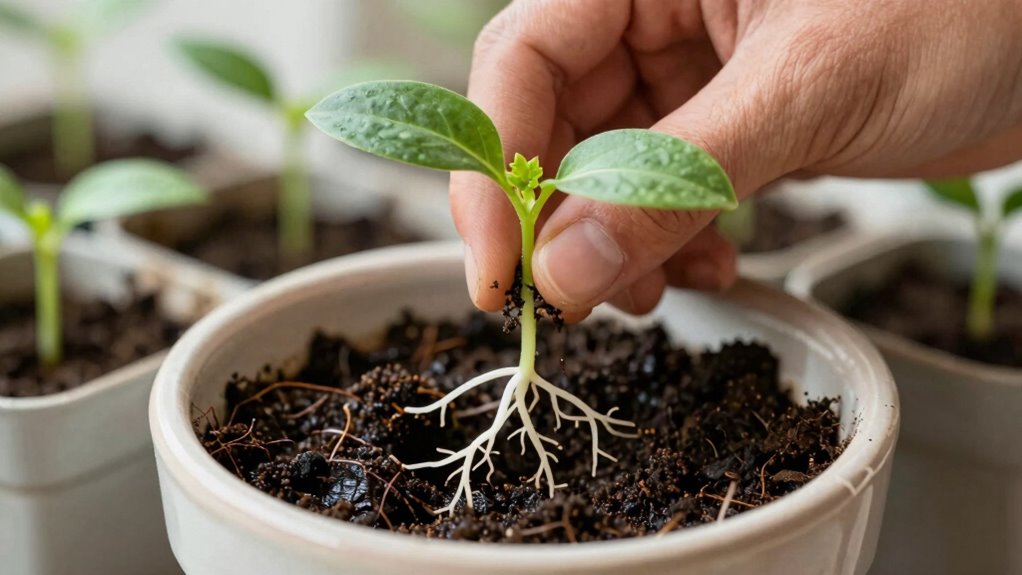
Preparing your containers properly sets the stage for healthy seedling growth. First, ensure your containers have adequate drainage holes to prevent water from pooling, which can cause root rot. Use well-draining soil to maintain proper soil moisture levels—neither too wet nor too dry. Fill the containers with a quality seed-starting mix, leaving enough space at the top for watering. Before transplanting, lightly moisten the soil so seedlings aren’t stressed by dry conditions. Check that the container drainage works well by watering lightly and observing how quickly excess water exits. Proper drainage and soil moisture balance promote strong root development and prevent common problems like overwatering. Taking these steps guarantees your seedlings have the ideal environment to thrive after transplanting. Additionally, understanding Gold IRA Markets can help diversify your investments once your garden is established.
Transplanting Seedlings Safely for Healthy Growth
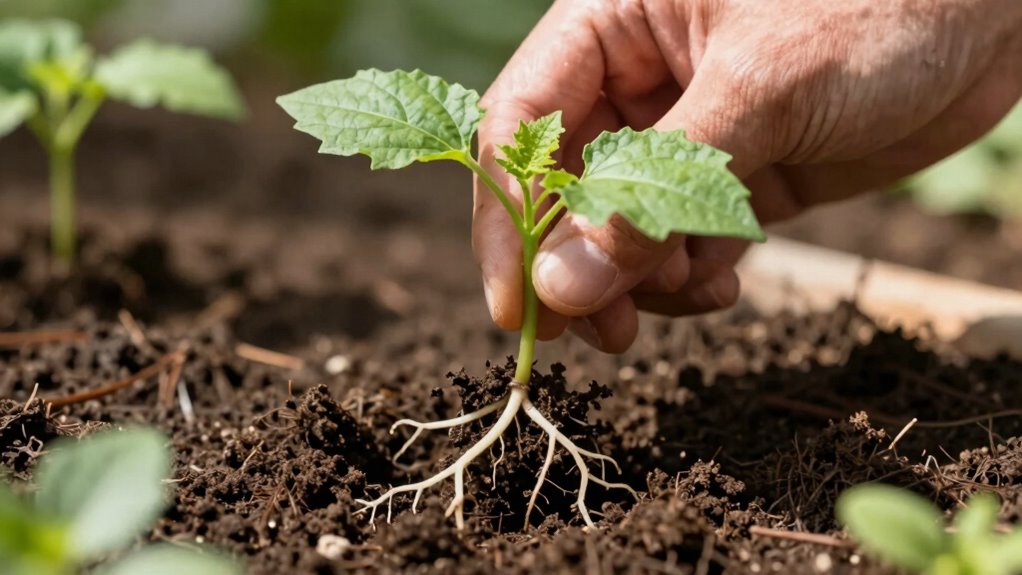
Are you ready to transplant your seedlings safely and set them up for healthy growth? Start by choosing a well-draining soil rich in nutrients to support root development. Handle seedlings gently, avoiding root damage, and plant them at the same depth they grew in their starter containers. After transplanting, guarantee the soil is moist but not waterlogged—adjust your watering frequency accordingly. Consistent moisture helps roots establish without stress. Keep an eye on soil nutrition; supplement with organic fertilizers if necessary to promote vigorous growth. Avoid overwatering, which can lead to root rot, and underwatering, which stresses the plant. Properly transplanted seedlings with balanced soil nutrition and appropriate watering will develop strong roots and thrive in their new environment. Understanding soil health is key to ensuring your seedlings grow strong and resilient over time.
Troubleshooting Common Root and Transplanting Problems
Transplanting seedlings can sometimes lead to issues like root damage, poor establishment, or stress-related problems. To troubleshoot, focus on soil nutrition and your watering schedule. Insufficient soil nutrients weaken roots, while overwatering can cause root rot. Underwatering stresses plants, hindering growth. Use this table to understand root health:
| Issue | Solution |
|---|---|
| Root damage | Handle seedlings gently; avoid disturbing roots. |
| Poor establishment | Ensure soil is rich in nutrients; maintain consistent watering. |
| Root rot | Improve drainage; reduce watering frequency. |
| Wilting after transplant | Check soil nutrition; adjust watering schedule accordingly. |
Additionally, maintaining proper watering practices is essential to prevent stress and ensure healthy root development.
Post-Transplant Care Tips for Thriving Seedlings

Once you’ve transplanted your seedlings, providing proper care guarantees they establish quickly and grow healthy. Focus on maintaining ideal soil nutrition by enriching the soil with balanced fertilizers to support root development. Adjust your watering frequency to keep the soil consistently moist but not waterlogged, preventing stress and promoting growth. Keep an eye on your seedlings to ensure they’re not drying out or drowning. Here are key tips:
- Consistently monitor soil moisture levels
- Use gentle watering techniques to avoid disturbing roots
- Fertilize with a diluted, balanced nutrient solution regularly
- Mulch lightly to retain soil moisture
- Gradually harden seedlings before exposing them fully outdoors
- Understanding root development helps optimize transplant success and overall seedling health.
Following these steps helps your seedlings thrive, ensuring strong, healthy growth from the start.
Final Tips for Successful Seedling Transplantation

Proper preparation and careful timing are key to ensuring your seedlings establish successfully after transplanting. Before moving them, make sure the soil nutrition is rich and balanced, giving your plants a strong start. Handle seedlings gently, keeping roots moist to reduce stress. When transplanting, choose a time when the weather is mild to avoid shock. After planting, establish a consistent watering schedule, ensuring the soil stays evenly moist but not waterlogged. Mulching can help retain soil moisture and regulate temperature. Monitor your seedlings daily, adjusting watering as needed based on weather conditions. Providing the right soil nutrition and maintaining steady watering schedules will promote healthy root growth and better adaptation, setting your seedlings on a strong path toward thriving in their new environment. Additionally, understanding the importance of timing and environmental conditions can significantly improve transplantation success.
Frequently Asked Questions
Can the Root Peek Test Be Used for All Plant Types?
The root peek test isn’t suitable for all plant types due to differences in plant compatibility and root sensitivity. Some plants have delicate roots that can be damaged easily, while others tolerate root disturbance better. Always research each plant’s specific needs before using this method. For sensitive plants, consider alternative signs of readiness, like growth rate or pot size, to make certain of healthy transplanting without risking root damage.
How Often Should I Check Seedling Roots During Growth?
You should check your seedlings’ roots every 7 to 14 days to stay on top of growth monitoring. Regular root inspection helps you identify when seedlings are ready to pot up, preventing root crowding or root binding. By observing root development, you ensure healthy growth, avoid transplant shock, and promote strong, vigorous plants. Keep a consistent schedule to catch root growth early and give your seedlings the best start.
What Are Common Mistakes to Avoid When Potting Up?
Like a vintage typewriter, avoid common potting mistakes. Don’t overwater your seedlings, which can lead to root rot, and choose improper containers that don’t drain well. Always make certain the pot has drainage holes and use the right size for your plants. Rushing into potting up without proper preparation can stunt growth. Take your time, watch for overwatering signs, and select containers wisely to give your seedlings a healthy start.
Is There a Risk of Damaging Roots Using the Root Peek Method?
Yes, there’s a risk of damaging roots using the root peek method if you’re not careful. Excessive root disturbance can cause transplant shock, which slows growth and weakens your seedlings. To avoid this, handle seedlings gently, limit root exposure, and only peek when necessary. Being cautious helps protect delicate roots and guarantees a smoother shift when potting up, leading to healthier, stronger plants.
How Do Environmental Factors Affect Root Development and Transplant Timing?
Environmental factors like soil moisture and light intensity greatly influence root development and transplant timing. You should guarantee the soil stays evenly moist; too dry or soggy soil can hinder roots. Adequate light promotes healthy growth, encouraging strong roots. When these conditions are ideal, seedlings are ready for potting up. Keep monitoring soil moisture and light levels regularly to prevent stress and assure your seedlings develop robust roots before transplanting.
Conclusion
Knowing when to pot up your seedlings is key to healthy growth—research shows that proper transplant timing can boost plant survival rates by up to 30%. By using the root peek test, you’ll confidently identify the perfect moment to transplant, giving your seedlings the best start. Remember, patience and observation are your best tools. With these tips, you’re well on your way to thriving, vigorous plants that will reward your effort.
Halloween Picks
halloween
As an affiliate, we earn on qualifying purchases.