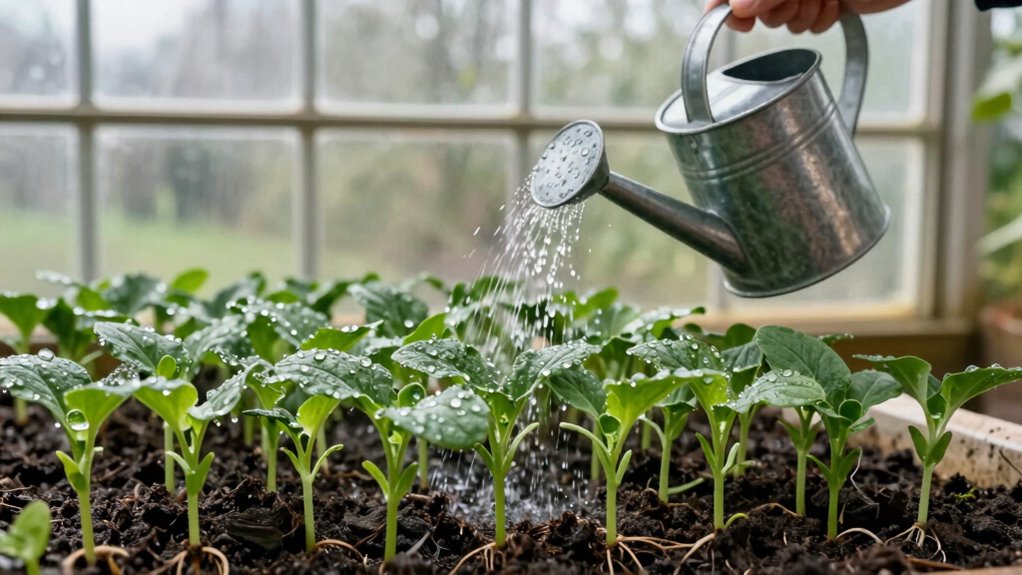

To create stronger roots in your greenhouse, adopt a consistent, deep watering pattern that maintains moist soil without overwatering. Focus on watering thoroughly so roots grow downward and outward, and adjust your schedule based on soil type and environmental conditions. Use techniques like drip irrigation or soaking hoses to deliver water directly to the roots. Mulching helps retain moisture and stabilize soil temperature. Keep these practices in mind to promote healthy, resilient plants—if you want to know more, continue exploring these tips.

Get garden gear delivered free with Prime
- Fast, free delivery on millions of items
- Prime Video, Amazon Music and more included
- Member-only deals all year
Key Takeaways
- Implement deep, infrequent watering to encourage roots to grow downward and access deeper soil moisture.
- Use drip irrigation or soaker hoses for consistent, targeted watering at the root zone.
- Monitor soil moisture regularly to prevent over- or underwatering, adjusting based on soil type.
- Mulch around plants to retain soil moisture, reduce evaporation, and promote healthy root development.
- Tailor watering schedules to environmental conditions and plant needs for optimal root strength.

Have you ever wondered how to guarantee your greenhouse plants stay healthy and thrive? The secret lies in mastering the right watering pattern, which directly influences soil moisture and root development. When you get these aspects right, your plants will grow stronger, more resilient, and better equipped to withstand pests and diseases. The key is to provide consistent, balanced watering that keeps soil moisture at ideal levels without overdoing it. Too much water can drown roots and lead to root rot, while too little causes stress and stunted growth. Striking the right balance encourages roots to penetrate deeper into the soil, searching for moisture, which results in a more robust root system.
Consistent, balanced watering fosters strong roots and healthy plants by maintaining optimal soil moisture levels.
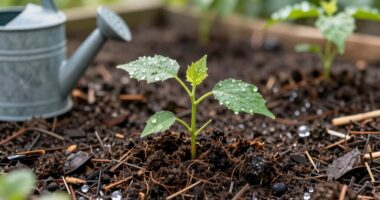
To develop an effective watering pattern, you need to understand your soil’s needs. Different soil types hold moisture differently—sandy soil drains quickly, while clay retains water longer. Adjust your watering frequency based on the soil’s characteristics and the plant’s stage of growth. For example, seedlings require more frequent watering to keep the soil consistently moist, but mature plants might only need watering once a few days, depending on temperature and humidity. Monitoring soil moisture levels regularly is essential; use a moisture meter or simply check the soil’s texture and feel. When the top inch feels dry, it’s time to water again. Soil moisture levels can vary widely depending on environmental conditions, so consistent monitoring helps prevent over- or underwatering. Using proper watering techniques also helps in maintaining soil health, which is crucial for sustainable plant growth. Additionally, understanding plant water requirements can help tailor your watering schedule even further, ensuring each plant gets what it needs to thrive. Incorporating knowledge of watering techniques can enhance your ability to maintain optimal moisture levels and promote healthy roots. Moreover, considering the climate conditions specific to your greenhouse environment can further refine your watering approach, ensuring consistent plant health regardless of external weather variations.
Consistent watering encourages healthy root development. When roots receive a steady supply of moisture, they grow downward and outward, establishing a strong network that anchors your plants and efficiently absorbs nutrients. This deeper root system provides stability and makes plants more drought-tolerant. Conversely, irregular watering creates a cycle of stress and recovery, which hampers root growth and weakens plants. To promote uniform root development, consider watering deeply and infrequently rather than shallow, frequent watering. Deep watering encourages roots to grow deeper into the soil, where they can access moisture even during dry spells.
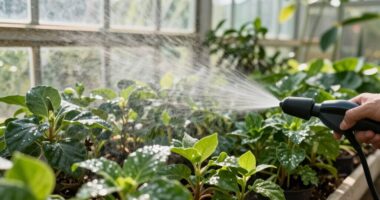
Additionally, employing techniques like drip irrigation or soaker hoses can help maintain consistent soil moisture levels. These methods deliver water slowly and directly to the root zone, reducing waste and preventing overwatering. Mulching around your plants also helps retain soil moisture, moderating temperature fluctuations and reducing evaporation. By paying close attention to your watering pattern—adjusting based on weather, soil type, and plant needs—you create an environment where roots develop strong and healthy, setting the foundation for vibrant, productive plants in your greenhouse.
drip irrigation system for greenhouse
As an affiliate, we earn on qualifying purchases.
As an affiliate, we earn on qualifying purchases.
Frequently Asked Questions
How Does Watering Frequency Affect Root Growth?
Watering frequency directly impacts root penetration and moisture retention. If you water too often, roots stay shallow, relying on surface moisture, which weakens their growth. Less frequent watering encourages roots to penetrate deeper searching for moisture, resulting in stronger roots. Proper timing guarantees consistent moisture, promoting healthy root development. By adjusting your watering pattern, you enhance root strength and improve overall plant resilience, leading to a thriving greenhouse environment.
What Are Signs of Overwatering in a Greenhouse?
You’ll notice overwatering in your greenhouse if the soil stays consistently soggy, leading to compaction issues that hinder root growth. Leaves may turn yellow, and plants might wilt despite moist soil. Overwatering also increases the risk of fungal diseases. To prevent this, stick to a proper watering schedule, allowing the soil to dry out slightly between waterings. Monitoring soil moisture helps you avoid overwatering and promotes healthier, stronger roots.
Which Watering Techniques Promote Deep Root Development?
You should use deep, infrequent watering to promote strong root growth, ensuring water penetrates deeply into the soil. This technique encourages root aeration, which improves oxygen flow to roots and boosts nutrient absorption. Avoid shallow watering, as it encourages roots to stay near the surface, weakening the plant. Consistent deep watering helps develop a robust root system, making your plants more resilient and better equipped to access essential nutrients.
How Does Soil Type Influence Watering Patterns?
Soil type directly influences your watering patterns by affecting drainage optimization and soil composition. For sandy soil, you’ll need to water more frequently but in smaller amounts to prevent drying out. Clay soil retains water longer, so you should water less often to avoid root rot. Loamy soil offers a balance, allowing steady moisture retention. Adjust your watering schedule based on these soil characteristics to promote healthy, strong root growth.
Can Watering Patterns Vary for Different Plant Species?
Yes, watering patterns can vary for different plant species because each plant has unique root absorption needs and water retention abilities. Some plants prefer deep, infrequent watering to encourage strong roots, while others thrive with frequent, lighter watering. Adjusting your watering approach based on these factors helps maximize water retention and guarantees healthy growth, ultimately strengthening roots and improving overall plant health.
Conclusion
By adopting this greenhouse watering pattern, you’ll nurture stronger roots that can withstand the stormiest weather, much like the steadfast oak. Remember, consistency is key—think of it as your secret recipe straight from the Queen’s own garden. Stay vigilant, adjust as needed, and watch your plants flourish. With patience and care, you’ll turn your greenhouse into a true Eden, proving that good habits truly do grow mighty trees.
Halloween Picks
halloween
As an affiliate, we earn on qualifying purchases.