TL;DR
Archived advice from gardener Larry Hodgson addresses leaf changes in calatheas, indoor lemon trees and peperomia-leaved pileas as fall and winter bring drier air and less light indoors. The symptoms can reflect growing conditions or normal leaf ageing; the advice is to check light, soil moisture and pests rather than assume one cause.
As fall and winter bring less daylight and drier indoor air, leaves on calatheas, indoor lemon trees and peperomia-leaved pileas may turn brown or yellow, or fall off, according to advice from gardener Larry Hodgson’s archived Le Soleil columns. Houseplants can lose leaves as days get darker. The symptoms do not automatically mean a plant is sick: they can reflect changes in light, watering or other growing conditions, as well as ordinary ageing of older foliage.

Get garden gear delivered free with Prime
- Fast, free delivery on millions of items
- Prime Video, Amazon Music and more included
- Member-only deals all year
For a calathea, also called a peacock plant, browning and dry leaf edges may be linked to dry air in a heated home. But the archived advice also lists inconsistent watering, soil that is too dry or waterlogged, excessive direct sun and salt buildup as possible causes. Misting is unlikely to keep humidity high for long. It can also leave white marks that may be mineral deposits from the water.
The suggested care is to keep the calathea in bright light away from harsh sun, drafts and radiator heat. Keep its potting mix slightly moist without letting it become waterlogged; in winter, let the surface dry between waterings without allowing the whole root ball to dry out. Drain water from the saucer. A humidifier may help when indoor air is very dry, and rainwater or demineralized water may reduce mineral marks if tap water is high in minerals.
An indoor lemon tree may shed leaves after a change in conditions, with too little light, improper watering, dry air or pests among the possible causes. Small fruits do not by themselves show that the tree is healthy. The advice is to provide a sunny window, supplement with a grow light if needed, avoid cold drafts and heating vents, and inspect stems and leaves for spider mites or scale insects. Water when the top few centimetres of mix have dried, then allow excess water to drain. Wait for new growth before fertilizing lightly; prune only branches that are clearly dead.
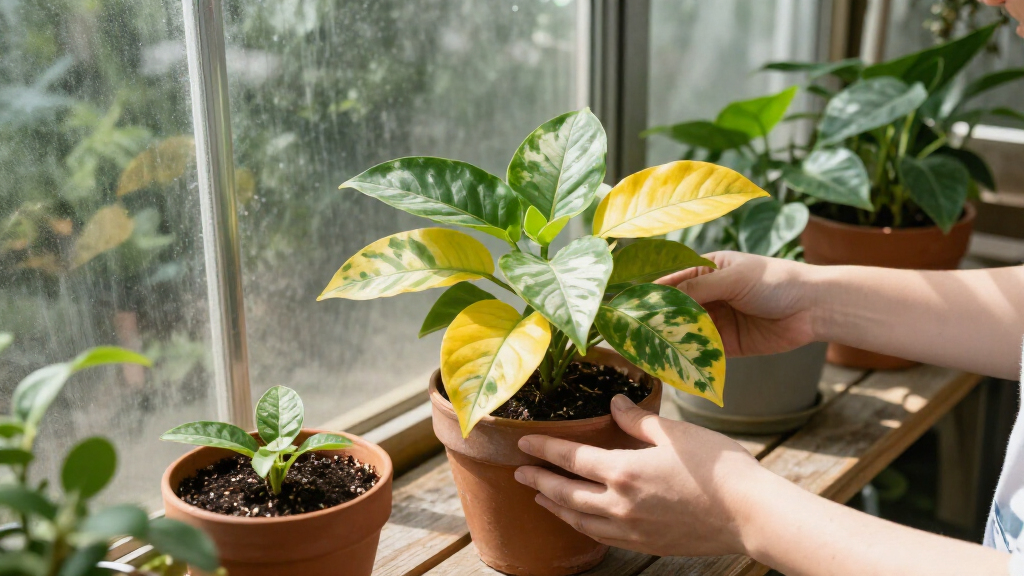
For a peperomia-leaved pilea, a few older leaves turning yellow near the base may be normal leaf renewal, particularly if the plant continues to grow. Widespread or rapid yellowing warrants a check of its conditions. Rather than following a fixed weekly watering schedule, check the soil and water when the top few centimetres begin to dry. The plant prefers bright, generally indirect light and well-drained mix; move it closer to a bright window gradually to avoid scorching its leaves, as houseplant care trends continue to emphasize healthy growth.
Why Are These Houseplants’ Leaves Changing? Read the signs before you react
Fall and winter bring less light and drier indoor air. Leaf changes can reflect growing conditions or normal ageing, so check the plant before changing its care.
Three plants, overlapping clues
One symptom can have several possible causes; the advice offers starting checks, not individual diagnoses.
Brown or dry edges
Dry air may contribute, but also check watering, soil, direct sun and salt buildup.
Leaves falling
A change in conditions, too little light, watering issues, dry air or pests may be involved.
Yellowing near the base
A few older leaves may be renewing normally if the plant continues to grow.
Check before you change care
Start with what you can observe in the pot and around the plant.
Feel the mix before watering; avoid both a fully dry root ball and waterlogged soil.
Look for bright light suited to the plant, away from harsh sun; move it gradually.
Check stems and leaves, especially on an indoor lemon tree.
Seasonal conditions can mislead
Heating can dry indoor air while plants may grow more slowly and use less water.
- Less natural light
- Drier air indoors
- Slower winter growth
- Dry air does not mean soil needs more water
- Check the mix instead of following a fixed schedule
- Some older leaves naturally age and fall
Care choices to consider
Match adjustments to the plant and the conditions you observe.
| Plant | Helpful check or adjustment |
|---|---|
| Calathea | Keep the mix slightly moist, drain the saucer and avoid radiator heat; a humidifier may help in very dry air. |
| Indoor lemon | Provide a sunny window, check for spider mites or scale, and let excess water drain. |
| Peperomia-leaved pilea | Water when the top few centimetres begin to dry; use bright, generally indirect light. |
Reading Three Common Leaf Changes
Leaf colour and leaf drop are visible signs that a houseplant’s conditions may have changed, but one symptom can have several possible causes. A brown calathea leaf does not establish that low humidity is the sole problem; a lemon tree with fruit can still be stressed; and a few yellow leaves on a growing pilea may be part of its normal cycle.
That distinction matters because reacting to the wrong suspected cause can make care less effective. For example, watering a plant more often because the air feels dry may leave its roots sitting in wet soil. The advice instead pairs observation with checks: inspect the soil before watering, look for pests, and consider the amount and intensity of light. These are practical starting points, not a diagnosis of any individual plant.
Products Worth Considering

Greenworks 24V 14-Inch Push Electric Lawn Mower Kit

Rachio 3 Smart Sprinkler Controller, 16-Zone

Garvee 6x10ft Walk-in Greenhouse with Polycarbonate Panels and Aluminum Frame
As an affiliate, we earn on qualifying purchases.
Seasonal Changes Inside Homes
The questions come from archived columns by Larry Hodgson, whose son Mathieu is making his father’s writing accessible to the public. Hodgson published thousands of articles and 65 books in French and English, according to the supplied source material. The selected questions cover three different plants and three overlapping concerns: changing indoor conditions, watering and the normal life cycle of leaves.
In the colder months, homes may have less natural light and drier air from heating. Plants may also grow more slowly and use less water in winter. That means dry indoor air does not automatically mean a plant needs more frequent watering; humidity and soil moisture are separate conditions to manage. The archived advice recommends adjusting care to the plant and checking the potting mix rather than relying on a calendar.
Some plant behaviours can also be mistaken for damage. Many calatheas raise their leaves in the evening and spread them during the day, a movement called nyctinasty that gives rise to the nickname “prayer plants.” This regular movement is different from leaves that are curling or drying out.
“Misting the leaves doesn’t maintain high humidity for any meaningful length of time.”
— Larry Hodgson’s archived advice, as presented in the supplied source
Symptoms Do Not Identify One Cause
The archived questions do not provide enough information to determine the cause of leaf changes in any particular plant. A photo or brief description cannot establish whether watering, light, humidity, pests or another factor is responsible. The guidance lists possible explanations and checks, but no diagnosis is confirmed for the plants described.
The source also does not report whether the suggested adjustments worked for the original questioners. For an individual plant, the extent and pace of the change, the condition of the soil and roots, and any visible pests remain relevant details. A few older yellow leaves are different from rapid yellowing across the plant, but the source does not set a precise threshold for when professional help is needed.
Check Conditions Before Changing Care
The advice is to begin with observable conditions: check how dry the potting mix is, make sure water can drain, assess available light and inspect for pests. Adjust exposure gradually, especially when moving a plant into stronger sunlight, and avoid leaving pots in standing water. For plants in very dry rooms, a humidifier may help; for a calathea, water with fewer minerals may reduce white deposits if mineral content is the issue.
For the lemon tree, monitor new growth and any continuing leaf loss. The archived guidance recommends waiting for new growth before applying light fertilizer and moving the tree outdoors next summer only after gradually acclimatizing it to the sun. The source gives no follow-up on the plants, so their outcomes remain unknown.
Key Questions
Why are my calathea leaves turning brown?
Dry indoor air may contribute, especially in a heated home, but the archived advice also names watering problems, waterlogged or very dry soil, strong direct sun and salt buildup. Check these conditions rather than assuming humidity is the only cause.
Does misting fix dry air for a calathea?
The archived guidance says misting does not maintain high humidity for long and may leave white mineral marks. A humidifier may be more useful when the air is very dry.
Why is my indoor lemon tree dropping leaves?
Possible causes include insufficient light, a change in conditions, improper watering, dry air or pests. Check the soil, light and plant for spider mites or scale insects. Fruit on the tree does not by itself confirm that it is healthy.
Is yellowing at the base of a pilea always a problem?
No. A few older leaves turning yellow near the base may be normal leaf renewal, especially if the plant is still growing. Rapid or widespread yellowing is a reason to review its light and watering conditions.
Should houseplants be watered on a weekly schedule?
The advice favors checking the potting mix instead of following a fixed schedule. For the pilea and lemon tree, water after the top few centimetres begin to dry, then let excess water drain and empty the saucer.
Source: laidbackgardener.blog