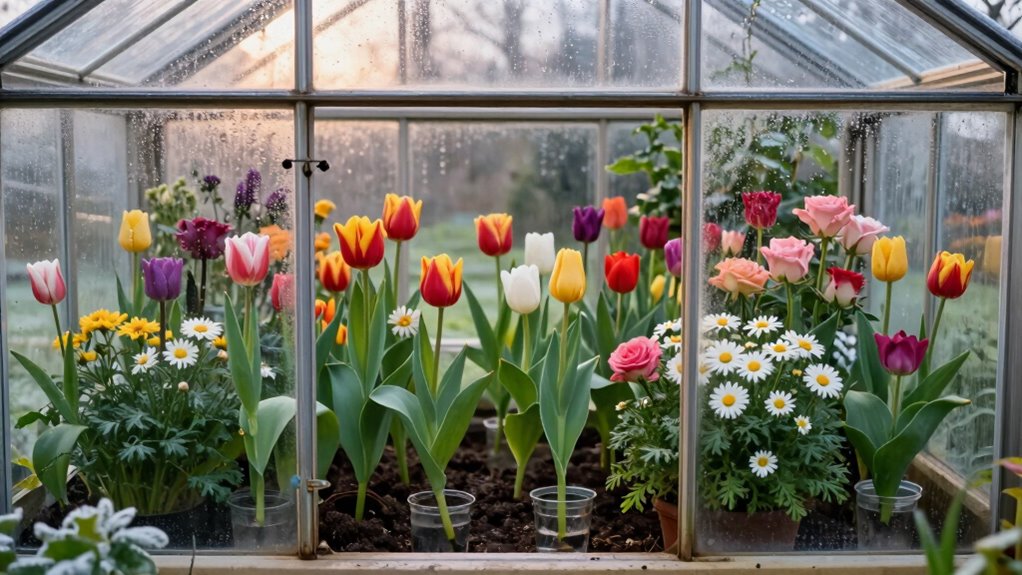
To grow cut flowers under cover during cold weather, choose a breathable and insulated cover that allows light while maintaining warmth and humidity. Pick cold-tolerant varieties like snapdragons or calendulas, and set up your garden near ample light sources or grow lights. Maintain proper watering, airflow, and plant health. Regularly harvest and care for your flowers to extend their bloom. Keep exploring so you can master creating a thriving indoor floral display all year round.
Key Takeaways
- Use breathable, insulating covers like greenhouse plastic or lightweight fabrics to protect flowers from cold while allowing light.
- Select cold-tolerant flower varieties such as snapdragons, calendulas, or sweet peas for better resilience in low temperatures.
- Position your flower garden near south-facing windows or under grow lights to maximize indoor light exposure.
- Maintain consistent watering, good airflow, and proper spacing to promote healthy growth and prevent fungal issues.
- Regularly harvest, trim, and condition cut flowers to extend their blooming period and keep them vibrant indoors.
How to Choose the Right Cover for Growing Cut Flowers Indoors
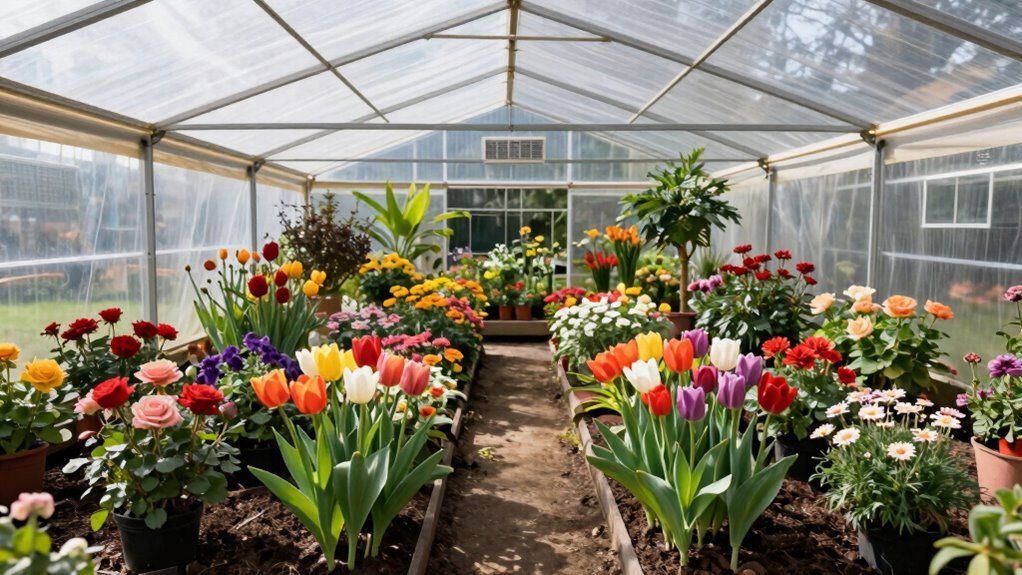
Choosing the right cover for growing cut flowers indoors is essential to create an ideal environment. Your cover should provide adequate lighting conditions, ensuring your flowers receive enough sunlight or artificial light to thrive. Look for materials that allow light to pass through while protecting plants from cold drafts. Additionally, consider how the cover affects soil amendments; it should help maintain proper soil warmth and moisture levels. A breathable material, like greenhouse plastic or a lightweight fabric, can help regulate humidity and temperature. Make certain the cover is easy to install and remove, so you can adjust based on weather conditions. Proper light transmission is crucial to ensure your flowers get enough energy for healthy growth. By selecting a cover that balances light transmission and environmental control, you give your cut flowers the best chance to flourish indoors, even during colder months. Incorporating insulation properties into your cover can further improve temperature stability and protect your plants from unexpected cold snaps. Additionally, choosing covers with UV filtering capabilities can help prevent sun damage and promote healthier growth. Selecting a cover with adequate insulation can also reduce energy costs and improve overall plant health during winter. Considering ventilation and airflow is also important to prevent mold and ensure your plants remain healthy.
Selecting the Best Flowers and Varieties for Cold-Weather Growing Under Cover

To successfully grow cut flowers under cover during cold weather, selecting the right flower varieties is essential. Focus on flower varieties known for their cold tolerance, ensuring they can withstand lower temperatures without damage. Hardy blooms like snapdragons, calendulas, and sweet peas thrive in cooler conditions and can provide vibrant color even in early spring or late fall. Look for varieties specifically bred for cold resistance, as they tend to perform better under cover in cold climates. Choosing the right flower varieties helps you maximize success and enjoy a steady supply of fresh cut flowers throughout the season. By prioritizing cold-tolerant options, you’ll create a resilient garden that flourishes despite chilly conditions.
Setting Up Your Indoor or Protected Flower Garden for Success
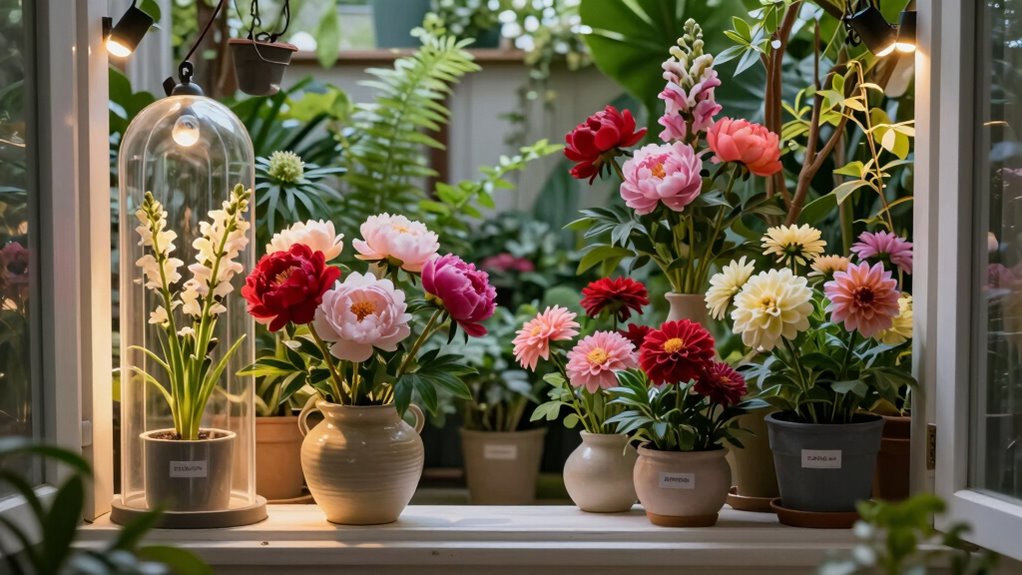
Setting up your indoor or protected flower garden begins with selecting a suitable location that offers ample light and good airflow. Ensure your space receives enough sunlight, ideally near south-facing windows or under grow lights. Once you’ve chosen the spot, focus on soil preparation; use high-quality, well-draining soil enriched with organic matter to promote healthy root development. Establish a consistent watering schedule, keeping the soil evenly moist but not waterlogged, to prevent issues like root rot. Regular watering, aligned with your plants’ needs, supports steady growth. Good airflow helps prevent fungal diseases and keeps plants healthy. Additionally, understanding field‑of‑view and proper spacing ensures your flowers have enough room to grow without competition. Proper lighting conditions are also essential for healthy flowering and growth. Maintaining optimal air circulation around your plants further reduces the risk of disease and supports vigorous growth. Proper ventilation in your growing space also contributes to reducing humidity and preventing mold. Incorporating climate control methods can help maintain consistent temperature and humidity levels, creating an ideal environment for your cut flowers to flourish indoors or under cover. By carefully choosing your location, preparing the soil properly, and maintaining appropriate watering schedules, you’ll create an optimal environment for your cut flowers to flourish indoors or under cover.
Tips for Keeping Your Cut Flowers Healthy and Extending Blooming Seasons
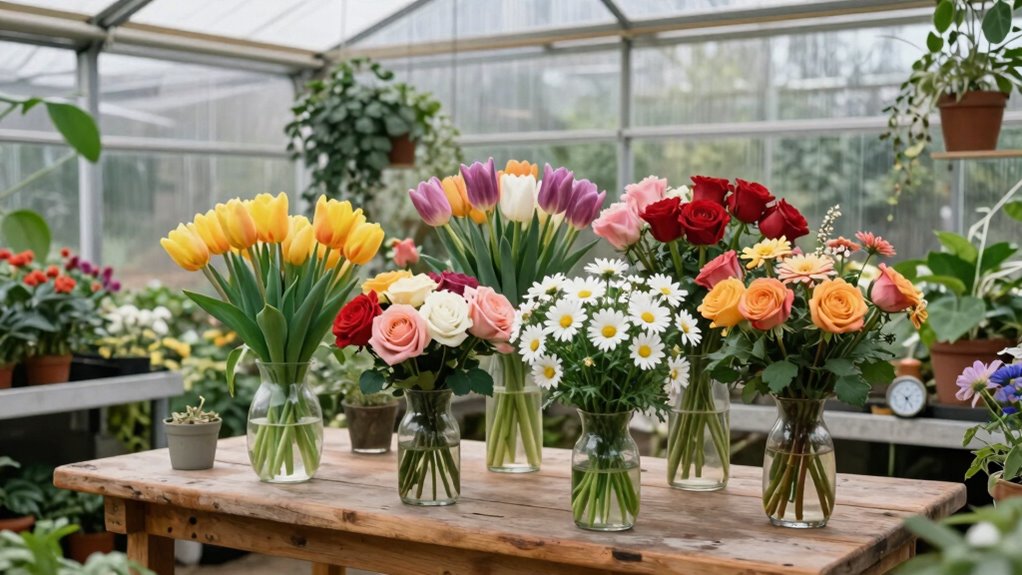
Keeping your cut flowers healthy and ensuring they bloom longer requires attentive care and proper handling. To achieve this, focus on key practices.
- Regularly inspect for pests and practice pest management to prevent damage.
- Enrich your soil with compost or organic matter to promote strong, healthy growth.
- Keep flowers well-hydrated by changing the water frequently and trimming stems at an angle.
- Remove wilted blooms promptly to encourage new flowering and prevent disease.
- Select the right flower varieties suitable for your growing conditions to enhance longevity and overall health.
How to Harvest and Arrange Your Cut Flowers Year-Round
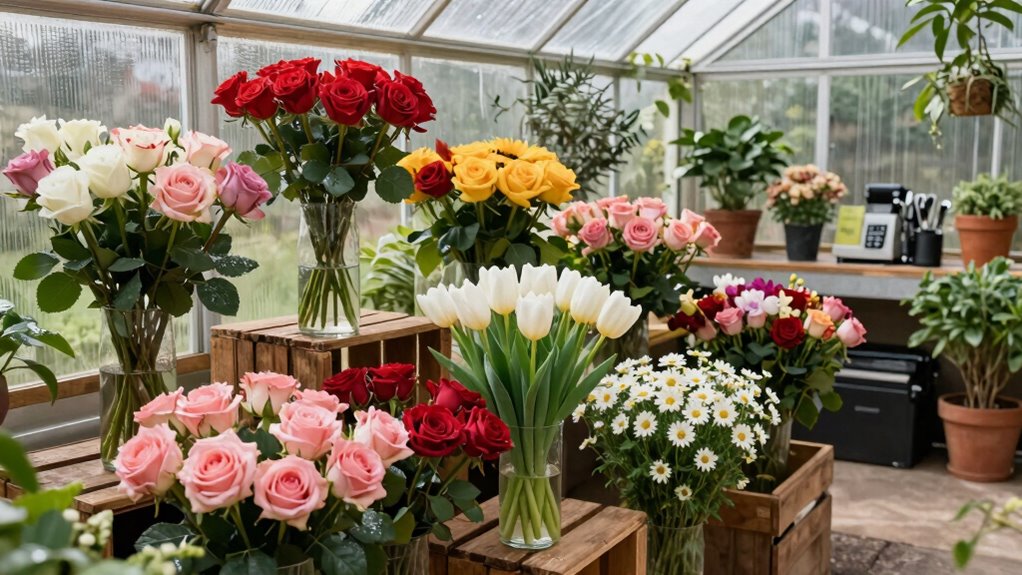
Harvesting and arranging your cut flowers throughout the year guarantees you enjoy fresh blooms whenever you desire. To do this, start by carefully cutting flowers in the early morning when they’re most hydrated. Immediately perform flower conditioning by trimming the stems at an angle and removing excess foliage to promote water absorption. Prepare your vases by thoroughly washing them and filling them with lukewarm water, adding floral preservative if available. Place your freshly cut flowers into the vase, ensuring they’re not crowded. Change the water every couple of days, re-trimming the stems as needed. Proper flower conditioning and vase preparation help extend the lifespan of your blooms, allowing you to enjoy vibrant arrangements year-round, even when grown under cover or in colder months. Vase preparation is a crucial step to maximize your flowers’ longevity and keep your arrangements looking fresh longer. Additionally, understanding the benefits of proper storage can help maintain your flowers’ freshness between harvesting and display. For optimal results, consider flower conditioning techniques to further enhance longevity and vibrancy, especially when managing temperature control to prevent premature wilting. Maintaining the right lighting conditions can also influence how long your flowers stay fresh and vibrant.
Frequently Asked Questions
How Do I Prevent Pests in an Indoor Flower Growing Environment?
To prevent pests in your indoor flower environment, focus on pest prevention by maintaining cleanliness and inspecting plants regularly. Use pest control methods like introducing beneficial insects, applying organic neem oil, and removing affected leaves promptly. Keep humidity levels in check and avoid overwatering, which attracts pests. Quarantine new plants before adding them to your space. These steps help keep pests at bay and ensure your flowers stay healthy.
What Lighting Conditions Are Best for Indoor Flowering Plants?
You should provide your indoor flowering plants with a full spectrum lighting setup to mimic natural sunlight, promoting healthy blooms. Keep the light duration between 12 to 16 hours daily, ensuring they receive enough energy for flowering. Adjust the intensity according to the plant’s growth stage, and consider using timers to maintain consistent lighting schedules. Proper lighting spectrum and duration are key to thriving, vibrant cut flowers indoors.
How Often Should I Water My Cut Flowers Under Cover?
Imagine dew-kissed petals gently soaking up morning light—that’s how your cut flowers thrive. You should water your cut flowers under cover about every 2-3 days, ensuring the soil stays consistently moist but not soggy. Check moisture levels regularly by touching the soil surface; if it feels dry, it’s time to water. Maintaining a balanced watering schedule keeps your flowers fresh and vibrant longer.
Can I Grow Tropical Flowers in a Cold Indoor Setup?
Yes, you can grow tropical flowers indoors in a cold setup. Focus on tropical plant care by maintaining a warm, humid environment, and guarantee proper indoor climate control. Place your plants near a heat source and use a humidifier if needed. Keep the light bright but indirect, and water regularly without overwatering. With consistent care, your tropical flowers will thrive even in cooler indoor conditions.
What Temperature Range Promotes Optimal Flower Growth Indoors?
Honestly, if you want your cut flowers to thrive indoors, keep the temperature between 65-75°F. This range maximizes photosynthesis efficiency and guarantees your plants aren’t sweating or shivering. Proper temperature regulation helps your flowers grow strong, vibrant, and ready for the bouquet. Anything cooler or warmer throws off their rhythm, making them sad, sluggish, and less likely to impress. So, set that thermostat and let your flowers flourish!
Conclusion
Growing cut flowers under cover keeps your garden vibrant year-round, even in cold weather. By choosing the right cover, selecting hardy varieties, and caring for your plants properly, you’ll enjoy fresh blooms anytime. Remember, “A stitch in time saves nine”—regular attention now means stunning flowers later. Stay patient and attentive, and your protected garden will reward you with beautiful, lasting blooms no matter the season.