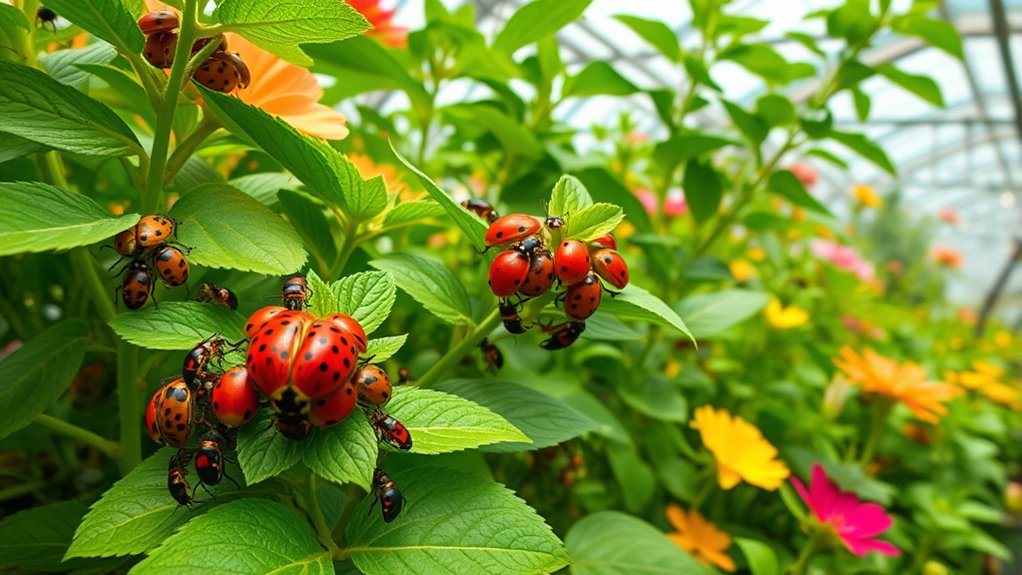

To promote natural pest control in your greenhouse, focus on attracting beneficial insects like predators and pollinators by planting nectar-rich flowers and providing shelters such as insect hotels. Regular pest monitoring helps you identify early infestations and understand predator activity. Avoid broad-spectrum pesticides, which can harm helpful insects, and instead create a diverse habitat that supports native beneficial populations. Keep exploring to discover more effective ways to foster a thriving ecosystem.
Key Takeaways
- Regular pest monitoring identifies early pest and beneficial insect activity, enabling targeted natural control strategies.
- Plant nectar-rich flowers and provide shelter to attract and support native beneficial insects in the greenhouse.
- Avoid broad-spectrum pesticides, instead use organic or selective treatments to protect beneficial insect populations.
- Create diverse habitats and incorporate native flowering plants to enhance conditions for natural pest predators.
- Support existing beneficial insects by fostering healthy, pest-resistant plants and minimizing external interventions.
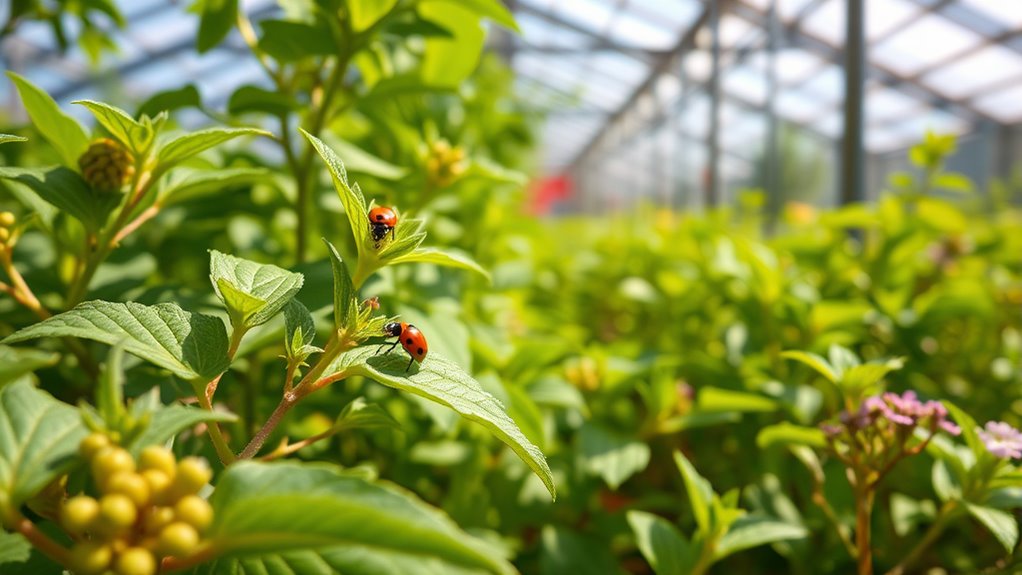
Have you ever wondered if there’s a safer way to keep pests out of your home and garden? One effective method is to encourage beneficial insects that naturally control pest populations. By fostering an environment that attracts native predators, you can reduce your reliance on chemical pesticides and create a more balanced ecosystem inside your greenhouse. Native predators, such as lady beetles, lacewings, and certain predatory mites, are naturally equipped to hunt down pests like aphids, whiteflies, and spider mites. They play a vital role in maintaining plant health without posing risks to humans, pets, or the environment.
To successfully implement this approach, pest monitoring is essential. Regularly inspecting your plants allows you to identify early signs of pest infestations and determine which beneficial insects are already present. Pest monitoring helps you understand the specific pests affecting your crops and whether your native predator populations are sufficient to keep those pests in check. If you notice an imbalance, you can take targeted steps to attract more beneficial insects, such as planting nectar-rich flowers or providing shelter with insect hotels. These strategies draw native predators closer, fostering a natural pest control system.
Encouraging native predators isn’t about releasing external beneficial insects but creating conditions that support the ones already in your area. This means avoiding broad-spectrum pesticides that could harm these natural allies and instead opting for organic or selective treatments when necessary. Providing diverse plantings and maintaining healthy, pest-resistant plants also encourages native predators to thrive. For instance, including native flowering plants around your greenhouse can serve as a food source for beneficial insects, helping sustain their populations. Over time, your pest monitoring efforts will reveal a thriving community of native predators actively keeping pests at bay. Additionally, understanding the beneficial insect species in your region can help tailor your habitat enhancement strategies for optimal pest control.
Frequently Asked Questions
How Do I Identify Beneficial Insects in My Greenhouse?
To identify beneficial insects in your greenhouse, look for small, often fast-moving bugs that don’t damage plants. Focus on Beneficial insect identification by recognizing common Greenhouse pest predators like ladybugs, predatory mites, and parasitic wasps. These insects typically have distinctive markings and behaviors. Regularly inspect your plants, especially the undersides of leaves, to spot these helpful predators and support a healthy, pest-free environment.
Are There Risks of Beneficial Insects Becoming Pests?
You should know that only about 1% of beneficial insects turn into pests, but risks assessment is key to managing pest behavior. While beneficial insects are generally safe, monitoring their population helps prevent unintended issues. Regularly observe your greenhouse to spot any changes, ensuring beneficial insects stay beneficial. Staying vigilant allows you to control pest behavior early, minimizing the chance of beneficial insects becoming pests and maintaining a healthy greenhouse environment.
How Long Does It Take to See Results With Natural Pest Control?
You can expect to see results within a few days to a week, depending on pest population dynamics and the insect release scheduling. As beneficial insects start to establish, they’ll actively target pests, reducing their numbers. Regular releases help maintain control, so monitor pest levels and adjust your schedule accordingly. Patience is key, as natural pest control works gradually, fostering a balanced ecosystem in your greenhouse.
Can Beneficial Insects Control Multiple Pest Types Simultaneously?
Yes, beneficial insects can control multiple pest types simultaneously through pest suppression, thanks to insect diversity. By introducing a diverse range of beneficials, you create a balanced ecosystem that targets various pests at once. This approach enhances effectiveness, reduces the need for chemical interventions, and promotes healthier plant growth. Just guarantee you select the right beneficial insects for your specific pests to maximize pest suppression and maintain a thriving greenhouse environment.
What Environmental Conditions Favor Beneficial Insect Populations?
Think of your greenhouse as a thriving garden of harmony. You favor conditions that support beneficial insects by planting pest-resistant plants and encouraging habitat diversification. Warm temperatures, high humidity, and ample shelter foster their populations. Avoid pesticides and sudden environmental changes, as they threaten this balance. By creating these ideal conditions, you guarantee beneficial insects flourish, naturally controlling pests and maintaining a healthy, resilient greenhouse ecosystem.
Conclusion
By encouraging beneficial insects in your greenhouse, you’re harnessing nature’s own pest control system. This approach reduces the need for chemicals and promotes a healthier environment for your plants and yourself. Are you ready to trust nature’s balance and create a thriving, pest-free greenhouse? Embracing natural pest control not only protects your crops but also fosters a sustainable gardening practice that benefits everyone involved. Why not give it a try and see the results for yourself?