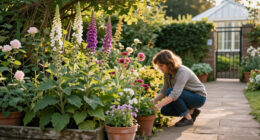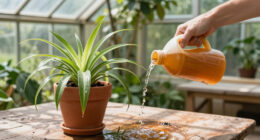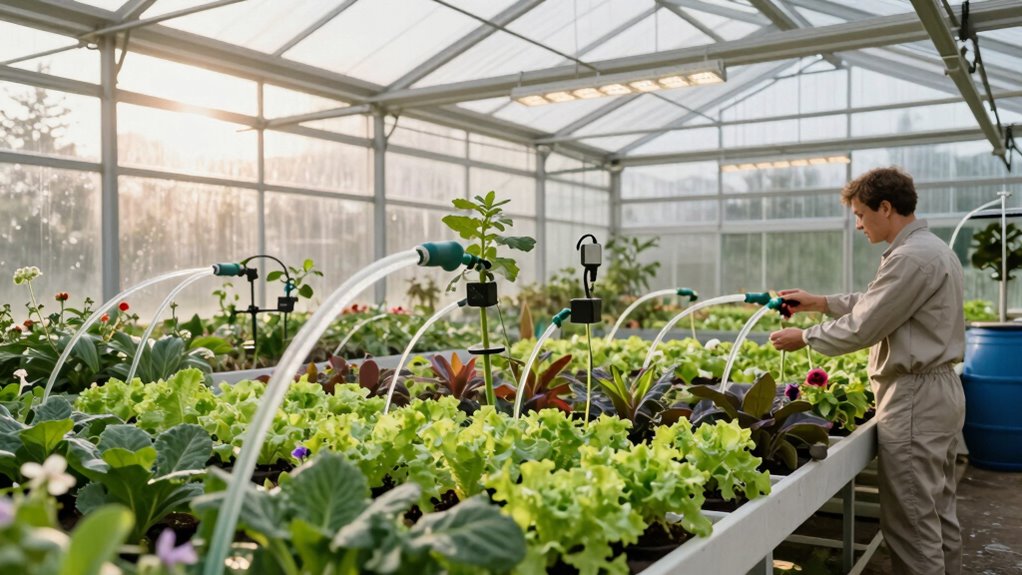
As a smart greenhouse grower, you should adopt water-saving habits early on to maximize efficiency. Implement drip irrigation to deliver water directly to plant roots, and collect rainwater for future use with gutters and filters. Regularly monitor soil moisture and adjust watering accordingly to prevent waste. Building these practices now promotes healthier plants, reduces costs, and supports sustainability. Keep exploring ways to refine your approach for even greater water conservation benefits.

Get garden gear delivered free — and shop member deals
- Fast, free delivery on millions of items
- Access to Prime Big Deal Days deals on October 6–7
- Prime Video, Amazon Music and more included
Key Takeaways
- Establish routine soil moisture monitoring to prevent overwatering and optimize resource use early in greenhouse operations.
- Implement drip irrigation systems for targeted watering, reducing water waste from the start.
- Collect and store rainwater through harvesting systems to ensure a sustainable water supply.
- Integrate rain harvesting with irrigation schedules to maximize water efficiency and conservation.
- Foster a mindset of water consciousness and proactive maintenance to embed sustainable habits from the beginning.
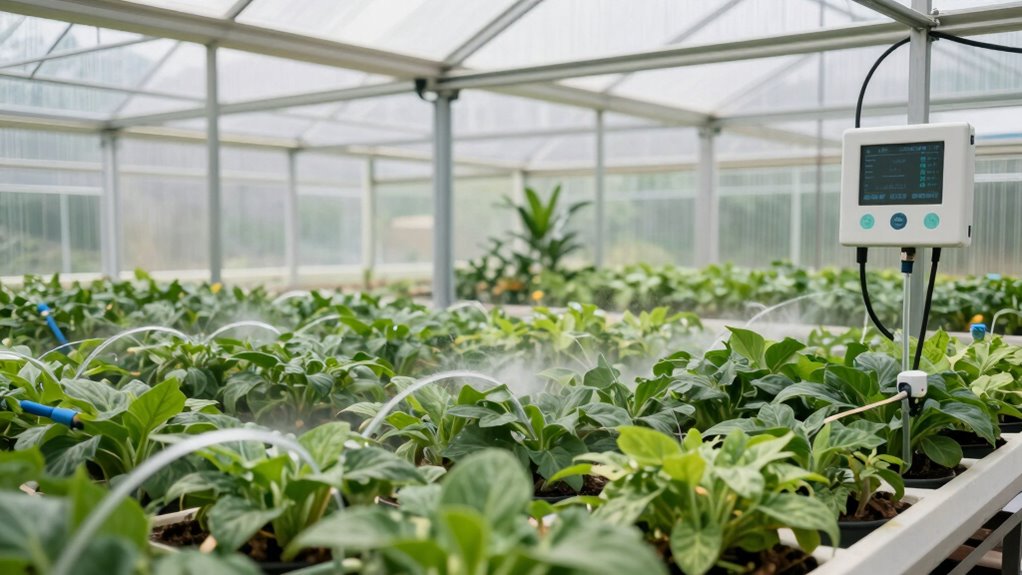
Greenhouse growers can considerably reduce water use by adopting effective habits that optimize efficiency and minimize waste. One of the most impactful ways to achieve this is by implementing drip irrigation systems. Unlike traditional watering methods, drip irrigation delivers water directly to the roots of plants, reducing evaporation and runoff. This targeted approach ensures each plant receives the right amount of moisture, preventing overwatering and conserving water resources. As you set up your greenhouse, invest in a reliable drip irrigation system and regularly check for leaks or clogs to maintain effectiveness. Over time, this habit not only saves water but also promotes healthier plant growth. Incorporating water-efficient practices helps reinforce sustainable growth and resource conservation in your greenhouse.
Implement drip irrigation for precise watering, reducing waste and promoting healthier greenhouse plant growth.
Another key habit to develop early on is rain harvesting. Collecting rainwater from your greenhouse’s roof and directing it into storage tanks is an excellent way to supplement your water supply naturally. Setting up a rain harvesting system requires careful planning—installing gutters and filters to keep debris out of your storage tanks ensures the water remains clean and usable. Using rainwater reduces your dependence on municipal water sources, which can be costly and limited, especially during dry seasons. Plus, rain harvesting aligns with sustainable practices, helping you reduce your environmental footprint. Making sure your rainwater collection system is properly maintained and cleaned periodically maximizes its efficiency and water quality. Incorporating water conservation methods into your routine further enhances the sustainability of your greenhouse operations.
Combining drip irrigation with rain harvesting creates a water-efficient cycle that maximizes resourcefulness. After a rainfall, you can direct excess water into your storage tanks for future use, minimizing waste and ensuring a steady supply during droughts or dry spells. By integrating these habits into your daily routines, you develop a sustainable approach that pays off in the long run. Additionally, monitoring soil moisture levels regularly allows you to adjust your watering schedule accurately, preventing unnecessary water use. This proactive management ensures your plants get the right amount of water without excess, which benefits both your crops and your water bill.
Building these habits early on gives you a strong foundation for sustainable greenhouse management. They foster a mindset that values resourcefulness and conservation, making water-saving second nature. Over time, you’ll notice improved plant health, reduced water costs, and a smaller environmental impact. Developing the discipline to maintain efficient watering practices—like using drip irrigation and rain harvesting—sets you apart as a responsible grower committed to sustainable practices. These habits, adopted early and maintained diligently, become integral to your success, ensuring your greenhouse operates efficiently while conserving essential water resources.
drip irrigation system for greenhouse
As an affiliate, we earn on qualifying purchases.
As an affiliate, we earn on qualifying purchases.
Frequently Asked Questions
How Do Weather Patterns Affect Water-Saving Strategies in Greenhouses?
Weather patterns considerably influence your water-saving strategies in greenhouses. Climate variability and changing rainfall patterns mean you need to adapt your irrigation schedules regularly. During dry spells, you might increase water conservation efforts, while heavy rains allow you to reduce watering. Monitoring weather forecasts helps you optimize water use, ensuring your plants get enough without waste. Flexibility in your approach keeps your greenhouse efficient, regardless of shifting climate conditions.
What Are the Costs Associated With Implementing Water-Efficient Technology?
Implementing water-efficient technology like drip irrigation and moisture sensors costs money upfront, but saves you in the long run. Drip irrigation reduces water waste by delivering precise amounts directly to plants, while moisture sensors help you monitor soil moisture levels, preventing overwatering. Expect expenses for equipment, installation, and maintenance. However, these investments pay off through lower water bills, healthier plants, and improved crop yields over time.
How Can Growers Monitor Water Usage Effectively?
Think of your water use as a delicate dance—precision is key. You can monitor water effectively by regularly checking soil moisture levels with sensors and adjusting your irrigation scheduling accordingly. Automated systems can provide real-time data, ensuring you don’t waste a drop. By keeping a close eye on these factors, you’ll optimize water use, save resources, and promote healthier plant growth.
Are There Specific Water-Saving Practices for Different Crop Types?
Yes, you should tailor water-saving practices to each crop type by using crop-specific irrigation methods. For example, drip irrigation suits water-sensitive plants, while sprinkler systems work better for others. Implement water conservation techniques like mulching and timed watering schedules to reduce waste. By customizing your approach, you optimize water use efficiency, ensuring healthy growth and conserving resources effectively across different crops.
What Training Is Available for Greenhouse Staff on Water Conservation?
You can access training programs that cover water conservation techniques like drip irrigation and rainwater harvesting. Many organizations, agricultural colleges, and industry associations offer workshops or online courses tailored for greenhouse staff. These trainings teach you how to efficiently use water, implement sustainable methods, and optimize resources. By participating, you’ll learn practical skills to conserve water, reduce costs, and promote environmental responsibility within your greenhouse operations.
Conclusion
By adopting water-saving habits early, you protect your greenhouse’s future, ensuring lush growth and sustainability. Just as careful planning preserves water’s precious resource, neglecting these habits risks drought and decline. The balance between innovation and tradition, efficiency and overuse, defines your success. Embrace smart practices now, and you’ll cultivate not only healthier plants but a resilient, thriving greenhouse that stands firm against the unpredictable tides of environmental change. Your foresight today shapes tomorrow’s harvest.
Fall yard work Picks
leaf blowers
As an affiliate, we earn on qualifying purchases.