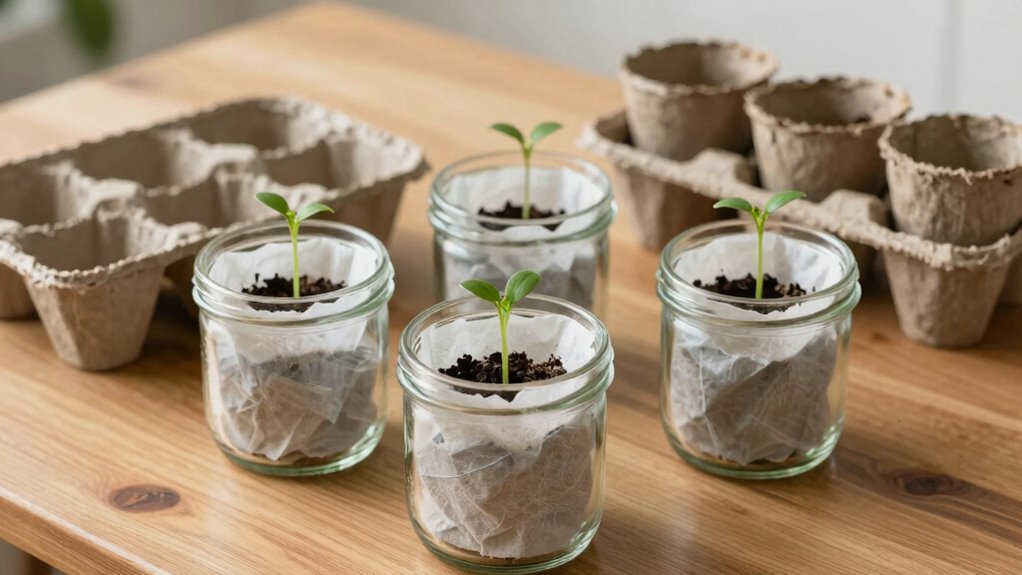
To create a low-plastic seed-starting setup you’ll stick with, focus on reusable, eco-friendly containers like recycled yogurt tubs, egg cartons, or biodegradable pots made from natural materials. Use sustainable soil, gentle watering methods, and containers with proper drainage. By repurposing materials and avoiding single-use plastics, you minimize waste and save money over time. This sustainable approach supports healthier seedlings and a greener environment—exploring these options further will help you build an effective setup.
Key Takeaways
- Use biodegradable pots and recycled containers to minimize plastic waste and promote eco-friendly gardening.
- Reuse and repurpose common household items like egg cartons or yogurt tubs for seed-starting.
- Maintain proper drainage and moisture with natural, lightweight soil and gentle watering techniques.
- Incorporate organic materials and compost to support healthy seedling growth sustainably.
- Gradually harden seedlings outdoors and handle them carefully to ensure successful transplanting.
Why Choose a Low-Plastic Seed-Starting System for Your Garden

Choosing a low-plastic seed-starting system benefits both your garden and the environment. It helps you avoid common seed starting mistakes, such as overusing plastic containers that can lead to waste and pollution. Instead, you can explore eco-friendly garden container options like biodegradable pots, recycled materials, or reusable containers. These choices reduce plastic waste and make your setup more sustainable. Plus, low-plastic systems often encourage better plant growth because they allow for more natural moisture regulation and aeration. Incorporating environmentally friendly materials in your seed-starting setup can further enhance sustainability and reduce your overall environmental footprint. Using biodegradable pots can also make transplanting easier and less disruptive for young plants. Additionally, choosing containers made from renewable resources supports a circular approach to gardening. By selecting these options, you’re not only supporting a healthier planet but also creating a more resilient garden. Switching to less plastic means you’re less likely to deal with the hassle of disposing of single-use containers and more likely to develop a long-lasting, eco-conscious seed-starting routine. Incorporating sustainable gardening practices can also amplify the environmental benefits of your setup.
What Materials Do You Need for an Eco-Friendly Seed-Starting Setup

To create an eco-friendly seed-starting setup, you’ll need just a few essential materials that prioritize sustainability. Start with seed starting containers made from eco friendly materials, such as biodegradable pots or recycled plastics. These containers support healthy growth and reduce waste. You’ll also need organic soil or compost, which provides nutrients without harmful chemicals. A spray bottle for watering helps avoid excess runoff and waste. Incorporating sustainable practices in your setup can further minimize environmental impact and enhance plant health. Additionally, choosing biodegradable seed trays can make transplanting easier and reduce plastic waste over time. Using compostable materials ensures your setup remains environmentally friendly from start to finish. Moreover, selecting containers with recyclable components can help you further reduce your ecological footprint. Incorporating water conservation techniques can also optimize resource use and promote eco-conscious gardening.
How to Build Sustainable, Low-Plastic Seed-Starting Containers

You can start by repurposing everyday containers like egg cartons or yogurt tubs to reduce waste. Choosing eco-friendly materials such as biodegradable pots or recycled plastics helps lower your environmental impact. Reusable options like seed trays or fabric pots make it easy to grow season after season without excess plastic waste. Incorporating essential oils for plant health into your watering routine can also promote stronger, more resilient seedlings. Additionally, selecting sustainable gardening practices supports long-term environmental health and encourages biodiversity in your garden. Utilizing low-impact gardening techniques further minimizes your ecological footprint while maintaining healthy plant growth. Incorporating knowledge of auditory processing can also help you develop more mindful and effective gardening routines, especially if you find sensory sensitivities impact your outdoor activities.
Repurposed Container Options
Repurposing containers for seed-starting is an excellent way to reduce plastic waste and build a sustainable garden. You can often find suitable options around your home that challenge seed starting myths about needing specialized pots. For example, different container colors can influence soil temperature, so choose lighter shades to prevent overheating. Consider these options:
- Old yogurt tubs or takeout containers
- Egg cartons for small seed batches
- Plastic milk jugs with cut-out bottoms
- Recycled berry or fruit containers
Using repurposed containers not only saves money but also helps you avoid unnecessary plastic waste. Just make sure they have drainage holes or add some, and clean them thoroughly. This approach keeps your setup eco-friendly while giving your seeds a healthy start. Additionally, incorporating natural materials in your seed-starting setup can further enhance sustainability and support healthy plant growth. Incorporating biodegradable options can also improve the environmental impact of your seed-starting process. To maximize the benefits of these sustainable choices, consider using biodegradable seed trays that break down naturally over time.
Eco-Friendly Material Choices
Building on the idea of repurposing containers, choosing eco-friendly materials for seed-starting setups helps further reduce plastic waste and support sustainability. Many seed starting myths suggest that only new, plastic containers work best, but that’s not true. Opt for biodegradable pots, such as peat or coconut coir, which break down naturally and avoid long-term plastic pollution. When selecting containers, pay attention to container labeling—look for labels indicating eco-friendly, recycled, or biodegradable materials. These choices not only minimize environmental impact but also promote healthier seed development, as some plastics can leach chemicals. Additionally, choosing water-resistant materials ensures your seed-starting setup remains durable and functional in various weather conditions. Using biodegradable containers can also help improve soil health as they decompose, enriching the garden over time. Incorporating sustainable materials into your setup reduces reliance on single-use plastics and supports eco-conscious gardening practices. Selecting containers made from recycled materials further enhances your commitment to reducing waste and conserving resources. Embracing eco-friendly options can inspire more sustainable gardening habits and contribute to a healthier planet. By consciously selecting sustainable options, you create a low-plastic, eco-conscious seed-starting environment that’s better for the planet and your garden’s future.
Reusable Container Ideas
Creating sustainable, low-plastic seed-starting containers is easier than you might think. Reusable options reduce waste and support composting benefits, turning your containers into compostable material at the end of their life cycle. Consider using recycled yogurt containers, sturdy cardboard cartons, or repurposed seed trays. These options are lightweight and affordable, making seedling lighting more effective by preventing overheating. Wooden crates or bamboo pots also work well, providing natural insulation and durability. Plus, they promote better airflow, decreasing disease risk. Reusing containers saves money and minimizes plastic waste, aligning with eco-friendly gardening goals. Incorporating recyclable materials and Vetted – Perfect Fit Living solutions can further optimize your setup for sustainability and ease of use. Additionally, selecting containers with biodegradable features ensures they break down naturally, reducing environmental impact. With these ideas, you’ll develop a low-plastic setup that’s sustainable, practical, and easy to maintain, ensuring your seedlings thrive while supporting a healthier planet.
How to Prepare Soil and Trays for Healthy Seedlings
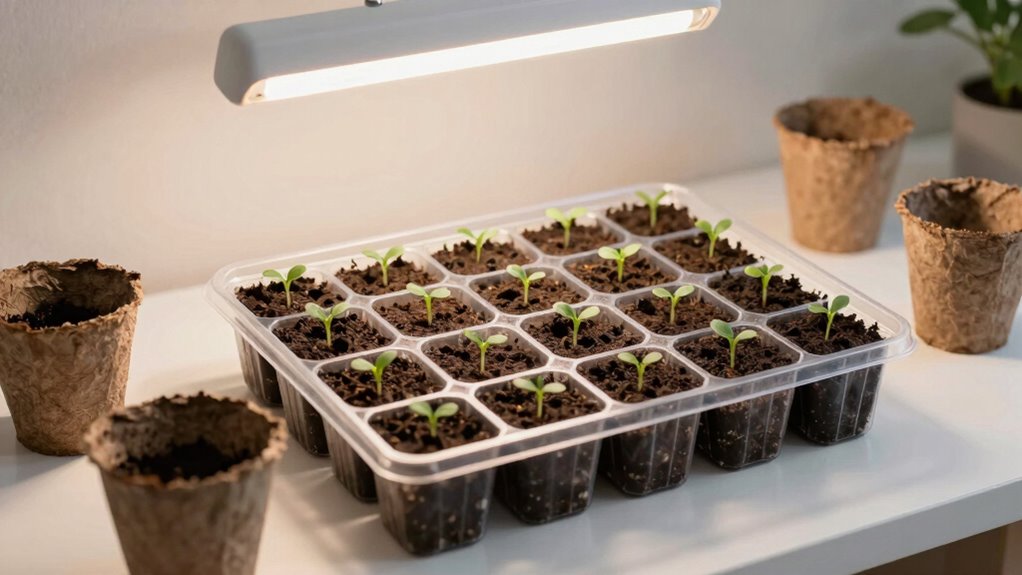
To guarantee your seedlings thrive, start by using proper soil preparation techniques that promote good drainage and nutrient availability. Fill your trays carefully, avoiding air pockets, and sterilize them to prevent disease. Properly prepared soil and clean trays set the foundation for healthy, vigorous seedlings.
Soil Preparation Techniques
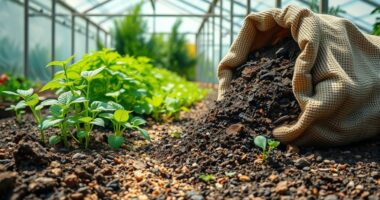
Preparing your soil and trays properly is essential for healthy seedling growth. Good preparation guarantees your seedlings get the right seedling nutrition and helps prevent pests. Start by choosing a light, well-draining mix, like compost-based soil, to promote root health. Before planting, loosen the soil to improve aeration. Incorporate organic matter to boost nutrients naturally. Keep an eye out for pests—using natural pest management methods like neem oil or beneficial insects can protect your seedlings without chemicals.
- Use a nutrient-rich, lightweight soil mix
- Ensure proper drainage and aeration
- Incorporate organic matter for seedling nutrition
- Practice natural pest management techniques
Tray Filling and Sterilization
Filling your trays correctly sets the foundation for healthy seedlings. Start by sterilizing your seed starting accessories, like trays and tools, to prevent disease. Use a clean workspace to assemble your soil mix, ensuring it’s moist but not waterlogged. Fill each cell evenly, avoiding overpacking, to promote proper root growth. Incorporate your preferred soil mixture, keeping in mind your garden layout and the specific needs of your plants. Sterilizing trays between uses helps prevent mold and pests from spreading. Consider labeling trays with plant types to stay organized. Proper tray filling and sterilization not only improve germination rates but also make your garden more manageable. With these steps, you’ll set up a reliable, low-plastic seed-starting system that encourages healthy, vigorous seedlings.
Tips for Keeping Seedlings Moist and Troubleshooting Common Problems
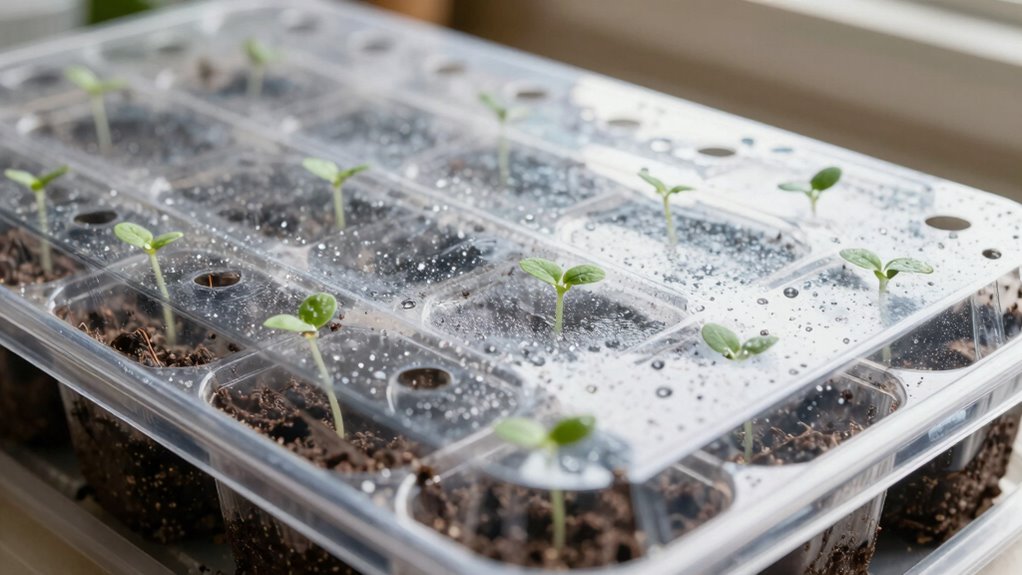
Keeping seedlings moist is essential for healthy growth, but it can be tricky to get just right. Overwatering can cause damping-off disease, while underwatering stunts growth. To maintain proper moisture, monitor soil regularly and water gently when the top feels dry. Proper seedling watering also helps prevent pests that thrive in damp conditions. If seedlings wilt or develop mold, adjust watering habits immediately. Troubleshooting common problems includes ensuring good airflow to prevent mold and avoiding overwatering.
Here are some tips to keep your seedlings thriving:
- Water early in the day to reduce excess moisture overnight
- Use a spray bottle for gentle, even watering
- Ensure containers have drainage to prevent waterlogging
- Regularly check for signs of pests and practice pest prevention
When and How to Transplant Your Seedlings to the Garden

Once your seedlings have grown sturdy enough and their roots are well-established, it’s time to transplant them into your garden. Pay attention to transplant timing; wait until the danger of frost has passed and seedlings are strong enough to handle outdoor conditions. Before transplanting, consider seedling pruning—removing any weak or leggy growth helps promote healthy development and reduces stress. Handle the plants carefully by their leaves or root ball to prevent damage. Gradually acclimate them to outdoor conditions through hardening-off, which involves a few hours outside each day. This process reduces shock and encourages better establishment. By choosing the right time and using gentle seedling pruning, you set your plants up for a healthy, productive garden.
The Benefits of Going Low-Plastic: Save Money, Reduce Waste, Grow Better Plants

Choosing low-plastic gardening methods can substantially cut your costs and lessen your environmental impact. By switching to plastic alternatives, you avoid common seed starting myths that plastic is the only option. Instead, you’ll save money over time and create less waste. Plus, many plastic-free options are just as effective, helping you grow healthier plants.
- Use biodegradable seed trays or pots made from natural materials
- Reuse containers and compost leftover seed-starting mediums
- Select sustainable, eco-friendly supplies to reduce plastic waste
- Discover plastic alternatives that support better seedling growth
Going low-plastic isn’t just good for the planet; it also encourages mindful gardening habits, ensuring your garden remains sustainable and thriving.
Frequently Asked Questions
Can This Low-Plastic Setup Be Used Indoors or Only Outside?
Yes, you can use this low-plastic seed-starting setup indoors or outside. It’s perfect for indoor gardening because of its container versatility, allowing you to set it up on a windowsill or under grow lights. The lightweight, low-plastic materials make it easy to move and adapt to your space. Whether inside or outdoors, this setup helps you start seeds efficiently while minimizing plastic use.
How Long Can Seedlings Stay in Low-Plastic Containers Before Transplanting?
You can keep seedlings in low-plastic containers for about 2 to 4 weeks, depending on their seedling longevity and growth rate. Monitor their development closely, and transplant them once they develop their first true leaves and outgrow the containers. Don’t wait too long, as root bound conditions can hinder growth. Transplant at the right timing to make certain of healthy establishment in your garden or larger pots.
Are There Specific Plants That Thrive Better With This System?
You’ll find succulents and plants propagated by root cuttings thrive best with this system. Like a gentle cradle, low-plastic containers provide just enough support without stifling growth. For instance, succulents love dry, well-draining environments, which your setup offers. Root cuttings also appreciate the controlled moisture and air circulation. Overall, plants needing minimal water or those propagated from cuttings flourish, making this system your go-to for successful, low-impact gardening.
What Eco-Friendly Alternatives Exist to Plastic Trays and Pots?
You can opt for biodegradable containers like peat pots or coconut coir pots, which break down naturally in the soil. Reusable seed trays made from recycled materials are another eco-friendly choice, reducing waste and saving money over time. These alternatives are durable, compostable, and sustainable, helping you cut down on plastic use while keeping your seed-starting setup eco-conscious and effective.
How Do I Sterilize Containers to Prevent Disease?
Did you know that proper seed sterilization can reduce disease risk by up to 80%? To sterilize containers, thoroughly clean them with warm, soapy water first. Then, disinfect using a solution of one part bleach to nine parts water, soaking for 10-15 minutes. Rinse well and let dry completely before planting. This container cleaning practice helps prevent disease and guarantees healthy seed growth.
Conclusion
Switching to a low-plastic seed-starting setup not only helps the environment but also saves you money and produces stronger plants. Did you know that traditional plastic trays can take hundreds of years to decompose? By choosing eco-friendly materials, you’re making a positive impact and ensuring your garden thrives sustainably. With just a little effort, you can enjoy a greener, more rewarding gardening experience that lasts for seasons to come.