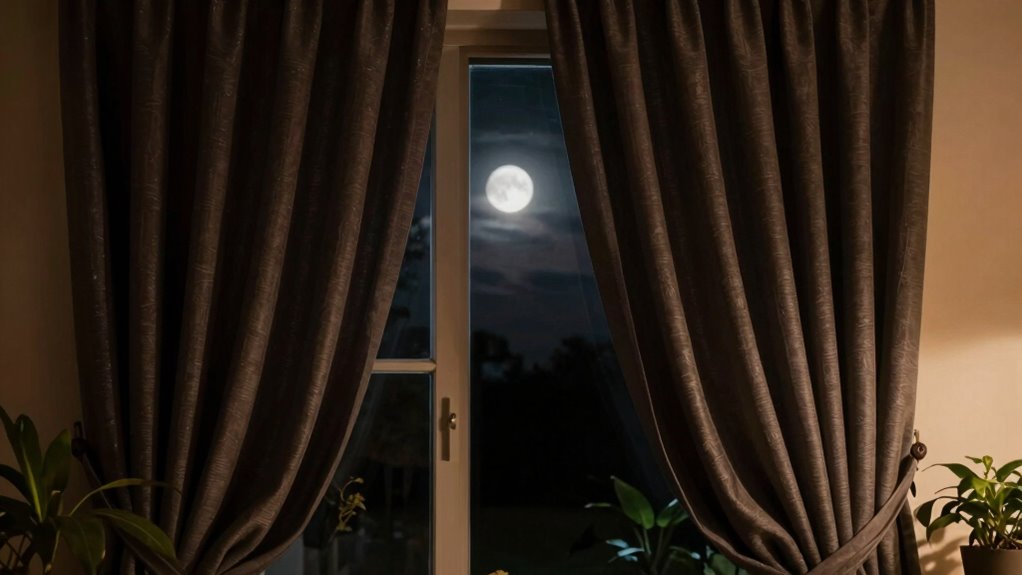

Night insulation curtains help you cut energy bills by trapping warmth indoors and reducing heat loss through windows. They also protect your plants from cold drafts and temperature swings, keeping them healthy. By creating a thermal barrier, these curtains improve indoor comfort and minimize the need for extra heating. With proper selection and installation, you can enjoy these benefits long-term. To discover how to maximize their effectiveness and compare options, there’s more to explore here.
Key Takeaways
- Night insulation curtains trap heat inside, reducing energy consumption and lowering heating bills.
- They create a thermal barrier that maintains stable indoor temperatures, protecting sensitive indoor plants from cold drafts.
- Properly selected materials and layered fabrics enhance insulation, preventing temperature swings that stress plants.
- Curtains block drafts and light, helping to maintain a consistent environment conducive to healthy plant growth.
- Regular maintenance and correct installation maximize their energy-saving benefits and ensure ongoing plant protection.
Why Night Insulation Curtains Can Cut Your Energy Bills
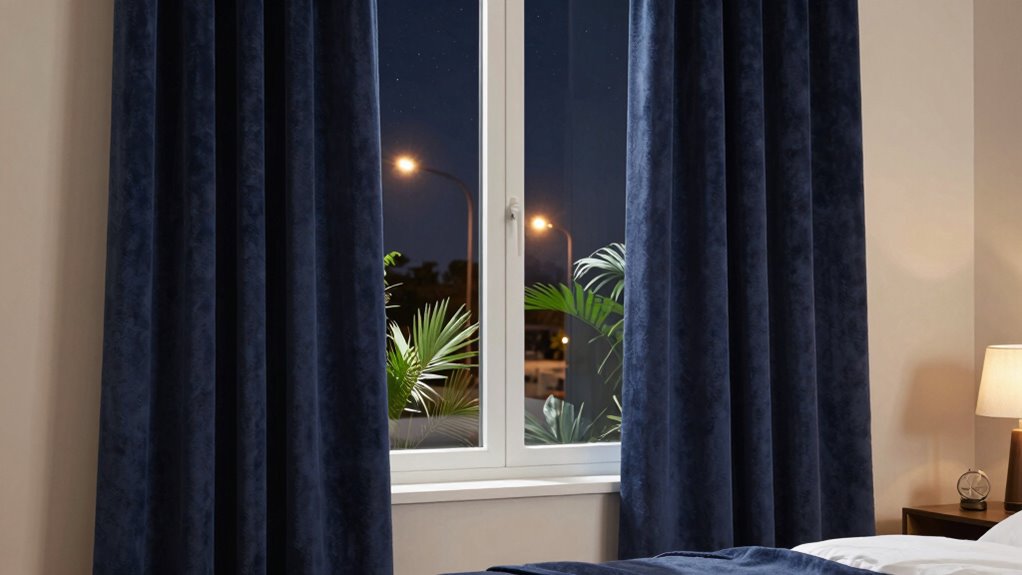
Night insulation curtains can markedly reduce your energy bills because they help keep warm air inside your home during colder nights. By trapping heat, these curtains decrease the workload on your heating system, leading to lower energy consumption. They also improve solar efficiency by minimizing heat loss through windows, ensuring your home stays warmer longer without extra energy use. Additionally, night insulation curtains effectively reduce noise from outside, creating a quieter indoor environment. This noise reduction means you can keep windows open or avoid using additional soundproofing devices, saving more energy. Moreover, by enhancing insulation properties, these curtains contribute to better overall energy efficiency in your home. Overall, these curtains are a smart investment, cutting costs while enhancing comfort and efficiency throughout the colder months.
How Night Insulation Curtains Keep Your Indoor Plants Healthy
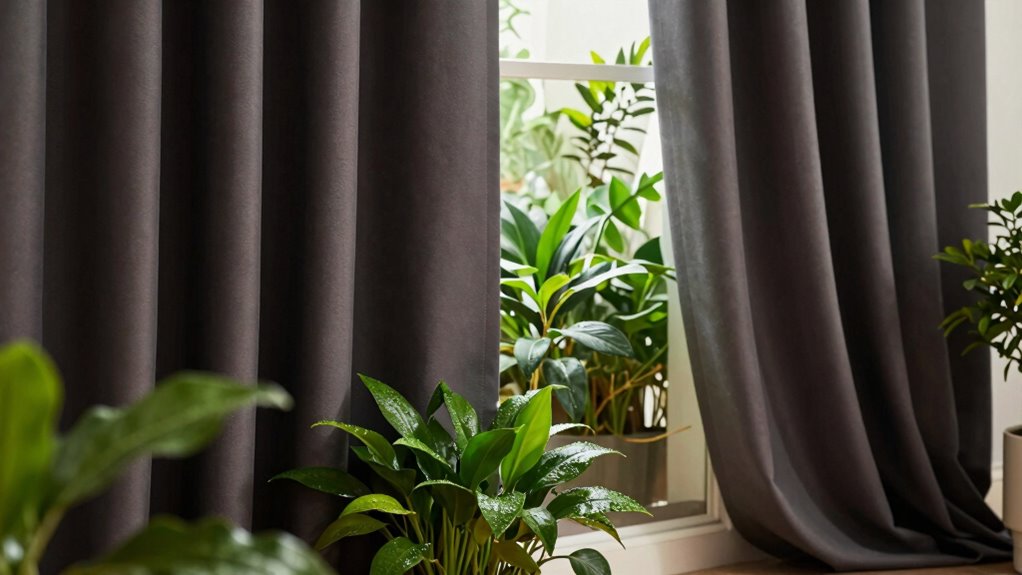
Night insulation curtains help maintain a stable temperature, protecting your indoor plants from cold drafts and temperature swings. This consistent environment reduces their stress responses, keeping them healthier and more resilient. By regulating heat, these curtains support your plants’ growth and overall well-being. Additionally, they contribute to energy efficiency, helping to lower heating costs and promote sustainable living.
Temperature Regulation Benefits
Since temperature fluctuations can stress indoor plants, using insulation curtains at night helps stabilize the environment. These curtains improve thermal efficiency by trapping heat and preventing cold drafts, ensuring a more consistent temperature. This stability minimizes the risk of temperature shocks that can damage sensitive plants. Additionally, insulation curtains reduce noise from outside, creating a calmer environment that supports healthy growth. By maintaining a steady temperature, your plants experience less stress and are better able to absorb nutrients. This consistent environment promotes stronger, healthier foliage and roots, especially during colder months. Moreover, incorporating energy-efficient solutions can further optimize your indoor climate and reduce energy consumption. Overall, night insulation curtains serve as a simple yet effective way to regulate indoor temperatures, protecting your plants from the adverse effects of temperature swings while also enhancing comfort inside your space.
Reduced Stress Responses
By maintaining a stable indoor temperature, insulation curtains help reduce the stress that fluctuations can cause in your plants. When temperature swings occur, plants activate stress responses that can hinder growth and health. Insulation curtains minimize these fluctuations, creating a consistent environment. This stability lowers plant stress levels, helping them conserve energy and focus on growth. Additionally, temperature regulation plays a crucial role in preventing the development of pests and diseases that thrive in unstable conditions.
How Do Night Insulation Curtains Work to Save Energy?
Night insulation curtains create an effective barrier that reduces heat transfer through your windows, helping to keep warmth inside. They work by trapping air and reflecting heat back into your room, which improves heat retention. Additionally, they block out light and air drafts, further minimizing energy loss overnight. Smart home integration can allow you to automate their use based on your schedule or temperature preferences, enhancing their energy-saving benefits.
Insulation Barrier Effectiveness
Night insulation curtains work by creating a thermal barrier between your indoor space and the cold outdoor air, reducing heat transfer through the windows. Their insulation barrier effectiveness depends on the material’s thermal conductivity; lower thermal conductivity means less heat escapes, enhancing energy savings. Additionally, material density plays an essential role—denser fabrics can trap air more effectively, further minimizing heat loss. These curtains act as an extra layer of insulation, preventing drafts and cold spots inside your home. By blocking heat from escaping, they help maintain a stable indoor temperature, reducing the workload on your heating system. Incorporating natural materials with low thermal conductivity can further improve insulation performance. This combination of low thermal conductivity and high material density makes night insulation curtains a practical, energy-efficient solution to keep your space warmer and more comfortable during cold nights.
Heat Retention Mechanisms
Night insulation curtains work primarily by actively trapping heat inside your home and preventing it from escaping through the windows. They achieve this through superior thermal properties, which help reflect indoor heat back into the room. The layered fabrics create a barrier that reduces heat transfer, keeping your space warmer overnight. Additionally, these curtains often incorporate moisture control features, preventing condensation buildup that could compromise insulation and promote mold growth. By maintaining a more stable indoor temperature, they reduce the need for heating, saving energy and lowering bills. The combination of thermal insulation and moisture regulation ensures your home stays comfortable and efficient during colder nights. This dual mechanism makes night insulation curtains a practical solution for energy conservation and indoor climate stability. Well-sourced name coverage is essential for understanding the benefits and proper implementation of these insulation solutions.
Light and Air Blockade
Because they are designed to block out light and air, night insulation curtains help you save energy by minimizing heat exchange with the outside environment. Their light blocking feature prevents excess heat from entering your space during warmer nights, reducing cooling needs. Simultaneously, their air sealing capability creates a barrier that limits drafts and air leaks, keeping your indoor temperature stable. Effective insulation enhances these benefits by further reducing heat transfer and maintaining a comfortable indoor environment. By effectively blocking out external light, these curtains also help maintain a consistent indoor climate, especially when paired with proper insulation. This combination ensures you don’t waste energy fighting against unwanted heat gain or loss. Overall, the light blocking and air sealing functions of night insulation curtains work together to improve energy efficiency, lowering your utility bills and creating a more comfortable indoor environment.
Choosing the Best Night Insulation Curtain for Your Home
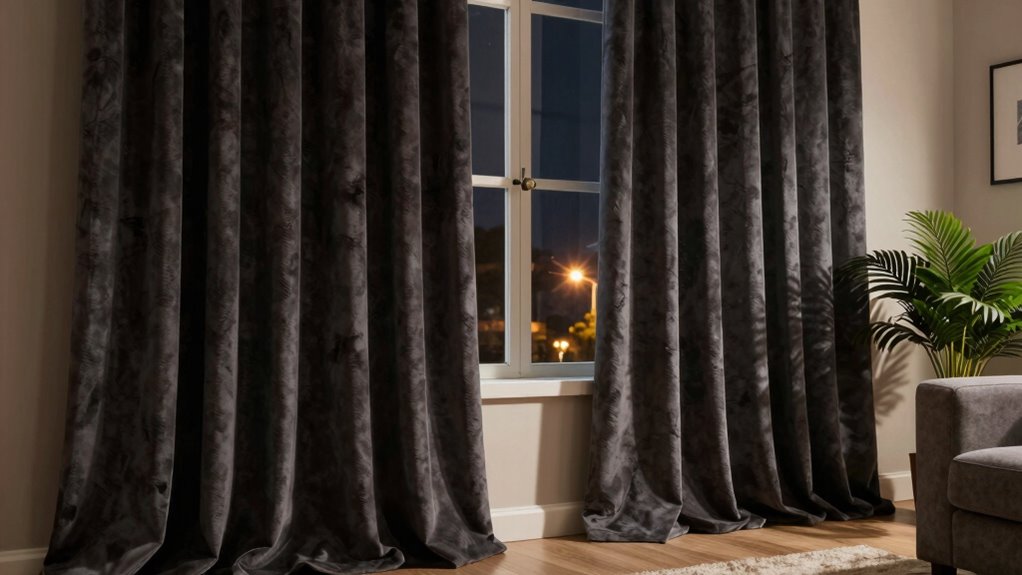
Choosing the right night insulation curtain can considerably improve your home’s comfort and energy efficiency. When selecting, consider material options that balance insulation properties with durability. Thick, densely woven fabrics like polyester or wool provide excellent thermal barriers, while lighter materials might suit rooms where natural light is a priority. Additionally, think about design aesthetics—curtains should complement your decor and match your personal style. Blackout fabrics can enhance insulation and block unwanted light, while patterned or textured options add visual interest. Keep in mind that the curtain’s size and fit are essential for maximum effectiveness. By choosing materials that suit your needs and matching them with your home’s aesthetic, you’ll ensure your nights are warmer, quieter, and more energy-efficient. For optimal results, also consider space-heating basics when selecting your curtains to maximize energy savings and comfort.
Installing and Maintaining Your Night Insulation Curtains for Longevity
Proper installation and regular maintenance are key to maximizing the benefits of your night insulation curtains. Start by ensuring the curtain material is durable and suited for long-term use. Follow installation tips such as securely attaching mounting hardware to sturdy frames and ensuring the curtains hang straight without sagging. Check for gaps around the edges that could reduce insulation effectiveness and adjust accordingly. Clean your curtains regularly with gentle methods to preserve their material durability, avoiding harsh chemicals that may cause wear. Inspect for tears or frayed edges, repairing or replacing damaged sections promptly. Proper care and correct installation not only extend your curtains’ lifespan but also maintain their insulating properties, helping you save energy and protect your plants year-round. For optimal performance, consider using appropriate maintenance schedules to keep your curtains in top condition.
How Do Night Insulation Curtains Compare to Other Window Insulation Options?
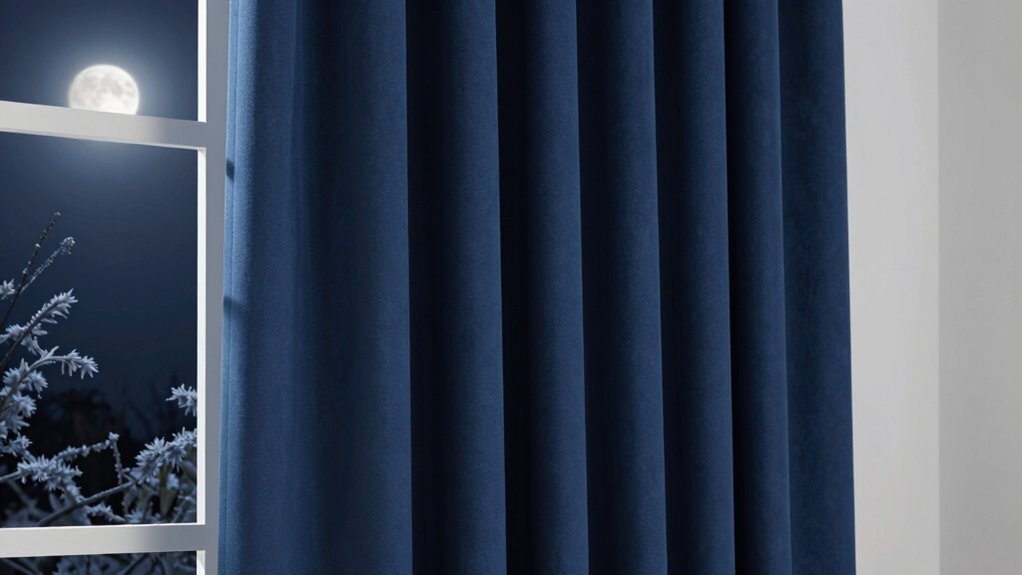
Night insulation curtains offer a flexible and aesthetically pleasing way to improve your window’s thermal performance, often outperforming traditional options in specific contexts. Unlike window film, which can reduce heat loss but may obscure views, curtains provide a physical barrier that enhances insulation without sacrificing natural light. Compared to triple glazing, curtains are more affordable and easier to install, making them suitable for existing windows. While triple glazing offers excellent energy efficiency year-round, night insulation curtains specifically target heat loss during colder nights, preventing drafts and heat escape. Both options can be combined for optimal performance, but curtains stand out for their affordability, ease of use, and ability to prevent plant stress caused by temperature fluctuations.
Are Night Insulation Curtains Worth the Investment?
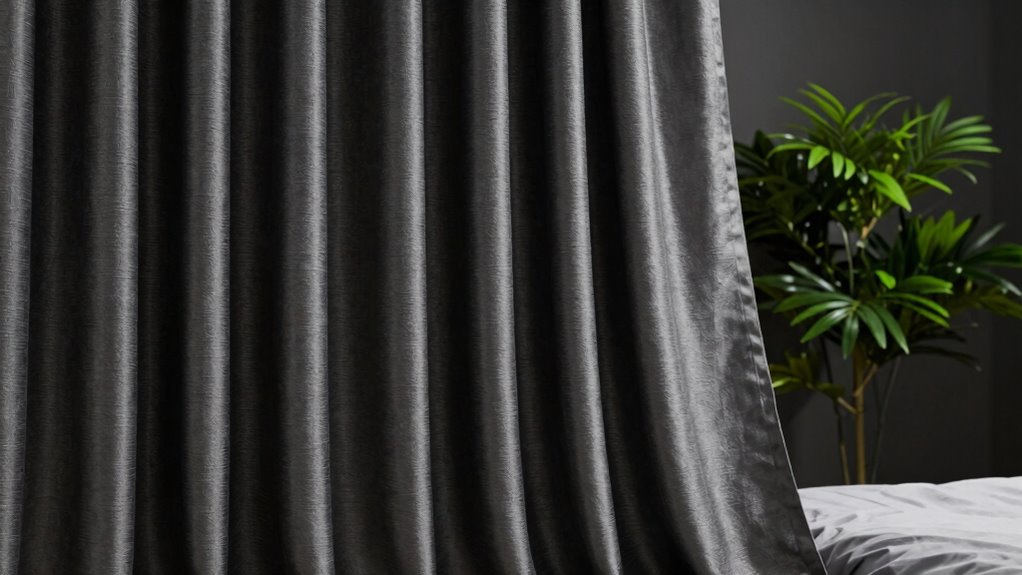
Are night insulation curtains a worthwhile investment? If you’re considering the cost comparison, they often save you money over time by reducing heating bills and preventing heat loss overnight. While the initial expense might seem high, the long-term energy savings make it worthwhile. Plus, these curtains offer more than just insulation; they enhance aesthetic appeal by providing a sleek, modern look that can complement your decor. You don’t have to sacrifice style for functionality. If you value energy efficiency and want to improve your home’s comfort without hefty costs, night insulation curtains are a smart investment. They help maintain a consistent indoor temperature and protect your plants from stress, making them a practical choice for many households.
Frequently Asked Questions
Are Night Insulation Curtains Safe for All Types of Windows?
Night insulation curtains are generally safe for most windows, but you should check window compatibility first. Consider safety considerations like ensuring the curtains don’t block emergency exits or obstruct vents. For different window types, choose curtains that fit properly without damaging frames or glass. Always follow manufacturer instructions for installation to avoid safety issues. If unsure, consult a professional to confirm the curtains are suitable for your specific windows.
Can Night Insulation Curtains Be Used in Commercial or Industrial Buildings?
Think of night insulation curtains as a sturdy shield for your building. Yes, they’re suitable for commercial and industrial spaces, offering excellent HVAC compatibility and noise reduction. You’ll find they adapt well to larger windows, helping you save energy while maintaining a comfortable environment. Just guarantee proper installation to maximize their benefits, and you’ll enjoy lower energy costs and a quieter, more controlled space, day and night.
How Do Night Insulation Curtains Impact Indoor Air Quality?
Night insulation curtains can positively impact indoor air quality by improving air circulation and controlling indoor humidity levels. You’ll notice better airflow, reducing stuffiness and stale odors. These curtains help maintain a consistent environment, preventing excess moisture that can lead to mold or respiratory issues. By regulating humidity and enhancing air movement, you create a healthier space for both plants and people, promoting comfort and reducing potential indoor air pollutants.
Are There Eco-Friendly Materials Available for Night Insulation Curtains?
Yes, eco-friendly materials are available for night insulation curtains. You can choose curtains made from recyclable fabrics, which help reduce waste and promote sustainability. Biodegradable materials are also an excellent option, as they break down naturally without harming the environment. By selecting these eco-friendly options, you not only save energy but also contribute to a healthier planet while enjoying effective insulation and plant stress prevention.
What Is the Typical Lifespan of Night Insulation Curtains?
You can expect your night insulation curtains to last around 5 to 10 years, depending on curtain maintenance and material durability. Regularly cleaning and inspecting the curtains helps prevent wear and tear, extending their lifespan. High-quality materials tend to be more durable, resisting damage and maintaining insulation properties longer. Proper maintenance guarantees your curtains continue to efficiently save energy and protect your plants from stress over the years.
Conclusion
Night insulation curtains save you money and protect your plants, but they also require care and investment. While they cut energy bills and maintain plant health, neglecting proper maintenance can reduce their effectiveness. The choice is yours: enjoy the comfort and savings or face higher costs and stressed plants. Embrace the difference these curtains make—balancing affordability with protection—so your home stays cozy and thriving, even when the night’s chill sets in.