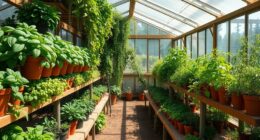
To start rainwater harvesting for your greenhouse, choose a clean, durable collection surface like your roof made from non-toxic materials. Install gutters with screens and a first-flush diverter to keep debris and contaminants out. Use food-grade, shaded storage tanks and maintain all components regularly. Guarantee proper overflow management to handle heavy rain, and keep filters clean for ideal water quality. Keep exploring to discover detailed steps for building a reliable, efficient system that supports healthy plant growth.

Get garden gear delivered free with Prime
- Fast, free delivery on millions of items
- Prime Video, Amazon Music and more included
- Member-only deals all year
Key Takeaways
- Select non-toxic, durable collection surfaces like greenhouse roofs for safe rainwater harvesting.
- Install gutters with screens and a first-flush diverter to filter debris and improve water quality.
- Use food-grade, UV-resistant storage tanks placed in shaded areas for algae prevention.
- Incorporate overflow outlets and secure plumbing to manage heavy rains and prevent overflows.
- Regularly clean gutters, filters, and tanks to maintain water purity and ensure system longevity.
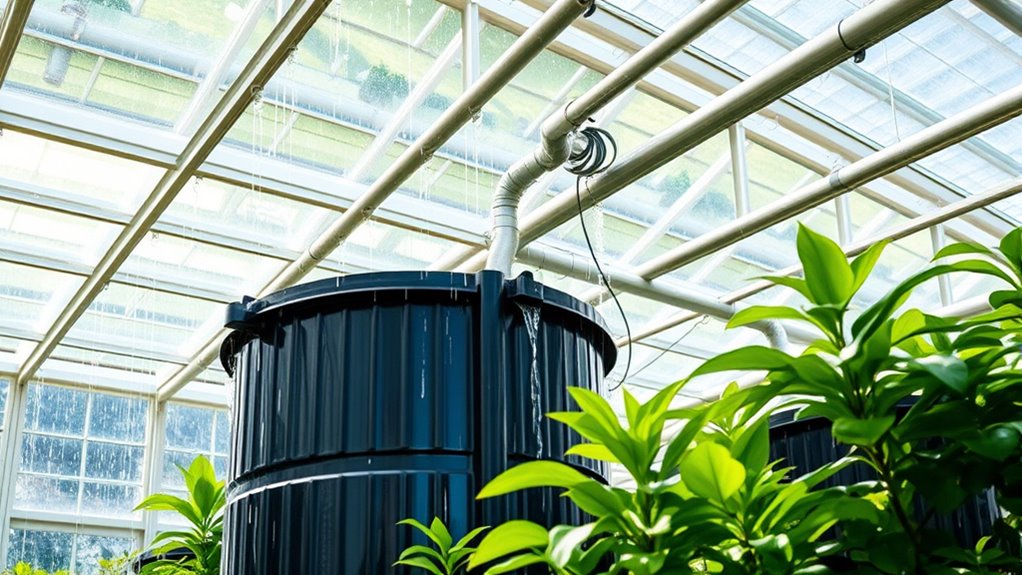
Rainwater harvesting can be a game-changer for your greenhouse by providing a sustainable and cost-effective water source. When considering this approach, one of the most important factors is guaranteeing the rainwater quality. Clean, uncontaminated water is essential for healthy plant growth and to prevent disease. To achieve this, you need to pay close attention to your harvesting system design. A well-designed system minimizes the risk of pollutants and debris entering your storage tanks, keeping the water as pure as possible.
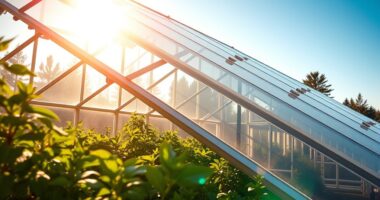
Start by choosing a suitable collection surface, typically the roof of your greenhouse or an adjacent structure. Make sure it’s made of non-toxic, durable materials that won’t leach chemicals into the water. Installing gutters along the edges of your roof allows you to channel rainwater efficiently. These gutters should be fitted with screens or mesh filters to trap leaves, twigs, and other debris, improving rainwater quality right from the start. The design should also include a first-flush diverter, which diverts the initial flow of rainwater away from your storage tank. This initial runoff often contains dirt, dust, and other contaminants that have accumulated on your roof, so diverting it helps keep your stored water cleaner.
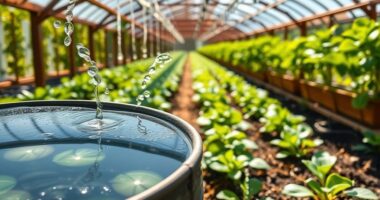
Next, focus on the material and placement of your storage tanks. Use food-grade, UV-resistant containers that won’t degrade over time or leach harmful substances into your water. Position your tanks in shaded areas if possible, to prevent excessive heat buildup, which can promote algae growth. Incorporate a mesh or fine filter at the tank inlet to further improve rainwater quality before it enters your storage system. Regular maintenance is also key—clean your gutters, filters, and tanks periodically to prevent algae, bacteria, and sediment buildup. Additionally, understanding the importance of a high contrast ratio can help you select a system that ensures clear visibility of water levels and system components, aiding in efficient management.
The harvesting system design should also include an overflow outlet to direct excess water away from your tanks during heavy rains, preventing overflow and potential contamination. Ensure your plumbing connections are secure and leak-proof to avoid introducing pollutants and to maintain water integrity. Installing a simple rainwater catchment system with proper filtration and screening components not only improves rainwater quality but also maximizes your harvest. This way, you’re making the most of every drop, reducing reliance on municipal water, and lowering your greenhouse’s environmental footprint.
rainwater harvesting system for greenhouse
As an affiliate, we earn on qualifying purchases.
As an affiliate, we earn on qualifying purchases.
Frequently Asked Questions
Can Rainwater Harvesting Be Used During Drought Conditions?
Yes, you can use rainwater harvesting during drought conditions. It supports rainwater conservation efforts and guarantees your drought-resistant plants stay healthy when water is scarce. By storing rainwater, you reduce reliance on municipal supplies, making your greenhouse more resilient. Keep your water system well-maintained, and prioritize using harvested rainwater for your plants. This sustainable approach helps you conserve water and maintain a thriving greenhouse even during dry spells.
What Are the Costs Involved in Setting up a Rainwater System?
The costs involved in setting up a rainwater harvesting system include initial investment, which covers components like gutters, storage tanks, and filters. You should also consider ongoing maintenance expenses such as cleaning filters and inspecting the system regularly. Conducting a cost analysis helps you estimate total expenses, guaranteeing your investment remains affordable and efficient for your greenhouse needs. Proper planning ensures you maximize benefits while minimizing unexpected costs.
How Often Should I Clean My Rainwater Collection System?
You should clean your rainwater collection system at least twice a year, as neglecting filter maintenance and storage cleaning can lead to 50% of contaminants remaining in your water. Regular cleaning prevents algae growth and debris buildup, ensuring safe, clean water for your greenhouse. Check filters and storage tanks every three to four months, especially after heavy storms, to maintain ideal water quality and system efficiency.
Is Rainwater Safe for All Types of Greenhouse Plants?
Rainwater is generally safe for your greenhouse plants, but you should check its plant nutrient content and water pH levels first. Some plants thrive with slightly acidic or neutral water, so testing helps guarantee compatibility. If the water’s pH is off or nutrient levels are low, consider supplementing or adjusting it. Regular testing ensures your plants get clean, balanced water, promoting healthy growth and maximizing your greenhouse’s productivity.
What Legal Regulations Should I Consider for Rainwater Harvesting?
Imagine you’re in a bustling city like ancient Rome, steering water rights and permits. You should check your local regulations first, as water rights can restrict harvesting practices. Obtain any necessary permits from local authorities before installing your system. Laws vary widely, so researching your area’s rules guarantees you’re compliant and avoids potential fines or legal issues. Always stay informed to harvest rainwater responsibly and legally.
Conclusion
By harvesting rainwater, you can reduce your greenhouse’s reliance on municipal water by up to 50%, saving money and conserving resources. It’s a simple, sustainable practice that benefits both your plants and the environment. Plus, collecting rainwater helps you manage water supply during droughts or dry spells. Embrace rainwater harvesting today, and you’ll create a more resilient, eco-friendly greenhouse that thrives sustainably—making a positive impact on your gardening efforts and the planet.
Fall yard work Picks
leaf blowers
As an affiliate, we earn on qualifying purchases.