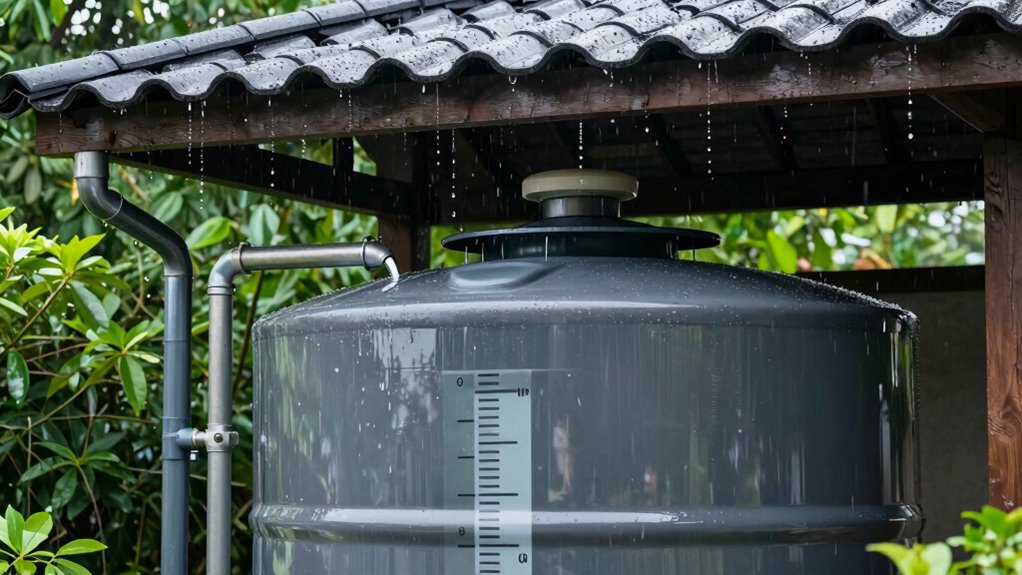

To determine the right size for your rainwater storage tank, consider your local rainfall patterns, roof size, and water needs. Larger roofs and seasonal rain require bigger tanks to maximize collection and prevent overflow. Avoid undersizing to ensure you have enough water during dry spells, but also steer clear of oversized tanks that may stagnate. Balancing these factors helps you optimize your system, and exploring further will give you extra insights for your specific situation.
Key Takeaways
- Assess your household or facility’s daily water needs to determine the minimum tank capacity required.
- Analyze local rainfall patterns and catchment area size to estimate annual rainwater collection potential.
- Consider seasonal variations and potential dry spells to size the tank for consistent water supply.
- Balance tank size with available space, budget, and maintenance capacity for optimal system efficiency.
- Regularly review and adjust tank capacity based on changing water demand and rainfall variability.
What Is Rainwater Harvesting and Why It Matters

Rainwater harvesting is the process of collecting and storing rainwater for future use. It plays a crucial role in urban landscaping, helping you maintain green spaces even during dry periods. By capturing runoff from rooftops and other surfaces, you reduce reliance on municipal water supplies. Understanding historical rainfall patterns in your area helps you determine how much water you can expect to collect annually. This knowledge allows you to design an efficient system that meets your needs without overbuilding. Rainwater harvesting promotes sustainable living by conserving water and reducing stormwater runoff, which can cause urban flooding. Additionally, understanding the behavior of bioluminescent organisms can inspire eco-friendly lighting solutions for sustainable landscapes. When you know the significance of historical rainfall and how it impacts water availability, you’ll be better equipped to size your storage tank correctly and maximize your system’s effectiveness.
How Local Rainfall Patterns Impact Your Tank Size
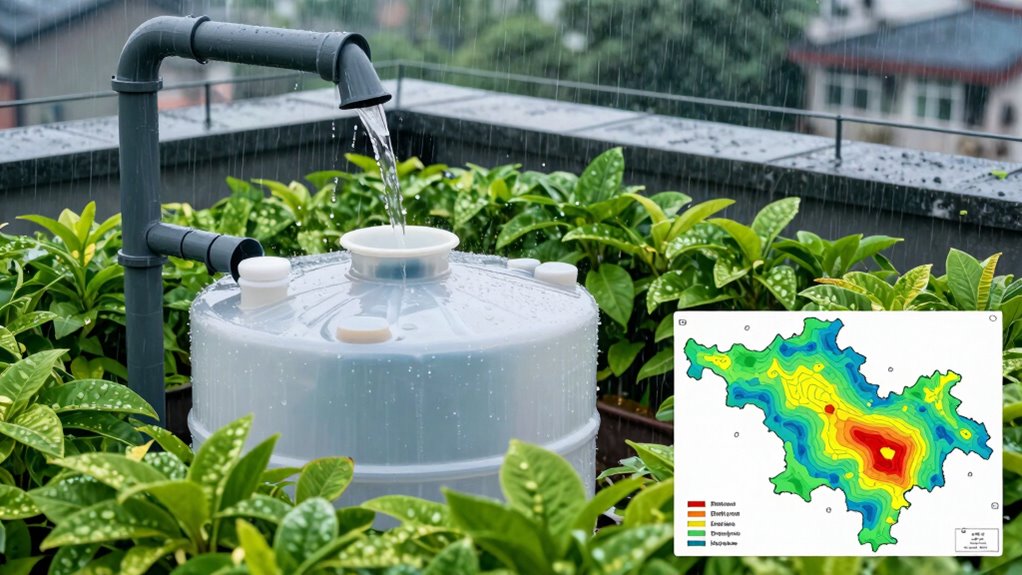
Your local rainfall patterns directly influence your tank size, making it essential to understand how much rain you typically receive. Variability in rainfall throughout the year means you might need a larger tank if the rain is inconsistent or seasonal. By analyzing these patterns, you can better estimate the capacity needed to meet your water needs effectively. Incorporating knowledge of rainfall patterns can help optimize your harvesting system for better performance.
Local Rainfall Variability
Since local rainfall patterns can vary considerably from one area to another, understanding these fluctuations is essential for properly sizing your rainwater harvesting tank. Climate variability influences not only how much rain falls but also how often it occurs. In areas with unpredictable rainfall, you might experience intense storms followed by dry spells, making it tricky to determine the right tank size. If you underestimate, you risk running out of stored water; overestimate, and you may invest in unnecessary capacity. Analyzing local rainfall data helps you identify patterns and adjust your tank size accordingly. Recognizing the extent of climate variability guarantees your system can handle both wet and dry periods efficiently, maximizing water availability while avoiding overspending. Incorporating free floating design principles can also help adapt your system dynamically to changing conditions.
Seasonal Rainfall Trends
Understanding how rainfall varies across different seasons is crucial because it directly affects how you size your tank. Seasonal rainfall patterns influence when and how much water you can collect, impacting your storage needs. Recognizing rainfall variability helps you plan for dry periods and avoid shortages. For example, consider these factors:
- Peak rainy seasons: Maximize collection during months with high seasonal rainfall to fill your tank efficiently.
- Dry season gaps: Ensure your storage capacity covers extended dry periods when rainfall is minimal.
- Rainfall variability: Account for unpredictable fluctuations in seasonal rainfall to prevent under- or over-sizing your tank.
- Dependence on cloud services: The outage highlighted the importance of contingency plans to maintain operational resilience during service disruptions.
How to Calculate Your Water Usage for Rainwater Storage

Calculating your water usage is a crucial step in sizing your rainwater harvesting system effectively. Start by evaluating how much water you need daily for household tasks, irrigation, or other uses. Keep in mind that rainwater quality can vary, so plan for appropriate filtration and storage to maintain water safety and reduce maintenance needs. Consider your household size, typical consumption, and seasonal changes to estimate your annual usage. Knowing your precise needs helps prevent over- or under-sizing your storage tank. Regularly reviewing your usage patterns can inform adjustments and ensure your system functions efficiently. Additionally, a well-planned maintenance schedule is essential to keep your system clean, safeguard rainwater quality, and prolong storage lifespan. Proper system sizing ensures you have enough capacity without unnecessary excess.
How Catchment Area and Roof Size Affect Your Storage Needs
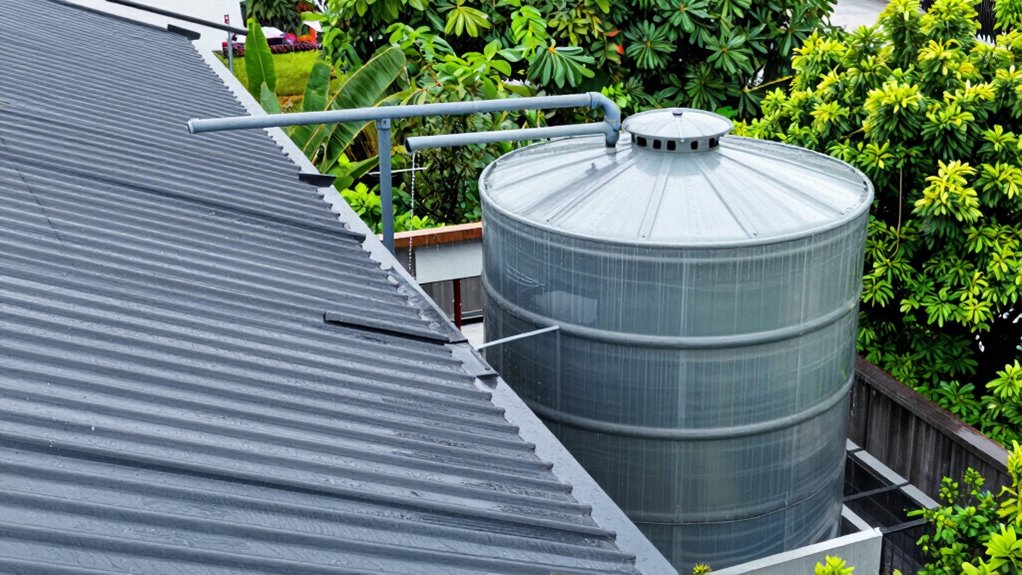
Your catchment area and roof size directly determine how much rainwater you can collect, making them key factors in sizing your storage tank. The larger your roof, the more water you can harvest, but catchment efficiency and roof material influence actual collection. Factors to examine include:
Your roof size and efficiency are key to effective rainwater harvesting and tank sizing.
- Catchment efficiency – How effectively your roof captures water, affected by debris and maintenance.
- Roof material – Smooth, non-porous surfaces like metal or tiles boost collection, while rough or porous materials reduce it.
- Roof size – A bigger roof increases potential harvest, but you must balance it with your storage capacity needs to prevent overflow or shortages.
Understanding these elements helps you determine the appropriate tank size, ensuring you store enough rainwater for your needs without excess.
How to Pick the Right Rainwater Tank Size for Your Climate and Space
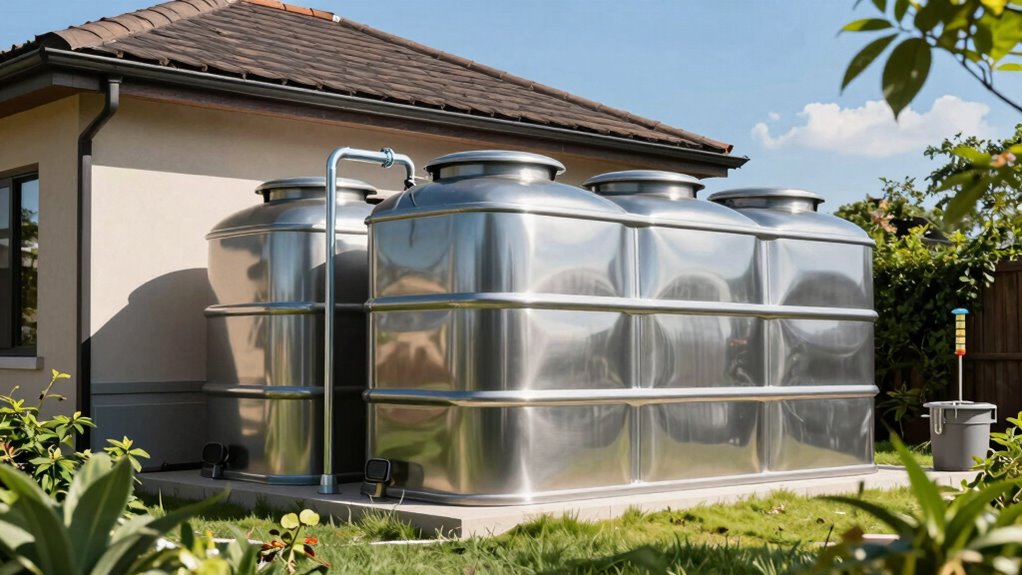
Choosing the right rainwater tank size depends heavily on your climate and available space. In urban landscaping settings, space can be limited, so selecting a compact tank that still meets your water needs is essential. Consider your area’s rainfall patterns; if you experience frequent heavy rain, a smaller tank might suffice, but in drier climates, larger tanks help ensure a steady water supply. Additionally, water quality plays a role—larger tanks can help reduce contaminants through longer retention times, improving water quality. Think about your intended use—gardening, flushing toilets, or outdoor cleaning—and match tank size accordingly. By balancing your climate, space constraints, and water quality requirements, you can choose a tank that maximizes efficiency without overcrowding your property. Proper sizing also involves understanding rainwater harvesting system design to optimize collection and storage capacity.
Which Rainwater Harvesting Calculators Help You Size Your Tank
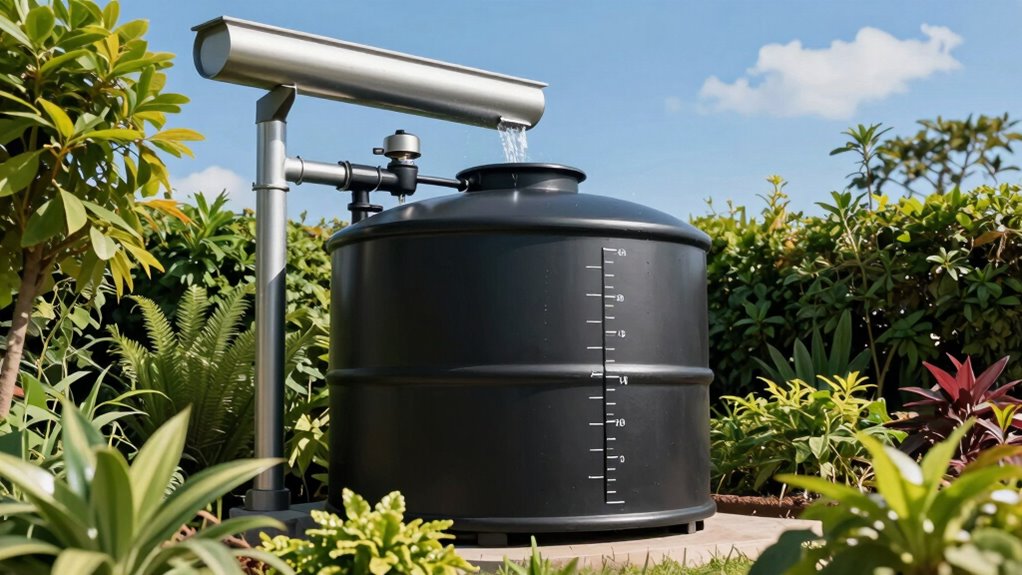
Selecting the right rainwater harvesting calculator can facilitate the process of sizing your tank accurately. These tools help you estimate tank capacity based on rainfall patterns, your water needs, and catchment area. When choosing a calculator, consider:
- How it accounts for rainwater quality to ensure your stored water remains safe and clean.
- Its ability to factor in tank maintenance requirements, preventing overflows or stagnation.
- Whether it offers customization for local climate variations and usage patterns.
- Energy-efficient cloud hosting options that support sustainable and reliable data management for your rainwater systems.
Using the right calculator ensures you won’t under- or over-size your tank, saving you money and effort. It also helps you plan for ongoing tank maintenance, keeping your system efficient and your water safe. Accurate sizing supports sustainable rainwater harvesting for years to come.
Common Mistakes to Avoid When Choosing Your Rainwater Storage
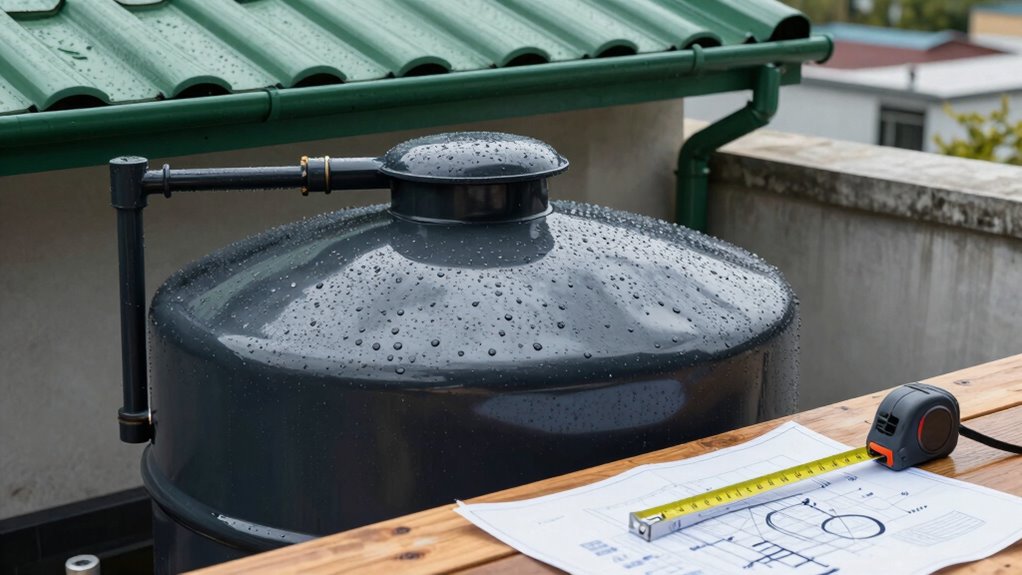
One common mistake is underestimating how much rainwater you’ll need, which can lead to an undersized tank that quickly runs dry during dry spells. To avoid this, plan for your water usage and seasonal rainfall patterns. Neglecting proper tank maintenance can cause algae buildup and debris accumulation, compromising water quality. Regular cleaning ensures your system stays functional and reduces health risks. Also, overlooking water purification steps can lead to unsafe drinking water. Incorporate filters or treatment methods to keep the stored water safe. Choosing a tank size based solely on initial cost rather than future needs may save money upfront but cause shortages later. Accurate sizing, routine maintenance, and proper purification are essential to ensure a reliable, safe rainwater supply. Additionally, considering the type of Support Breakfast available in your area can help you plan for supplemental water needs, especially if you’re incorporating culinary uses that require clean, safe water.
Pros and Cons of Different Rainwater Tank Sizes and Types
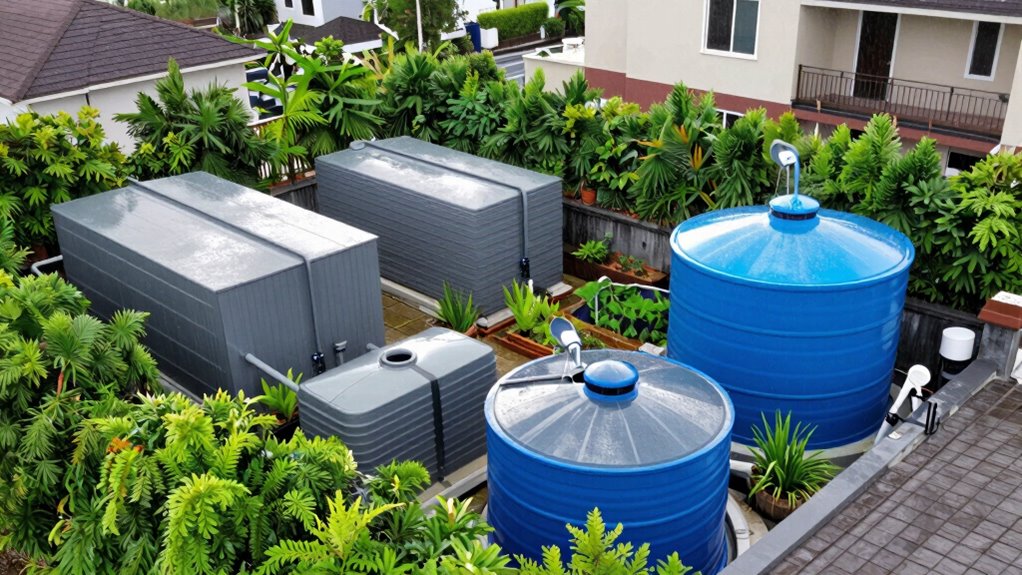
Choosing the right tank size and type affects your system’s efficiency and budget. Smaller tanks are cheaper and easier to install but may fill up quickly, while larger tanks store more water but cost more upfront. Material options like plastic, metal, or concrete also influence durability and price, so it’s important to weigh these factors carefully. Additionally, considering tank sizing best practices can help optimize your rainwater harvesting system for your specific needs.
Tank Size Options
When considering rainwater tank sizes, it’s important to weigh the advantages and disadvantages of different options. Larger tanks store more water, reducing runoff and providing ample supply, but they may impact tank aesthetics and require more maintenance. Smaller tanks are easier to install and blend seamlessly into your landscape, yet they might need frequent emptying or refilling. Here are some options to consider:
- Small tanks (100-500 gallons): Compact, easy to maintain, and less visually obtrusive, but limited storage capacity.
- Medium tanks (500-2000 gallons): Balance size and aesthetics, offering more storage with manageable maintenance.
- Large tanks (2000+ gallons): Maximize water storage, ideal for extensive needs, but require careful planning for tank aesthetics and ongoing upkeep. Additionally, understanding water conservation strategies can help optimize your rainwater harvesting system and reduce overall storage requirements.
Choosing the right size depends on your water needs, space, and how much effort you’re willing to dedicate to tank maintenance.
Material and Cost Factors
Selecting the right rainwater tank involves considering both material and cost factors, which directly influence your investment’s longevity and affordability. Different tank materials, like polyethylene, concrete, or steel, vary in material costs and durability. Polyethylene tanks tend to be more affordable and easier to install but may not last as long as concrete or steel options. Installation expenses also fluctuate depending on the tank size and type; larger tanks require more extensive setup, increasing costs. While larger tanks might seem cost-effective over time, they often come with higher initial expenses. Balancing material costs with installation expenses helps you choose a tank that fits your budget and needs. Ultimately, understanding these factors ensures your rainwater harvesting system is both economical and reliable.
How Oversized or Undersized Tanks Affect Your System’s Performance
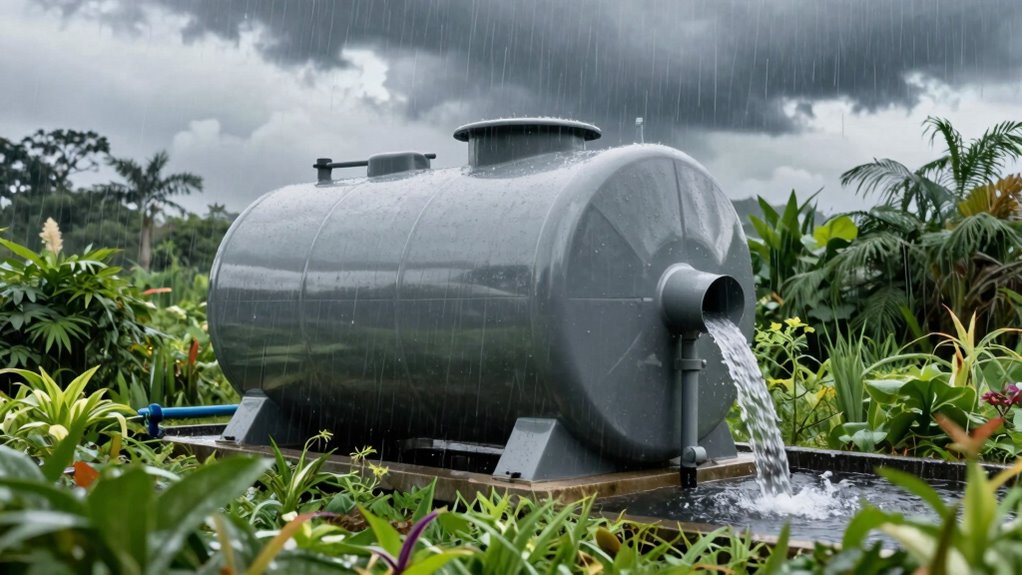
An improperly sized tank can substantially impact your rainwater harvesting system’s efficiency and reliability. If your tank is too large (tank overcapacity), you risk wasted space and increased costs without added benefit. Conversely, an undersized tank limits storage efficiency, forcing you to use water prematurely or miss out on capturing rainfall. Consider these impacts:
- Excessively large tanks may cause stagnant water and unnecessary maintenance.
- Small tanks can lead to frequent overflow or shortages, reducing system effectiveness.
- Both over- and under-sizing can strain your system’s ability to maximize rainfall collection and storage.
Choosing the right size ensures ideal storage efficiency, prevents water wastage, and maintains a balanced, reliable system. Proper sizing is key to a sustainable, cost-effective rainwater harvesting setup.
Tips for Scaling Your Rainwater Storage as Your Needs Grow
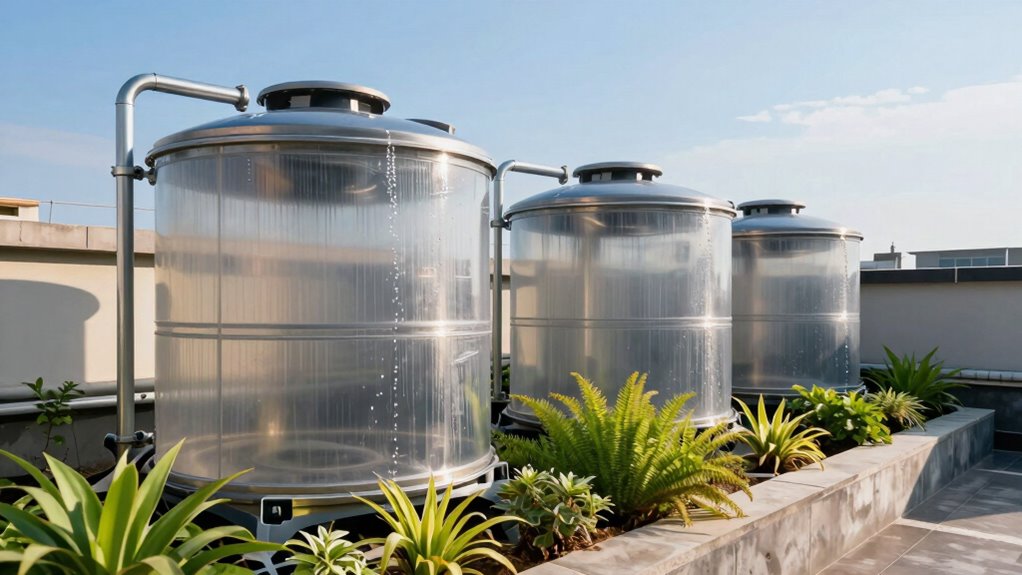
As your water needs increase, it’s important to keep an eye on your usage patterns to identify when you might need more storage. Anticipating future expansion helps you plan effectively, ensuring your system keeps up with demand. By regularly adjusting your storage capacity, you can avoid shortages and maximize your rainwater harvesting efficiency.
Monitor Water Usage Trends
Tracking your water usage regularly helps you identify patterns and anticipate future needs. By monitoring trends, you can improve water conservation and enhance storage efficiency. To effectively scale your rainwater storage, consider these steps:
- Record usage during different seasons to spot fluctuations and plan for peak demand.
- Analyze which activities consume the most water and find ways to reduce waste.
- Adjust your storage capacity based on long-term consumption patterns, ensuring you’re neither under- nor over-allocating.
Monitoring usage allows you to make informed decisions, optimizing your system as your needs grow. Staying attentive to water trends helps you conserve water, maximize storage efficiency, and avoid unnecessary investments. Consistent tracking is key to a sustainable, scalable rainwater harvesting setup.
Anticipate Future Expansion
To effectively prepare for future growth, you should plan your rainwater storage expansion proactively. As your water needs increase, consider how expanding your storage can maintain rainwater quality and comply with legal regulations. Larger tanks can help ensure your system remains efficient and safe, but they also require attention to legal standards for water storage and safety. Evaluate your future water demands and the potential for increased rainwater collection, especially if you plan to add more fixtures or landscape features. Incorporating modular tank options allows you to scale gradually, avoiding unnecessary oversizing initially. Staying informed about legal regulations guarantees your expansion remains compliant, preventing costly penalties or system failures. Proper planning now sets a solid foundation for seamless growth and reliable water supply later.
Adjust Storage Capacity
When your water needs increase over time, adjusting your rainwater storage capacity becomes necessary to guarantee your system keeps pace. To do this effectively, consider these tips:
- Upgrade your tank size gradually to match increased demand, ensuring your rainwater quality remains high and your system stays efficient.
- Regular tank maintenance is vital; clean filters and inspect for debris that could compromise water quality or clog your system.
- Monitor usage patterns to determine if additional storage is needed, preventing shortages during dry periods. Scaling your storage capacity helps maintain consistent rainwater quality and guarantees your system adapts smoothly as your needs grow. Proper adjustments also prolong tank lifespan and optimize overall performance.
Frequently Asked Questions
What Are the Long-Term Costs of Different Tank Sizes?
Your long-term costs depend on your tank size, with larger tanks often having higher initial expenses but lower maintenance costs per gallon stored. Conduct a cost analysis to compare upfront investment versus ongoing expenses like cleaning and repairs. When planning your budget, consider how much rainwater you’ll need annually and choose a size that balances storage needs with affordability, ensuring you don’t overspend or under-prepare.
How Does Tank Material Affect Storage Capacity?
You’ll find that tank material directly affects your storage capacity through its durability and design. Durable materials like concrete or polyethylene resist damage and can be built larger without compromise. Sustainable options, such as recycled plastics, help reduce environmental impact while offering sturdy storage. Consider your needs, climate, and long-term maintenance costs to choose a material that maximizes capacity and longevity, ensuring your rainwater system remains effective and eco-friendly.
Can I Retrofit My Existing System for Larger Storage?
You can definitely retrofit your existing system to expand capacity, turning your current tank into a larger water reservoir like upgrading a vessel to hold more treasure. Start by evaluating your tank’s structure and space for additional units. Retrofitting tanks involves adding extra storage modules or replacing the tank with a bigger one, ensuring your rainwater harvesting system can meet your growing water needs efficiently.
What Are the Maintenance Requirements for Various Tank Sizes?
You need to regularly clean your tank to prevent buildup and guarantee water quality, especially for larger tanks which may require more frequent tank cleaning. Also, check for corrosion, and apply corrosion prevention measures like protective coatings or anodes, particularly for metal tanks. Smaller tanks might need less maintenance, but all systems benefit from periodic inspections and cleaning to prolong lifespan and maintain safe, clean rainwater storage.
How Do Local Regulations Influence Tank Sizing Choices?
Oh, regulations love to keep you on your toes, don’t they? They can dictate tank sizes based on local rainwater quality standards and system integration rules, making sure you don’t turn your backyard into a water park. You’ll need to check with local authorities, who might limit tank capacity or require specific filtration systems. Ignoring these rules could turn your rainwater dreams into bureaucratic nightmares, so stay compliant and keep your system running smoothly.
Conclusion
Choosing the right rainwater storage size might seem tricky, but it’s your secret weapon against droughts and skyrocketing water bills. Get it right, and your system will run smoother than a well-oiled machine, saving you time, money, and stress. Don’t settle for a tank that’s too small or too big—find that perfect fit, and you’ll harness rainwater like a true water wizard. Your future self will thank you for making this smart, life-changing decision!