Better water delivery helps you apply the right amount of water precisely when plants need it, reducing waste throughout the season. Upgrading to automated systems, using moisture sensors, and maintaining your equipment guarantee watering is efficient and targeted. Tools like rain sensors prevent unnecessary watering during rain, while proper system maintenance avoids leaks and uneven coverage. Over time, this approach saves water, lowers bills, and keeps your garden healthier—if you keep exploring, you’ll discover even more ways to optimize your irrigation.
Open a free Amazon Business account
Business pricing, bulk buying and tax-exempt orders.
As an affiliate, we earn on qualifying purchases.
Key Takeaways
- Precise, automated watering minimizes over- and under-watering, reducing seasonal water waste.
- Regular system maintenance ensures consistent, efficient water delivery throughout the season.
- Water-saving tools like rain sensors and moisture meters prevent unnecessary watering during wet or moist conditions.
- Proper system design targets water directly to plants, decreasing runoff and evaporation over time.
- Adjusting watering schedules based on weather and soil conditions optimizes resource use season-long.
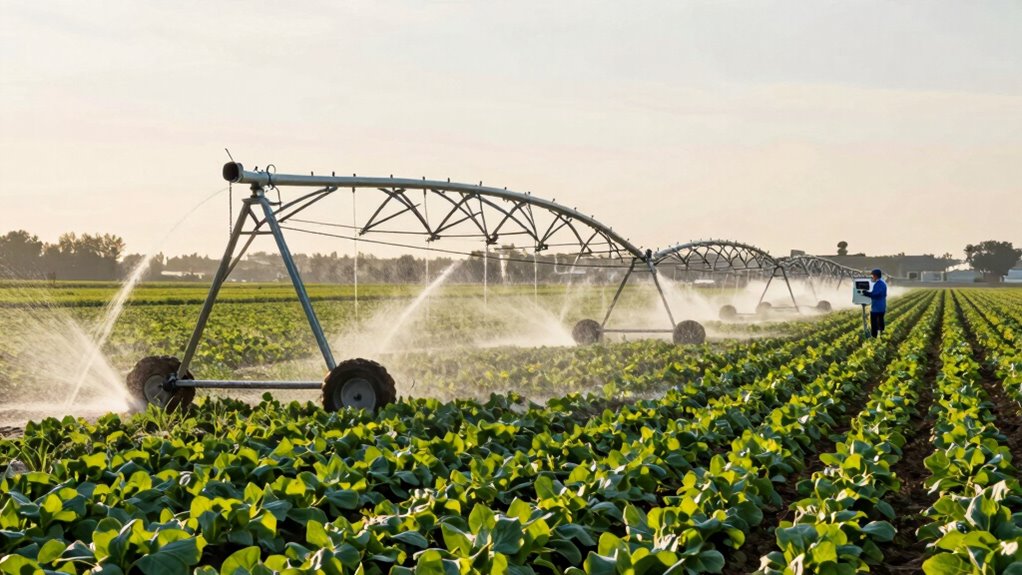
Have you ever wondered if there’s a smarter way to guarantee reliable water delivery? When it comes to managing your irrigation system, improving efficiency isn’t just about saving water—it’s about making every drop count. By boosting irrigation efficiency, you guarantee that water reaches your plants directly where it’s needed, minimizing runoff and evaporation. This precision allows you to use less water overall, which is essential for water conservation, especially during dry seasons or in areas facing water scarcity. When you focus on better water delivery, you’re not only protecting your plants but also contributing to the sustainability of your local water resources. Incorporating water-saving techniques into your system further enhances these benefits by optimizing water use across the entire season.
One of the most effective ways to enhance irrigation efficiency is by upgrading to modern, automated systems. These systems can be programmed to deliver the right amount of water at specific times, reducing waste caused by overwatering or missed watering schedules. With smart controllers, you can also adjust watering based on weather forecasts, soil moisture levels, or plant needs. This targeted approach prevents unnecessary water use, ensuring your landscape gets what it needs without excess. As a result, you’ll see healthier plants, lower water bills, and a reduced environmental impact over the course of an entire season. Proper system maintenance is also vital, as it ensures that these advanced features operate correctly and efficiently. Regular maintenance also helps prevent equipment failures that could lead to water wastage or system damage.
Another key element is proper system maintenance. Regularly inspecting and cleaning your sprinklers, drip emitters, and filters keeps them functioning effectively. Clogged or damaged equipment can lead to uneven watering and water loss. By maintaining your system, you avoid wasting water through leaks or inefficient spray patterns. Additionally, installing rain sensors or moisture meters helps you avoid watering during rainfalls or when soil moisture is sufficient. These simple tools keep your irrigation system working efficiently, saving water and energy in the long run. Employing watering schedules that are tailored to your landscape’s needs further reduces unnecessary water use.

Orbit B-hyve Indoor Smart Sprinkler Controller – 8-Zone – WiFi Irrigation Controller – App Controlled Irrigation with Weather Adjustment – Easy Installation Smart Home Ready Device – 57925
- Smart Irrigation Control: Control your sprinkler remotely via WiFi
- Automated Watering: Supports multiple irrigation methods and custom programs
- Multi-Zone Management: Independent scheduling for different zones
As an affiliate, we earn on qualifying purchases.
As an affiliate, we earn on qualifying purchases.
Frequently Asked Questions
What Are the Common Signs of Inefficient Water Delivery?
You’ll notice signs of inefficient water delivery through irrigation leaks, which waste water and increase costs. Uneven watering causes dry patches or overly saturated areas, harming your landscape. You might see water pooling or run-off, indicating leaks or misaligned sprinklers. Additionally, plants may wilt or turn yellow despite watering, revealing inconsistent supply. Addressing these issues promptly guarantees water is used effectively, reducing waste and promoting healthier growth across the season.
How Does Water Delivery Impact Crop Yields?
Water delivery directly impacts your crop yields by ensuring plants get the right amount of water at the right time. Using drip irrigation promotes water conservation and minimizes runoff, which helps maintain ideal soil moisture levels. Efficient water delivery prevents overwatering or underwatering, encouraging healthy growth and higher yields. By adopting better water delivery methods, you effectively boost productivity while conserving water resources across the entire season.
Are There Environmental Benefits to Improved Water Delivery?
Think of improved water delivery as a finely tuned orchestra, each instrument playing its part perfectly. Yes, it offers significant environmental benefits, including water conservation and reduced ecological impact. By delivering water efficiently, you minimize waste and prevent runoff that can harm local ecosystems. This precise approach helps sustain natural habitats, conserves resources, and reduces pollution, making your farming practices more eco-friendly and aligned with a healthier planet.
What Technologies Are Used to Enhance Water Distribution?
You use smart sensors and drip irrigation technologies to enhance water distribution. Smart sensors monitor soil moisture levels in real-time, ensuring water is only delivered when needed. Drip irrigation delivers water directly to plant roots with minimal runoff, reducing waste. Together, these technologies optimize water use, improve crop health, and decrease environmental impact by minimizing excess water runoff and evaporation, ultimately making your water delivery more efficient across the entire season.
How Can Farmers Measure Water Waste Effectively?
You can’t just guess; you need precise water measurement. Use irrigation sensors to monitor soil moisture and track water usage accurately. These sensors help you identify leaks or overwatering, so you’re not pouring water down the drain. Regularly checking data from these sensors allows you to fine-tune your irrigation system, ensuring you’re only using what’s needed. That way, you’re smart about water, saving resources and reducing waste across the season.
Conclusion
By improving water delivery methods, you can greatly cut down waste throughout the entire season. When you guarantee precise, efficient watering, plants thrive without overuse, and resources aren’t squandered. Some believe that better delivery systems even influence plant health and yield, making seasonal growth more predictable. So, investing in smarter watering isn’t just about conserving water — it’s about creating a sustainable cycle that benefits both your crops and the environment in the long run.
Evergreen bestsellers Picks
bestsellers
As an affiliate, we earn on qualifying purchases.