
To reuse potting mix safely and prevent pest and disease carryover, you need to thoroughly sterilize it. This involves removing all old soil, inspecting containers, and then using heat treatment methods like baking, steaming, or microwaving. If heat isn’t an option, chemical sterilization with approved soil fumigants can work. Proper sterilization eliminates pests, fungi, and pathogens, keeping your garden healthy. Keep your plants safe—find out more about effective sterilization techniques below.
Key Takeaways
- Properly sterilize or pasteurize the soil using heat treatment methods like baking, steaming, or microwaving before reuse.
- Incorporate organic amendments such as compost to rejuvenate soil microbial activity and nutrient levels.
- Remove any visible pests, mold, or disease signs and thoroughly clean containers before refilling.
- Avoid reusing contaminated or heavily compacted soil to prevent spreading pests and pathogens.
- Regularly test and monitor soil health, replacing or sterilizing soil as needed to prevent pest and disease carryover.
Why Reusing Potting Mix Can Save Money and Reduce Waste

Reusing potting mix can considerably save you money and cut down on waste. Instead of constantly buying new soil, you can recycle your containers and reuse the existing mix, making your gardening more sustainable. Container recycling helps reduce landfill waste and extends the life of your pots. To improve soil fertility, add organic amendments like compost or aged manure, enriching the mix without extra cost. Reusing your potting soil also minimizes the need for packaging and transportation emissions. By maintaining and replenishing your current mix, you’re not only saving money but also supporting eco-friendly practices. Just remember, proper sterilization is key to avoiding pests and diseases, which we’ll cover in the next section. For now, recycling and enriching your soil promotes a healthier garden and a healthier planet. Regular cleaning and maintenance routines of your containers and tools further ensure the longevity and safety of your reused soil.
The Risks of Reusing Potting Mix Without Proper Sterilization

If you skip proper sterilization, reusing potting mix can introduce pests, diseases, and fungi into your garden. Without soil sterilization, harmful organisms can survive in the old mix and infect your new plants. This not only hampers plant growth but also makes pest prevention much harder. Reusing unsterilized potting mix increases the risk of pests like fungus gnats, root aphids, and fungal pathogens spreading quickly. These issues can lead to poor plant health and increased chemical use. To protect your garden, always sterilize your potting mix before reuse. Proper soil sterilization breaks the cycle of pests and diseases, giving your plants a clean start. Additionally, understanding the importance of contrast ratio can help you select the right equipment for monitoring and managing pest infestations effectively. Skipping this step can undo your efforts and cause ongoing problems that are difficult to control later.
How Pests and Diseases Spread Through Old Potting Mix
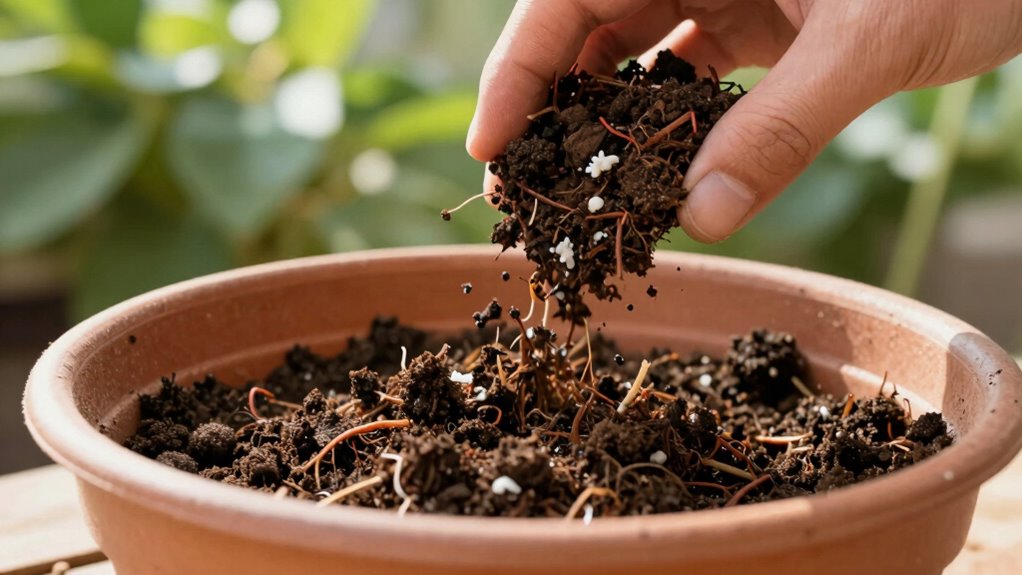
Old potting mix can harbor pests in their dormant stages, ready to infest new plants. Disease residues often persist in the soil, increasing the risk of infection. Additionally, soil-borne pathogens can easily transmit from old mix to healthy plants if you reuse without proper sterilization. To minimize these risks, understanding soil-borne pathogens and effective sterilization methods is essential for safe reuse.
Pest Dormant Stages
Pests and diseases can survive in potting mix through dormant stages, making it easy for them to spread when you reuse old soil. Many pests have pest dormant stages, such as eggs, pupae, or cysts, that remain inactive but viable over time. Similarly, disease overwintering allows pathogens to persist through cold months in the soil, ready to infect new plants. When you reuse old potting mix without proper treatment, these dormant stages can become active again, leading to infestations or disease outbreaks. Recognizing that pests and diseases can persist in this hidden form emphasizes the importance of sanitizing or replacing soil. Understanding these survival mechanisms highlights why it is crucial to take preventative measures. By doing so, you interrupt their life cycle and reduce the risk of spreading problems to your healthy plants.
Disease Residue Persistence
Dormant stages of pests and diseases can linger in potting mix long after plants are gone, creating hidden reservoirs of infection. Disease residue, including spores and pathogen remnants, can survive in the soil, sometimes for years. This pathogen survival means that even if you remove visible pests, the disease-causing agents may still be present. When you reuse old potting mix without proper treatment, you risk reintroducing these pathogens to healthy plants. The presence of disease residue increases the chance of infections spreading quickly, especially in warm, moist conditions. To prevent this, you need to eliminate or reduce disease residue by sterilizing or composting the mix thoroughly. Proper sterilization methods are essential to effectively break the cycle of disease carryover and keep your new plants healthy.
Soil Pathogen Transmission
Since pathogens can survive in potting mix for years, reusing contaminated soil poses a real risk of spreading diseases to healthy plants. Contamination sources, such as infected roots, spores,, and bacteria, can persist and infect new plants if the soil isn’t properly treated. This compromises soil health and allows pests and diseases to cycle back into your garden. To prevent this, consider:
- Identifying the sources of contamination before reuse
- Properly sterilizing or composting soil to eliminate pathogens
- Regularly testing soil health to detect lingering pests or diseases
- Utilizing indoor gardening techniques that minimize soil reuse and promote a healthy environment
Step 1: Removing Old Potting Mix and Preparing Your Workspace
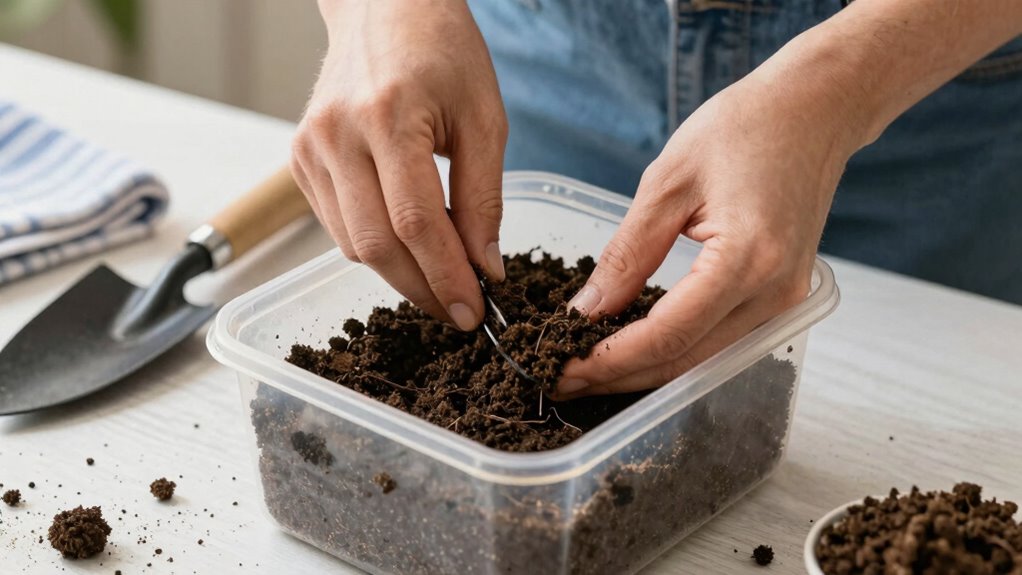
Before you reuse potting mix, removing the old material and setting up a clean workspace is vital. Start by emptying the container, discarding any remaining mix that may harbor pests or disease. Inspect the container material selection; choose durable, easy-to-clean containers that won’t harbor pathogens. As you remove the old mix, consider the plant nutrient balance; leftover nutrients can affect new plant growth. Clean your workspace thoroughly, removing debris and contaminants that could carry pests. Use disinfectants or cleaning solutions suitable for your container material to prevent disease carryover. Keeping your workspace tidy ensures no residual pests or pathogens contaminate fresh potting mix. Additionally, paying attention to navigation and mapping within your workspace can help organize cleaning tools and materials efficiently. Proper preparation creates a safe environment for your new plants and helps maintain healthy, nutrient-balanced soil.
Step 2: Sterilizing Your Potting Mix With Heat or Chemicals
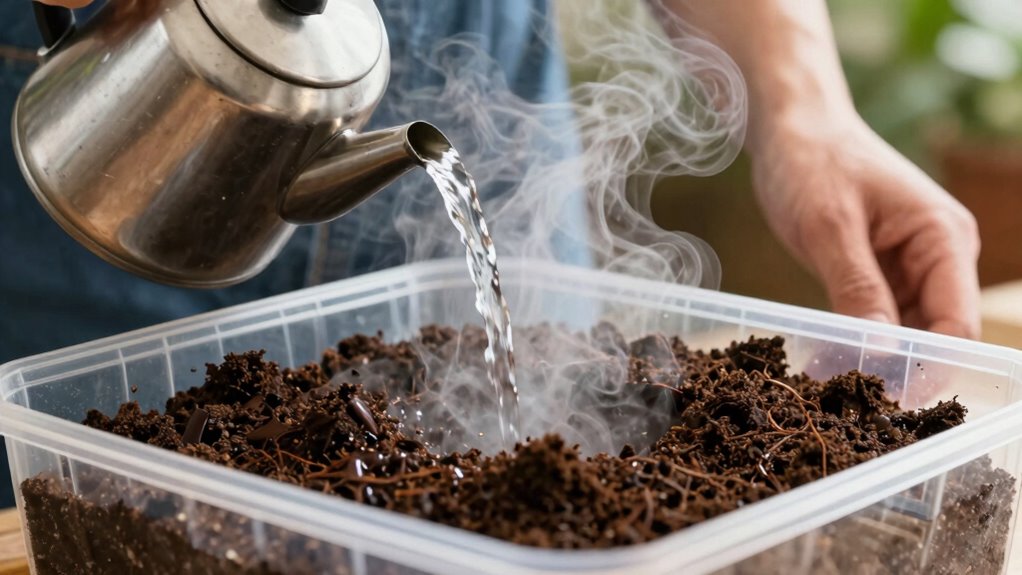
To guarantee your reused potting mix is free of pests and diseases, sterilization is essential. You can choose between heat treatment techniques, like steaming or baking, or chemical sterilization methods. Both options effectively sanitize the soil, but it’s important to follow safety guidelines for each. Incorporating simple, effective systems can help you maintain soil health and prevent future problems.
Heat Treatment Techniques
Heat treatment is an effective way to sterilize your potting mix and eliminate harmful pathogens, pests, and weed seeds. By applying heat, you guarantee soil sterilization, reducing the risk of disease and improving pest management. To do this efficiently, consider these methods:
- Baking in an oven at 180-200°F (82-93°C) for 30 minutes to kill pests and pathogens.
- Using a microwave for smaller quantities, microwaving for 10-15 minutes until steaming.
- Applying steam sterilization with a pressure cooker or steamer to penetrate dense soil layers.
These techniques help break the lifecycle of pests and pathogens, ensuring your reused potting mix is safe for plants. Proper heat treatment is a reliable, chemical-free approach to maintaining healthy, pest-free soil. Soil sterilization methods are widely recognized as effective for preventing disease carryover in reused soil.
Chemical Sterilization Methods
Chemical sterilization offers an effective alternative when heat treatment isn’t practical or sufficient. You can use chemical sterilization to eliminate pests, fungi, and pathogens from your potting mix efficiently. Soil fumigation involves applying a chemical agent that penetrates the soil, killing harmful organisms on contact. This method is especially useful for large batches or heavily infested mixes. Before proceeding, carefully follow the instructions on the product label, wear protective gear, and ensure proper ventilation. After fumigation, allow enough time for the chemicals to dissipate before handling or planting. Keep in mind, chemical sterilization can be more aggressive than heat treatment and may leave residues, so it’s important to use it responsibly. Proper application techniques ensure effective sterilization while minimizing potential risks. When done correctly, it considerably reduces the risk of disease and pest carryover.
Step 3: Refreshing Your Mix With New Soil, Compost, or Amendments
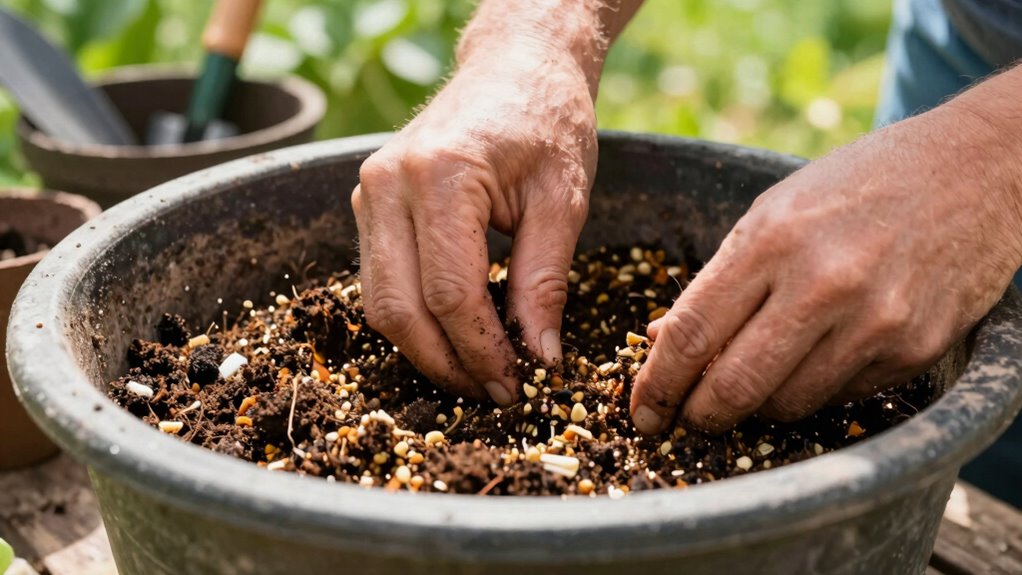
Revitalizing your potting mix with new soil, compost, or amendments is vital to maintain a healthy environment for your plants. By doing so, you prevent the buildup of pests and diseases and guarantee ideal nutrient levels. Incorporate soil amendments like perlite or vermiculite to improve aeration and drainage, and consider compost rejuvenation to restore organic matter and microbial activity. Adding fresh compost or amendments helps rebalance the soil’s nutrient profile and promotes vigorous growth.
Some key practices include:
- Mixing in soil amendments to boost fertility and aeration
- Replenishing organic matter with compost rejuvenation
- Incorporating new soil layers for consistency and freshness
This process helps your reuse efforts stay sustainable and effective, ensuring your plants thrive in a healthy, balanced medium.
Tips for Maintaining Healthy Reuse Practices Season to Season
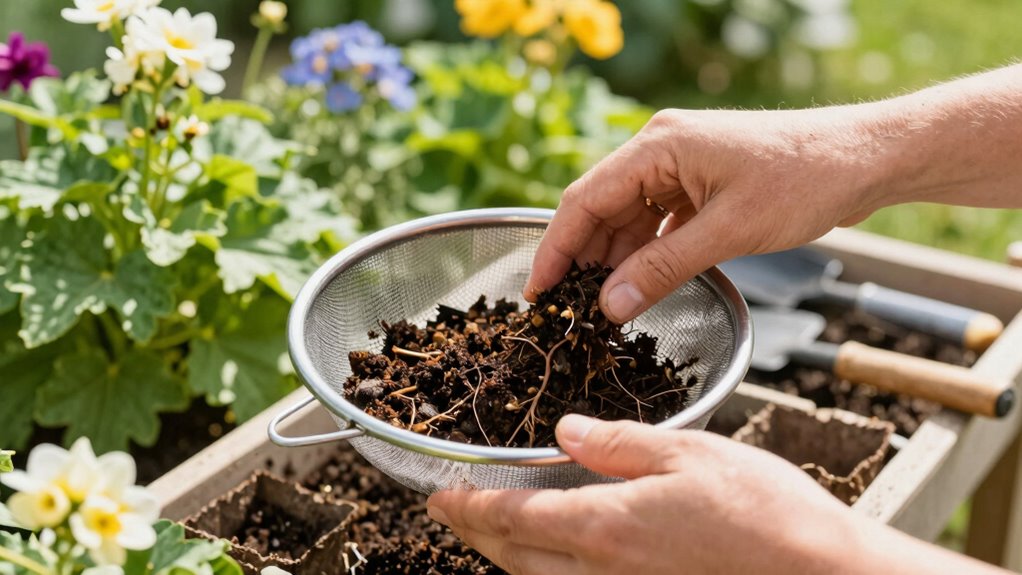
To keep your reuse practices effective throughout the year, you need to adapt your maintenance routines to each season’s changing conditions. During warmer months, increase aeration and monitor moisture levels to prevent compaction and disease buildup. In colder seasons, protect your mix from freezing and drying out by storing it properly or insulating containers. Incorporate sustainable gardening practices by regularly adding compost or organic amendments to boost soil health and reduce waste. Using effective composting techniques ensures your reused potting mix remains nutrient-rich and free of pests. Consistently check for signs of contamination and adjust your practices accordingly. Seasonal adjustments help maintain a healthy, sustainable gardening system that minimizes waste and promotes vigorous plant growth year-round.
Signs Your Reused Potting Mix Is Still Contaminated or Unhealthy
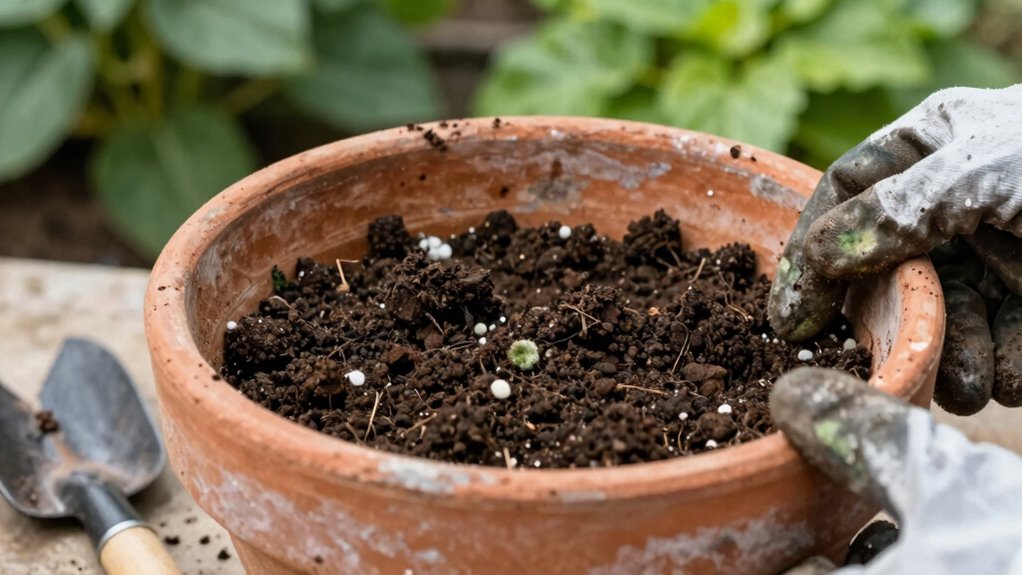
If your reused potting mix still smells unpleasant or has a lingering odor, it’s a sign that contaminants may remain. Visible mold or fungus on the surface indicates the mix isn’t fully healthy. Additionally, if your plants show poor growth despite proper care, the soil might still be contaminated or unsuitable.
Unpleasant Odors Persist
Persistent unpleasant odors are a clear sign that your reused potting mix may still be contaminated or unhealthy. Odors indicate that harmful microbes or residues are active, risking pest and disease carryover. To address this, focus on odor control by improving aeration and adjusting moisture levels. Using proper composting techniques can help break down organic matter and eliminate foul smells. You might also consider sanitizing the mix with heat or natural disinfectants. Be vigilant for persistent odors, as they suggest the mix hasn’t been fully restored. Regularly inspecting and managing the mixture ensures it remains safe for future planting. Remember, a healthy, odor-free potting mix is your best defense against pests and diseases.
Visible Mold or Fungus
Visible mold or fungus on your reused potting mix is a clear warning sign that it remains contaminated or unhealthy. Mold identification is straightforward—you’ll see fuzzy spots in colors like white, green, or black. Fungus prevention starts with recognizing these signs early and avoiding use of the contaminated mix. If you notice mold or fungal growth, it indicates moisture buildup and possible disease presence. To keep your plants healthy, discard heavily moldy or fungus-infested mix rather than trying to clean it. Properly drying and sterilizing the soil can help prevent future fungus growth, but persistent mold suggests the mix has been compromised. Always inspect your potting mix closely before reuse to avoid introducing pests or diseases into your garden.
Poor Plant Growth
When your plants show stunted growth, yellowing leaves, or fail to thrive despite proper care, it often indicates that your reused potting mix remains contaminated or unhealthy. Poor plant growth can result from lingering pests, diseases, or nutrient imbalances. To improve results, consider adding soil amendments that boost fertility and aeration, such as compost or organic matter. Also, evaluate your container selection; using clean, appropriately sized containers helps prevent disease buildup and promotes healthy root development. Signs your mix is still problematic include:
- Persistent fungal or mold issues
- Unusual odor or compacted soil
- Consistent poor drainage and root rot
Addressing these issues ensures your potting mix is safe and nutritious, supporting vigorous plant growth instead of hindering it.
Alternatives to Reusing Potting Mix Safely: When to Replace It
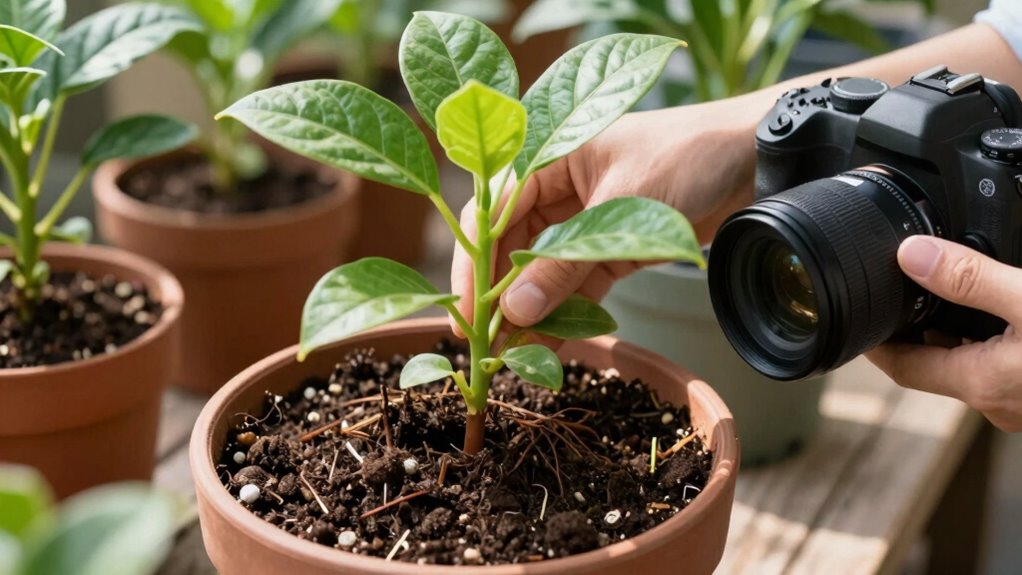
Even with careful reuse, potting mix can become less healthy over time and may pose risks to your plants. When you notice poor growth, pests, or diseases recurring, it’s time to contemplate replacing your mix. Instead of reusing, explore composting alternatives like adding fresh organic matter or making your own potting mix from scratch. Container sterilization is another effective method—heating the soil to kill pathogens and pests—making it safer for reuse or disposal. If the mix shows signs of compaction, persistent pests, or mold, replacing it altogether is the best option. This prevents disease carryover and ensures your plants have a healthy environment to thrive. Knowing when to replace your potting mix keeps your garden vibrant and minimizes pest and disease problems.
FAQs: Common Questions About Reusing and Sterilizing Potting Mix
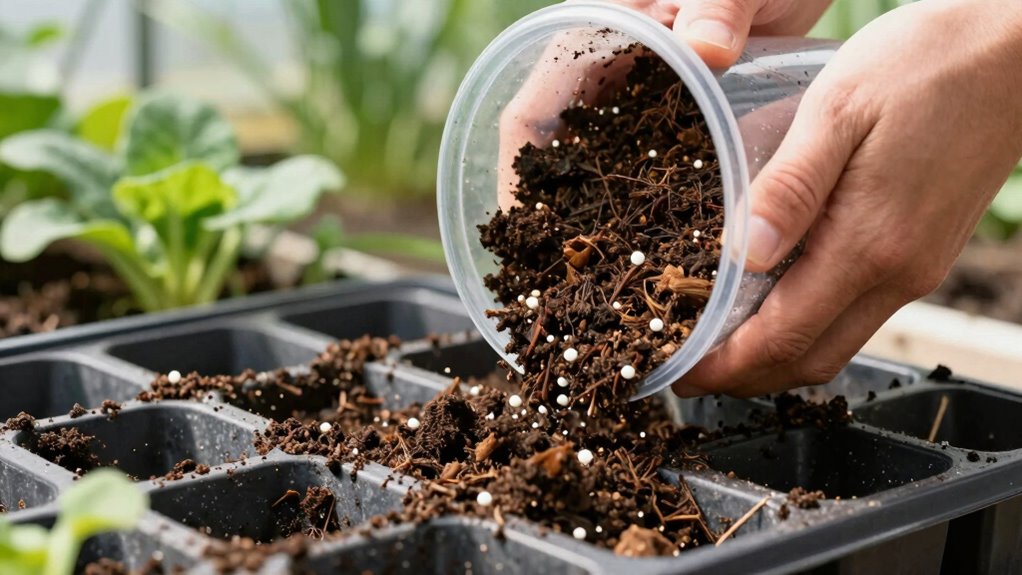
Many gardeners have questions about safely reusing or sterilizing potting mix to protect their plants and avoid potential problems. You might wonder if sterilizing kills all pests and diseases or if nutrient depletion limits plant growth. Additionally, understanding container compatibility is vital to guarantee the mix works well with your pots. Common FAQs include:
- Can I reuse potting mix without sterilizing it?
- How do I sterilize potting mix effectively?
- Will reusing mix cause nutrient depletion or affect plant health?
While sterilizing helps eliminate pests and pathogens, it doesn’t restore nutrients, so supplementing with fertilizer is often necessary. Also, ensure the mix remains compatible with your container to prevent drainage issues or root problems. Addressing these questions helps you reuse potting mix safely and sustainably.
Frequently Asked Questions
Can I Reuse Potting Mix for Edible Vegetable Plants Safely?
Yes, you can reuse potting mix for edible vegetables safely if you improve its soil nutrients and add organic amendments. First, refresh the mix by removing any plant debris and pests. Then, enrich it with compost or organic matter to boost nutrients. This process helps prevent disease and pest carryover while providing a healthy environment for your vegetables, ensuring a productive and safe growing experience.
How Often Should I Sterilize Potting Mix to Prevent Pests?
Did you know that pests and diseases can survive in potting mix for up to two years? You should sanitize your potting mix every 1-2 growing seasons for effective pest prevention. Regular sterilization minimizes pest buildup and disease transfer, keeping your edible plants healthy. If you’re reusing mix, sterilize more often—at least once a year—to ensure pests don’t hitch a ride and compromise your garden’s success.
Is Homemade Sterilization as Effective as Commercial Options?
DIY sterilization can be quite effective if you follow proper methods like oven or microwave heating, but commercial sterilization often guarantees more consistent results due to specialized equipment. While homemade options are convenient and cost-effective, they might not eliminate all pests and diseases as thoroughly. If you’re serious about preventing issues, combining DIY sterilization with commercial options or professional advice can give you the best protection for your potting mix.
What Are the Environmental Impacts of Chemical Sterilizers?
Imagine using chemical sterilizers and noticing nearby water sources become contaminated. Chemical pollution from these sterilizers can leach into soil and water, harming beneficial organisms and disrupting soil health. These environmental impacts include soil degradation and harm to wildlife. While they’re effective, their use risks long-term damage to ecosystems. You should weigh these concerns against their benefits and consider eco-friendly alternatives to minimize your environmental footprint.
Can Reused Potting Mix Affect Plant Growth Negatively?
Reusing potting mix can negatively affect your plant growth if you don’t replenish soil nutrients and manage pest resistance. Over time, nutrients deplete, leading to weaker plants, and pests or diseases may carry over if you skip sterilizing or revitalizing the mix. To prevent these issues, add fresh compost or fertilizers and consider sterilizing the mix to maintain healthy soil conditions, ensuring your plants thrive with ideal soil nutrients and pest resistance.
Conclusion
Reusing potting mix wisely is like tending a delicate garden: if you skip sterilization, pests and diseases can sneak back in, sabotaging your efforts. By following proper steps, you keep your plants healthy and your gardening costs low. Think of it as giving your soil a fresh start—like turning over a new leaf. When you prioritize safe practices, you’ll enjoy thriving plants season after season, just like a well-tended garden that blossoms year-round.