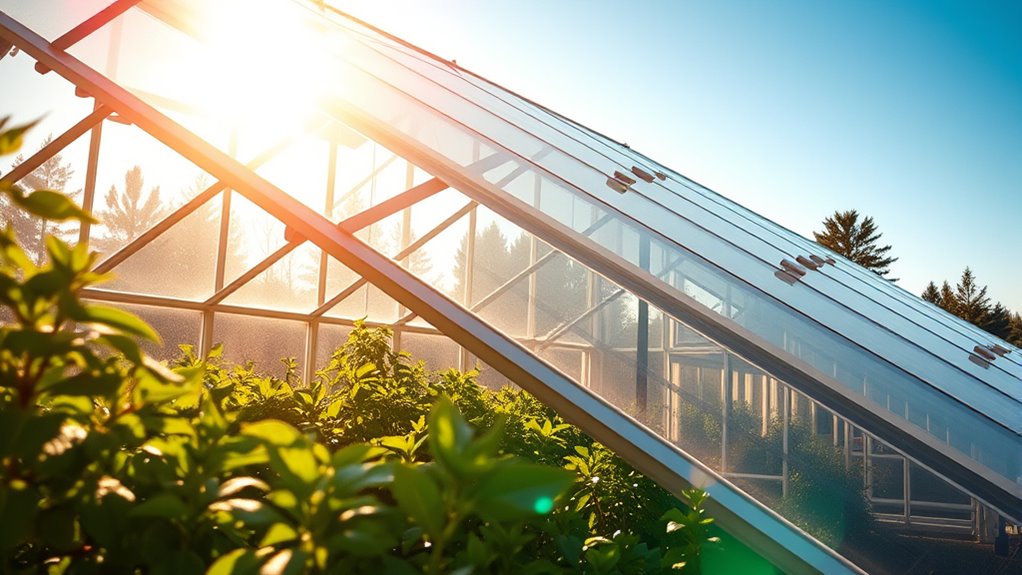

To heat your greenhouse with solar energy, install solar thermal collectors on the roof or wall to capture sunlight and convert it into heat through a circulating fluid. Insulate your greenhouse walls and use materials like polycarbonate windows to trap and retain warmth. Incorporate thermal mass, such as water barrels, to absorb and release heat, creating a stable environment. Keep your system maintained, and you’ll enjoy year-round, eco-friendly warmth—and there’s more to explore on optimizing this setup.
Play games included with Prime
Start a Prime free trial and play with Amazon Luna on your devices.
As an affiliate, we earn on qualifying purchases.
Key Takeaways
- Install solar thermal collectors on the roof or sunny wall to capture and convert sunlight into heat for your greenhouse.
- Use insulation and double-glazed windows to retain heat and improve efficiency of the solar heating system.
- Incorporate thermal mass materials like water barrels or concrete floors to store and stabilize heat overnight.
- Regularly maintain and clean collectors, and monitor internal temperatures to optimize solar heating performance.
- Combine solar thermal systems with supplemental heating during extreme cold to ensure consistent plant growth year-round.
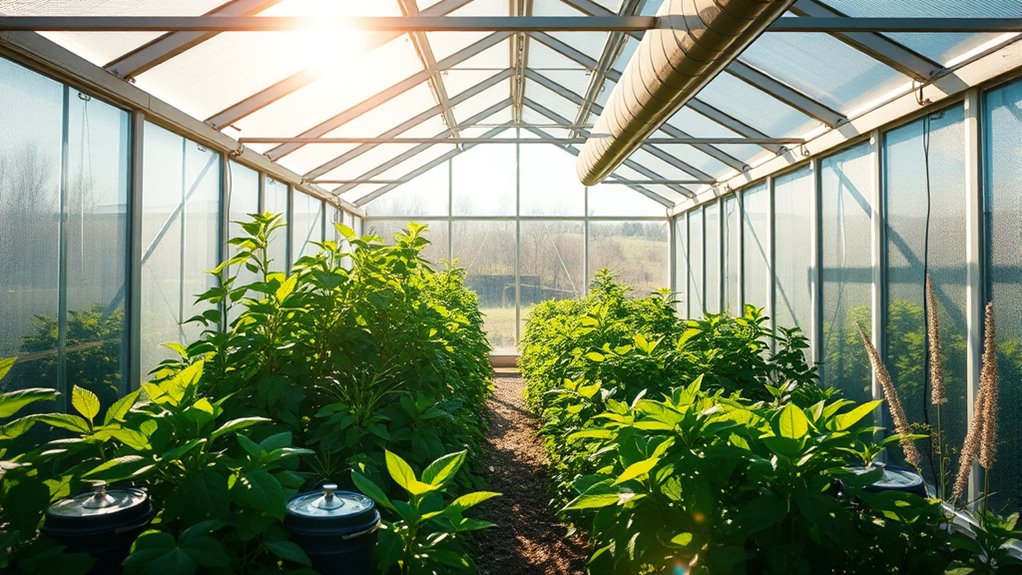
Harnessing solar energy is an effective way to keep your greenhouse warm year-round. By utilizing solar thermal technology, you can efficiently capture the sun’s heat and convert it into a sustainable source of warmth for your plants. Solar thermal systems work by absorbing sunlight through collectors, often installed on the roof or a sunny wall, and transferring that heat to a fluid that circulates within the system. This heated fluid then releases its warmth into your greenhouse, maintaining a consistent temperature without relying on traditional fossil fuels or electric heaters. When designing your setup, it’s vital to consider greenhouse insulation to maximize energy retention. Proper insulation minimizes heat loss through walls, windows, and vents, ensuring that the captured solar heat stays inside where your plants need it most.
Good greenhouse insulation involves sealing gaps, insulating walls, and using double-glazed or polycarbonate windows to trap heat effectively. The better your insulation, the less energy you need to supplement with other heating sources, making your solar thermal system more efficient and cost-effective. You might also want to incorporate thermal mass materials, like water barrels or concrete floors, which absorb heat during the day and release it slowly during colder nights. This combination of solar thermal collection and insulation creates a warm environment that can sustain your plants even during winter or cloudy days. Utilizing reliable merchant services can help you manage the financial aspects of installing and maintaining your solar heating system more effectively.
To optimize your solar thermal system, position your collectors where they’ll receive maximum sunlight throughout the day, typically south-facing in the northern hemisphere. Keep the collectors clean and unobstructed to ensure maximum efficiency. You should also monitor your greenhouse’s internal temperature regularly to fine-tune your insulation and heating setup. During especially cold periods, supplementary heating might still be necessary, but with well-designed solar thermal and insulation strategies, you’ll considerably reduce your reliance on conventional energy sources, lowering your greenhouse’s carbon footprint and energy bills.
Incorporating these elements isn’t complicated, but it requires careful planning. Invest in quality insulation materials, choose the right solar thermal collectors, and ensure your greenhouse design minimizes heat loss. These efforts will pay off by creating a stable, warm environment for your plants year-round, all while harnessing the sun’s free and renewable energy. Over time, you’ll notice your greenhouse stays warmer longer, and your energy costs decrease. Using solar thermal combined with effective greenhouse insulation isn’t just environmentally friendly; it’s also a smart way to grow healthy plants consistently, no matter the season.
solar thermal collectors for greenhouse
As an affiliate, we earn on qualifying purchases.
As an affiliate, we earn on qualifying purchases.
Frequently Asked Questions
What Is the Initial Cost of Installing Solar Heating Systems?
The initial cost of installing solar heating systems varies based on your greenhouse size and system type. You can expect solar panel costs to range from $10,000 to $30,000, while installation expenses might add another $5,000 to $15,000. Keep in mind, these costs include equipment, labor, and permits. While the upfront investment is significant, solar heating can lower your energy bills over time, making it a worthwhile choice.
How Does Weather Affect Solar Greenhouse Heating Efficiency?
Like a painter’s palette, weather colors your solar greenhouse heating efficiency. Cloud cover dims solar radiation, reducing heat collection, while clear skies boost it. Overcast days limit sunlight, making it harder to maintain warmth, unlike sunny days that maximize solar radiation. Wind and temperature fluctuations also influence effectiveness, so you should consider local climate patterns when designing your system. Weather plays a crucial role in how well your solar heating works.
Can Solar Heating Be Used for Large Commercial Greenhouses?
Yes, solar heating can be scaled for large commercial greenhouses, but you need to take into account commercial feasibility carefully. You should evaluate your energy needs, available space for solar collectors, and the initial investment required. By designing a system that efficiently captures and stores solar energy, you can reduce operating costs and make solar heating a viable option for large-scale operations. Proper planning ensures you get the most out of your solar investment.
What Maintenance Is Required for Solar Heating Systems?
You should perform regular system checks on your solar heating system to guarantee it runs efficiently. Keep an eye on components like pumps, valves, and filters, replacing any worn or faulty parts promptly. Clean solar collectors regularly to maximize energy absorption. Scheduling routine maintenance helps prevent breakdowns and extends your system’s lifespan, ensuring your greenhouse stays warm and productive throughout the seasons.
Are There Government Incentives for Solar Greenhouse Heating?
Imagine your greenhouse basking in golden sunlight, powered by eco-friendly energy. Yes, there are government grants and tax incentives that can help cover your solar heating setup costs. These programs aim to encourage sustainable practices, making it easier for you to adopt solar solutions. Check with local agencies or federal programs, as they often offer incentives that reduce expenses and support your green thumb’s green energy progression.
Conclusion
By harnessing solar energy, you can effectively heat your greenhouse while cutting costs and reducing your carbon footprint. Did you know that a well-designed solar heating system can save up to 70% on energy bills? That’s like getting free warmth from the sun! So, why not take advantage of this renewable resource and keep your plants thriving year-round? It’s an easy, eco-friendly way to enjoy a lush, productive greenhouse no matter the season.
NFL season / tailgating Picks
team gear
As an affiliate, we earn on qualifying purchases.