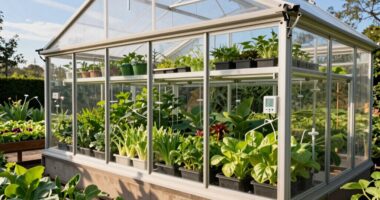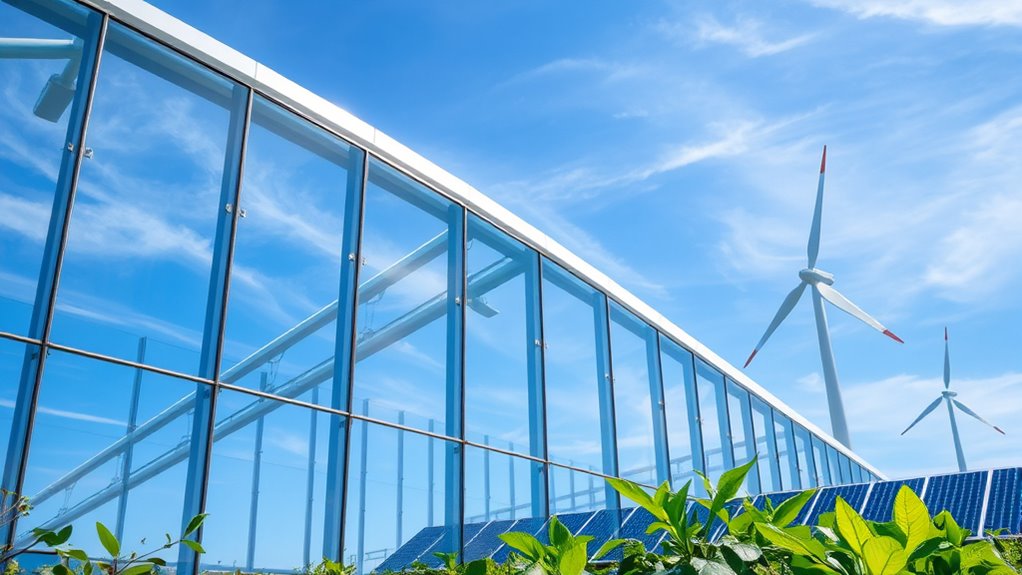

To minimize your greenhouse’s carbon footprint, switch to renewable energy sources like solar panels and wind turbines, which cut emissions and lower costs over time. Use eco-friendly materials such as recycled supplies and biodegradable plastics to reduce waste. Design your greenhouse to maximize natural light and insulation, decreasing dependence on energy-intensive systems. Maintain efficient equipment and incorporate smart technology to optimize energy use. Exploring these strategies further can help you create a more sustainable operation.

Get garden gear delivered free with Prime
- Fast, free delivery on millions of items
- Prime Video, Amazon Music and more included
- Member-only deals all year
Key Takeaways
- Switch to renewable energy sources like solar panels and wind turbines to power greenhouse operations.
- Use eco-friendly, recycled, or sustainably sourced materials for construction and insulation.
- Design the greenhouse for passive solar heating, natural ventilation, and shading to reduce energy needs.
- Implement energy-efficient systems such as LED lighting, automated controls, and regular maintenance.
- Incorporate advanced, durable materials and construction techniques to enhance insulation and reduce long-term emissions.
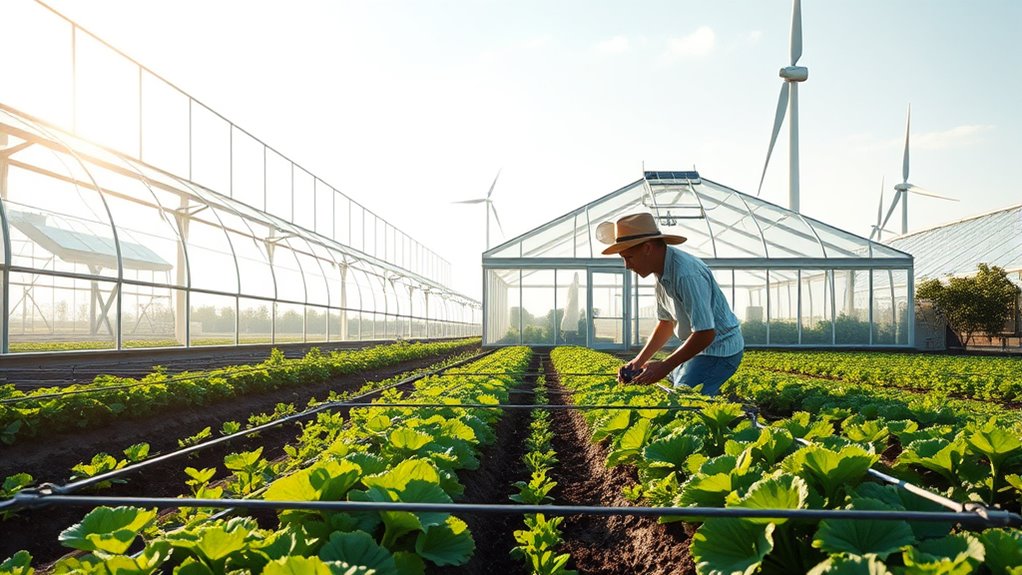
Understanding your greenhouse carbon footprint is essential in addressing climate change. When you focus on reducing the emissions associated with your greenhouse operations, you’re not only helping the environment but also improving the efficiency and sustainability of your growing practices. One of the most effective ways to achieve this is by integrating sustainable energy sources. Switching to renewable energy options like solar panels or wind turbines can drastically cut your reliance on fossil fuels, which are major contributors to greenhouse gases. By harnessing eco-friendly energy, you reduce your carbon emissions while often lowering long-term operational costs. This shift not only benefits the planet but also demonstrates your commitment to environmentally responsible farming.
Another critical aspect involves the materials you use in your greenhouse. Opting for eco-friendly materials can considerably decrease your carbon footprint. For example, choosing recycled or sustainably sourced building supplies minimizes the environmental impact of construction and maintenance. Eco-friendly materials like biodegradable plastics or natural insulation reduce waste and emissions associated with manufacturing and disposal. These choices help create a closed-loop system where your greenhouse’s environmental impact is minimized from start to finish. Additionally, investing in durable, energy-efficient glazing and ventilation systems enhances insulation, reducing the need for artificial heating and cooling, which are energy-intensive processes.
You should also consider how your greenhouse design can maximize natural resources. Incorporating passive solar techniques, such as proper orientation and shading, minimizes the need for additional heating and cooling. Using eco-friendly materials in shading devices or reflective surfaces can further improve energy efficiency without relying heavily on electricity. Proper insulation and sealing prevent heat loss during colder months and keep the interior cool during summer, reducing demand for artificial climate control. These strategies not only diminish your greenhouse’s carbon footprint but also promote sustainable energy use by leveraging natural conditions.
Furthermore, implementing energy-efficient systems like LED grow lights, timers, and automated climate controls can optimize energy consumption. These technologies ensure that you’re using only what’s necessary, avoiding waste and excess emissions. Routine maintenance of equipment and infrastructure also plays a crucial role in keeping energy use low. When you prioritize sustainability in your energy and materials choices, you create a more resilient, eco-friendly greenhouse that aligns with climate goals and supports the health of your crops and the environment. Additionally, adopting fiber-reinforced materials can improve the durability and insulation properties of your greenhouse structures, further reducing energy needs.
As an affiliate, we earn on qualifying purchases.
Frequently Asked Questions
How Can I Measure My Greenhouse’s Current Carbon Footprint Accurately?
To measure your greenhouse’s current carbon footprint accurately, start with a carbon footprint calculation that considers all emission sources, such as energy use, transportation, and waste. Use reliable emission measurement techniques like data collection from utility bills and fuel records. You can also employ online tools or software designed for precise emission tracking. Regularly updating these measurements helps identify areas to reduce your overall emissions effectively.
What Are Low-Impact Materials for Greenhouse Construction?
Like finding a hidden gem in a vintage store, choosing low-impact materials makes your greenhouse eco-friendly. Opt for sustainable wood, which is harvested responsibly, and incorporate recycled plastics to reduce waste. These materials lower your carbon footprint by minimizing environmental harm. Using sustainable wood and recycled plastics not only supports green building practices but also guarantees your greenhouse remains durable and eco-conscious for years to come.
How Does Climate Zone Affect Carbon Reduction Strategies?
Your climate zone directly influences your carbon reduction strategies. In colder zones, you focus on insulating and efficient heating to cut emissions, while in warmer zones, you prioritize ventilation and shading to lower cooling needs. Understanding your climate zone helps you select appropriate materials and design features, maximizing energy efficiency. Tailoring your strategies ensures you minimize carbon output effectively, making your greenhouse more sustainable regardless of regional weather patterns.
Can Renewable Energy Sources Fully Power a Greenhouse?
You might think renewable energy sources can fully power your greenhouse, and with solar integration and wind power, it’s possible, but not always guaranteed. Solar panels can generate significant energy during sunny days, while wind turbines provide power when it’s windy. However, you’ll likely need energy storage solutions or backup systems to guarantee consistent power supply, especially during cloudy or calm periods, making complete reliance challenging but achievable with proper planning.
What Financing Options Support Sustainable Greenhouse Upgrades?
You can fund sustainable greenhouse upgrades through green loan programs and eco-friendly grants. Green loans often offer favorable terms for energy-efficient projects, making upgrades more affordable. Eco-friendly grants provide direct funding to support eco-conscious initiatives, helping you invest in renewable energy systems and sustainable infrastructure. Exploring these options can markedly reduce your greenhouse’s carbon footprint while promoting environmentally responsible growth. Always check eligibility criteria and application deadlines to maximize your chances of securing funding.
Conclusion
So, you’ve taken steps to cut your greenhouse’s carbon footprint—yet, here’s the irony: while you might be proud of your eco-friendly efforts, your greenhouse still releases more carbon than a small city’s power plant. It’s almost poetic, isn’t it? All your good intentions, fighting against the very emissions they’re fueling. But don’t fret—every small change adds up. Maybe one day, your greenhouse will be the shining example of true sustainability, not just a carbon culprit.
Halloween Picks
halloween
As an affiliate, we earn on qualifying purchases.