Choosing sustainable potting and propagation systems helps you grow healthy plants while reducing environmental impact. By using eco-friendly containers, organic soil amendments, and moisture sensors, you promote healthier roots and conserve resources like water and plastics. Proper aeration prevents root issues and supports plant vigor. Incorporating sustainable practices not only benefits your plants but also protects the environment. Keep exploring how you can make your gardening more eco-conscious and reap the long-term rewards.
Get ready for Prime Big Deal Days — try Prime free
Exclusive member deals on October 6–7, plus fast free delivery. Cancel anytime.
As an affiliate, we earn on qualifying purchases.
Key Takeaways
- Using eco-friendly containers reduces environmental impact and prevents root circling, promoting healthier plant growth.
- Incorporating organic soil amendments improves moisture retention and soil health sustainably.
- Employing moisture sensors and automated watering systems conserves water and enhances propagation efficiency.
- Promoting soil microbiome health enhances plant resilience and reduces reliance on chemical inputs.
- Sustainable potting practices support resource conservation and long-term plant vitality.
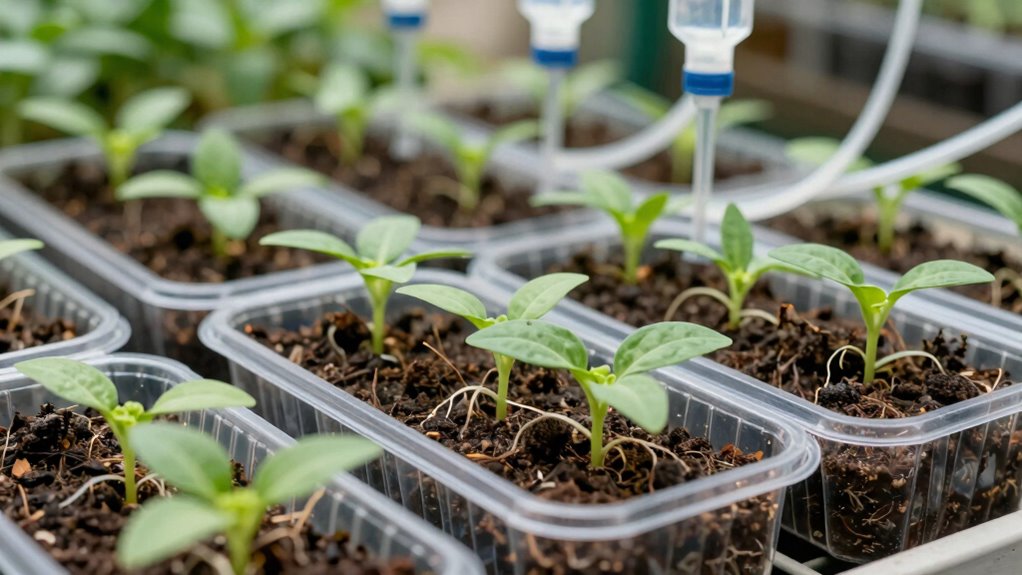
Have you ever wondered how nurseries efficiently grow and reproduce plants? It all starts with understanding the essential role of soil moisture and root development. When you’re managing a potting or propagation system, maintaining ideal soil moisture is necessary. Too much water can drown roots, leading to rot and disease, while too little causes dehydration and stunted growth. A well-designed system keeps the soil evenly moist, ensuring roots have a steady supply of water without becoming waterlogged. This balance encourages healthy root development, which is the foundation of robust plants.
Healthy root growth is fundamental because it directly affects how well a plant can absorb nutrients and water from its environment. When roots develop properly, they form a dense, fibrous network that anchors the plant firmly and promotes vigorous growth. To achieve this, sustainable propagation systems often incorporate soil mixes that retain moisture but drain excess water efficiently. Using organic materials like compost or peat moss can improve soil structure, providing a hospitable environment for roots to expand. Modern systems also utilize moisture sensors and automated watering, which help you maintain consistent soil moisture levels. This precision not only fosters better root development but also conserves water, making the process more environmentally friendly. Additionally, understanding the soil microbiome can help improve nutrient availability and boost plant health over time.
Healthy roots enhance nutrient absorption, stability, and vigorous growth through well-draining, moisture-retentive soil and modern watering technology.
Efficient potting and propagation systems also emphasize the importance of aeration. Good airflow around roots prevents compaction and promotes healthy growth. When roots breathe, they grow stronger and more resilient, leading to quicker establishment and better survival rates. Incorporating materials such as perlite or coconut coir enhances aeration while maintaining necessary moisture levels. Such sustainable practices reduce the need for chemical fertilizers and pesticides, as healthy roots can better fend off pests and diseases naturally. Additionally, promoting soil health through organic amendments can further enhance root resilience and overall plant vitality. These practices contribute to a sustainable gardening approach that benefits both plants and the environment.
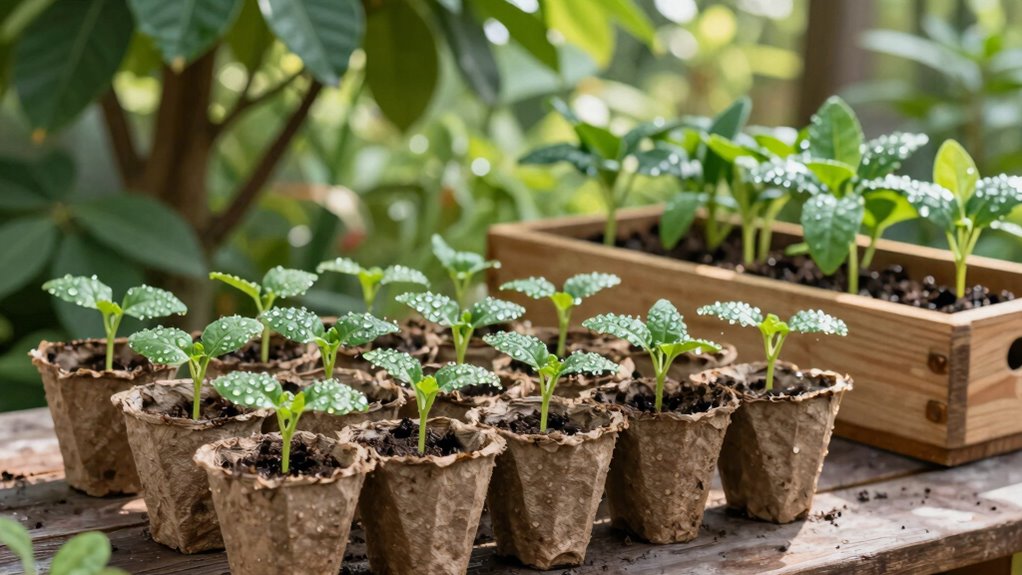
Moreover, choosing eco-friendly containers made from recycled or biodegradable materials complements your efforts to create a sustainable system. These containers promote better root development by preventing root circling or girdling, common problems with traditional plastic pots. They also reduce waste and environmental impact, aligning your gardening efforts with eco-conscious principles. Proper container choice can also improve root aeration, which is essential for healthy plant growth.
In essence, a sustainable potting and propagation system revolves around controlling soil moisture and fostering strong root development. When you give roots the right environment—moist but well-drained soil, ample aeration, and eco-friendly containers—you set the stage for healthy, resilient plants. This approach not only benefits your garden or nursery but also contributes to conserving resources and protecting the planet. By focusing on these core elements, you create a system that produces vigorous plants while supporting sustainability at every step. Proper soil moisture management is essential for promoting healthy roots and ensuring the longevity of your plants.
As an affiliate, we earn on qualifying purchases.
Frequently Asked Questions
How Do Sustainable Systems Reduce Water Usage in Propagation?
Sustainable systems reduce water usage in propagation through water conservation techniques like drip irrigation and self-watering containers. You can also reuse water and employ eco-friendly practices such as rainwater harvesting. These methods minimize waste, guarantee plants get just the right amount of water, and promote healthier growth. By adopting sustainable systems, you help protect resources, lower your environmental impact, and support eco-friendly practices that benefit both your plants and the planet.
Are Eco-Friendly Materials Cost-Effective Compared to Traditional Options?
Imagine planting seeds in a garden of tomorrow — eco-friendly materials like recyclable containers and biodegradable substrates often cost less in the long run. They reduce waste and landfill reliance, making them more cost-effective over time. While initial expenses might be higher, their durability and environmental benefits save money and resources, proving you’re not just planting, but cultivating a sustainable future. Eco-friendly choices grow smarter with each passing season.
What Are the Long-Term Environmental Benefits of Sustainable Potting Systems?
Switching to sustainable potting systems reduces your ecological footprint by minimizing waste and pollution. These systems promote resource conservation, helping you use fewer raw materials and less water over time. In the long run, you’ll contribute to healthier ecosystems, decrease landfill burden, and support biodiversity. Your choice to adopt eco-friendly materials guarantees a lasting positive impact on the environment, making gardening more sustainable and beneficial for future generations.
Can Sustainable Propagation Systems Be Scaled for Commercial Use?
Yes, sustainable propagation systems can be scaled for commercial use, but you’ll face scalability challenges and market adoption hurdles. You need to optimize resource efficiency, reduce costs, and build supply chains that support larger volumes. You also must educate consumers and growers about the long-term benefits. By addressing these hurdles with innovation and persistence, you’ll help make sustainable propagation systems a viable and impactful option for widespread commercial application.
How Do Sustainable Systems Affect Plant Growth and Health?
Sustainable systems positively impact plant growth and health by promoting a healthy soil microbiome, which enhances nutrient cycling. When you use eco-friendly potting methods, you encourage beneficial microorganisms that improve nutrient availability and soil structure. This results in stronger, more resilient plants. Additionally, sustainable practices reduce chemical use, lowering stress on plants and supporting long-term growth, ensuring healthier plants and a more balanced, thriving ecosystem.
Conclusion
By choosing sustainable potting and propagation systems, you’re planting seeds for a greener future. Think of your efforts as tending a delicate garden, where each thoughtful decision nurtures growth and resilience. When you prioritize eco-friendly practices, you’re not just growing plants—you’re cultivating a healthier planet. So, embrace these sustainable methods as your garden’s guiding stars, and watch your efforts blossom into a vibrant, thriving ecosystem that benefits all.
Fall yard work Picks
leaf blowers
As an affiliate, we earn on qualifying purchases.