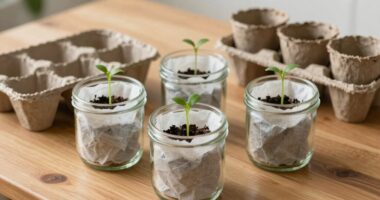
Even in winter, water still evaporates because solar energy heats the soil, causing moisture to escape, especially if humidity is low. To reduce this loss without overwatering, use organic mulches like straw or shredded leaves to insulate soil, and cover exposed areas with landscape fabric or gravel. Installing shade cloths and barrier methods can also help slow evaporation. Keep a close eye on soil moisture levels to maintain the perfect balance—there’s more to learn to master winter watering.
Key Takeaways
- Apply organic mulches like straw or shredded leaves to insulate soil and reduce moisture loss.
- Use evaporation barriers such as plastic sheeting or landscape fabric to slow water vapor escape.
- Water deeply and infrequently early in the day to promote root growth without excess moisture.
- Incorporate shade cloths or windbreaks to protect soil and plants from sun and wind-driven evaporation.
- Regularly monitor soil moisture with sensors to avoid overwatering while maintaining adequate hydration.
Why Does Water Still Evaporate in Winter?
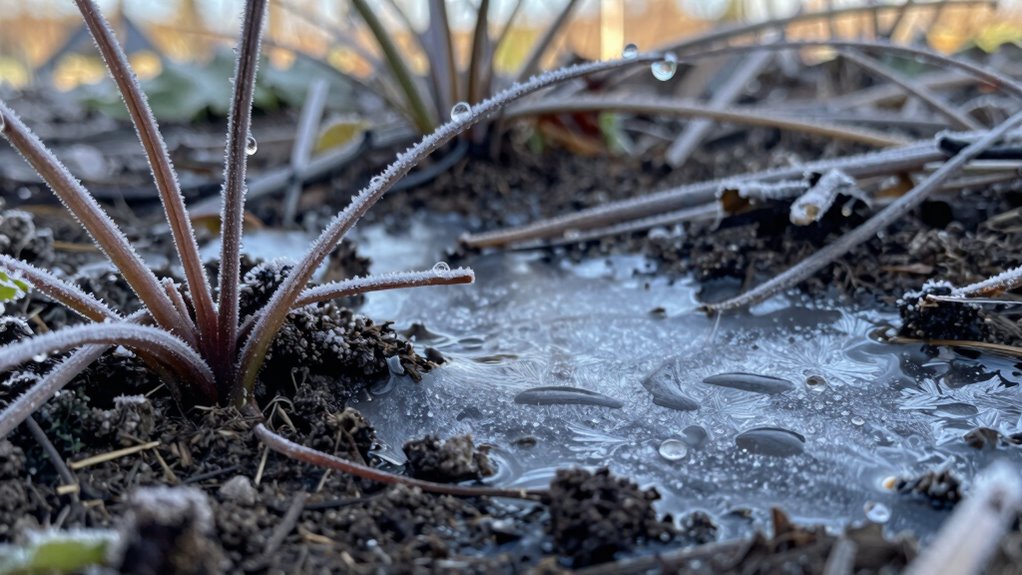
Even though winter brings cold temperatures, water continues to evaporate because evaporation depends on the energy from the sun and the water’s surface, not just air warmth. As the sun shines, it heats the soil surface, raising soil temperature enough for some water molecules to escape into the air. Humidity control plays a role here; low humidity allows more water to evaporate, even in winter. You might notice water disappearing from outdoor containers or soil, despite the cold. This ongoing evaporation means you’ll need to manage water carefully, ensuring soil doesn’t dry out too quickly. Understanding that soil temperature and humidity influence evaporation helps you make better watering decisions, keeping your plants healthy without overwatering during the colder months. Additionally, soil temperature fluctuations can impact how much water is lost through evaporation. Recognizing the importance of microclimate conditions around your plants can further help optimize watering strategies in winter. Being aware of these environmental factors will help you adapt your watering routines to prevent both drought stress and overwatering.
Best Mulches and Ground Covers to Keep Soil Moist

Choosing the right mulch or ground cover can make a significant difference in maintaining soil moisture during winter. Mulch types like straw, wood chips, or shredded leaves create a protective layer that insulates the soil and reduces evaporation. Ground cover plants, such as creeping thyme or low-growing sedums, naturally shield the soil while adding aesthetic value. Organic mulches improve soil structure as they break down, helping retain water. Inorganic options like landscape fabric or gravel also prevent moisture loss, especially in exposed areas. When selecting ground cover, consider plants that are hardy in winter and can tolerate cold conditions. Proper mulch application is essential to maximize water retention and prevent soil from drying out. Additionally, selecting appropriate ground covers that are resilient in winter ensures ongoing soil moisture protection. Using the best mulch types or ground covers guarantees your soil stays moist, even during the coldest months, without the risk of overwatering. Incorporating sustainable landscaping practices can further enhance water conservation efforts in your winter garden. Understanding how ground cover diversity can contribute to a resilient garden ecosystem is also beneficial for long-term moisture retention. Moreover, choosing energy-efficient solutions like reflective mulches can help maintain soil temperature and moisture levels more effectively.
How to Water Your Garden Properly in Cold Weather
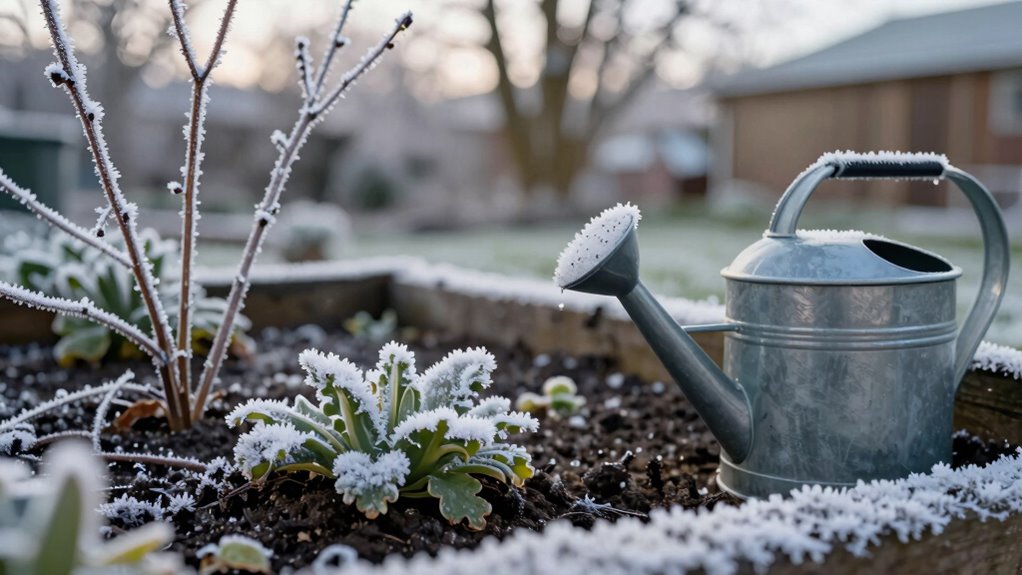
During cold weather, proper watering becomes essential to protect your garden’s health without encouraging root rot or frost damage. Use watering techniques that deliver deep, infrequent soakings rather than frequent, shallow watering. This approach encourages roots to grow deeper, making plants more resilient to winter stress. Water early in the day so moisture can soak into the soil before temperatures drop overnight. Focus on winter plant protection by avoiding overwatering, which can lead to frozen roots and disease. Keep an eye on soil moisture; it should be moist but not waterlogged. Mulching helps retain soil warmth and moisture, reducing the need for frequent watering. Monitoring soil moisture levels regularly is crucial to prevent overwatering and maintain plant health. Adjust watering based on seasonal changes to ensure your garden remains healthy and resilient during the cold months. Additionally, understanding watering techniques can help you optimize water use and improve plant resilience in winter. Remember, watering in moderation during winter keeps your garden healthy and prepares plants to withstand the cold. Proper watering practices are especially important in supporting water conservation, ensuring you use resources efficiently while protecting your garden.
Using Barriers and Shade to Prevent Moisture Loss

To prevent moisture loss in your winter garden, using barriers and shade is highly effective. Evaporation barriers, like plastic sheeting or mulch, create a physical barrier to slow water loss. Shade cloths reduce sunlight intensity and lower temperature fluctuations, helping retain soil moisture. Combining these methods protects your plants from harsh winter winds and direct sun exposure, which accelerate evaporation. Using proper insulation techniques can further enhance moisture retention by maintaining more stable soil temperatures. Incorporating moisture conservation strategies is essential for maintaining healthy winter soil conditions. Understanding airflow dynamics can also help optimize your barrier placement to maximize moisture retention. Properly managing evaporation control methods can significantly improve water retention during colder months. Additionally, selecting appropriate barrier types based on your specific climate conditions ensures more effective moisture preservation. Use the table below to select appropriate barriers and shading options:
| Barrier Type | Best Use Case |
|---|---|
| Evaporation barriers | Covering soil to minimize water loss |
| Shade cloths | Shielding plants from intense sun |
| Mulch | Insulating soil and reducing evaporation |
| Windbreaks | Blocking cold winds |
| Reflective sheeting | Redirecting sunlight and heat |
Implementing these strategies keeps moisture in your soil without overwatering.
How to Monitor Soil Moisture and Avoid Overwatering in Winter
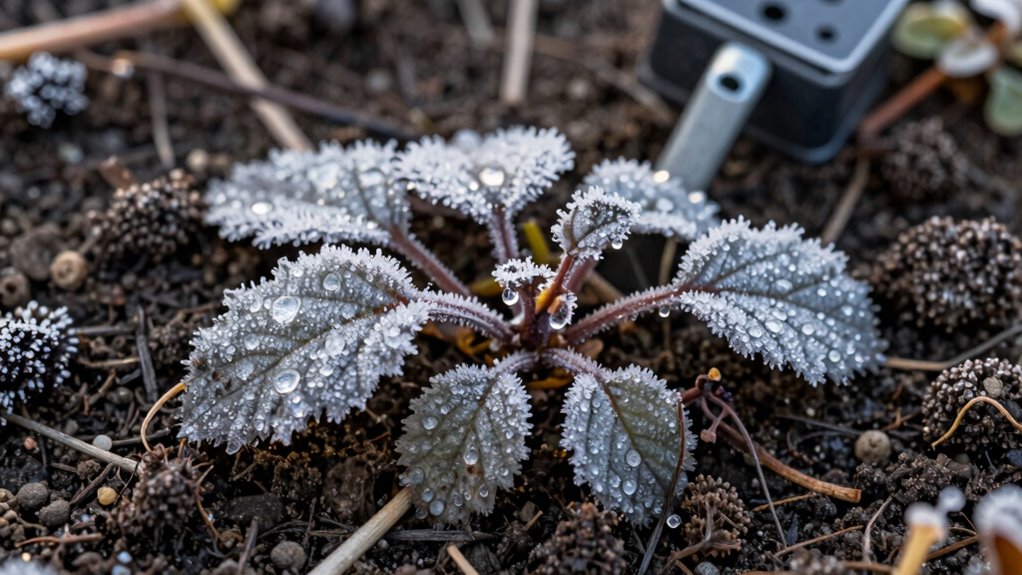
Monitoring soil moisture in winter is essential to prevent overwatering and guarantee healthy plant growth. To do this effectively, use moisture sensors or soil probes to get accurate readings of your soil’s moisture levels. These smart devices help you determine if your plants need water, avoiding guesswork that can lead to overwatering. Place soil probes at various depths to monitor moisture throughout the root zone. Check readings regularly, especially after rain or watering, to maintain ideal moisture. Remember, winter soil tends to retain water longer, so adjust your watering schedule accordingly. Being aware of how moisture sensors work can improve your ability to interpret readings correctly and respond appropriately. Utilizing soil moisture sensors can provide more precise data, making your watering routine more efficient. Incorporating soil moisture monitoring into your winter gardening routine can prevent unnecessary watering and promote healthier plant roots. By consistently monitoring soil moisture, you can provide just enough water without risking root rot or other issues caused by excess moisture. This proactive approach keeps your plants healthy and resilient all winter long.
Frequently Asked Questions
Can Indoor Plants Benefit From Winter Watering Techniques?
Indoor plants definitely benefit from adjusted winter watering schedules. During colder months, you should reduce indoor plant hydration to prevent overwatering, which can lead to root rot. Follow winter watering schedules that focus on letting the topsoil dry out between waterings. This helps prevent excess moisture, reduces evaporation, and keeps your plants healthy. Just be mindful of each plant’s specific needs and avoid watering on a strict routine—listen to their signals.
What Are Natural Methods to Retain Soil Moisture in Winter?
Think of your soil as a treasure chest; you want to keep its riches hidden. Use mulch insulation to shield the soil from chilly winds, like a cozy blanket. Add a layer of compost to act as a sponge, locking in moisture. These natural methods create a barrier against evaporation, ensuring your plants stay hydrated without overwatering, even in the coldest months.
How Does Winter Watering Differ for Container Versus Garden Plants?
When winter watering, you should water container plants more carefully, ensuring you don’t overwater while keeping soil moist, since containers dry out faster. For garden plants, water less frequently but deeply, allowing moisture to penetrate deeper into the soil. In both cases, avoid overwatering by checking soil moisture regularly. Adjust your watering schedule based on temperature and wind conditions to prevent evaporation and keep plants healthy.
Are There Specific Plant Species That Are More Drought-Tolerant in Winter?
Imagine your garden as a resilient fortress—certain plants stand firm against winter’s chill and dry breath. Drought-tolerant species like sedum, juniper, and lavender are your winter hardy plants, thriving with minimal water. These hardy survivors require less frequent watering, helping you conserve moisture and prevent overwatering. Embrace these tough characters to keep your garden vibrant and resilient, even when winter’s grip tightens.
How Often Should Soil Moisture Levels Be Checked During Winter Months?
You should check soil moisture monitoring weekly during winter months. This helps you stay on top of your winter watering schedule, ensuring plants get enough water without overdoing it. Use a simple soil moisture meter or probe to assess levels accurately. Adjust watering frequency based on the readings, especially during cold spells or dry periods, to keep your plants healthy and prevent water wastage.
Conclusion
Just like a sponge, your garden’s soil can easily lose its moisture if not properly protected. I once watched my neighbor cover her beds with mulch before a cold snap, and her plants thrived while others struggled. Remember, thoughtful watering and barrier use are your tools to keep soil moist without drowning it. Think of winter watering as a gentle dance—balance is key to keeping your garden vibrant and healthy all season long.