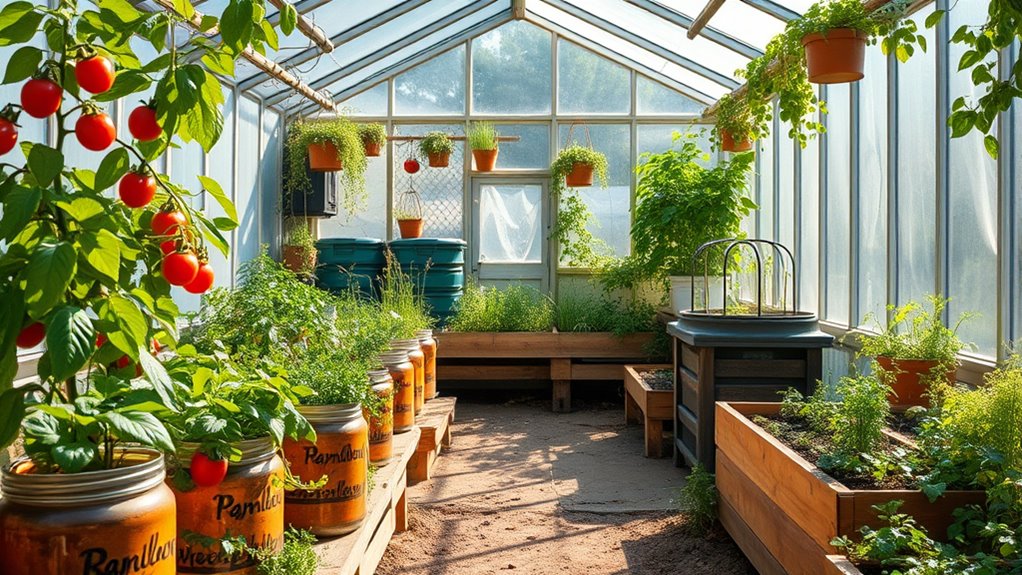

To practice zero waste greenhouse gardening, start composting kitchen scraps and garden waste to enrich your soil naturally. Use organic pest control methods like beneficial insects, neem oil, and companion planting to keep pests at bay without chemicals. Keep your greenhouse tidy to prevent pest problems and regularly turn your compost to avoid odors. By integrating these sustainable practices, you’ll create a resilient, eco-friendly environment. Keep exploring for more tips to enhance your green space further.
Key Takeaways
- Implement composting using kitchen scraps and garden waste to enrich soil and reduce waste.
- Introduce beneficial insects like ladybugs and nematodes to naturally control pests.
- Use organic repellents such as neem oil and garlic sprays to deter pests without chemical waste.
- Practice regular compost turning and pest inspection to prevent odors, pest attraction, and chemical treatments.
- Incorporate companion planting with basil, marigolds, and nasturtiums to enhance pest resistance naturally.
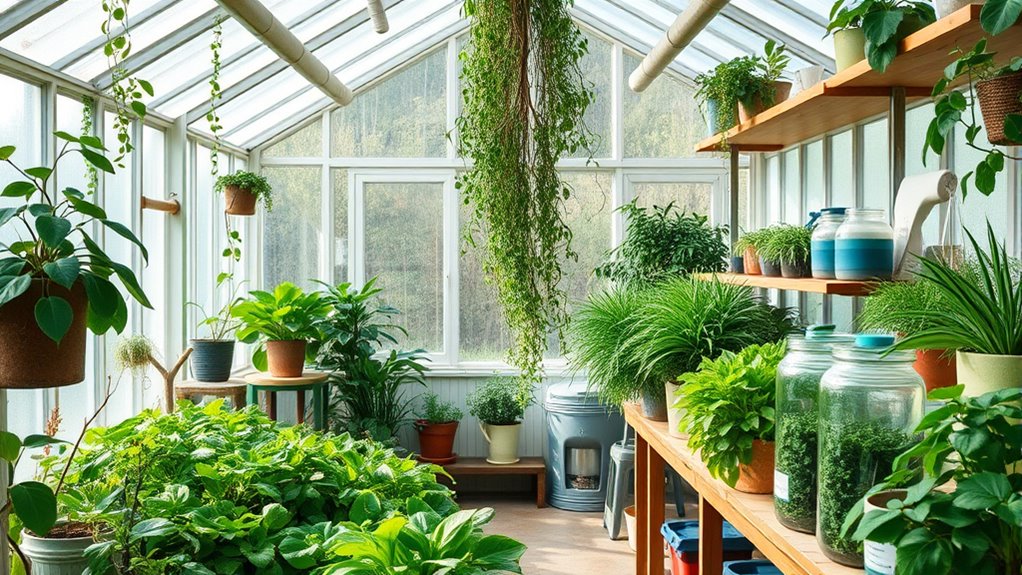
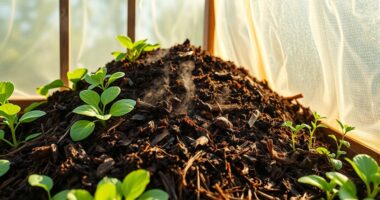
Have you ever wondered how to maximize your greenhouse’s potential? One of the most effective ways to do that is by embracing zero waste gardening, starting with composting techniques that turn organic waste into valuable soil amendments. Composting not only reduces your household and garden waste but also enriches your soil naturally, leading to healthier plants. To get started, gather kitchen scraps like vegetable peels, coffee grounds, and eggshells, along with garden waste such as leaves and grass clippings. Use a simple compost bin or pile, making sure to maintain proper aeration by turning it regularly. This helps break down materials faster and prevents unpleasant odors. As your compost matures, you’ll notice it becomes dark, crumbly, and rich in nutrients, ready to feed your plants without the need for synthetic fertilizers. Incorporating compost into your planting routines minimizes waste and creates a closed-loop system that benefits your entire greenhouse ecosystem. Understanding how performance tuning can enhance the efficiency of your composting equipment may also help speed up the process.
Alongside composting, pest management plays a crucial role in maintaining a zero waste approach. Instead of relying on chemical pesticides that can harm the environment and your plants, focus on natural pest control methods. Introduce beneficial insects like ladybugs and predatory nematodes that naturally prey on common greenhouse pests. Keep your greenhouse clean and free of debris, which can harbor insects and diseases. Use organic repellents such as neem oil or garlic sprays to deter pests without generating waste or adding harmful chemicals. Companion planting can also be highly effective—plant herbs like basil, marigolds, or nasturtiums alongside your vegetables to repel pests naturally. When you spot pest issues early, remove affected leaves or insects manually, reducing the need for wasteful chemical interventions. Proper pest management combined with composting techniques ensures your greenhouse remains productive, sustainable, and free from unnecessary waste.
Frequently Asked Questions
How Can I Compost Effectively Inside My Greenhouse?
To compost effectively inside your greenhouse, place your compost bin in a well-ventilated, shaded spot to prevent overheating. Keep a good mix of compost ingredient variety, including greens like vegetable scraps and browns such as dried leaves or paper, to promote healthy decomposition. Turn the pile regularly to aerate and speed up composting. Maintain moisture levels similar to a damp sponge, and you’ll have rich compost in no time.
What Are the Best Zero Waste Pest Control Methods?
Imagine your greenhouse as a vibrant, thriving sanctuary where pests are kept at bay naturally. You can use composting techniques to enrich your soil with beneficial microbes that deter pests. Plant pest-resistant plants like marigolds and nasturtiums to act as living shields, creating a hostile environment for unwanted visitors. Combine these methods for a harmonious, zero waste approach that keeps your garden healthy and pest-free without chemicals.
How Do I Recycle Greenhouse Materials Sustainably?
To recycle greenhouse materials sustainably, start by choosing recyclable greenhouse plastics and other eco-friendly materials. Always clean and sort plastics before recycling, and check local facilities for proper disposal. Opt for sustainable material sourcing to reduce waste from the outset. Additionally, reuse materials whenever possible, and consider composting organic waste to minimize landfills. This approach helps you maintain an environmentally responsible greenhouse that aligns with zero waste principles.
Can I Grow Food Year-Round With Zero Waste Practices?
Yes, you can grow food year-round with zero waste practices by mastering composting techniques and seasonal planting strategies. By composting organic waste, you create rich soil to sustain continuous crops, while adjusting planting schedules to match seasonal shifts. This sustainable cycle keeps your greenhouse green, minimizes waste, and maximizes yield. With dedication to eco-friendly methods, you’ll enjoy fresh, local food through every season, all while respecting the environment.
What Low-Impact Watering Systems Suit Greenhouse Gardening?
You should consider using drip irrigation for efficient watering, as it delivers water directly to plant roots, reducing waste. Rain harvesting systems also work well by collecting and reusing rainwater, minimizing your environmental impact. Both methods are low-impact options that conserve water and support sustainable greenhouse gardening. Combining drip irrigation with rain harvesting guarantees your plants stay hydrated while keeping your practices eco-friendly and aligned with zero waste principles.
Conclusion
By embracing these zero waste greenhouse gardening tips, you’re planting the seeds for a greener future. Think of your garden as a living, breathing mirror of the planet—every small step you take ripples outward, transforming waste into wonder. With mindful choices, your greenhouse becomes a lush oasis that nurtures both your plants and the Earth. So, dig in, stay committed, and watch your sustainable garden flourish like a well-tended dream.