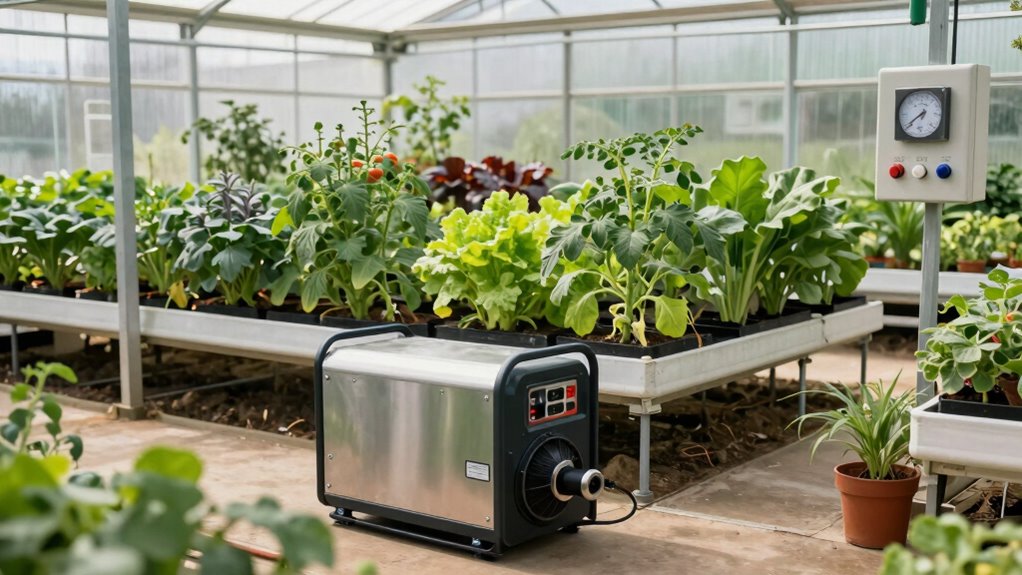

You quickly learn that reliable backup power is essential to avoid crop loss and keep your greenhouse running during outages. Guaranteeing critical systems like climate control, lighting, and irrigation stay active saves your crops and reduces stress. Incorporating solar with battery storage enhances energy stability and sustainability. Using energy-efficient equipment and maintaining your system ensures quick responses in emergencies. Keep exploring to discover how well-designed backup plans can safeguard your operation and boost long-term success.
Key Takeaways
- Rapidly implementing reliable backup systems prevents crop loss during unexpected power outages.
- Integrating solar with battery storage ensures sustainable, consistent backup energy.
- Regular maintenance and testing are essential for backup systems to function effectively when needed.
- Prioritizing energy-efficient equipment extends backup duration and reduces operational costs.
- Strategic planning and scalable solutions enhance resilience against future power disruptions.
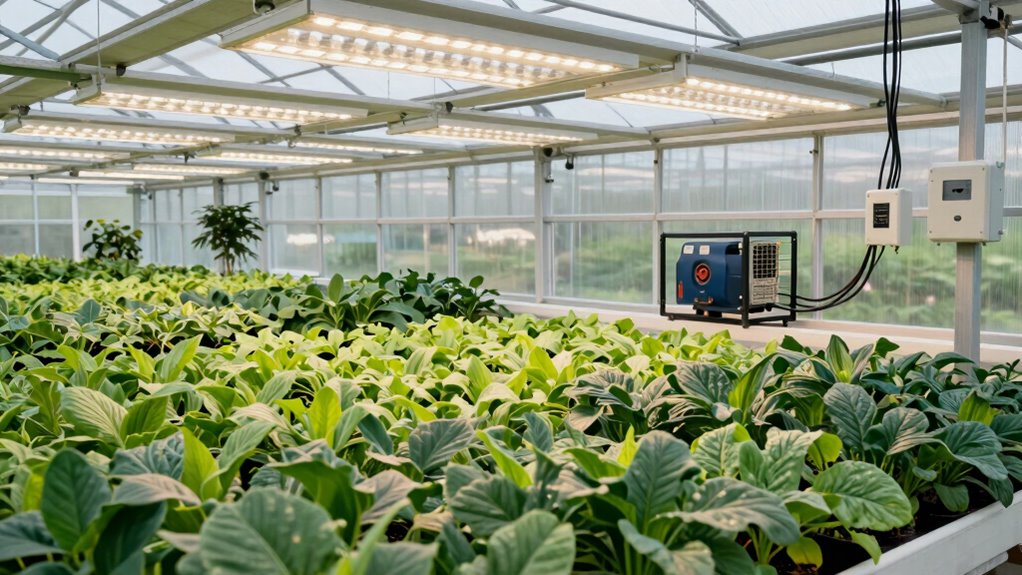
When power outages occur, greenhouse growers face serious risks to their crops and operations. Without reliable electricity, your climate control systems, irrigation, and lighting can all shut down unexpectedly, jeopardizing plant health and yield. That’s why understanding backup power options becomes a top priority. You quickly learn that integrating solar power with your backup systems isn’t just an eco-friendly choice; it’s a practical solution for maintaining energy stability during outages. Solar integration allows you to generate your own electricity, reducing dependence on grid power and ensuring that essential systems stay operational even when the mains go down. By combining solar with battery storage, you can store excess energy during sunny periods and deploy it when needed, giving you a reliable, renewable backup. This setup not only minimizes downtime but also enhances your overall energy efficiency, cutting long-term costs and reducing your environmental footprint.
As you explore backup power solutions, you realize the importance of designing your system with energy efficiency in mind. Every watt saved means your backup resources last longer and work more effectively. You find that choosing energy-efficient equipment—like LED grow lights, smart climate controls, and low-energy pumps—reduces the load on your backup power system. This means you can operate for longer periods without draining your stored energy or overloading your batteries. You also learn that optimizing your greenhouse’s insulation and ventilation further enhances energy efficiency, making your backup power last even longer. The lessons you pick up quickly emphasize that a well-planned, energy-efficient system not only safeguards your crops but also offers cost savings over time. Additionally, understanding the role of renewable energy in backup solutions helps you make smarter, more sustainable choices. Incorporating energy conservation strategies can significantly improve your system’s resilience and sustainability. Proper system design is essential to ensure all components work harmoniously during power disruptions. Recognizing the importance of system resilience encourages proactive planning to adapt quickly to unforeseen challenges.
You realize that rapid response and planning are crucial. When you experience a power outage, having a pre-configured backup system that’s easy to activate minimizes downtime. Regular maintenance and testing become part of your routine, ensuring your backup power works when it’s needed most. The importance of integrating solar and energy-efficient practices becomes clear: they form the backbone of a resilient, sustainable greenhouse operation. These lessons teach you to think ahead, invest in scalable solutions, and prioritize energy efficiency—ultimately making your greenhouse more resilient to power disruptions. Effective emergency preparedness and quick adaptation are critical to protecting your crops and maintaining productivity during unexpected outages. Through quick adaptation and strategic planning, you protect your crops, optimize your energy use, and maintain productivity, even when the lights go out unexpectedly.

200W Solar Powered Generator, Portable Power Station with Solar Panel 40W
- Includes Solar Panel: 200W generator with 40W solar panel
- Large Capacity Power Bank: 146Wh/39600mAh portable power station
- Multiple Charging Options: AC, USB, DC outlets for versatile charging
As an affiliate, we earn on qualifying purchases.
As an affiliate, we earn on qualifying purchases.
Frequently Asked Questions
What Is the Average Cost of Backup Power Systems for Greenhouses?
The average cost of backup power systems for greenhouses varies between $3,000 and $15,000, depending on size and energy needs. As part of your emergency preparedness, investing in reliable backup solutions is essential. Consider renewable solutions like solar generators to reduce long-term costs and environmental impact. These investments guarantee your greenhouse maintains ideal conditions during outages, safeguarding your crops and maximizing productivity.
How Long Can Backup Power Typically Sustain a Greenhouse During an Outage?
During a power outage, your backup system might keep the lights on for a few hours or up to several days, depending on your setup. Battery longevity and fuel efficiency play vital roles here—high-quality batteries can last longer, while fuel-efficient generators stretch your outage time. So, if you’re counting on backup power, invest wisely, or you’ll quickly discover how short your greenhouse’s “powerful” backup really is.
Are There Specific Backup Solutions Better Suited for Different Greenhouse Sizes?
Yes, the best backup solution depends on your greenhouse size. Smaller greenhouses often benefit from battery systems with ample capacity paired with solar integration, providing cost-effective, renewable power. Larger operations may require more robust solutions like generators or extensive battery banks to guarantee continuous operation. Always consider your specific energy needs and available space when choosing, and optimize battery capacity to maximize backup duration during outages.
How Often Should Backup Power Systems Be Tested and Maintained?
You should test and maintain your backup power systems at least quarterly to confirm battery lifespan and fuel efficiency stay ideal. Regular testing helps identify issues early, preventing unexpected failures during outages. Keep an eye on battery performance and fuel levels, and schedule maintenance as recommended by the manufacturer. Proper upkeep not only prolongs system life but also guarantees reliable backup power when you need it most.
What Are Common Challenges Faced When Implementing Backup Power in Greenhouses?
When implementing backup power in greenhouses, you often face challenges like integrating renewable energy sources and guaranteeing reliable power redundancy. You might struggle with initial costs, system compatibility, and maintaining consistent performance during outages. Additionally, managing storage solutions and balancing renewable inputs with energy demands can be complex. Overcoming these hurdles requires careful planning, regular testing, and ongoing maintenance to ensure your backup power system remains effective when you need it most.
Conclusion
In the world of greenhouse growing, backup power isn’t just a safety net—it’s your lifeline. Imagine your crops as a delicate symphony, where a single power outage can turn harmony into chaos. By investing in reliable backup systems, you turn potential disaster into a minor note. Don’t wait for the storm to strike—be the conductor who keeps the music playing, no matter what. After all, in this game, preparedness is your greatest harvest.