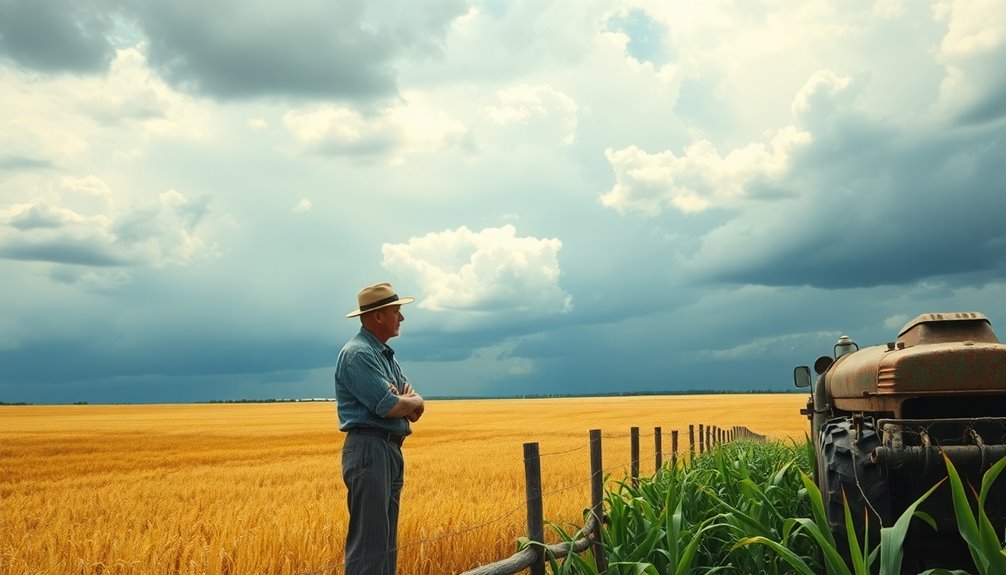

Farmers in Kansas and Missouri often stay quiet about climate change due to fears of conflict and potential backlash. Many worry that discussing their views could strain personal relationships or harm their businesses. While some farmers recognize climate issues and adapt their practices accordingly, others remain skeptical or unsure. This diverse landscape of opinions means that open dialogue is scarce, leaving many climate-related challenges unaddressed. Discover how these dynamics shape sustainability efforts in this region.
Key Takeaways
- Farmers in Kansas and Missouri often avoid discussing climate change due to fears of conflict and political divisions within their communities.
- Concerns over damaging business relationships and attracting negative reviews further silence open dialogue among farmers regarding climate issues.
- A spectrum of beliefs exists within the farming community, with some recognizing climate change while others remain skeptical yet still adopt sustainable practices.
- High initial costs and uncertainty about the effectiveness of sustainable methods hinder farmers from openly addressing climate change.
- Limited access to information and social pressures complicate farmers' willingness to engage in conversations about climate adaptation strategies.
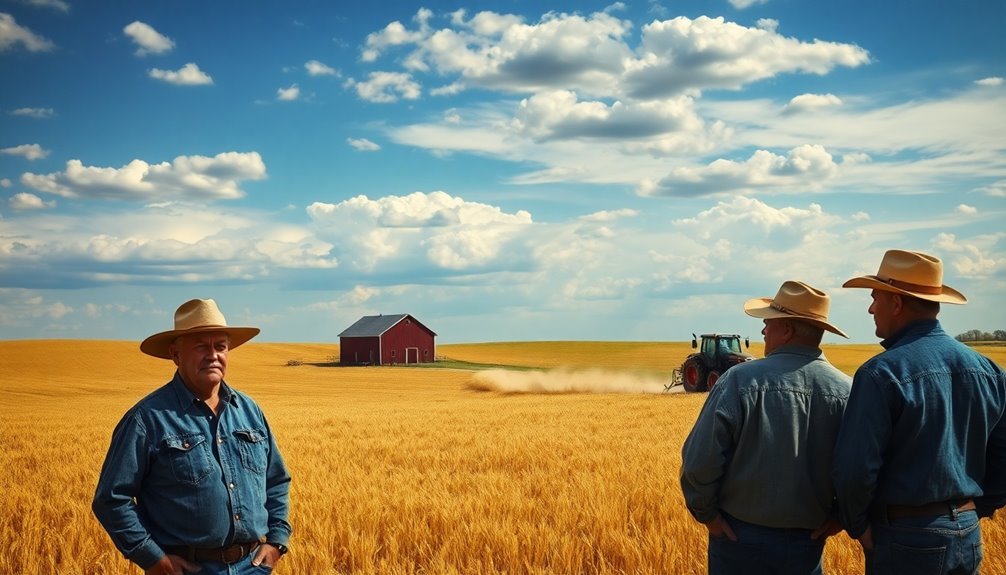
As climate change increasingly impacts agriculture, farmers in Kansas and Missouri find themselves navigating a complex landscape of challenges and adaptations. Despite the pressing need for dialogue, many of you might hesitate to speak up about climate change. Fear of conflict often looms large; discussing such a contentious topic could stir arguments or even violence within your communities. You know that expressing certain views might jeopardize valuable business relationships or attract negative reviews, so it's easier to stay silent.
Farmers in Kansas and Missouri grapple with climate change impacts, often silenced by fear of conflict and community backlash.
Political divisions further complicate matters. Climate change has become a highly politicized issue, making it tough to engage in conversations without risking alienation from friends and neighbors. Moreover, you might feel a lack of trust in the media, which often appears to politicize climate change, rendering it an unreliable source for understanding public opinion. This social and professional pressure can make you worried about losing cooperation from neighbors or harming your livelihood, discouraging open discussions.
As you cope with climate change's tangible impacts like increased drought, extreme weather events, and shifting growing seasons, some of you are adopting sustainable practices. Many have turned to drought-resistant crop varieties and water conservation techniques to mitigate these challenges. Planting cover crops and adopting no-till farming helps preserve soil integrity and reduce emissions, while integrated pest management lessens chemical usage. In fact, many Kansas farmers focus on resource conservation to adapt to the changing climate. Embracing sustainable habits can significantly enhance overall well-being while addressing climate-related concerns.
Within the farming community, opinions vary. Some of you recognize climate change's reality and adjust your practices accordingly, while others remain skeptical, questioning human influence but still embracing sustainability. Then there are those of you who are undecided, unsure about the causes but open to adapting your methods.
Yet, the road to implementing sustainable practices isn't without obstacles. High initial costs, limited access to information, and uncertainty about long-term effectiveness often hold you back. In this landscape of uncertainty, finding a voice on climate change remains a challenge.
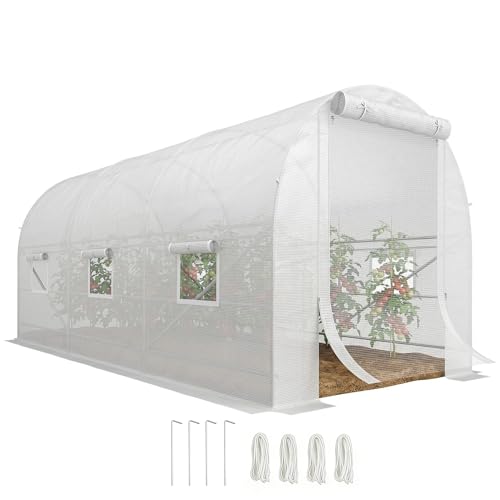
Outsunny 14.6' x 6.6' x 6.6' Walk-in Tunnel Greenhouse, Large Garden Hot House Kit with 6 Roll-up Windows & Roll Up Door, Steel Frame, White
Spacious Walk-In Green House: Our tunnel greenhouse is great for a variety of plants including vegetables, fruits, flowers,...
As an affiliate, we earn on qualifying purchases.
Frequently Asked Questions
How Do Farmers in Kansas and Missouri Gather Climate Data?
You gather climate data by utilizing advanced technologies like satellite crop monitoring systems and drones for aerial assessments.
Precision agriculture tools and soil sensors help track moisture levels, while weather forecasting systems provide essential climate insights.
Relying on credible sources like NOAA and USDA, you analyze data through statistical methods and GIS.
What Crops Are Most Affected by Climate Change in These States?
You might think all crops are equally affected by climate change, but that's not the case.
In Kansas and Missouri, wheat and soybeans are projected to see about a 10% reduction in acreage due to rising temperatures and drought conditions. Corn isn't far behind, with a 7% decrease expected.
As these staple crops struggle, farmers may need to consider alternative options like sorghum and millet to adapt to the changing climate effectively.
Are There Any Local Climate Change Initiatives Farmers Are Involved In?
Yes, you'll find several local climate change initiatives that farmers are involved in.
The University of Missouri offers programs like the Climate-Resilient Crop and Livestock Project, which gives you financial incentives and education for adopting climate-smart practices.
Additionally, agroforestry programs promote techniques that enhance resilience and biodiversity.
Many farmers are also implementing sustainable practices such as cover cropping and water conservation to mitigate climate impacts effectively on their farms.
How Do Farmers Perceive the Economic Impact of Climate Change?
You likely perceive climate change as a significant economic threat, especially with estimates showing an average income reduction of 15.7% globally over the past two years.
Rising costs for inputs like fertilizers and energy add to your financial pressures. You're probably concerned about extreme weather events leading to crop failures and decreased yields, which can hurt your livelihood.
Despite these worries, you might still feel optimistic about adapting and finding solutions.
What Are Common Misconceptions About Farmers and Climate Change?
Common misconceptions about farmers and climate change include the belief that agriculture is a major contributor to greenhouse gas emissions.
In reality, U.S. agriculture accounts for around 10% of emissions, not the often-quoted one-third.
Additionally, people overlook how farmers can sequester carbon through practices like no-till farming.
Many farmers also feel unfairly blamed for emissions, which discourages open discussions on climate change and its impacts on their livelihoods.

EAGLE PEAK 8x6 Portable Walk in Greenhouse, Pop Up Indoor Outdoor Greenhouse, Green House Kit with Zippered Roll-Up Doors and Windows, PE Cover, Clear/Green
PATENTED CENTER LOCK: Quick, easy setup. This pop up greenhouse with patented center lock technology supports one person...
As an affiliate, we earn on qualifying purchases.
Conclusion
As you reflect on the silence of farmers in Kansas and Missouri regarding climate change, consider the irony: their crops thrive under the very sun that grows hotter each year. It's as if they're tending to a garden while ignoring the storm clouds gathering on the horizon. By staying mum, they might miss the chance to adapt and safeguard their livelihoods. In the end, it's not just about the land; it's about the future they're cultivating for generations to come.

Greengro Greenhouse, 57 x 57 x 76'' Greenhouses for Outdoors, Durable Green House Kit with Window, Thicken PE Cover, 3 Tiers 8 Shelves, Heavy Duty Walk in Green Houses for Indoor Backyard Outside
Excellent Greenhouse for Plants Growth: No longer worry about winter cold, rainstorms, rodents, or insects. Greengro green house...
As an affiliate, we earn on qualifying purchases.

10×7×7 FT Greenhouses for Outdoors Heavy Duty, Large Walk in Green Houses for Outside with 6 Ventilated Mesh Windows & Roll-up Door & Reinforced Frame
UPGRADE GALVANIZED MTAL FRAME: this large tunnel walk in greenhouse is made of a premium galvanized finished heavy...
As an affiliate, we earn on qualifying purchases.