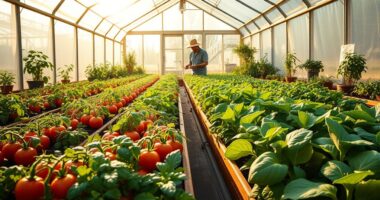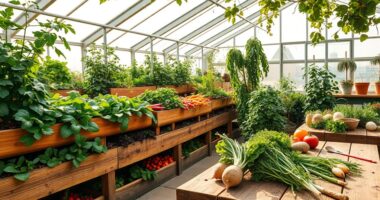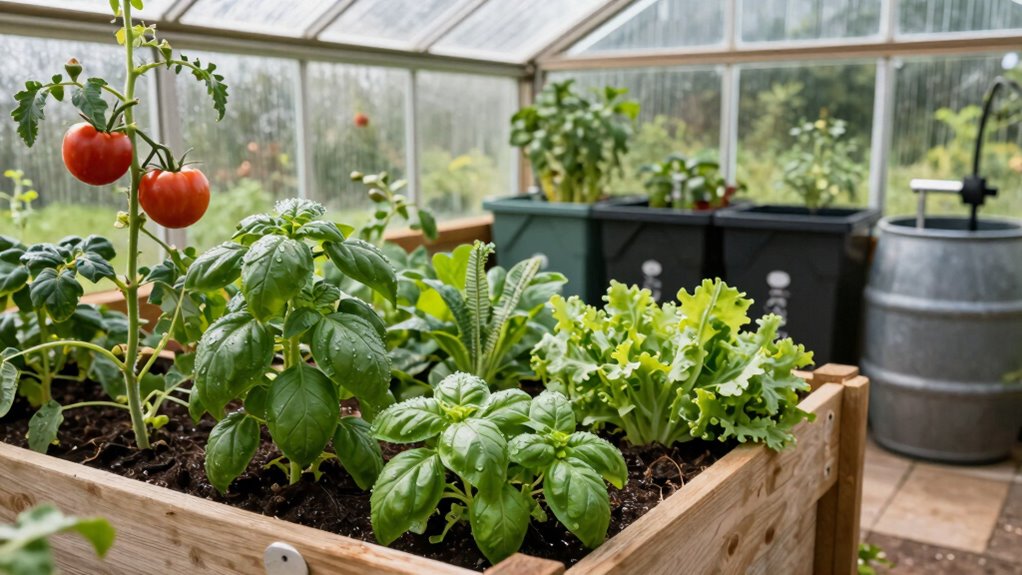

A greenhouse helps you grow fresh, homegrown produce year-round, reducing reliance on store-bought items and packaging. It allows you to implement sustainable gardening practices like composting and crop rotation, which cut down on waste and improve soil health. By harvesting only what you need and using preservation methods, you minimize food spoilage. If you keep exploring, you’ll find even more ways to transform your gardening habits into a step toward a lower-waste kitchen.

Get garden gear delivered free with Prime
- Fast, free delivery on millions of items
- Prime Video, Amazon Music and more included
- Member-only deals all year
Key Takeaways
- Extends growing seasons, allowing fresh produce availability year-round, reducing reliance on store-bought items with excess packaging.
- Facilitates seasonal planting and crop management, minimizing surplus and waste from overproduction.
- Enables efficient harvesting and food preservation, extending freshness and reducing spoilage.
- Supports composting of plant waste, turning scraps into nutrient-rich soil for sustainable gardening.
- Promotes biodiversity and eco-friendly practices, leading to resilient plants and fewer resources needed for maintenance.
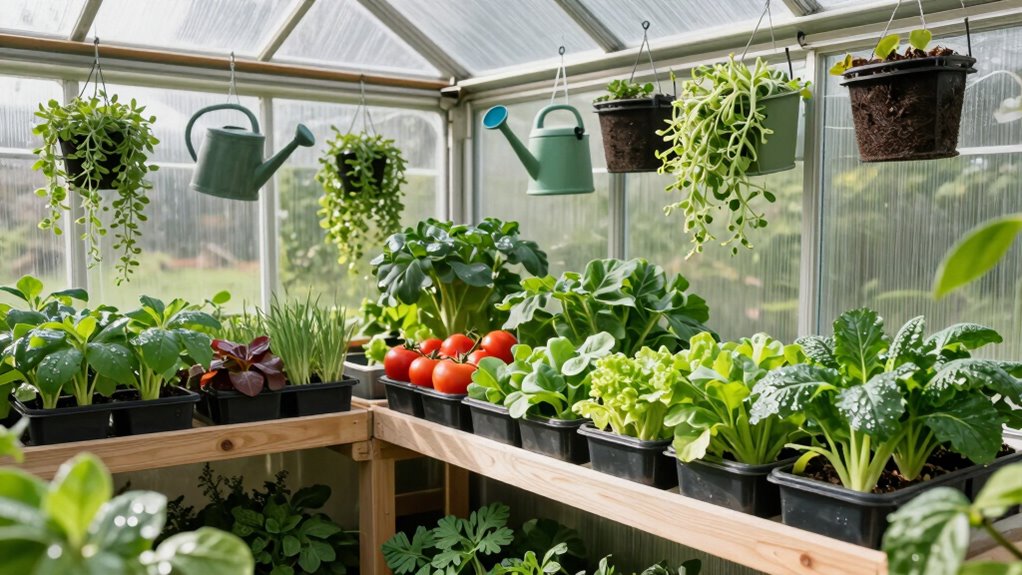
A greenhouse can be a game-changer for creating a lower-waste kitchen by providing fresh, homegrown produce year-round. When you grow your own vegetables and herbs, you reduce reliance on store-bought items that often come with excess packaging and transportation emissions. Plus, a greenhouse allows you to extend your growing season, meaning you can harvest more often and better match your food intake to your consumption, reducing waste from spoiled produce.
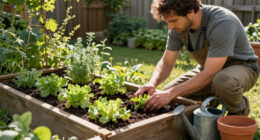
One of the most effective ways to minimize waste is by mastering composting techniques. In your greenhouse, you can set up a compost system to recycle kitchen scraps and plant waste into nutrient-rich soil. Composting not only cuts down on garbage destined for landfills but also creates a sustainable cycle of nutrients for your plants. You can incorporate kitchen waste like vegetable peels, coffee grounds, and eggshells into your compost, ensuring that organic waste doesn’t end up in the trash. Over time, you’ll produce compost that feeds your plants, reducing the need for chemical fertilizers and decreasing waste. Understanding biodiversity can help you select a variety of crops that support local ecosystems and reduce pests naturally, further enhancing the sustainability of your gardening practices.
Master composting to turn kitchen scraps into nutrient-rich soil and reduce landfill waste.
Seasonal planting is another crucial strategy. By understanding the seasons and planting accordingly, you avoid overproducing and letting produce go to waste. In your greenhouse, you can grow a variety of crops suited to different times of the year, adjusting your planting schedule to match your needs. This approach minimizes surplus, which often ends up discarded. For example, planting hearty greens in winter and quick-growing herbs in spring ensures you always have fresh ingredients without excess that might spoil. Planning your seasonal planting also helps you maximize space and time, making sure every harvest counts and reducing waste caused by over-planting. Incorporating seasonal awareness into your gardening routine can help further align your planting with natural cycles and reduce waste. Additionally, understanding crop rotation can improve soil health and decrease pest issues, contributing to a more sustainable gardening system.
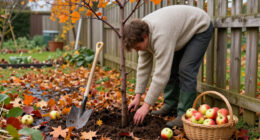
Additionally, by growing your own food, you’re more aware of the food you consume. You can harvest only what you need, preventing excess that might otherwise rot in the fridge. With a greenhouse, you can also experiment with preserving methods like freezing or drying, extending the usability of your harvest and cutting down on food waste. The more connected you are to your food’s lifecycle, the more mindful you’ll be about reducing waste at every stage. Incorporating food preservation techniques can further help you extend the longevity of your harvest and reduce waste. Developing a sustainable gardening approach can also enhance your efforts by fostering resilient plant systems that require fewer resources and generate less waste over time.
Products Worth Considering

Jocoevol 6 x 8 ft Walk-In Greenhouse with Polycarbonate Panels

EAGLE PEAK 8 × 6 ft Walk-In Pop-Up Greenhouse, Green and White

EGO POWER+ 21 Cordless Electric Lawn Mower Kit, Self-Propelled
As an affiliate, we earn on qualifying purchases.
Frequently Asked Questions
Can a Greenhouse Reduce Overall Food Waste in the Kitchen?
Yes, a greenhouse can reduce your kitchen’s food waste. It allows you to implement composting methods efficiently, turning scraps into nutrient-rich soil. Plus, with seasonal planting, you can grow fresh produce on-site, minimizing the need to buy and discard vegetables. This sustainable approach helps you control portions, reduce waste, and enjoy fresher ingredients, all while supporting eco-friendly practices in your kitchen.
How Much Space Is Needed to Integrate a Greenhouse Effectively?
You’ll need enough urban space to accommodate your greenhouse, ideally about 10-20 square feet for a small setup or more for larger operations. Make certain your space has ample sunlight exposure, preferably south-facing, to maximize plant growth. Keep in mind that taller or larger greenhouses require additional space for ventilation and access. By planning carefully, you can efficiently integrate a greenhouse into your kitchen’s environment, reducing waste and boosting freshness.
What Are the Initial Costs of Setting up a Greenhouse for a Kitchen?
Setting up a greenhouse for your kitchen costs between $1,000 and $10,000, depending on size and materials. You’ll want to compare costs like a cost comparison of structures and equipment. Keep in mind, maintenance requirements involve regular watering, cleaning, and monitoring climate control, which can add ongoing expenses. While initial investments vary, a greenhouse can save money long-term by providing fresh, local produce and reducing waste.
How Does a Greenhouse Impact the Nutritional Quality of Homegrown Produce?
Like a trusty alchemist’s lab, your greenhouse boosts nutritional quality by enhancing nutrient retention in your homegrown produce. You can grow a wider crop variety, including nutrient-dense greens and heirlooms, all year round. The controlled environment minimizes nutrient loss caused by weather fluctuations, ensuring your vegetables stay rich in vitamins and minerals. This means you get fresher, more nutritious food, supporting your health and culinary creativity every day.
Are There Specific Crops Better Suited for Kitchen Greenhouses?
You’ll find that herb varieties like basil, mint, and parsley thrive well in kitchen greenhouses, offering fresh flavors year-round. Fruit options such as strawberries and dwarf citrus trees also do well, providing convenient access to ripe produce. These crops are suited for greenhouse conditions, allowing you to extend growing seasons and reduce waste. Focusing on these specific plants makes your greenhouse more productive and supports your goal of a lower-waste kitchen.
Conclusion
By embracing a greenhouse, you’re not just reducing waste—you’re revolutionizing your entire kitchen, transforming it into a lush, self-sustaining paradise. Imagine every meal bursting with freshness straight from your own garden, leaving no room for scraps or leftovers to go to waste. This isn’t just a change; it’s a seismic shift towards a greener, more sustainable world. Your kitchen can become a powerhouse of abundance, a beacon of hope in the fight against waste—are you ready to lead the charge?