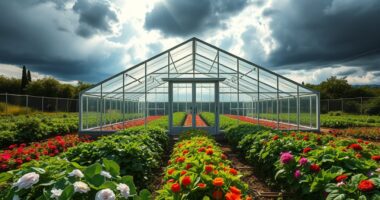
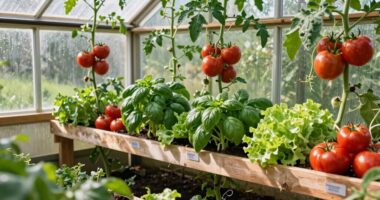
Greenhouse gardening can boost your community’s food security by allowing you to grow fresh, diverse crops year-round, even in urban spaces. It extends growing seasons, supports local farming, and reduces your reliance on imported produce. By encouraging community involvement, you can build resilience and promote sustainability. Plus, with resource-efficient practices, you help lower environmental impact. Want to discover more ways greenhouse gardening can transform your community’s food future? Keep exploring to find out.

Get garden gear delivered free with Prime
- Fast, free delivery on millions of items
- Prime Video, Amazon Music and more included
- Member-only deals all year
Key Takeaways
- Greenhouse gardening extends growing seasons, ensuring year-round local food production and increased community food security.
- Crop diversification in greenhouses enhances nutritional variety and reduces dependence on external food sources.
- Urban greenhouses lower transportation emissions and costs, promoting sustainable and affordable local food systems.
- Community involvement in greenhouse projects fosters shared ownership, resilience, and collective action for food security.
- Starting with high-value crops and scaling gradually builds expertise and supports sustainable urban agriculture growth.
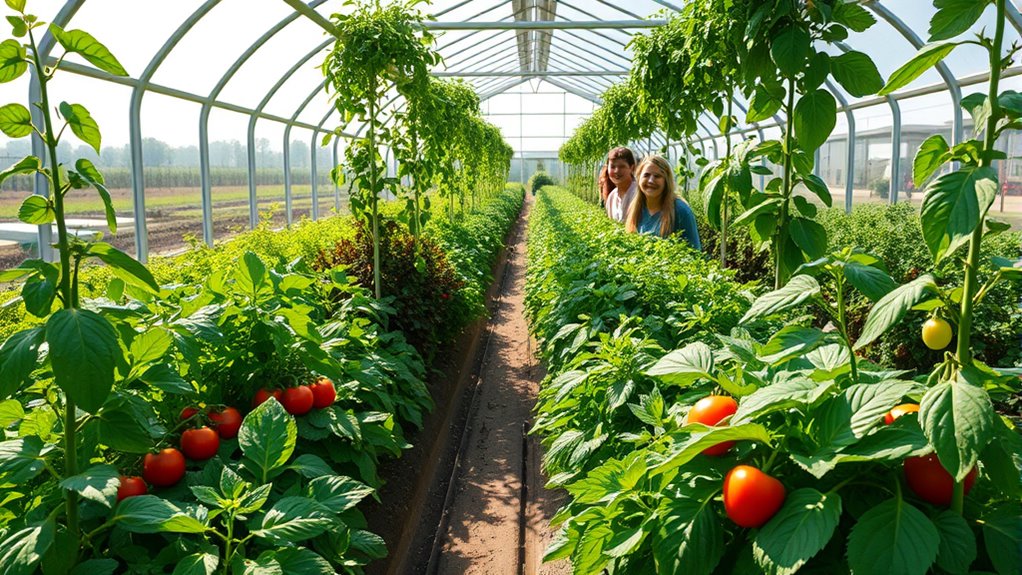
Greenhouse gardening is emerging as a vital strategy to enhance food security in a changing world. As urban populations grow and traditional farming faces challenges like climate change and limited land access, greenhouse gardening allows you to bring fresh produce directly into your community. It’s a form of urban agriculture that maximizes space and extends growing seasons, making it possible to produce food year-round in even small city plots. By adopting greenhouse techniques, you can help diversify the types of crops grown locally, reducing dependence on imported foods and strengthening your community’s resilience.
Greenhouse gardening boosts urban food security by extending seasons and diversifying local crops.
One of the main advantages of greenhouse gardening is its ability to support crop diversification. Rather than sticking to a few staple crops, you can experiment with a variety of vegetables, herbs, and even fruits. This not only improves nutritional intake but also minimizes the risk of crop failure due to pests or weather disruptions. When you diversify, you create a more stable food supply for your community, ensuring that people have access to a broader range of nutrients. Greenhouses provide the controlled environment needed for growing less common or more delicate crops that wouldn’t survive outdoors in your region. This flexibility encourages innovation and allows community members to explore new food options, fostering a more resilient local food system.
Furthermore, greenhouse gardening empowers urban residents to take control of their food sources. It reduces reliance on distant supply chains, which are often vulnerable to disruptions. By growing food locally, you can cut down on transportation emissions and costs, making fresh produce more affordable and accessible. Greenhouses also enable you to optimize resource use—such as water and nutrients—through efficient systems, which is especially important in areas facing water scarcity. As you develop your greenhouse, you contribute to a sustainable urban agriculture model that bolsters food security and promotes ecological balance. Additionally, integrating fiber-rich vegetables and seeds into your greenhouse crops can enhance dietary diversity and digestion for your community members.
Getting started with greenhouse gardening might seem intimidating, but the benefits are well worth the effort. You can begin small, focusing on high-value crops like leafy greens or herbs, and gradually expand as you gain experience. Engaging your community in this effort creates a shared sense of ownership and encourages collective action toward food security. Whether you’re growing food for your family or establishing a community-supported garden, greenhouse gardening offers a practical, impactful way to strengthen local food systems. By embracing urban agriculture and crop diversification within your greenhouse, you help build a more resilient, self-sufficient community prepared to face future challenges.
As an affiliate, we earn on qualifying purchases.
Frequently Asked Questions
How Can Greenhouse Gardening Reduce Local Food Deserts?
Greenhouse gardening reduces local food deserts by enabling urban farming, providing fresh produce directly within communities. You can grow a variety of fruits and vegetables year-round, ensuring access to nutritious foods with significant nutritional benefits. This approach minimizes food insecurity, encourages sustainable practices, and empowers residents to take control of their food sources. By establishing local greenhouses, you create a reliable supply of healthy, affordable food for those who need it most.
What Are the Initial Costs of Setting up a Greenhouse?
Imagine turning a small patch of earth into a lush, productive oasis. Your initial setup costs depend on factors like size, materials, and technology, but cost estimation typically ranges from $2,000 to $10,000 for a basic greenhouse. Startup expenses include framing, glazing, ventilation, and heating, so plan carefully. Budget wisely to guarantee your greenhouse becomes a thriving hub for fresh produce and community growth.
How Does Greenhouse Gardening Impact Local Biodiversity?
Greenhouse gardening can positively impact local biodiversity by attracting pollinators like bees and butterflies, which boost plant reproduction. However, if not managed carefully, it might encourage invasive species to thrive, disrupting native ecosystems. You can help by selecting native plants and monitoring for invasive species, ensuring your greenhouse supports pollinator attraction without harming existing biodiversity. This balance promotes a healthy, resilient local environment.
Can Small Communities Sustain Greenhouse Projects Long-Term?
Imagine you’re in a medieval village, yet your small community can indeed sustain greenhouse projects long-term. Urban agriculture thrives with proper planning, resources, and community effort, bolstering resilience. Your community’s dedication to local food production fosters sustainability and independence. As you nurture these green spaces, you strengthen local bonds and resilience, ensuring the greenhouse projects endure, benefiting everyone and creating a resilient, food-secure future for your community.
What Are Best Practices for Training Community Members in Greenhouse Farming?
You should focus on hands-on workshops and peer mentoring to effectively train community members in greenhouse farming. Hands-on workshops give participants practical experience, boosting confidence and skills. Peer mentoring fosters ongoing support, encourages knowledge sharing, and builds a strong community network. Combining these approaches guarantees members learn by doing and stay motivated, creating a sustainable, thriving greenhouse project that benefits everyone.
Conclusion
By building better bonds through greenhouse gardening, you boost both your community’s crop and confidence. Your commitment cultivates a crowded canvas of colorful, consistent crops that combat cravings and create community. Remember, small steps sow strong, sustainable solutions, turning tiny efforts into terrific, tangible transformations. So, seize this simple, sunny strategy—spreading seeds of security, shaping a stronger, more self-sufficient society one greenhouse at a time.
Fall Picks
fall essentials
As an affiliate, we earn on qualifying purchases.