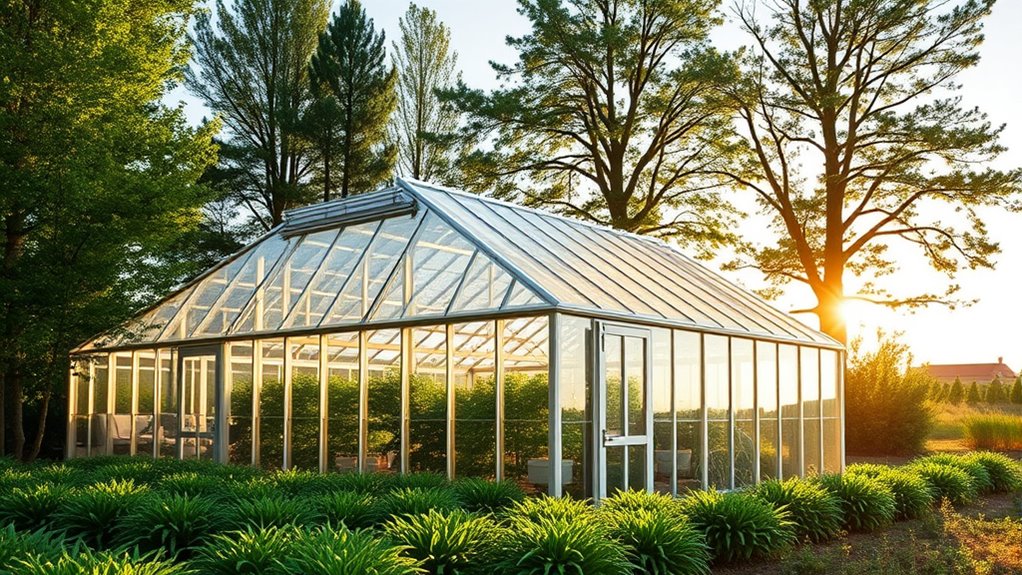

To select the best location and orientation for your greenhouse, find a site facing south in the Northern Hemisphere for maximum sunlight exposure and plant health. Protect it from strong winds by nearby natural barriers or windbreaks. Opt for gentle south-facing slopes to ensure good drainage and avoid low-lying, cold spots. Position your greenhouse near water and utilities for easy access. Proper orientation and location optimize sunlight, wind protection, and microclimate, helping you create an efficient growing environment—discover how these tips can work for you.

Get garden gear delivered free — and shop member deals
- Fast, free delivery on millions of items
- Access to Prime Big Deal Days deals on October 6–7
- Prime Video, Amazon Music and more included
Key Takeaways
- Position your greenhouse facing south in the Northern Hemisphere for maximum sunlight exposure.
- Select a site with natural windbreaks or install barriers to protect against wind damage.
- Choose a gentle south-facing slope to enhance drainage and optimize sunlight.
- Locate the greenhouse near water and utilities for easier maintenance and resource access.
- Align the structure east-to-west to ensure even sunlight distribution and efficient temperature management.
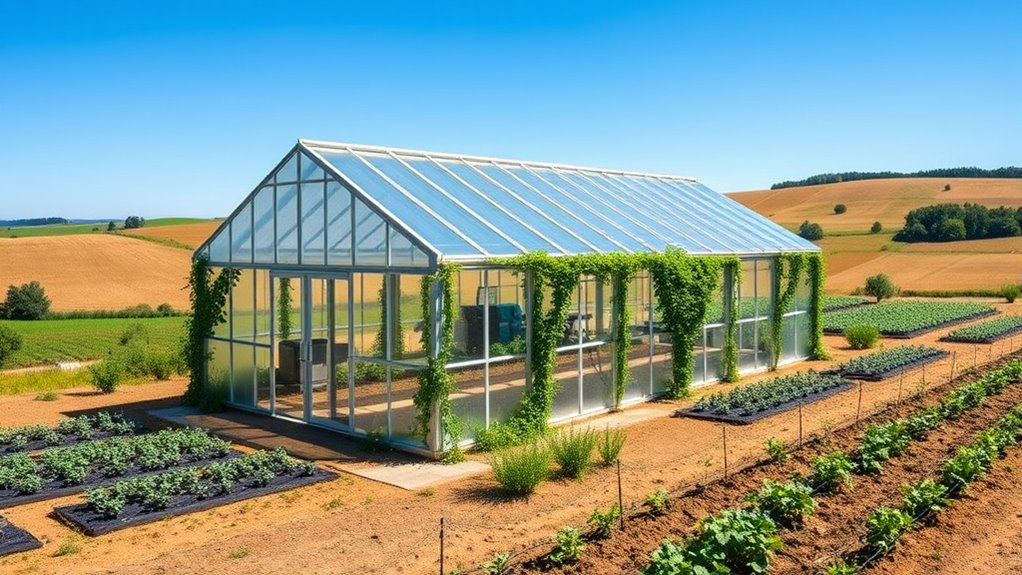
Selecting the right location and orientation for your greenhouse is vital to maximize sunlight, conserve energy, and create ideal growing conditions. Sunlight exposure plays a critical role in plant health and productivity, so you want your greenhouse positioned where it receives consistent, unobstructed sunlight throughout the day. Ideally, the structure should face south if you’re in the Northern Hemisphere, as this orientation captures the most sunlight year-round. This guarantees that your plants get the maximum amount of natural light, reducing your dependence on artificial lighting and lowering energy costs.
Position your greenhouse facing south in the Northern Hemisphere for maximum sunlight and energy efficiency.
Equally important is protecting your greenhouse from the wind. Strong winds can cause temperature fluctuations, increase heating costs, and even damage the structure. To address this, select a site that naturally offers wind protection—perhaps near natural barriers like trees, shrubs, or existing buildings. If natural windbreaks aren’t available, consider planting evergreen hedges or installing windbreak walls around your greenhouse. Proper wind protection not only stabilizes the internal temperature but also minimizes stress on your plants, helping them grow steadily and healthily.
When choosing a location, think about the surrounding landscape and topography. A gentle slope facing south can help with drainage and sunlight exposure, preventing water accumulation and ensuring your plants aren’t sitting in soggy soil. Avoid low-lying areas where cold air tends to settle or sites shaded by tall trees or structures, as these can block sunlight and create cooler microclimates inside your greenhouse. You also want to keep access in mind—placing your greenhouse near water sources, utilities, and your home makes maintenance more manageable. Incorporating proper site planning and understanding microclimates can further enhance your greenhouse’s efficiency and productivity.
Orientation is equally vital. Position your greenhouse so that its longest side runs east-to-west. This allows for even sunlight distribution across the structure, especially during the winter months when sunlight is limited. If you have the space, incorporating adjustable vents and shading devices can help manage sunlight exposure and temperature fluctuations, further optimizing the environment inside. Remember, the goal is to create a balance: enough sunlight for robust plant growth without overheating or excessive energy use.
As an affiliate, we earn on qualifying purchases.
Frequently Asked Questions
How Does Local Climate Affect Greenhouse Placement?
Your local climate considerably impacts where you place your greenhouse. You need to take into account microclimate considerations like wind exposure, shade, and drainage, which vary even within your region. Regional weather patterns, such as snowfall, rainfall, and temperature fluctuations, influence your greenhouse’s orientation to maximize sunlight and minimize weather damage. By understanding these factors, you can optimize your greenhouse’s placement for better climate control and plant growth.
What Are the Best Materials for Greenhouse Foundations?
You should choose foundation materials that guarantee strong structural stability for your greenhouse. Concrete, for example, provides durability and a solid base, while reinforced concrete offers extra support. Gravel or crushed stone can improve drainage and stability on uneven ground. Using quality foundation materials helps prevent shifting or settling over time, ensuring your greenhouse remains secure and stable, even in adverse weather conditions. Prioritize materials that suit your soil and climate for best results.
How Can I Optimize Ventilation in My Greenhouse?
Imagine you’re a modern-day Leonardo, perfecting your greenhouse’s airflow. You can enhance ventilation by maximizing natural ventilation through strategic placement of vents and windows, creating a cross-breeze. Additionally, install fans in ideal spots—like near intake vents—to promote air circulation, reducing humidity and temperature. Regularly monitor and adjust fan placement as needed, ensuring fresh air flows freely, keeping your plants healthy and thriving under ideal conditions.
What Are Common Pests Influenced by Location Choices?
By selecting a location with good airflow and minimal standing water, you can reduce common pests like aphids, whiteflies, and fungus gnats. Poorly chosen sites may promote pest infestations, making pest prevention and pest management strategies harder to implement. To keep pests at bay, guarantee proper ventilation, eliminate standing water, and use physical barriers. Regular monitoring and integrated pest management are key to maintaining a healthy, pest-free greenhouse environment.
How Do Neighboring Structures Impact Greenhouse Sunlight Exposure?
Neighboring structures can block out sunlight like giant shadows cast by towering giants, turning your greenhouse into a gloomy cave. They cause significant shadow casting, reducing your solar shading benefits and limiting plant growth. Tall buildings or trees nearby can block essential sunlight during peak hours, making your greenhouse struggle for light. To avoid this, position your greenhouse where nearby structures won’t cast long shadows, ensuring maximum sunlight exposure for thriving plants.
Conclusion
Choosing the right location and orientation for your greenhouse is like planting a seed for success. When I first built mine, I found that a sunny, south-facing spot boosted growth—much like a well-placed compass guides a ship safely home. Remember, a strategic spot maximizes sunlight and minimizes wind exposure, turning your greenhouse into a thriving oasis. With careful planning, you’ll create a haven where your plants flourish, just like that first seed blooming into a vibrant tree.
Fall yard work Picks
leaf blowers
As an affiliate, we earn on qualifying purchases.