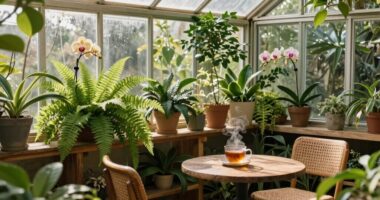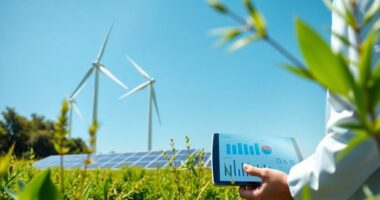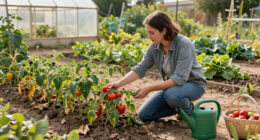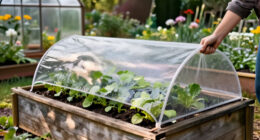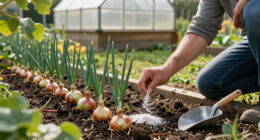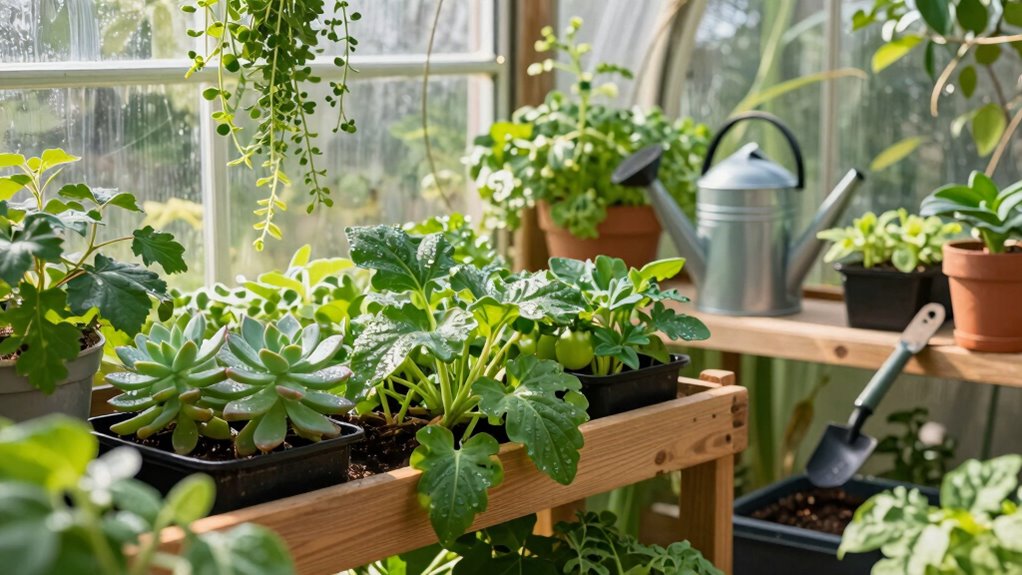

Greenhouse gardening makes you feel more resilient by giving you a reliable source of fresh, homegrown food year-round, no matter the weather. It protects you from external disruptions like supply chain issues or extreme weather, allowing quick adaptation. Plus, it promotes sustainable practices and develops your gardening skills, boosting confidence. As you nurture your plants, you strengthen your connection to nature and self-sufficiency. Stay tuned to discover more ways it can empower your household resilience.

Get garden gear delivered free with Prime
- Fast, free delivery on millions of items
- Prime Video, Amazon Music and more included
- Member-only deals all year
Key Takeaways
- Provides a consistent supply of fresh produce year-round, reducing dependence on external food sources.
- Shields crops from extreme weather and supply chain disruptions, ensuring household food security.
- Promotes sustainable practices that lower environmental impact and increase resource efficiency.
- Enhances skills and knowledge for adaptable gardening, fostering self-sufficiency and environmental stewardship.
- Offers mental and emotional benefits through connection with nature and nurturing a resilient, self-sufficient lifestyle.
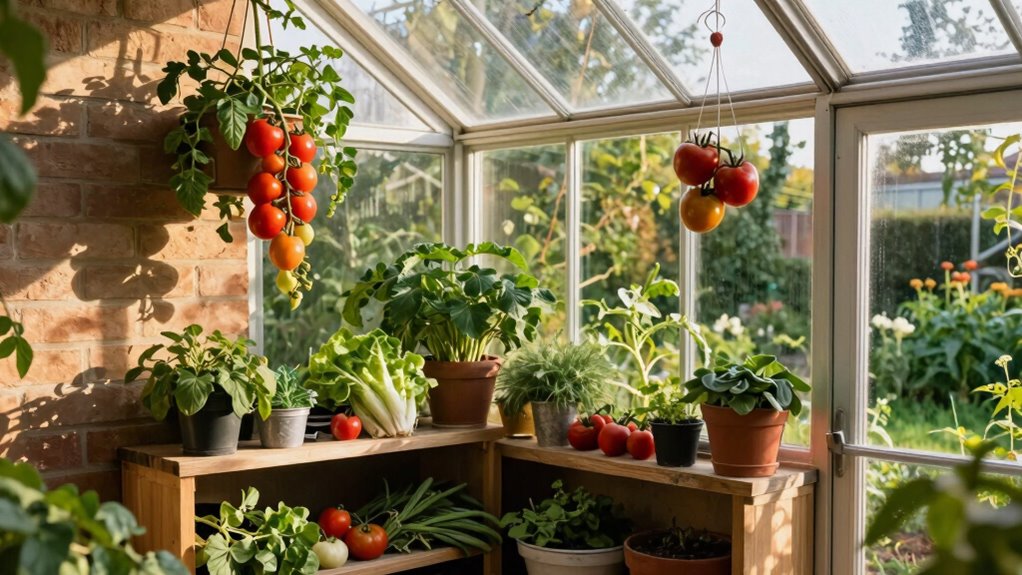
In today’s uncertain world, greenhouse gardening can substantially boost your household’s resilience by ensuring a steady supply of fresh produce year-round. When you incorporate a greenhouse into your home, you’re not just growing food—you’re actively supporting urban sustainability by making better use of limited space and reducing your reliance on external food sources. This proactive approach helps you adapt to seasonal changes, allowing you to cultivate vegetables, herbs, and fruits regardless of the weather outside. As climate patterns become more unpredictable, having a controlled environment means you can respond quickly to changes, ensuring your household always has access to nutritious, homegrown food.
A greenhouse acts as a buffer against external disruptions, whether they stem from supply chain issues, extreme weather, or local environmental challenges. With seasonal adaptation built into your gardening routine, you can extend growing seasons and even grow crops typically out of reach in your climate zone. This flexibility means you’re less vulnerable to food shortages or price hikes, making your household more self-sufficient and resilient. You get to decide what to plant and when, giving you control over your food supply and reducing dependence on grocery stores, which can sometimes be unreliable during crises. Additionally, a greenhouse environment allows you to experiment with different plant varieties and cultivation methods, further enhancing your household’s adaptability.
Beyond food security, a greenhouse fosters a sense of empowerment and sustainability. You can experiment with eco-friendly practices like composting, rainwater harvesting, and organic pest control, all within a small, manageable space. This not only reduces your household’s environmental footprint but also promotes urban sustainability by decreasing your food miles and supporting local biodiversity. Incorporating biodiversity into your gardening practices can help attract beneficial insects and promote a healthier ecosystem within your greenhouse. Moreover, understanding how to optimize your greenhouse environment can help you better manage resources and reduce waste, which aligns with the principles of sustainable living. As you learn to optimize your greenhouse environment, you develop skills that contribute to a more resilient lifestyle—skills that help you adapt to changing circumstances and minimize your impact on the planet.
Furthermore, a greenhouse can serve as a year-round oasis for your mental and emotional well-being. Growing your own food provides a sense of purpose and connection to nature, which becomes especially valuable during uncertain times. It encourages you to plan ahead, adapt to seasonal shifts, and find satisfaction in nurturing life in a controlled environment. Additionally, understanding the importance of urban sustainability can motivate you to implement more eco-friendly practices in your daily life, such as composting, which helps close the loop on organic waste and enriches your soil. Developing a self-sufficient food system within your home can significantly strengthen your household’s resilience to external shocks. This not only boosts your self-sufficiency but also encourages a mindset of proactive preparedness and environmental stewardship. This resilience isn’t just about food; it’s about creating a sustainable, adaptable lifestyle that helps you face whatever challenges may come, with the confidence that you’re taking proactive steps toward stability and self-sufficiency.
As an affiliate, we earn on qualifying purchases.
Frequently Asked Questions
What Are the Initial Costs of Setting up a Greenhouse?
The initial costs of setting up a greenhouse vary based on size, materials, and features. You’ll need to take into account plant selection, which influences the type of structure and equipment, and climate control systems like heaters or fans. Expect expenses for a sturdy frame, glazing, and ventilation. While costs can range from a few hundred to several thousand dollars, investing in quality guarantees better climate control and durability, boosting your resilience.
How Much Space Is Needed for Effective Greenhouse Gardening?
You’ll want at least 8 by 10 feet for a modest greenhouse, but hey, who needs space? With clever plant spacing and versatile container options, you can maximize even tiny spots. Think vertically, use shelves, and squeeze in more plants than you’d believe. Remember, the less room you have, the more creative you get. Resilience isn’t about size—it’s about how smartly you turn limited space into a lush paradise.
Can Beginners Successfully Manage a Greenhouse at Home?
Yes, beginners can successfully manage a greenhouse at home. Start with simple indoor automation systems to control temperature and lighting, making it easier to maintain ideal conditions. Focus on proper seed selection suited for your environment, and follow basic gardening steps. As you gain confidence, you’ll develop skills to troubleshoot issues, creating a rewarding experience that boosts your household’s resilience and self-sufficiency.
What Are Common Pests and How to Control Them in a Greenhouse?
Ever wonder how to handle pests in your greenhouse? Common pests include aphids, whiteflies, and spider mites. To control them, start with pest identification to target the issue precisely. Organic controls like neem oil, insecticidal soap, or introducing beneficial insects work effectively without harmful chemicals. Regularly inspect your plants, remove affected leaves, and maintain good airflow to prevent pest infestations and keep your greenhouse thriving.
How Does Greenhouse Gardening Impact Household Energy Consumption?
Greenhouse gardening impacts your household energy consumption by enhancing energy efficiency through better climate control. You can optimize temperature and humidity levels, reducing the need for excessive heating or cooling. This precise control minimizes energy waste, making your household more resilient and sustainable. By investing in insulated structures and energy-efficient equipment, you lower overall energy use, creating a healthier environment for your plants and your family.
Conclusion
So, why not embrace greenhouse gardening and become the ultimate household hero? With a little effort, you’ll outsmart grocery store shortages, impress your friends with homegrown goodies, and finally master the art of sustainable living—without needing a wizard’s wand. Sure, tending plants might seem trivial, but it’s actually the secret weapon against modern chaos. Go on, prove that your resilience isn’t just a myth—your greenhouse is your new fortress!
Columbus Day / Indigenous Peoples' Day Picks
long weekend sales
As an affiliate, we earn on qualifying purchases.