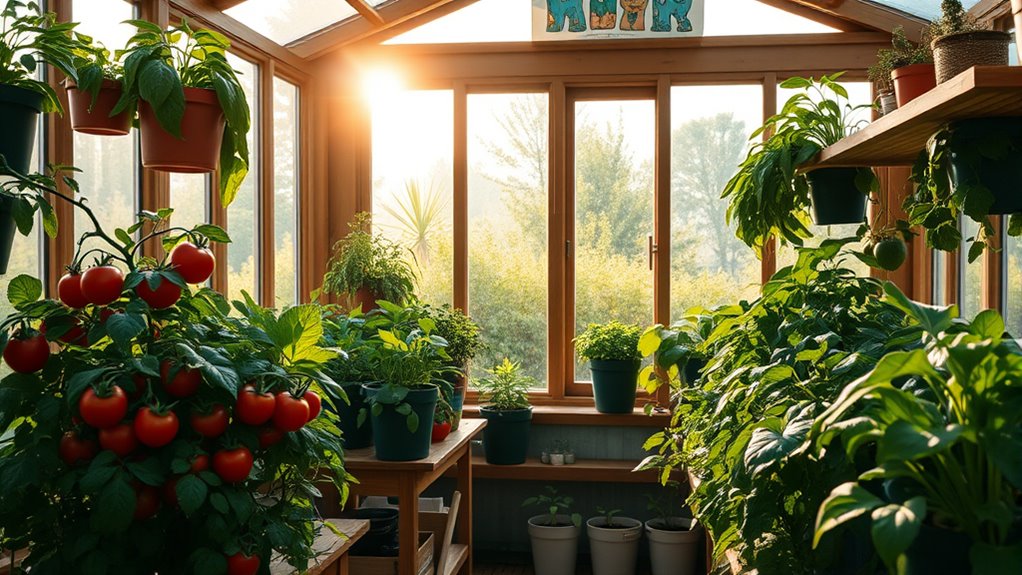

A greenhouse helps you live more sustainably by allowing you to grow your own food locally, reducing reliance on store-bought produce and cutting down on transportation emissions. Its energy-efficient design saves water and electricity, while eco-friendly materials lessen environmental impact. By supporting resource conservation and promoting eco-conscious practices, a greenhouse encourages a greener lifestyle. Keep exploring how these benefits work together to make your sustainable living journey even more impactful.
Key Takeaways
- Greenhouses maximize natural light and heat, reducing dependence on artificial energy sources and lowering carbon emissions.
- They enable local food production, decreasing transportation-related environmental impacts.
- Incorporating efficient water and energy systems promotes resource conservation and sustainable practices.
- Use of eco-friendly materials in greenhouse construction minimizes ecological footprints.
- Greenhouses foster community engagement and education, encouraging eco-conscious lifestyles and local food systems.
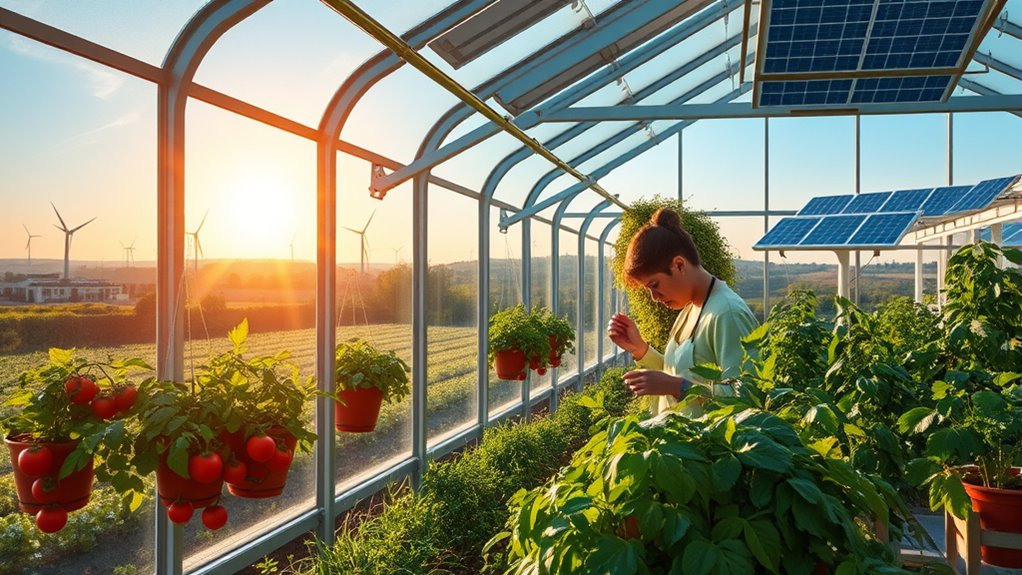
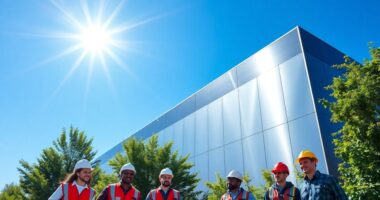
Have you ever wondered how greenhouses can play a pivotal role in promoting sustainability? They’re more than just structures for growing plants; they’re powerful tools for fostering energy efficiency and supporting urban farming initiatives. When you think about energy use, greenhouses are designed to maximize natural light and heat, reducing the need for artificial lighting and climate control systems. This efficient use of energy not only lowers operating costs but also minimizes the environmental impact, making greenhouses a smart choice for eco-conscious growers. By harnessing solar energy and insulating effectively, they cut down on electricity consumption and greenhouse gas emissions, aligning with sustainable living goals.
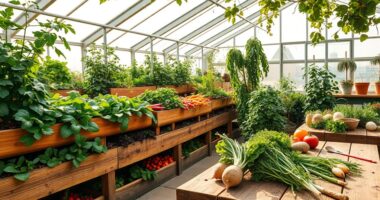
In urban environments, space is limited, and growing fresh produce locally becomes a challenge. That’s where greenhouses shine. They enable urban farming—bringing food production into cities—so you can grow vegetables, herbs, and even fruits right in your neighborhood. This proximity reduces the need for long-distance transportation, which is a major contributor to carbon emissions. Plus, urban farming through greenhouses helps to reclaim unused or underutilized spaces like rooftops or vacant lots, transforming them into productive green zones. You get fresh, nutritious food without the environmental costs associated with traditional farming and food distribution.
Greenhouses also promote water efficiency, which is essential for sustainable living. They often incorporate advanced irrigation systems that deliver water directly to plants’ roots, minimizing waste. This is especially beneficial in areas prone to drought or water shortages. When you use a greenhouse for urban farming, you’re not only conserving water but also creating a controlled environment, which reduces the need for chemical pesticides and fertilizers. This approach results in healthier, more sustainable food production, reducing chemical runoff and pollution. Additionally, integrating sustainable materials into greenhouse construction can further decrease their environmental footprint.
Furthermore, greenhouses foster community engagement and education. As a participant or observer, you see firsthand how sustainable practices can be integrated into everyday life. They encourage local food production, reduce reliance on imported goods, and promote eco-conscious behaviors. The combination of energy efficiency and urban farming within greenhouses empowers you to make a tangible difference in your community’s ecological footprint. Whether it’s growing your own herbs or supporting local food systems, greenhouses serve as practical tools to live more sustainably.
In essence, greenhouses help you embrace a more sustainable lifestyle by making energy use smarter and fostering local food production. They demonstrate that with thoughtful design and innovation, you can greatly reduce your environmental impact while enjoying fresh, homegrown produce. Greenhouses aren’t just about plants; they’re about creating a greener, healthier future for everyone.
Frequently Asked Questions
How Does a Greenhouse Reduce Overall Water Consumption?
A greenhouse reduces your water use by maximizing efficiency through rainwater harvesting and soil moisture management. You can collect rainwater to irrigate plants, decreasing reliance on external water sources. Additionally, controlling soil moisture levels means you use only what’s necessary, preventing waste. This targeted approach guarantees your plants get enough water, conserving precious resources and supporting a sustainable lifestyle.
Can Greenhouses Help in Reducing Chemical Pesticide Use?
Did you know greenhouses can cut pesticide use by up to 90%? They help you reduce chemical pesticides through natural pest control methods. By implementing pesticide alternatives and integrated pest management, you create a healthier environment and safer food. Greenhouses provide a controlled space where you can monitor pests closely, making it easier to target them with eco-friendly solutions. This approach supports sustainable farming and minimizes harmful chemical reliance.
Are Greenhouses Effective in Supporting Local Food Systems Year-Round?
Yes, greenhouses are effective in supporting local food systems year-round by enabling urban farming. They allow you to grow fresh produce regardless of season, boosting community resilience. With a greenhouse, you can reduce reliance on distant suppliers, lower transportation emissions, and provide consistent food access. This promotes a sustainable lifestyle by fostering local food production, encouraging community involvement, and making urban areas more self-sufficient year-round.
How Do Greenhouses Impact Local Biodiversity?
Greenhouses dramatically boost local biodiversity by supporting pollinator populations and preserving habitats. You help pollinators thrive by planting native species and offering shelter, which sustains the ecosystem. Unlike wild areas, greenhouses can control conditions to protect rare plants and insects, acting as tiny biodiversity sanctuaries. Your efforts in maintaining these spaces directly contribute to healthier, more resilient local ecosystems, proving that even small actions can create a biodiversity explosion.
What Are the Energy Requirements for Maintaining a Greenhouse Sustainably?
You need to focus on optimizing solar efficiency and insulation techniques to keep your greenhouse sustainable. Using solar panels can harness renewable energy, reducing reliance on grid power. Proper insulation minimizes heat loss, lowering energy requirements for heating and cooling. By combining these methods, you can maintain ideal conditions inside your greenhouse while conserving energy, supporting a more eco-friendly and sustainable lifestyle.
Conclusion
Embracing a greenhouse in your lifestyle is like planting a seed for a greener future. It nurtures not only plants but also your commitment to sustainability, transforming your home into a thriving oasis of eco-conscious living. Every small step you take with a greenhouse helps weave a more vibrant, resilient planet—like threads in a tapestry, creating a masterpiece of harmony between nature and human life. So, start cultivating today and watch your eco-journey blossom.