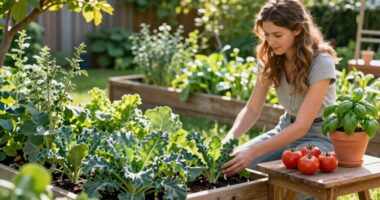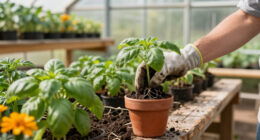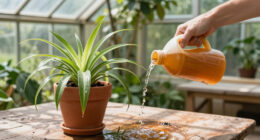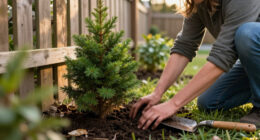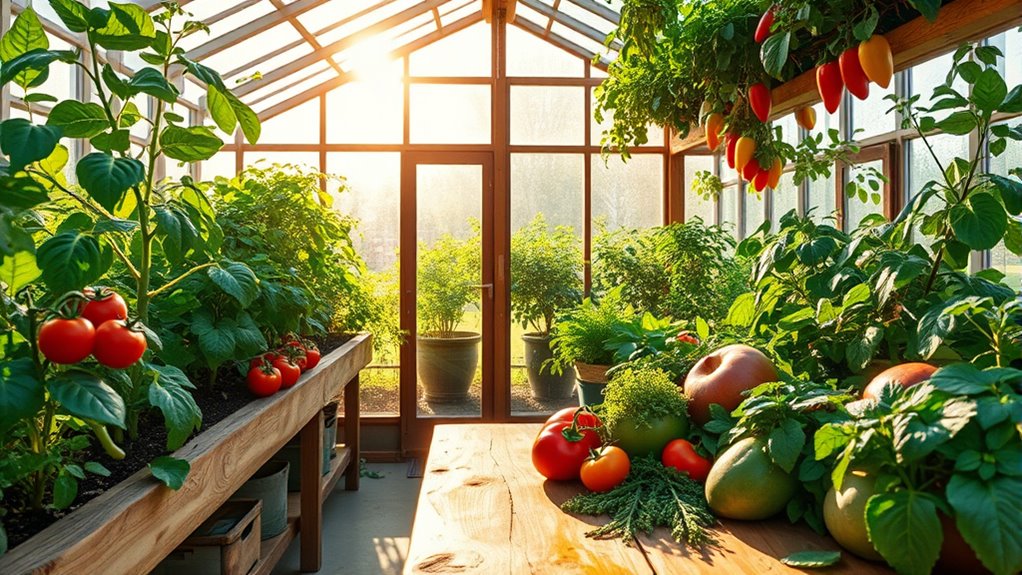

Growing your own food from greenhouse to table is a sustainable choice that puts fresh produce right in your hands. You can optimize small spaces like balconies or rooftops with containers, vertical gardens, and smart soil management. Incorporate composting to enrich your soil naturally and use tools like HEPA filters for indoor air quality. Small adjustments can boost yields and reduce waste, making your lifestyle more eco-friendly. Discover how sustainable urban farming can transform your daily meals and habits.

Get garden gear delivered free — and shop member deals
- Fast, free delivery on millions of items
- Access to Prime Big Deal Days deals on October 6–7
- Prime Video, Amazon Music and more included
Key Takeaways
- Building a greenhouse extends growing seasons, ensuring fresh produce year-round for sustainable home food production.
- Incorporate container gardening and vertical setups inside the greenhouse to maximize limited space efficiently.
- Use composting techniques to enrich soil quality and promote eco-friendly waste management from start to table.
- Implement soil testing and management practices to optimize plant health and maximize yields sustainably.
- Grow a variety of vegetables, herbs, and small fruits inside the greenhouse for nutritious, safe, and self-sufficient meals.
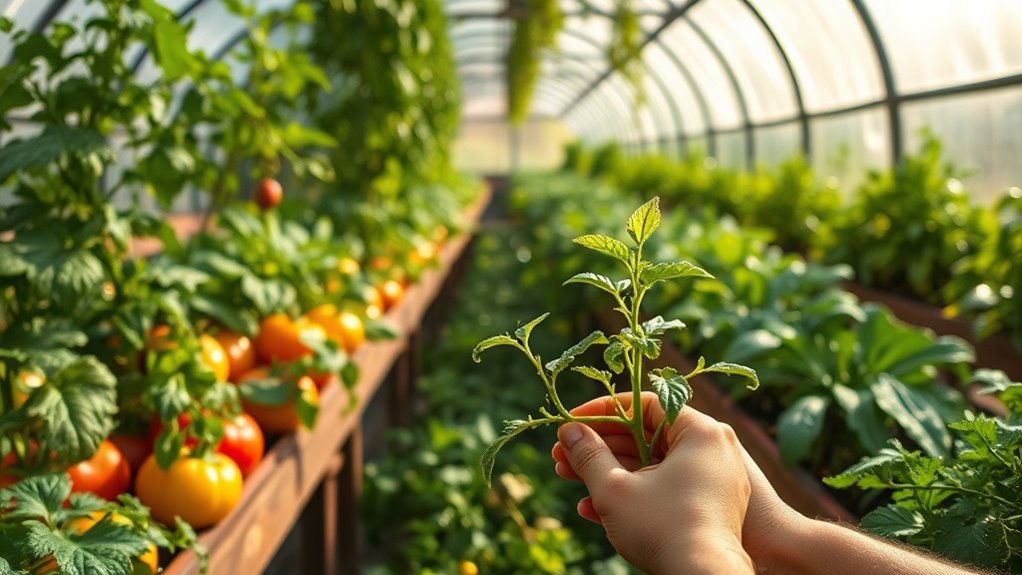
Have you ever considered growing your own food? It’s a rewarding way to take control of what you eat while reducing your environmental footprint. Urban farming makes this possible even if you don’t have a sprawling backyard. By transforming small spaces like balconies, rooftops, or community gardens into productive plots, you can cultivate fresh vegetables, herbs, and even small fruit trees. The key lies in smart planning and utilizing efficient growing methods. One effective approach is to incorporate composting techniques into your urban farming routine. Composting turns kitchen scraps and yard waste into rich, nutrient-dense soil that nourishes your plants naturally. It reduces waste sent to landfills and provides your crops with essential minerals, leading to healthier, more vigorous growth. Additionally, using HEPA filters in your indoor spaces can help improve air quality for both you and your plants, creating a healthier environment. Getting started with composting is simple. You gather organic waste like fruit peels, coffee grounds, eggshells, and yard clippings, then create a compost bin or pile in a corner of your space. Regularly turning the compost accelerates decomposition, ensuring you produce usable soil faster. This process not only supports sustainable urban farming but also saves you money on fertilizers. Moreover, incorporating composting techniques can significantly enhance soil fertility and plant health, making your efforts more fruitful. Using soil management practices can help you tailor your composting and planting strategies to your specific environment. Proper soil testing can also guide you in adjusting amendments for the best crop growth. As your compost matures, you’ll notice your plants thriving, showing the benefits of enriching your soil with homemade compost.
Urban farming combined with effective composting techniques allows you to maximize limited space and resources. Containers, raised beds, or vertical gardens can be tailored to fit your environment, making it easier to manage soil quality and plant health. When you grow your own food, you’re more aware of what goes into your soil and how your plants are cared for, leading to fresher, safer produce. Plus, it’s an empowering experience—seeing your efforts turn into ripe vegetables or fragrant herbs reminds you of the tangible effects of sustainable practices. In addition, understanding soil microbiology can help you foster a healthier soil ecosystem that naturally supports plant growth. Moreover, embracing these practices encourages a deeper connection with nature and fosters a sense of community. Sharing tips on composting and urban farming can lead to collaborative efforts, creating greener neighborhoods. As you refine your techniques, you’ll discover how small adjustments—like layering compost materials properly or choosing the right crops for your climate—can markedly boost your yields. Growing your own food from greenhouse to table isn’t just about convenience; it’s a lifestyle choice that promotes environmental stewardship and personal well-being. With patience and consistency, your urban farming journey becomes a sustainable cycle that benefits both you and the planet.
As an affiliate, we earn on qualifying purchases.
Frequently Asked Questions
What Are the Best Crops for Small Greenhouse Spaces?
For small greenhouse spaces, you should focus on compact crops like lettuce, herbs, cherry tomatoes, and peppers. These plants thrive in limited space and mature quickly. Practice companion planting to maximize growth and deter pests, and rotate crops regularly to maintain soil health. By choosing the right crops and applying these techniques, you’ll optimize your greenhouse’s productivity and enjoy fresh, homegrown produce year-round.
How Much Sunlight Do Different Vegetables Require?
Did you know that most vegetables need at least 6 hours of sunlight daily? For ideal growth, consider sunlight intensity when planning your garden. Leafy greens like lettuce thrive in partial shade, while tomatoes and peppers require full sun. Incorporate companion planting to maximize sunlight use and protect plants. Adjust your planting based on sunlight availability to ensure healthy, abundant harvests in your small greenhouse or garden space.
What Are Common Pests in Home Greenhouses?
In your home greenhouse, common pests like aphids, whiteflies, and spider mites can challenge your plants. To prevent pests, practice pest prevention strategies like maintaining good airflow and removing debris. When pests appear, use organic pest control methods such as neem oil or insecticidal soap to protect your crops without chemicals. Regular monitoring and early intervention help keep your greenhouse healthy and productive, ensuring a bountiful harvest.
How Often Should I Water My Greenhouse Plants?
You should water your greenhouse plants based on their watering frequency needs and how well they retain moisture. Typically, check the soil daily, and water when the top inch feels dry. Proper plant hydration involves providing enough water to keep the soil moist but not soggy. Adjust your watering schedule according to plant type, weather conditions, and container size to ensure healthy growth without overwatering.
What Sustainable Practices Can Reduce Energy Use?
You can reduce energy use by adopting sustainable practices like composting techniques to improve soil naturally, cutting down on synthetic fertilizers. Additionally, explore renewable energy options such as solar panels or wind turbines to power your greenhouse efficiently. These steps not only lower your carbon footprint but also promote a more eco-friendly lifestyle, making your gardening efforts more sustainable and cost-effective over time.
Conclusion
By growing your own food, you’re not just eating—you’re becoming the superhero of your kitchen, saving the planet one tomato at a time. Imagine transforming your backyard into a lush, endless feast, where every harvest is a victory dance. It’s so easy, even a sleepy koala could do it! So, grab those seeds and start your epic journey today—because nothing beats the thrill of plucking a ripe veggie straight from your own superhero garden.
Fall yard work Picks
leaf blowers
As an affiliate, we earn on qualifying purchases.