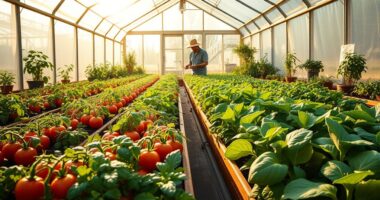
Growing your own food in a greenhouse helps cut your carbon footprint by reducing transportation emissions and supporting local, sustainable practices. It eliminates long-distance shipping, ensuring fresh, nutrient-rich produce is available right at home. By using energy-efficient design, renewable energy like solar, and natural pest control methods, you can further lower your environmental impact. Want to discover more ways to make your greenhouse eco-friendly and maximize its benefits? Keep exploring!
Key Takeaways
- Growing food locally in a greenhouse eliminates transportation emissions, reducing your overall carbon footprint.
- Incorporating renewable energy like solar panels minimizes reliance on fossil fuels for heating and lighting.
- Using sustainable pest control and energy-efficient design practices further lowers greenhouse gas emissions.
- Maximizing natural light and ventilation reduces the need for artificial lighting and climate control, conserving resources.
- Supporting local food production decreases dependency on long-distance supply chains, cutting associated emissions.
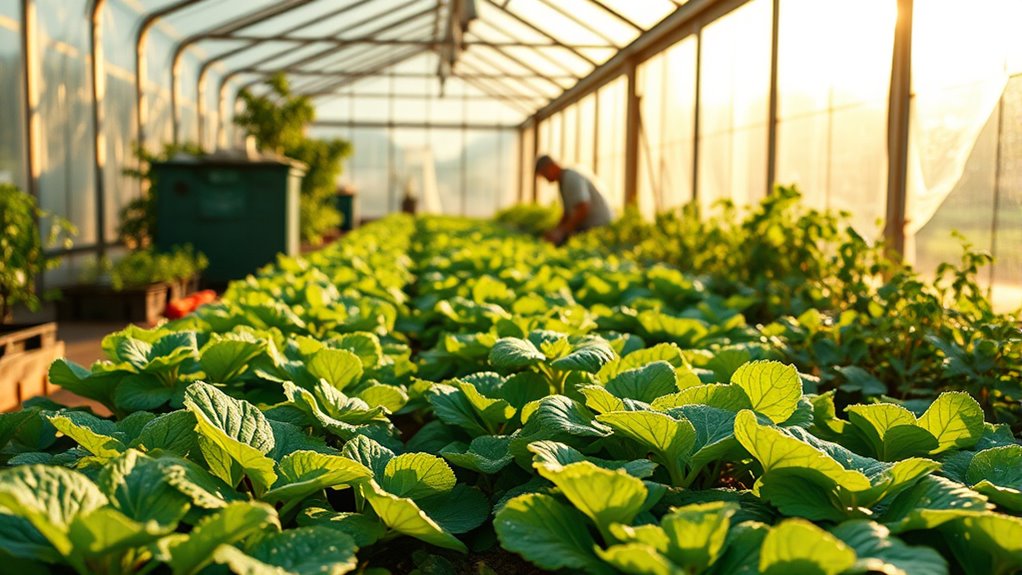
Growing your own food in a greenhouse allows you to considerably cut down on the carbon emissions associated with transporting produce from farms to stores. When you cultivate your vegetables and herbs at home, you eliminate the need for long-distance trucking and shipping, which are significant contributors to greenhouse gas emissions. This approach not only reduces your carbon footprint but also guarantees you have fresh, nutrient-rich food readily available. To maximize these benefits, focusing on sustainable pest control methods is essential. Instead of relying on chemical pesticides that can harm the environment, you might consider integrated pest management techniques, such as introducing beneficial insects or using organic deterrents. These strategies keep pests in check without adding harmful pollutants, making your greenhouse a more eco-friendly space.
Equally important is designing your greenhouse for energy efficiency. An energy-efficient greenhouse minimizes the use of external power sources, helping you conserve resources and reduce emissions. You can start by choosing a structure with good insulation, which reduces heating and cooling needs throughout the year. Incorporating natural ventilation, such as vents or exhaust fans, allows you to regulate temperature without excessive energy use. Additionally, positioning your greenhouse to maximize sunlight exposure can substantially reduce the need for artificial lighting requirements, especially during the shorter winter days. Using reflective materials or light-colored surfaces inside can further enhance natural light distribution, decreasing the need for electric lighting during daylight hours.
Implementing energy-efficient practices extends beyond design. You can also incorporate renewable energy sources like solar panels to power lighting or small climate control systems, further decreasing your reliance on fossil fuels. Regular maintenance of your greenhouse ensures that insulation and ventilation systems work at their best, preventing energy waste. Moreover, integrating smart automation technologies can optimize climate control and reduce energy consumption even further. When combined with sustainable pest control, these measures create a closed-loop system that supports your goal of reducing your carbon footprint.
Frequently Asked Questions
How Can I Maximize Greenhouse Space for Local Food Production?
To maximize your greenhouse space for local food, focus on optimizing soil health through crop rotation, which prevents soil depletion and boosts productivity. Use vertical gardening and tiered planting to increase growing area without expanding footprint. Organize your crops by growth habits to maximize space efficiency. Regularly monitor and adjust your setup for better light and airflow, ensuring healthy plants and higher yields in limited space.
What Are the Best Crops for Small Greenhouse Setups?
Did you know small greenhouses can yield up to 10 times more crops per square foot? For your setup, choose plant selection wisely—herbs like basil and mint, leafy greens such as lettuce, and compact vegetables like cherry tomatoes thrive in limited space. Focus on pest management through natural methods to protect your crops. These choices maximize space, guarantee healthy growth, and keep your greenhouse productive and eco-friendly.
How Do I Maintain Optimal Temperature and Humidity Levels?
You should regularly monitor your greenhouse’s temperature and humidity levels with a thermometer and hygrometer. Use fans, vents, or heaters to keep temperatures stable, and adjust watering to maintain ideal soil moisture. Keep humidity in check with a humidifier or dehumidifier. For pest control, guarantee proper airflow and cleanliness, which helps prevent issues. Regularly inspect plants to catch problems early and keep your environment suitable for healthy growth.
What Sustainable Energy Options Are Best for Greenhouses?
You should consider solar integration and wind power as sustainable energy options for your greenhouse. Solar panels can efficiently harness sunlight, reducing reliance on grid electricity, while wind turbines generate clean energy, especially in breezy locations. Combining both provides a reliable, eco-friendly power source that helps lower your carbon footprint. Investing in these renewable options guarantees your greenhouse operates sustainably, supporting your goal of eco-conscious food production.
How Often Should I Harvest to Reduce Waste and Energy Use?
Oh, just harvest whenever you feel like it—who needs timing anyway? In reality, precise harvest timing is key to waste reduction and energy savings. You should harvest crops at their peak ripeness, based on growth stage and maturity, not a random schedule. This approach minimizes waste, optimizes energy use, and guarantees you’re not overworking your greenhouse’s resources. Stay attentive, and your plants will thank you!
Conclusion
By choosing local food from your greenhouse, you cut down your carbon footprint and enjoy fresher produce. It’s a simple act that contrasts with the environmental cost of imported foods, which travel thousands of miles. While supermarkets offer convenience, growing your own or sourcing locally highlights what’s truly sustainable. In this small shift, you find a balance between convenience and conservation, proving that even modest changes can have a powerful impact on the planet.