
To compost without odors, choose a system like worm composting or Bokashi that minimizes smell and guarantees good airflow. Keep the right balance of green and brown materials, and turn the compost regularly to boost aeration. Use sealed bins with vents or filters, and bury food scraps in garden setups. Maintaining proper moisture and adding odor absorbers like charcoal also help. Want to master odor-free composting? Keep exploring for proven tips to succeed.

Get garden gear delivered free with Prime
- Fast, free delivery on millions of items
- Prime Video, Amazon Music and more included
- Member-only deals all year
Key Takeaways
- Use odor-controlled systems like worm composting or Bokashi bins with sealed lids and carbon filters.
- Maintain proper greens-to-browns ratio and turn the compost regularly to ensure aeration.
- Place compost in well-ventilated areas and avoid overloading with moist or rotting materials.
- Bury food scraps beneath dry materials or soil to reduce odor and promote aerobic decomposition.
- Add activated charcoal, baking soda, or microbial inoculants to neutralize persistent smells.
odor-free compost bin with carbon filter
As an affiliate, we earn on qualifying purchases.
As an affiliate, we earn on qualifying purchases.
Why Does Compost Smell? Causes and How to Prevent Odors
Compost often smells because of anaerobic conditions, which occur when there’s not enough oxygen in the pile. When oxygen is scarce, soil bacteria switch from aerobic to anaerobic processes, producing foul odors like sulfur or rotten eggs. These bacteria thrive in compacted, poorly aerated compost, breaking down organic materials slowly and producing unpleasant gases. To prevent this, you need to guarantee proper aeration by turning your compost regularly and adding bulky materials like straw or wood chips to improve airflow. Maintaining a balanced mix of greens and browns also helps prevent anaerobic zones. By avoiding compacting the pile and encouraging oxygen flow, you keep soil bacteria happy and odor-free, creating a healthier composting environment and eliminating smell issues.
What Are the Best Odor-Controlled Compost Systems for Your Home?
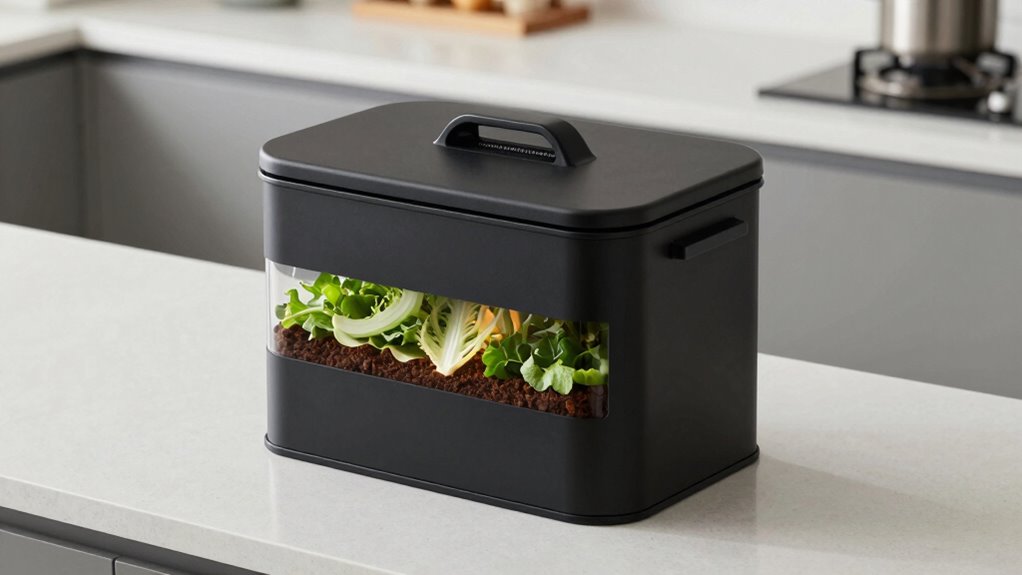
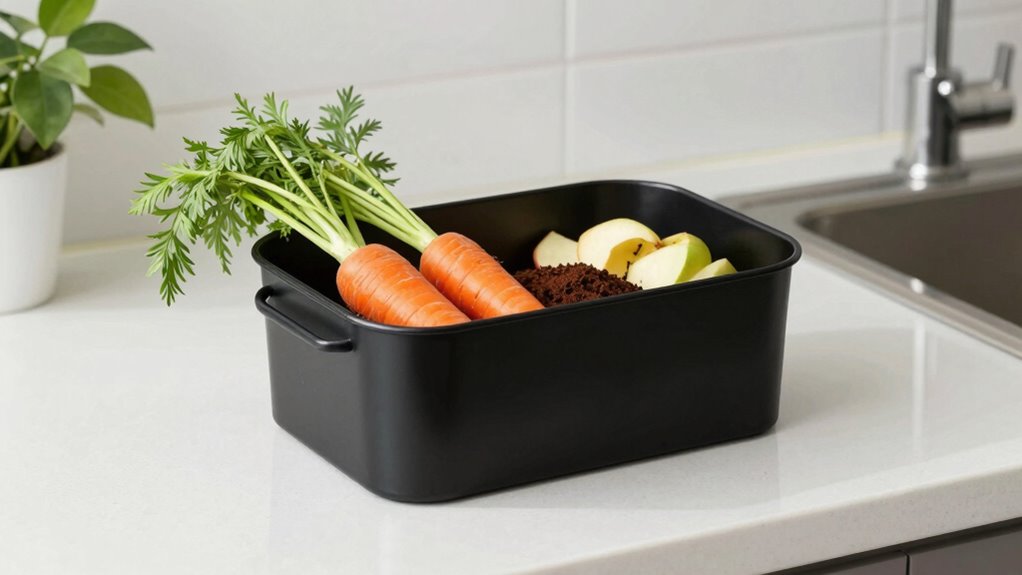
To keep odors at bay while composting at home, choosing the right system can make a significant difference. Worm composting uses red worms to break down organic waste quietly and without smell, perfect for indoor spaces. Bokashi bins ferment kitchen scraps with beneficial microbes, sealing in odors effectively. Both systems are compact and easy to maintain, making them ideal for home use. Consider the table below to compare features:
| System | Odor Control | Ideal For |
|---|---|---|
| Worm Composting | Minimal smell, relies on worms | Indoor, small spaces |
| Bokashi Bins | Fermentation seals in odors | Kitchen scraps, urban living |
| Traditional Compost | Needs aeration for odor control | Backyard, larger spaces |
Furthermore, understanding composting methods can help you select the most suitable system for your needs. Incorporating proper maintenance techniques can enhance odor control and ensure successful composting. Additionally, choosing a system with effective odor barriers can further improve your composting experience and reduce unpleasant smells.
How to Set Up a Smell-Free Compost Bin in Your Kitchen or Garden
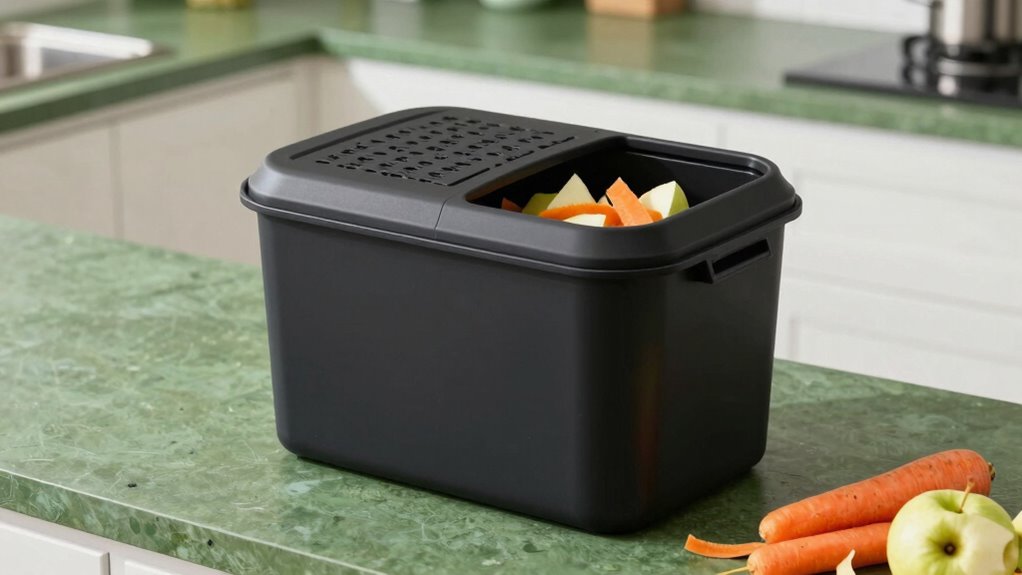
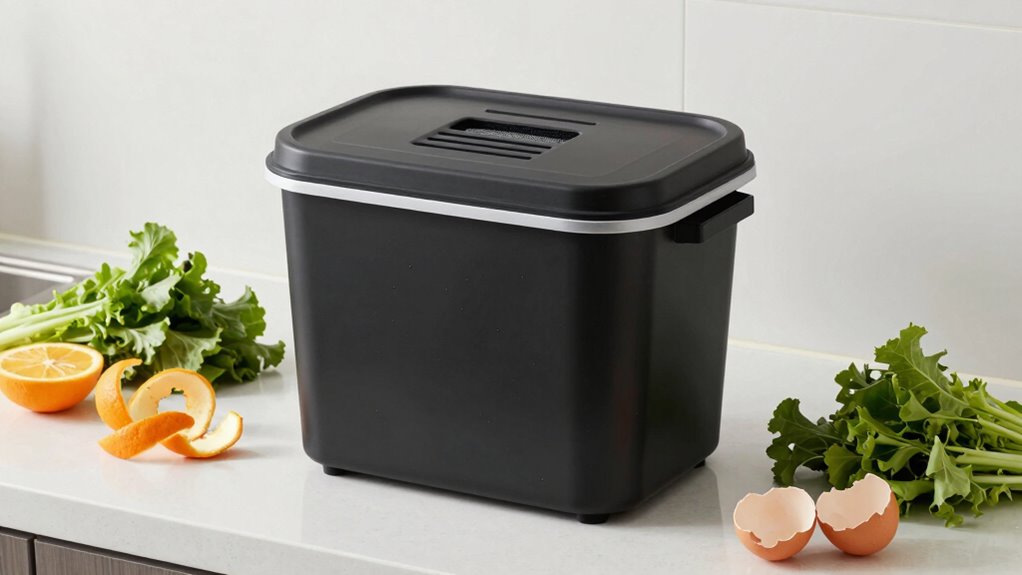
Setting up a smell-free compost bin in your kitchen or garden is simple when you choose the right system and follow some basic steps. First, carefully consider compost bin placement; keep it in a well-ventilated area away from living spaces to reduce odors. Use odor absorption techniques like adding dry carbon-rich materials—such as shredded paper, leaves, or sawdust—to balance moisture and nitrogen. In the kitchen, opt for a compact bin with a tight-fitting lid and carbon filters to contain smells. In the garden, bury food scraps beneath mulch or soil to minimize odors further. Regularly turning the compost helps aerate it, preventing smells from developing. Proper filtration systems can also help trap odors before they escape into your home or garden. Incorporating air circulation techniques can further improve odor control and promote healthy composting. With proper placement and odor absorption techniques, your compost system remains odor-free and efficient.
Easy Tips to Keep Your Compost Odor-Free and Successful
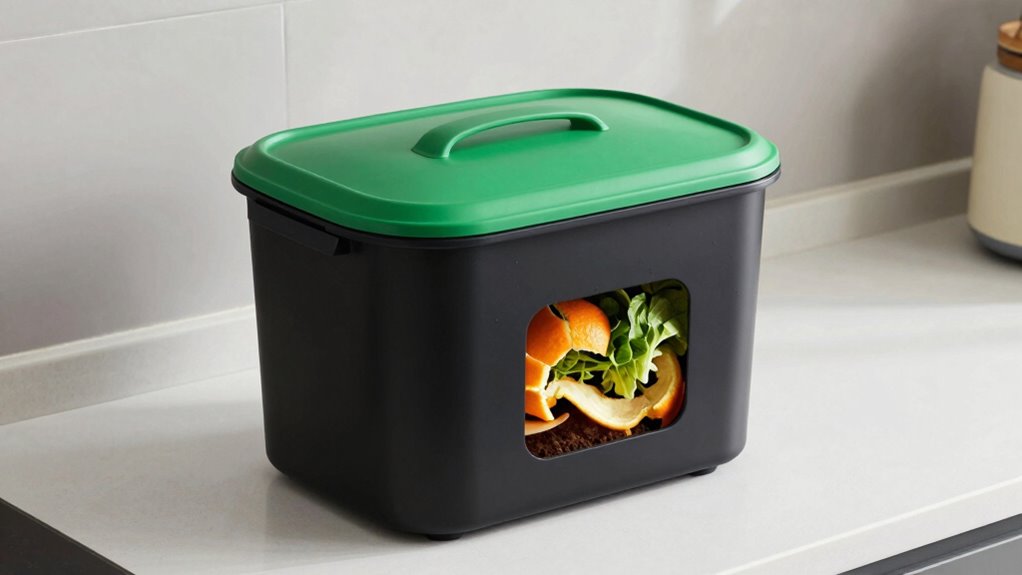
Keeping your compost odor-free and successful is easier when you follow a few simple, effective tips. First, debunk common composting myths—like the idea that all food scraps cause odors. In reality, adding the right balance of greens (fruit and vegetable scraps) and browns (dry leaves or paper) helps control smells. Use odor control techniques such as layering materials and turning your compost regularly. Ensure proper aeration to prevent anaerobic conditions that lead to bad odors. Avoid overloading the bin with moist or rotting items; instead, keep everything balanced and covered. Maintaining your compost dry and well-ventilated minimizes odors, making your composting experience both successful and smell-free. Incorporating proper aeration techniques, such as monitoring moisture levels and choosing the right container, can further enhance odor control. Additionally, understanding the importance of balanced compost materials ensures that your compost remains healthy and odorless. Regularly checking moisture levels and adjusting as needed helps prevent odors from developing. Incorporating effective composting methods can significantly improve your results and keep odors at bay. These simple tips help you maintain a healthy, odorless compost system that works efficiently.
How to Troubleshoot and Fix Common Compost Smell Problems
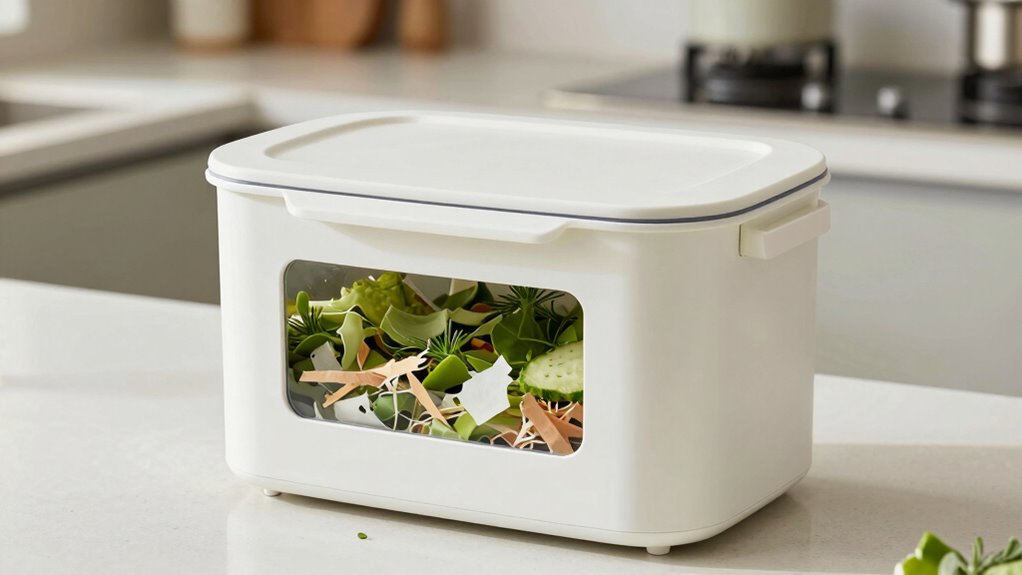
When your compost starts to emit unpleasant odors, it’s a clear sign that something’s off balance. First, review your compost bin maintenance—ensure you’re turning the pile regularly to aerate it and mix in fresh browns like dry leaves or shredded paper. If odors persist, try odor absorption techniques such as adding activated charcoal or baking soda to neutralize smells. Also, check the moisture level; too much moisture can cause anaerobic conditions that produce foul odors. If the compost is too wet, add more dry materials to absorb excess moisture. Keep an eye on the balance of greens and browns, and avoid overloading the bin with food scraps. Proper air purifier maintenance can help reduce indoor odors that may be contributing to compost smell issues. Additionally, understanding the contrast ratio of your compost setup—like the depth and light exposure—can influence microbial activity and odor development. Maintaining proper aeration and moisture balance is essential for preventing odors and supporting healthy compost decomposition. To further improve compost conditions, consider adjusting microbial activity by adding compost starters or inoculants that promote beneficial bacteria. With consistent maintenance and proper odor absorption techniques, your compost should stay fresh and odor-free.
Frequently Asked Questions
Can Composting Be Done Indoors Without Any Smell?
Yes, you can compost indoors without any smell. Using urban techniques, opt for airtight container types like sealed bins or compost pails designed for indoor use. These containers trap odors and allow you to manage compost efficiently. Keep the bin in a cool, well-ventilated spot, and regularly balance green and brown materials. With the right container and proper maintenance, indoor composting stays odor-free and eco-friendly.
What Materials Are Best to Neutralize Odors in Compost?
You should use odor absorbing materials like activated charcoal, shredded newspaper, or sawdust to neutralize odors in compost. These neutralizing agents help absorb excess moisture and smell-causing gases, keeping your compost bin fresh. Adding a layer of these materials on top of your compost regularly can prevent odors from escaping. Keep the balance of greens and browns, and make sure to aerate often for the best results.
How Long Does It Take for Compost to Become Usable?
It typically takes about 3 to 6 months for your compost to reach maturity, depending on conditions. You’ll know it’s ready when it’s dark, crumbly, and has an earthy smell, indicating nutrient availability. Regular turning and maintaining proper moisture help speed up the process. Once compost is mature, you can confidently use it in your garden, knowing it’ll boost plant growth and improve soil health.
Are There Natural Remedies to Eliminate Compost Odors?
To curb compost odors, try natural deodorizers like baking soda or activated charcoal, which absorb smells effectively. Microbial treatments also work wonders by boosting beneficial bacteria that break down odors at their source. You can sprinkle these natural remedies directly into your compost or mix them in regularly. This way, you keep your compost smelling fresh, fostering a friendly, foul-free household environment with minimal effort.
Does Compost Smell Differently Depending on the Season?
Yes, compost smells differently depending on the season. During warmer months, higher temperatures accelerate decomposition, which can lead to stronger, more noticeable odors if not managed properly. In cooler seasons, decomposition slows, often reducing odor intensity but possibly causing a different, earthier smell. You should adjust your composting habits seasonally, like turning the pile more frequently in summer, to control seasonal odor variations and temperature effects effectively.
Conclusion
Think of your compost as a delicate balance, like tuning a guitar—you need the right strings and tension. When you get it just right, your kitchen scraps transform into rich soil without any smell. I once struggled with odors until I added a layer of dry leaves, and suddenly, everything improved. With patience and the right techniques, you’ll turn your waste into garden gold—smell-free and successful, just like a perfectly played melody.
Fall Picks
fall essentials
As an affiliate, we earn on qualifying purchases.