By combining solar water heating and passive ventilation, you can create an off-grid greenhouse that supports year-round growth. Solar collectors heated by sunlight provide warmth during winter, reducing your reliance on external power. Naturally ventilating through roof vents and side windows keeps temperatures balanced during summer, preventing overheating. This energy-efficient setup requires minimal maintenance and operates silently. If these methods pique your interest, explore further to discover how they can fully transform your off-grid gardening experience.
Key Takeaways
- Solar water heating provides consistent warmth, enabling year-round plant growth without external power sources.
- Passive ventilation maintains optimal temperature and humidity naturally, reducing reliance on mechanical systems.
- Combining solar heating and passive airflow creates an energy-efficient environment suited for off-grid living.
- Proper placement of solar collectors and vents enhances sustainability and self-sufficiency in the greenhouse.
- These renewable systems support eco-friendly, year-round gardening with minimal maintenance and environmental impact.

Living off-grid in a greenhouse offers a sustainable way to grow your own food while minimizing environmental impact. One of the key advantages is that you can harness renewable energy sources to maintain ideal conditions year-round. Solar water heating plays a pivotal role here, providing a reliable way to warm your water without relying on external power. By installing solar collectors on your greenhouse roof, you can efficiently capture sunlight and convert it into heat, which then heats your water for domestic use or garden needs. This setup reduces your dependence on fossil fuels and lowers your energy bills, all while keeping your greenhouse environment stable.
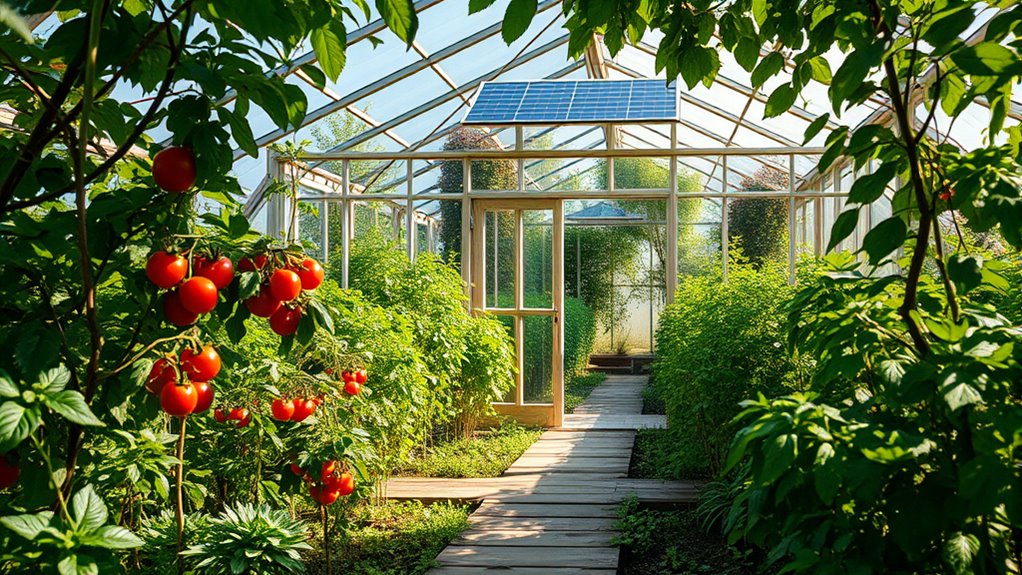
Harness solar energy to heat water and create an eco-friendly, off-grid greenhouse environment year-round.
Passive ventilation is another fundamental feature that guarantees your greenhouse stays comfortable without using electricity-powered fans or exhaust systems. When designed properly, passive ventilation takes advantage of natural air flow to regulate temperature and humidity. For example, you might include roof vents and side windows that open in response to temperature differences inside and outside the greenhouse. As the sun heats the space, warm air rises and escapes through vents at the top, drawing cooler air in from lower openings. This natural air circulation helps prevent overheating during hot days and guarantees fresh air exchange, which is essential for plant health. You don’t need electric fans or mechanical systems, saving energy and reducing operational costs.
Combining solar water heating with passive ventilation creates a balanced, energy-efficient environment. During winter, solar water heaters can contribute to maintaining a warm atmosphere by providing heat directly or through hot water circulation beneath planting beds. Meanwhile, passive ventilation ensures excess heat doesn’t build up during summer, preventing your crops from suffering heat stress. The simplicity of passive ventilation means fewer moving parts and less maintenance, making it ideal for off-grid living. Plus, these systems work silently and reliably, giving you peace of mind and a consistent growing environment.
In addition, integrating these renewable energy systems encourages you to think sustainably and become more self-sufficient. You’ll learn to optimize the placement of vents and solar collectors, maximizing their efficiency based on your local climate. Over time, you’ll develop a better understanding of how natural processes can support your gardening goals, reducing your reliance on external power sources. Living off-grid in a greenhouse with solar water heating and passive ventilation isn’t just about growing food; it’s about creating an eco-friendly lifestyle rooted in renewable energy. By harnessing the sun’s power and natural airflow, you turn your greenhouse into a self-sustaining, productive space that aligns with your commitment to environmental stewardship.
Frequently Asked Questions
What Are the Initial Costs for Setting up an Off-Grid Greenhouse?
You’ll likely spend around $5,000 to $15,000 on initial setup costs, depending on your greenhouse size and features. This includes installing solar panels to generate renewable energy, water tanks for irrigation, and basic infrastructure. You might also need to budget for insulation, heating, and ventilation systems. While upfront costs seem high, investing in quality equipment guarantees reliable energy and water supply for year-round growing off-grid.
How Do I Troubleshoot Renewable Energy Systems in Winter?
To troubleshoot your renewable energy system in winter, start by inspecting your solar panels for dirt, debris, or snow, and clean them with a gentle brush or water to maximize efficiency. Check your batteries regularly for proper charge levels and signs of corrosion, and make certain connections are secure. If power drops unexpectedly, verify the charge controller and inverter are functioning correctly. Consistent maintenance keeps your system running smoothly year-round.
Can Off-Grid Greenhouses Support Year-Round Vegetable Production?
Like a steadfast guardian, your off-grid greenhouse can support year-round vegetable production. With solar tracking, you harness maximum sunlight, while wind integration adds reliability during storms or cloudy days. These renewable energy techniques symbolize harmony with nature, ensuring continuous power. By combining solar and wind sources, you create a resilient system that sustains your crops through every season, turning your greenhouse into a perpetual oasis of growth.
What Are the Best Low-Maintenance Renewable Energy Options?
You should consider solar batteries and wind turbines as your top low-maintenance renewable energy options. Solar batteries store excess energy, ensuring a steady power supply even during cloudy days, while wind turbines generate electricity with minimal upkeep once installed. Both are reliable, eco-friendly choices that keep your off-grid greenhouse running smoothly year-round, reducing your reliance on external power sources and making your sustainable farming easier and more efficient.
How Do I Ensure Consistent Power Supply During Extended Cloudy Periods?
To guarantee a consistent power supply during extended cloudy periods, you should invest in solar storage systems and an energy backup. Solar batteries store excess energy generated during sunny days, providing power when sunlight is scarce. Additionally, having a reliable backup, like a small generator or wind turbine, ensures your greenhouse remains operational. Regularly monitoring your energy storage levels helps prevent outages and keeps your plants thriving year-round.
Conclusion
So, step into the sustainable sphere of off-grid greenhouse living, where renewable resources reign and resilience rises. Embrace eco-friendly energy, enjoy endless growth, and empower your environment with every effort. By blending bold bravery with green goals, you’ll not only nurture nature but also nurture your needs. With passion, persistence, and a touch of planning, you can cultivate a carefree, climate-conscious corner of comfort, creating a greener, greater greenhouse getaway all year round.