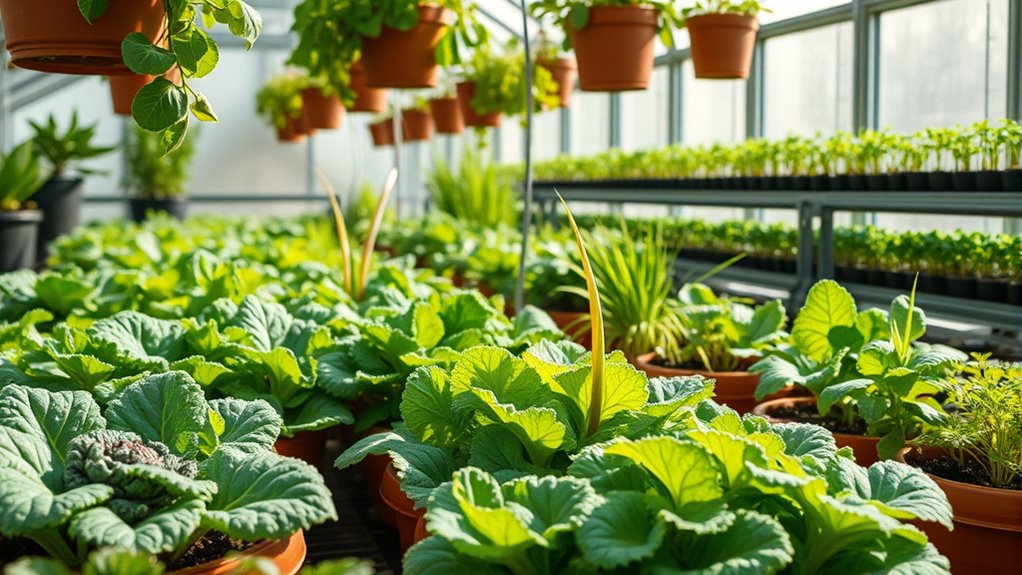
A greenhouse helps you grow fresh, organic produce all year long, making it easier to maintain a plant-based lifestyle. It shields your plants from pests and harsh weather, ensuring a consistent supply of vegetables, herbs, and protein-rich crops like beans and leafy greens. This practice reduces reliance on store-bought foods and supports eco-friendly habits. If you keep exploring, you’ll discover further ways your greenhouse can boost your green diet.
Key Takeaways
- Greenhouses enable year-round cultivation of fresh vegetables and herbs, supporting consistent plant-based nutrition.
- They protect crops from pests and harsh weather, reducing the need for chemical pesticides and environmental impact.
- Greenhouses facilitate growing high-protein vegan crops like beans and lentils, reducing reliance on processed plant-based products.
- They promote sustainable practices by minimizing food waste, packaging, and carbon emissions associated with food transportation.
- Greenhouse gardening encourages eco-friendly techniques, enhancing overall environmental health and supporting a greener diet.
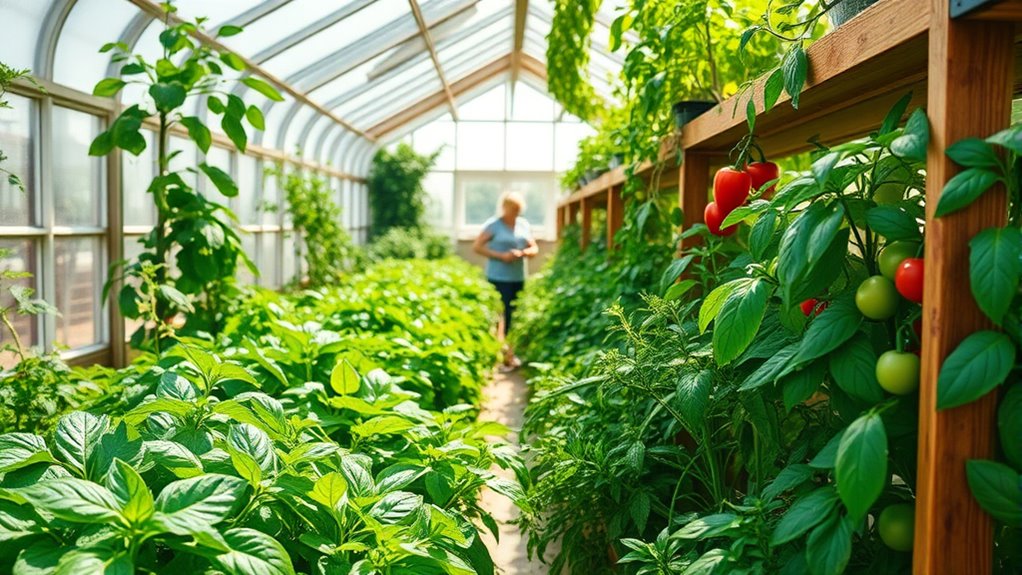
Are you curious about how adopting a plant-based lifestyle can transform your health and the environment? One of the most effective ways to do this is by embracing urban gardening, which allows you to grow fresh, organic produce right in your city space. Urban gardening puts control back in your hands, letting you cultivate vegetables, herbs, and even small fruit trees in limited spaces like balconies, rooftops, or community plots. This hands-on approach not only reduces your carbon footprint but also guarantees you’re consuming food free from pesticides and preservatives often found in store-bought produce. Plus, tending to your garden gives you a deeper connection to your food, making you more mindful of what you eat and how it impacts the planet.
Growing your own vegetables complements your shift toward a plant-based diet, especially when it comes to sourcing high-quality vegan protein. Instead of relying on processed plant-based meats or powders, you can harvest nutrient-dense crops like beans, lentils, peas, and leafy greens that serve as natural sources of vegan protein. These staples are versatile, filling, and packed with essential amino acids, making them perfect additions to salads, stir-fries, or grain bowls. When you incorporate urban gardening into your routine, you’re not just eating healthier—you’re actively reducing the demand for factory-farmed products, which are often associated with environmental degradation and greenhouse gas emissions.
Growing your own vegetables provides nutrient-rich, plant-based proteins that support a sustainable, healthy diet.
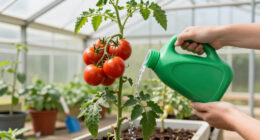
Your greenhouse becomes an essential part of this lifestyle shift, offering a controlled environment where you can extend the growing season and protect your plants from pests and harsh weather. This means you can harvest fresh greens and vegetables year-round, ensuring your plant-based meals stay diverse and nutritious. With a greenhouse, you can experiment with different crops, including those rich in vegan protein, without depending solely on store-bought options. This self-sufficiency minimizes waste and packaging, aligning your diet with eco-friendly principles.
Incorporating urban gardening and greenhouse cultivation into your lifestyle empowers you to take charge of your health while reducing your ecological footprint. You’ll enjoy the satisfaction of growing your own food, knowing exactly where it comes from and how it’s grown. As you cultivate a variety of vegetables and legumes, you’ll find your meals becoming more vibrant, nourishing, and aligned with your values. Transitioning to a plant-based diet supported by your own urban garden isn’t just a change in what you eat; it’s a lifestyle choice that benefits your well-being and helps nurture a more sustainable planet. Additionally, practicing sustainable gardening techniques can further enhance your efforts to support environmental health.

4 Tier Mini Greenhouse – Portable Greenhouse with Locking Wheels and PVC Cover for Indoor or Outdoor Green House by Pure Garden
- Four-Tier Shelving: Sturdy, spacious shelves for plants
- Indoor/Outdoor Use: Suitable for porch, patio, or sunroom
- Locking Wheels: Easy mobility with secure locking
As an affiliate, we earn on qualifying purchases.
As an affiliate, we earn on qualifying purchases.
Frequently Asked Questions
How Does a Greenhouse Reduce Carbon Emissions?
A greenhouse reduces your carbon footprint by enabling sustainable farming practices year-round, which cuts down on transportation emissions and energy use. You can grow food locally, minimizing the need for imported produce, and control conditions to save resources. This sustainable approach helps lower overall emissions, making your diet greener. By growing your own food in a greenhouse, you support eco-friendly choices and contribute to a healthier planet.
What Are the Best Plants for Beginner Greenhouse Gardeners?
Did you know that beginner greenhouse gardeners often find success with herbs and leafy greens? You should start with plants like lettuce, basil, and radishes—easy to grow and fast-growing. Focus on proper soil preparation and companion planting to boost growth and health. These plants thrive in greenhouse conditions and need minimal maintenance, making them perfect for newcomers enthusiastic to enjoy fresh, homegrown produce quickly.
Can a Greenhouse Extend My Growing Season Year-Round?
Yes, your greenhouse can extend your growing season and enable year-round cultivation. By controlling temperature, humidity, and light, you create ideal conditions for plants to thrive beyond outdoor limits. This season extension allows you to harvest fresh produce even in winter, supporting a greener diet. With proper insulation and heating, you’ll enjoy continuous growth, making your greenhouse a powerful tool for sustainable, all-year gardening.
What Are Eco-Friendly Methods for Maintaining Greenhouse Health?
You can maintain your greenhouse health eco-friendly by using composting techniques to enrich your soil naturally and reduce waste. Practice natural pest control by introducing beneficial insects like ladybugs or using organic sprays, avoiding harmful chemicals. Regularly monitor humidity and temperature to prevent plant stress, and guarantee proper airflow. These methods keep your greenhouse sustainable, healthy, and aligned with your greener diet goals.
How Does a Greenhouse Support Biodiversity in My Garden?
Your greenhouse supports biodiversity by creating a rich habitat that attracts native pollinators, essential for healthy plant growth. By incorporating native plants and diverse habitats, you encourage habitat diversity, which benefits a variety of wildlife. This not only boosts pollination but also maintains ecological balance. As a result, your garden becomes a thriving, resilient ecosystem, fostering a healthier environment for both your plants and local wildlife.
Conclusion
By embracing a plant-based lifestyle and nurturing your greenhouse, you’re not just growing food—you’re planting seeds of change. Every leaf you tend and every meal you prepare becomes a confirmation to your commitment to a greener planet. Think of your greenhouse as a silent guardian, quietly fostering sustainability. When you nurture it, you’re cultivating more than plants—you’re cultivating hope for a healthier, more vibrant Earth. After all, isn’t that what true growth is all about?