When pressure canning, you must follow strict safety steps to prevent accidents and guarantee your food is safe. Always use tested recipes, keep your equipment in top shape, and monitor pressure levels carefully. Proper jar handling, correct sealing, and regular gauge calibration are crucial. Store jars properly and watch out for signs of spoilage. Staying vigilant and following recommended techniques helps you produce safe, high-quality preserves. To master these essential safety rules, continue exploring these critical guidelines.
Open a free Amazon Business account
Business pricing, bulk buying and tax-exempt orders.
As an affiliate, we earn on qualifying purchases.
Key Takeaways
- Always follow tested recipes and manufacturer instructions to ensure safe pressure levels and proper food preservation.
- Regularly calibrate and inspect pressure gauges to maintain accurate pressure monitoring during canning.
- Use safety features like vent pipes, pressure locks, and gauges to prevent over-pressurization and accidents.
- Handle hot jars with proper tools like jar lifters and avoid overfilling or improper sealing to prevent spoilage and safety risks.
- Store canned foods in cool, dark places, label jars clearly, and discard any signs of spoilage immediately for food safety.

T-fal 22-Quart Aluminum Pressure Canner, 3 PSI Settings, Home Canning, Includes Racks & Canning Guide, Large Capacity, Pressure & Water Bath Canning for Vegetables, Meats, Seafood & Fruits, Silver
- Durable Aluminum Construction: Long-lasting, reliable performance and easy maintenance
- Multi-Purpose Canning: Preserves low-acid and high-acid foods safely
- Large 22-Quart Capacity: Can batch after batch of produce
As an affiliate, we earn on qualifying purchases.
As an affiliate, we earn on qualifying purchases.
Why Safety Is Critical in Pressure Canning?

Pressure canning involves heat and pressure, which can be dangerous if not managed properly. Your priority must be pressure safety to prevent accidents. High pressure inside the canner can cause explosions or burns if it’s not monitored correctly. Properly understanding and following safety guidelines helps you avoid risks like over-pressurization or equipment failure. Maintaining the correct pressure levels and using a reliable canner are essential for risk prevention. Never bypass safety features or take shortcuts, as that increases danger. When you respect the canner’s limits and carefully follow safety protocols, you reduce the chance of accidents. Remember, safety isn’t just about protecting your equipment; it’s about safeguarding yourself and your loved ones during every step of pressure canning. Understanding pressure canning safety is vital for reducing hazards and ensuring a successful canning experience.
How to Properly Prepare Food for Canning
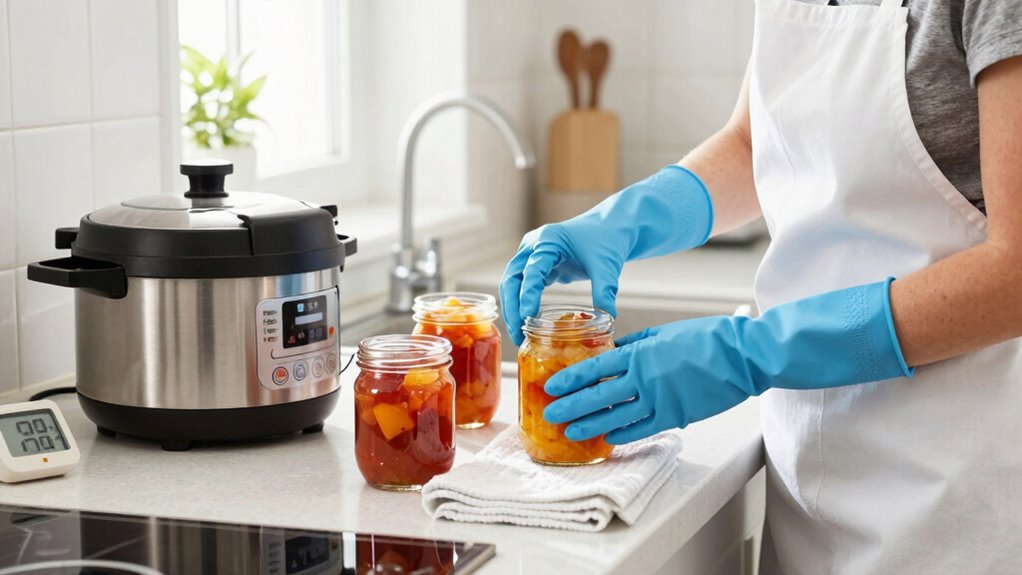
To guarantee your canned food is safe and tasty, start by choosing fresh ingredients. Make sure to wash, peel, and trim produce properly before processing. Proper preparation minimizes risks and helps preserve quality throughout the canning process. Additionally, organizing your ingredients and paperwork beforehand can simplify the process and reduce the chance of errors streamline your life with easy document management.
Selecting Fresh Ingredients
Choosing the best ingredients is essential for safe and flavorful canning. Start with fresh, seasonal produce, as it’s often at its peak in flavor and nutrition. Look for firm, blemish-free fruits and vegetables, avoiding any that are overripe or damaged. Whenever possible, opt for organic ingredients to reduce exposure to pesticides and additives, which can affect the safety and quality of your canned goods. Freshness is key—ingredients should be harvested recently and handled carefully during selection. Avoid using frozen or previously frozen produce, as freezing may compromise texture and safety. Keep in mind that high-quality ingredients mean better flavor and longer shelf life. Selecting the best, freshest produce lays a solid foundation for safe, delicious canned foods. Proper handling and storage techniques also play a crucial role in maintaining ingredient quality before canning.
Proper Food Preparation
Proper food preparation is essential for ensuring safe canning results. Before starting, wash your hands thoroughly and clean all utensils, jars, and surfaces to maintain kitchen sanitation. Select ripe, unblemished produce, and trim or peel as needed, removing any damaged areas. Cutting foods uniformly helps ensure even heat penetration, which is crucial for proper food preservation. Be sure to eliminate air bubbles by gently tapping or stirring the contents, preventing spoilage. Use fresh ingredients to reduce the risk of bacteria or spoilage. Properly prepared food reduces the chance of contamination and ensures consistent results. Always follow tested recipes and guidelines to keep safety a priority. Maintaining proper food storage practices is vital for preventing spoilage and ensuring long-term safety. By maintaining kitchen sanitation and preparing ingredients correctly, you set a solid foundation for successful, safe pressure canning.
What Are the Parts of a Pressure Canner and How Do They Work?
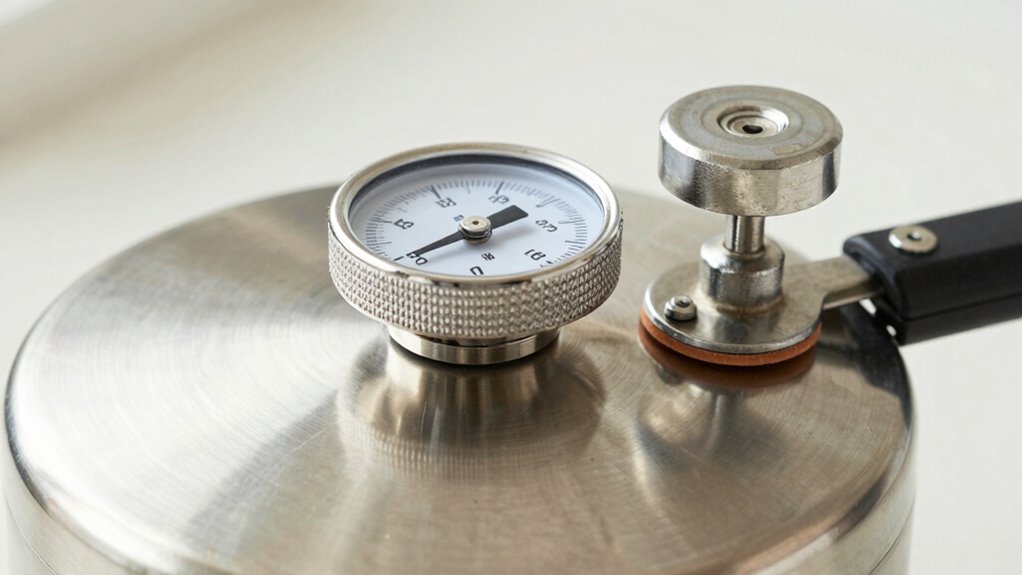
A pressure canner has several key parts that work together to guarantee safe preservation. The main body includes components like the pot and lid, which create a sealed environment. You’ll also find the valve and pressure control, which regulate pressure levels to keep everything running safely. Additionally, proper ventilation considerations are essential to prevent dangerous pressure buildup and ensure safe operation.
Canner Body Components
The main parts of a pressure canner work together to safely process food under high pressure and temperature. The canner body components include the sturdy metal shell, which holds everything securely. The lid, equipped with sealing rings, creates an airtight environment. Inside, the pressure gauge helps you monitor pressure levels; regular pressure gauge maintenance ensures accuracy for safe processing. The vent pipe allows steam to escape safely, preventing over-pressurization. The safety lock mechanism prevents opening the lid during processing. The canner’s weight or dial controls pressure regulation, but it’s essential to check that all parts are in good condition. Understanding these components helps you operate your pressure canner correctly, ensuring safe, effective canning while preventing accidents. Navigation and mapping explainers can help you understand how to position and handle your canner for optimal operation and safety.
Valve and Pressure Control
Understanding how the valve and pressure control work together is vital for safe and effective pressure canning. The valve regulates pressure buildup and release, ensuring the canner doesn’t get too hot or too cool. The pressure control, often a weighted gauge or dial, maintains the correct pressure level for preserving food safely. Regularly checking gauge calibration is important; an inaccurate gauge can lead to unsafe pressure levels. When the pressure reaches the set point, the valve releases excess pressure through a pressure release mechanism, preventing over-pressurization. This process keeps the process safe and consistent. Proper valve and pressure control management is key to successful, safe pressure canning. Additionally, utilizing European cloud innovation can provide advanced monitoring tools that enhance safety and precision during canning.
How to Safely Use Your Pressure Canner: Step-by-Step
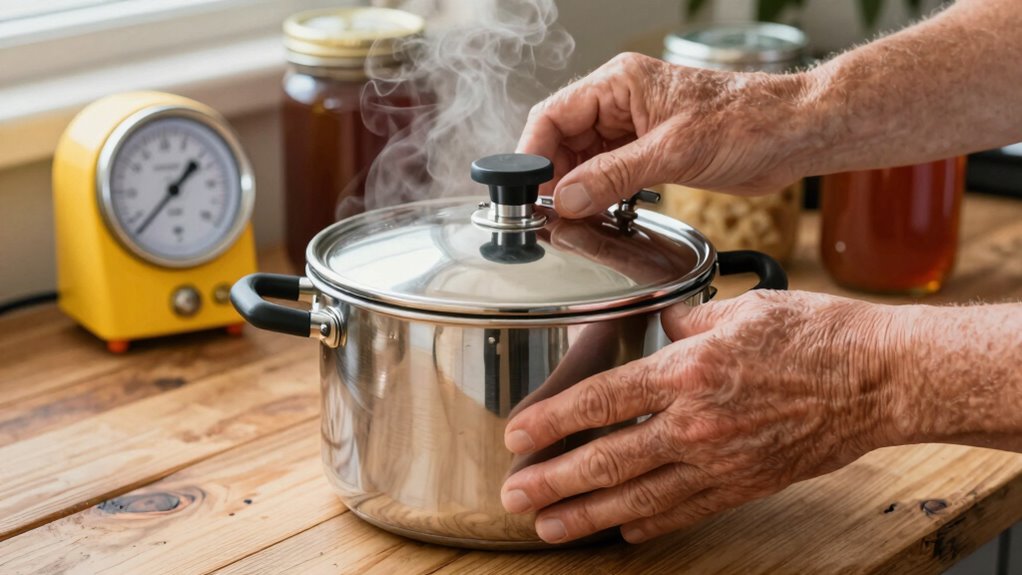
Before you start using your pressure canner, it is vital to read the manufacturer’s instructions carefully. Begin by selecting clean, high-quality canning jars and make certain they undergo the sterilization process. To do this, wash jars thoroughly with hot, soapy water, then place them in boiling water or run them through a hot dishwasher cycle. Once sterilized, keep the jars hot until you’re ready to fill them. Follow the steps to load the jars into the canner, making sure they are properly seated and not touching each other. Add the appropriate amount of water for your specific pressure canner model, then lock the lid securely. Monitor pressure and temperature carefully throughout the process, guaranteeing safety and food preservation. Proper pressure regulation is essential for safe canning and preventing spoilage.
Common Mistakes to Avoid When Pressure Canning
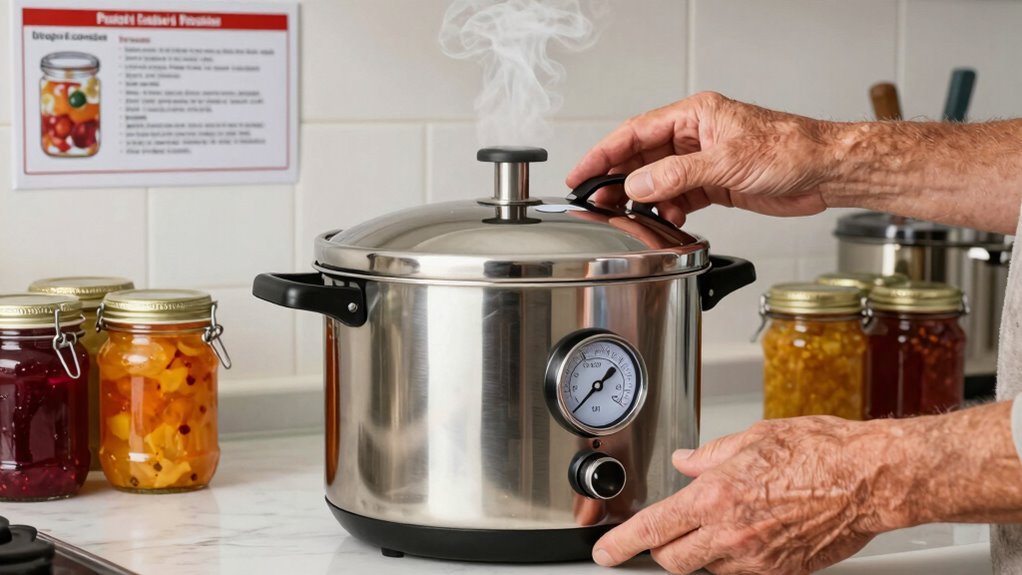
One common mistake is neglecting to follow the manufacturer’s instructions precisely, which can compromise safety and food quality. Many pressure canning myths lead beginners to skip steps or alter procedures, increasing risks like underprocessing or spoilage. Avoid these common mistakes by sticking closely to tested recipes and guidelines. Don’t assume shortcuts are safe; each step, from venting to timing, matters. Another mistake is overfilling jars or sealing them improperly, which can cause pressure issues or spoilage. Also, ignore pressure gauge calibration at your peril—incorrect readings can lead to unsafe processing. Remember, pressure canning isn’t the time for guesswork. Color accuracy impacts overall image quality and can be affected by calibration and technology choices, so paying attention to details ensures better results. By steering clear of these mistakes and disregarding pressure canning myths, you ensure your canned foods are safe, nutritious, and long-lasting.
How to Store and Label Your Canned Foods Safely
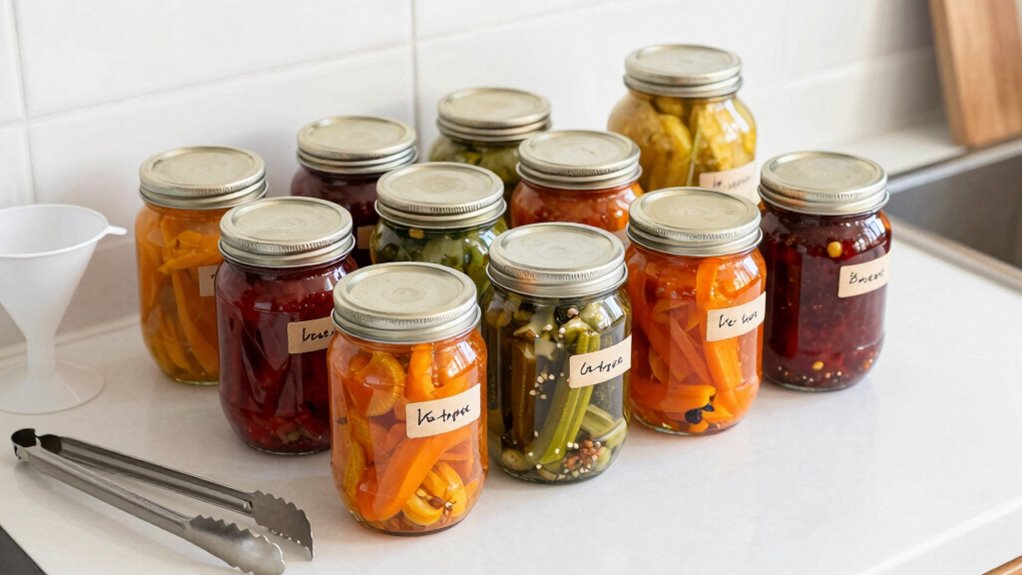
Proper storage and clear labeling are essential to keep your canned foods safe and maintain their quality over time. Ensure your storage conditions are cool, dark, and dry, as temperature fluctuations and humidity can compromise the safety and freshness of your cans. Label each jar with accurate information, including the date of canning and contents, to guarantee labeling accuracy. This helps you track shelf life and prevents confusion about what’s inside. Store cans upright to prevent leaks and minimize damage. Regularly check stored cans for signs of spoilage or damage, but focus first on proper storage conditions and precise labels. Clear, accurate labels and ideal storage conditions are your best tools to keep canned foods safe and enjoyable long after canning. Additionally, understanding concepts like imaging-scale and field-of-view in related areas can help you better plan and organize your storage space and labels for optimal management.
How to Recognize Spoiled or Failed Cans and What to Do
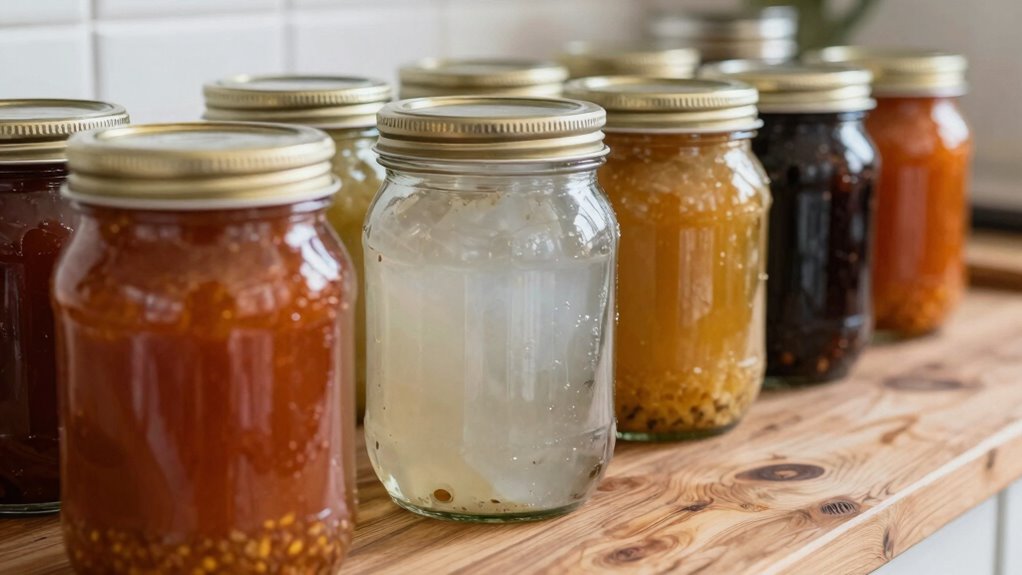
You can spot spoiled or failed cans by paying close attention to their appearance, smell, and the condition of the seal. Spoiled cans often have bulging lids, leaks, or rust, which signal failed can detection. If a can is swollen or the seal is broken, discard it immediately—these are signs of bacterial growth or spoilage. Also, check for any foul or sour odors when opening a can; a bad smell indicates contamination. Any cans with discoloration, mold, or unusual textures should be thrown out. Never taste from a questionable jar. When you identify spoiled cans, dispose of them safely, ideally by double-bagging and discarding in an outdoor trash bin. Properly recognizing failed can detection helps prevent foodborne illness and ensures your safety.
Essential Tools and Equipment for Pressure Canning
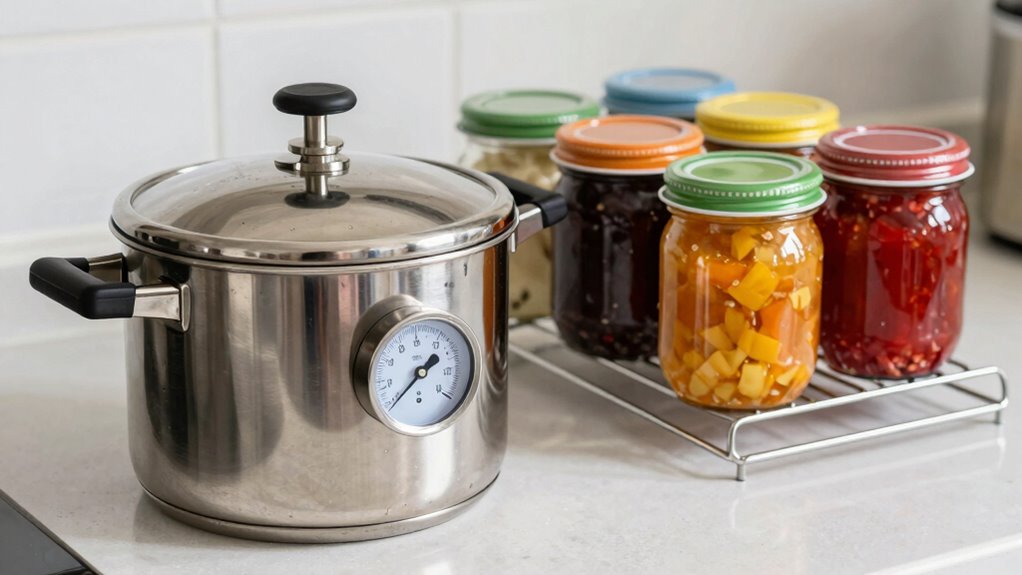
Having the right tools and equipment makes pressure canning safer and more efficient. To get started, you’ll need essential items that guarantee proper sealing and safety.
- Canning jars – choose high-quality jars that can withstand the pressure and heat.
- Seal rings – these prevent leaks and help create a vacuum for proper preservation.
- Pressure canner – a reliable model with a secure lid and accurate pressure gauge.
- Jar lifter – essential for safely handling hot jars without burns or accidents.
Using the correct canning jars and seal rings ensures your food stays safe and fresh. Be sure to check that all tools are in good condition before starting, and always follow manufacturer instructions for your pressure canner.
Final Tips for Confident and Safe Pressure Canning
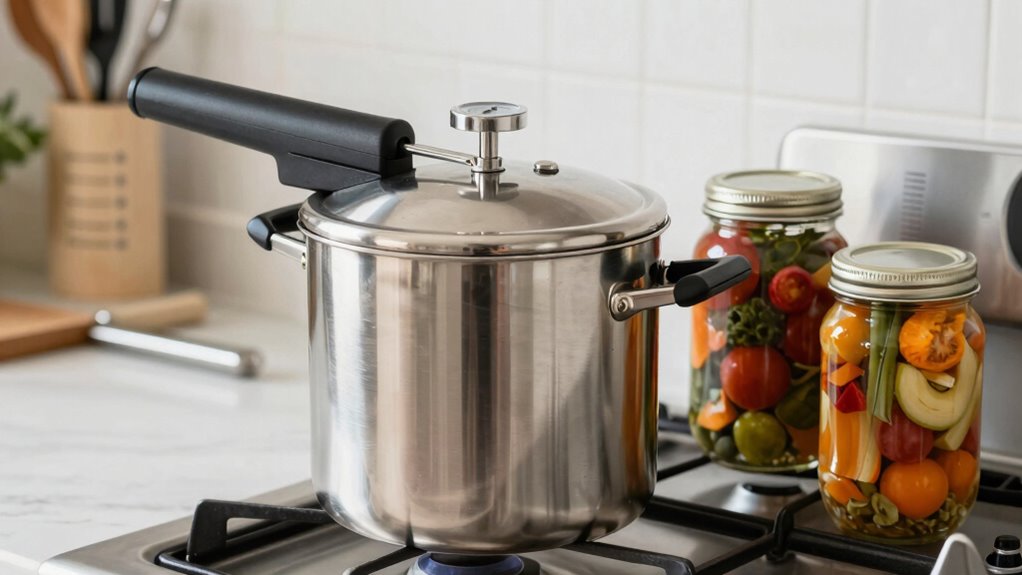
To guarantee your pressure canning sessions end successfully and safely, it’s important to double-check that all equipment is in good working order before you start. Always wear safety gear such as heat-resistant gloves and eye protection, especially when handling hot jars and steam. Additionally, prepare for emergencies by keeping a first aid kit nearby and knowing basic first aid procedures. Use the table below as a quick reference:
| Safety Gear | Emergency Preparedness | Final Tips |
|---|---|---|
| Heat-resistant gloves | Keep a first aid kit handy | Follow processing times precisely |
| Safety goggles | Know how to turn off the heat | Check seals before storing |
| Apron for protection | Have emergency contact info ready | Maintain equipment regularly |
This approach boosts your confidence and ensures safe, successful canning.
Frequently Asked Questions
Can I Reuse My Pressure Canner’s Gasket or Seal?
You shouldn’t reuse your pressure canner’s gasket or seal. Proper gasket maintenance and timely seal replacement are vital for safety. Over time, gaskets can crack, harden, or lose elasticity, which compromises the seal and increases the risk of accidents. Always inspect your gasket before each use. If you notice any damage or wear, replace it immediately to guarantee a safe and effective canning process.
What Is the Ideal Pressure Setting for Different Foods?
Think of pressure settings like tuning a fine instrument; they vary by food and altitude. For most vegetables and fruits, set your pressure to 10-15 psi, adjusting for altitude—higher elevations need more pressure. Meats often require 11-15 psi, depending on the recipe. Always consult your specific canner’s manual and altitude charts, making pressure adjustments to guarantee safe, perfectly preserved foods every time.
How Long Can Canned Foods Be Stored Safely?
You can typically store canned foods safely for 1 to 5 years, depending on the type and storage conditions. Proper shelf life and storage tips are essential—keep jars in a cool, dark place, and check for signs of spoilage before consuming. Always label canned goods with the date you canned them, and use the oldest first to ensure quality and safety. Maintain consistent temperatures to prevent spoilage and preserve flavor.
Is It Safe to Can Low-Acid Foods Without a Pressure Canner?
Using a pressure canner isn’t just a fancy gadget; it’s essential for low-acid foods like vegetables and meats to guarantee food safety. Without one, you’re playing a risky game, as boiling water bath methods won’t reach the necessary temperature to kill bacteria like botulism. Think of it as your own medieval shield—without it, your canned goods aren’t safe, and you risk serious health hazards. Always use a pressure canner for low-acid foods.
How Do I Troubleshoot if My Pressure Canner Is Not Reaching Proper Pressure?
If your pressure canner isn’t reaching proper pressure, first check the pressure gauge for accuracy—calibrate it if needed. Confirm the sealing ring is in good condition and properly seated to prevent sealing issues. Make sure the vent pipe is clear and steam is escaping steadily before reaching pressure. Adjust the heat gradually, and avoid opening the lid during processing. These steps help you troubleshoot and maintain safe, effective pressure canning.
Conclusion
By following these safety tips, you can confidently enjoy preserving your harvest. Remember Sarah’s story—she followed all steps, avoided mistakes, and ended up with perfectly safe, delicious jars of peaches. Trust your equipment, stay vigilant, and never rush the process. With attention to detail, you’ll prevent spoilage and guarantee your canned goods are safe for your family to enjoy all year round. Happy canning!
Labor Day sales Picks
labor day deals
As an affiliate, we earn on qualifying purchases.