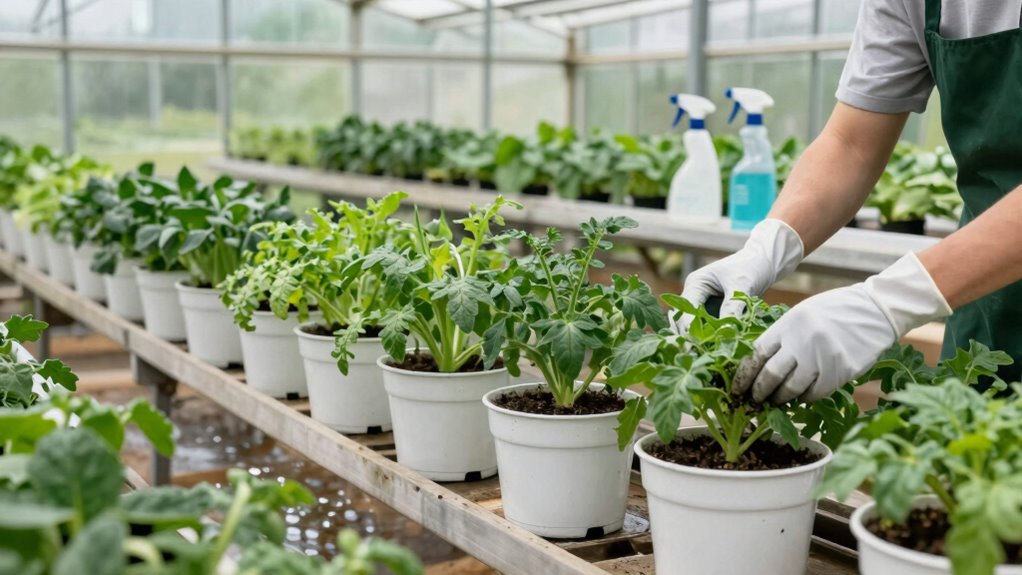
To support better pest management, you should prioritize regular sanitation of your greenhouse. This means sterilizing soil to eliminate pathogens, cleaning tools and equipment thoroughly, and keeping the environment tidy by removing dead plant material and fallen leaves. Ensuring proper airflow and hygiene practices reduces pests and disease risks. Consistently applying these habits creates a healthier, pest-resistant space. Keep these strategies in mind, and you’ll discover even more ways to maintain a pest-free greenhouse environment.
Key Takeaways
- Regularly sterilize soil to eliminate pests, pathogens, and weeds before planting.
- Clean and disinfect tools, containers, and equipment to prevent cross-contamination.
- Maintain a tidy environment by removing dead plant debris and ensuring proper airflow.
- Use footbaths and change footwear to minimize pest and pathogen entry.
- Consistently monitor and uphold hygiene standards to reduce pest outbreaks and promote healthy plants.
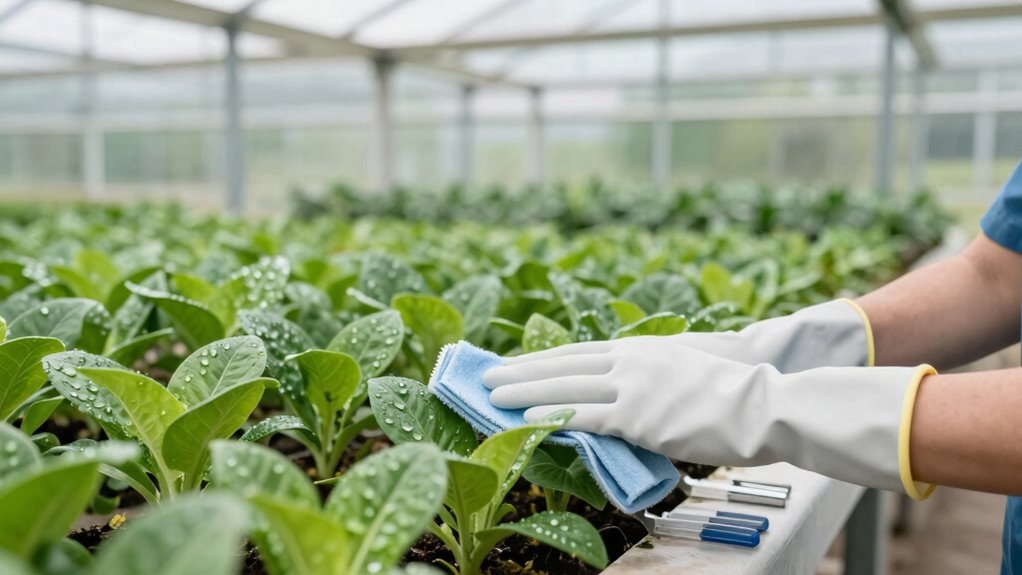
Maintaining good hygiene habits in your greenhouse is essential for healthy plant growth and preventing the spread of pests and diseases. One of the most important practices is soil sterilization, which helps eliminate harmful pathogens, fungi, and pests that can lurk in the soil. Before planting new crops, consider treating your soil with heat or chemical sterilants to reduce the risk of infestations and disease outbreaks. This step not only creates a healthier environment for your plants but also minimizes the need for chemical interventions later. Regularly inspecting soil and removing any debris or plant material that might harbor pests is equally important. By guaranteeing your soil is properly sterilized, you give your plants a clean start, promoting vigorous growth and fewer pest problems down the line. Additionally, understanding the benefits of soil sterilization can help you make more informed decisions for your greenhouse management.
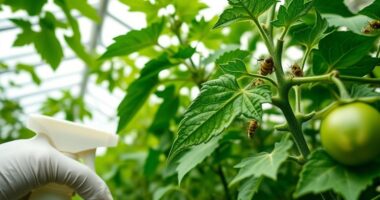
Equally crucial is equipment sanitation, which involves cleaning and disinfecting all tools, containers, and machinery used within your greenhouse. Dirty tools can easily transfer pests and diseases from one plant to another, so wiping down pruning shears, trowels, and watering cans with a disinfectant after each use is a straightforward but effective way to contain potential issues. When cleaning your equipment, use a solution of diluted bleach or commercial disinfectants suitable for horticultural tools to kill bacteria, fungi, and pests. This habit helps prevent cross-contamination, especially when switching between different plant varieties or sections of your greenhouse. Regular equipment sanitation also benefits from proper storage practices to keep tools dry and free from moisture, which can encourage mold growth. Remember, equipment sanitation isn’t just a one-time task; it’s a continuous process that should be integrated into your routine.
In addition to sterilizing soil and disinfecting tools, keep your greenhouse environment clean by removing dead plant material and fallen leaves regularly. These can become breeding grounds for pests and diseases if left unchecked. Maintaining a tidy workspace reduces hiding spots for pests, making it easier to spot early signs of trouble. Proper airflow and ventilation also contribute to hygiene, as they help keep humidity levels down and prevent mold growth. You should also consider using footbaths or changing footwear before entering different sections of your greenhouse, further reducing the chances of introducing unwanted pests or pathogens. Staying vigilant with these practices and educating yourself about hygiene standards can significantly enhance your pest management efforts.
Ultimately, consistent soil sterilization and equipment sanitation create a cleaner, healthier environment for your plants. These habits act as foundational elements in your pest management strategy. When you prioritize hygiene, you reduce the likelihood of infestations and disease outbreaks, allowing your plants to thrive naturally. Staying vigilant with these practices ensures your greenhouse remains a productive and pest-resistant space, making your gardening efforts more successful and less stressful.
As an affiliate, we earn on qualifying purchases.
Frequently Asked Questions
How Often Should Greenhouse Tools Be Sanitized?
You should sanitize greenhouse tools after each use to prevent pest spread and disease. Regular tool sterilization is vital, especially when switching between plant types or working in different areas. Aim for a consistent cleaning frequency—ideally daily or after every session—using appropriate disinfectants. This habit minimizes pest risks, promotes plant health, and guarantees a cleaner, more productive greenhouse environment.
What Are the Best Pest-Resistant Greenhouse Materials?
You’d think pest-resistant materials would be perfect, but even the strongest greenhouse durability can’t guarantee pests stay out. Opt for polycarbonate or UV-resistant plastics—they’re tough against pests and weather. Metal frames also add resilience, but beware of rust. Irony hits: the most durable materials aren’t just for longevity—they’re your best pest defenses. Choose wisely, and you’ll keep pests at bay while ensuring your greenhouse stands the test of time.
How Can Humidity Levels Influence Pest Control?
Humidity control plays a vital role in pest prevention by creating an environment less favorable for pests to thrive. When you regulate humidity levels in your greenhouse, you reduce excess moisture that pests like fungi and mold depend on. Proper humidity management discourages pest infestations, making your pest control efforts more effective. Consistent humidity control helps maintain a healthier environment, keeping pests at bay and supporting overall plant health.
Are Natural Cleaning Agents Effective for Greenhouse Hygiene?
Think of natural cleaning agents as gentle rain nourishing your greenhouse’s delicate balance. They’re surprisingly effective, especially when combined with biological controls and organic pesticides, creating a harmonious pest management symphony. While they may not be as swift as chemical options, their eco-friendly nature fosters a healthier environment. With consistent use, you’ll cultivate a resilient greenhouse where pests struggle to thrive, all while safeguarding your plants’ essentialness.
What Signs Indicate Pest Infestations Early?
You should look for early warning signs like tiny holes in leaves, discolored or wilting plants, and the presence of small insects or webs. Regular pest detection helps you catch infestations early. Keep an eye out for unusual movement or sticky residue, which can signal pests. Spotting these signs early allows you to take swift action, preventing infestations from spreading and causing significant damage.
Conclusion
By practicing good greenhouse hygiene, you’re planting the seeds for healthier, pest-free crops. Think of your greenhouse as a fortress, where each clean surface and proper habit builds walls of defense. When you stay vigilant and maintain these habits, you’re nurturing an environment where pests can’t take root. Keep your greenhouse tidy and your efforts consistent, and you’ll watch your plants flourish like a well-tended garden—vibrant, strong, and resilient against any pest invasion.