
To prepare your plants for seasonal shifts without stressing them, gradually adjust their environment step by step. Slowly increase or decrease light, watering, and humidity levels to avoid sudden changes. Test soil health and amend as needed so plants get the nutrients they require. Keep a close eye on their responses and modify care practices accordingly. Consistent, gradual tweaks help your plants adapt smoothly. Stay tuned for more tips on keeping your plants healthy year-round.
Key Takeaways
- Gradually adjust lighting, watering, and humidity levels to allow plants to adapt slowly to seasonal changes.
- Test and amend soil beforehand to ensure proper nutrients and drainage for new conditions.
- Monitor plants regularly for stress signs and intervene promptly to prevent damage.
- Use consistent schedules for watering and lighting to create a stable environment.
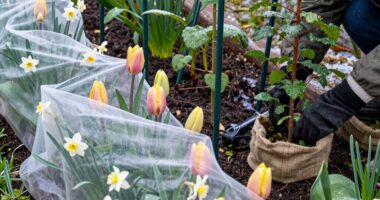
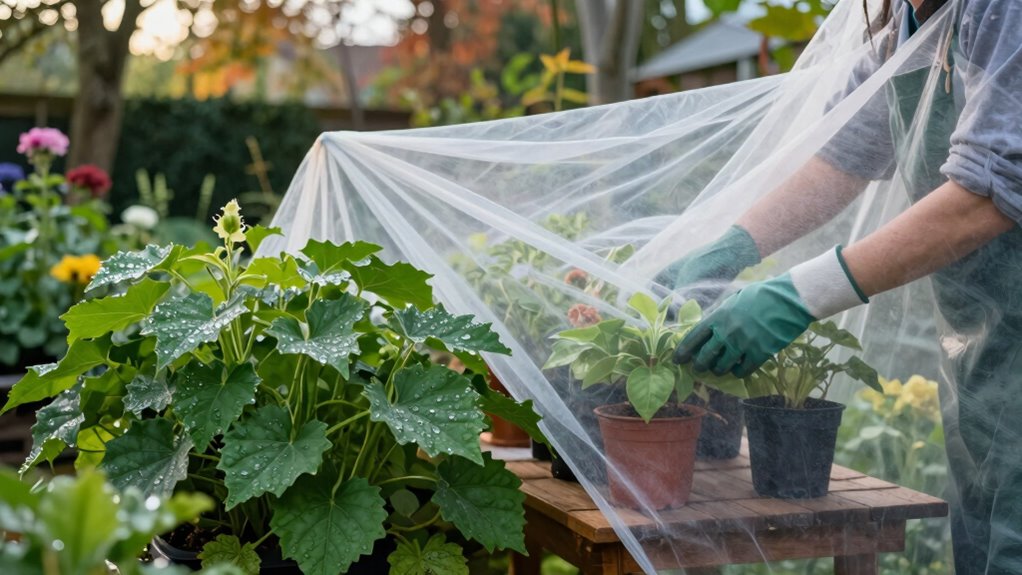
- Incorporate outdoor plant protection like mulching and covering to minimize cold shock.
Are you ready to help your plants thrive through seasonal changes? Preparing your plants for shifting weather can seem intimidating, but with a few simple steps, you can guarantee they stay healthy and vibrant year-round. First, focus on adjusting your indoor lighting. As daylight hours shorten in fall and winter, natural light diminishes, which can leave your indoor plants starved for the energy they need. To compensate, consider supplementing with grow lights that mimic sunlight. Position them close enough to provide adequate light without overheating your plants, and keep them on a consistent schedule to establish a stable environment. This way, your plants won’t suffer from abrupt light changes, and they’ll continue to photosynthesize effectively despite the seasonal shift.
Adjust indoor lighting with grow lights to support your plants during shorter winter days.
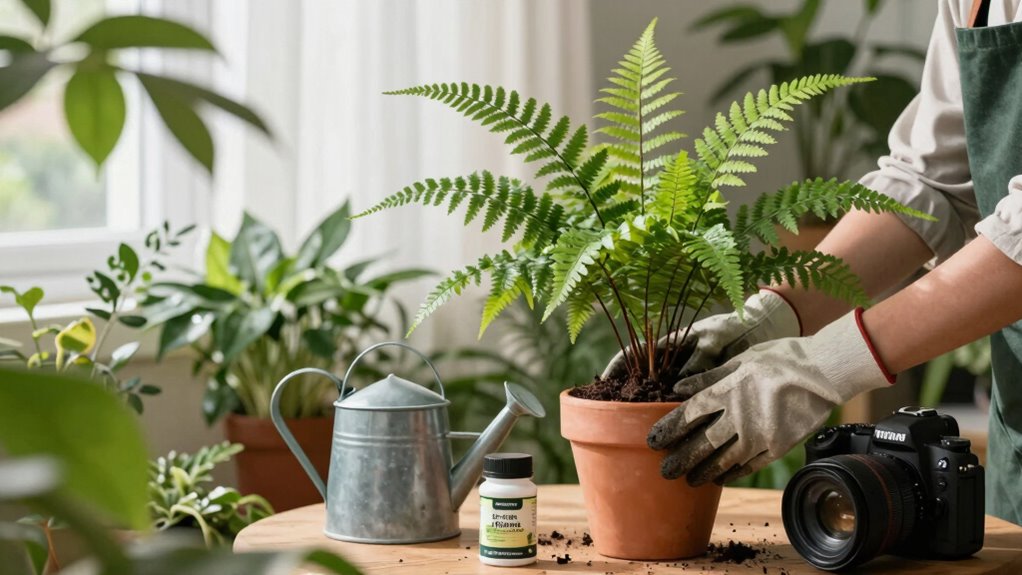
Equally important is maintaining soil health, which acts as the foundation for your plants’ overall well-being. As seasons change, soil can become depleted of essential nutrients or overly saturated from increased rainfall or watering adjustments. To prepare, start by testing your soil’s pH and nutrient levels, then amend it accordingly. Adding organic matter such as compost or well-rotted manure boosts soil fertility and improves drainage — both critical for healthy roots during seasonal transitions. When repotting or refreshing soil, guarantee you’re using the right mix for your specific plant type, as different species have unique needs. Additionally, avoid overwatering as cooler temperatures slow evaporation, risking root rot. Mulching around outdoor plants can help regulate soil temperature and moisture, protecting roots from extreme cold or fluctuations. Incorporating soil testing can help you better understand your garden’s specific needs and optimize your preparations for a healthier landscape.
As you adapt your indoor lighting and soil management, also pay attention to your plants’ watering schedules. During colder months, many plants require less water, so cut back accordingly to prevent stress or rot. Keep an eye on humidity levels, especially indoors, where dry air from heating systems can dry out foliage. Using a humidifier or placing water trays nearby can help maintain ideal moisture for your plants. Regularly inspect your plants for pests and diseases that might take advantage of seasonal weaknesses, and remove any affected leaves promptly. By staying attentive and making gradual adjustments, you give your plants a smoother transition, reducing shock and promoting steady growth.
Ultimately, preparing your plants for seasonal changes involves proactive care and observation. Adjust your indoor lighting to compensate for shorter days, improve your soil’s health with proper amendments, and modulate watering and humidity levels. Being aware of seasonal plant stress can help you identify early signs of distress and act promptly. With these strategies, you create a resilient environment that helps your plants adapt comfortably, guaranteeing they remain healthy and beautiful no matter what season it is.

Aokrean Plant Grow Light, 48 LEDs Full Spectrum Grow Lights for Indoor Plants, Height Adjustable Small Halo Grow Light with Base, 3 Optional Spectrums, Auto Timer 3/9/12Hrs, 10 Brightness, 3 Pack
- Stable Stand Design: Requires pot pressure for stability
- Flexible Installation: Insert in soil or use stand
- Multiple Lighting Modes: White, warm white, red, and mix
As an affiliate, we earn on qualifying purchases.
As an affiliate, we earn on qualifying purchases.
Frequently Asked Questions
How Often Should I Check Soil Moisture During Seasonal Transitions?
You should check soil moisture at least every couple of days during seasonal shifts. Use soil testing to gauge moisture levels accurately, making certain your plants aren’t over- or underwatered. Adjust your watering schedule based on these tests, as soil moisture can fluctuate with temperature and humidity changes. Consistent monitoring helps prevent stress, keeps plants healthy, and guarantees they adapt smoothly to seasonal shifts without damage.
Can I Use Artificial Light to Help Plants Adapt?
Yes, you can use artificial lighting to assist plant adaptation during seasonal changes. Think of it as giving your plants a little boost to stay on their toes. Use grow lights that mimic natural sunlight, adjusting the intensity and duration to match the season. This helps plants acclimate gradually, reducing stress and encouraging healthy growth as they shift between seasons. Proper artificial light can be a game-changer in your plant care routine.
Are There Specific Fertilizers Recommended for Seasonal Shifts?
You should choose fertilizer types that suit the season and plant needs, like a balanced or higher phosphorus fertilizer for root development in fall. Focus on nutrient timing; apply fertilizers when plants actively grow or are preparing to enter dormancy. Avoid over-fertilizing, which can stress plants. Using slow-release or organic fertilizers can help maintain steady nutrients, ensuring your plants adapt smoothly without stress during seasonal shifts.
How Do I Identify Signs of Stress in Plants During Change?
Think of your plants as delicate dancers, and stress indicators are their missteps. You’ll notice wilting, yellowing leaves, or leaf drop—signs they’re struggling to adapt. Other signs include stunted growth or discolored patches. Recognizing these signs early helps you support their resilience. Keep an eye on changes in appearance or liveliness, and you’ll catch stress before it becomes a bigger problem, ensuring your plants stay strong through seasonal shifts.
Should I Prune Plants Before or After Seasonal Changes?
You should prune plants after seasonal changes, during their active growth phase, to promote healthy recovery. Pruning timing is essential because it helps prevent stress and encourages stronger plant recovery. Avoid pruning just before a season shift, as it can weaken the plant’s ability to adapt. Instead, wait until the plant shows signs of new growth, ensuring it recovers well and remains resilient through the upcoming seasonal change.
Conclusion
By following these simple steps, you’ll help your plants adapt smoothly through seasonal shifts, avoiding stress and promoting healthy growth. Even if it feels like a lot of work, think of it as giving your plants a gentle hug—they’ll thank you with lush leaves and vibrant blooms. When you care for them thoughtfully, you create a beautiful, resilient garden that thrives year-round. Your plants will flourish, and so will your enjoyment of their natural beauty.