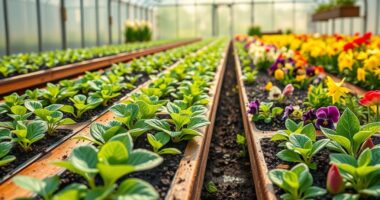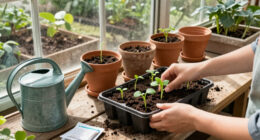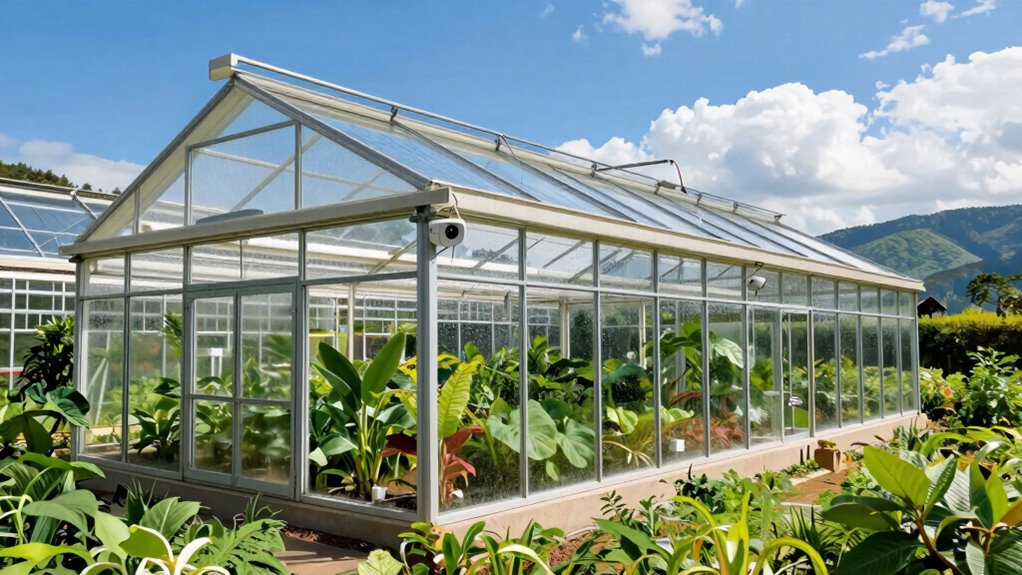

To plan a year-round greenhouse starting with weather, begin by thoroughly understanding your local climate patterns and seasonal fluctuations. Use this knowledge to optimize insulation, ventilation, and heating systems, while adjusting crop choices to match growing seasons. Monitor soil health and adapt pest management based on moisture and humidity levels. This approach helps you create a resilient, productive environment. Keep exploring, and you’ll discover how integrating these strategies guarantees success all year long.

Get garden gear delivered free with Prime
- Fast, free delivery on millions of items
- Prime Video, Amazon Music and more included
- Member-only deals all year
Key Takeaways
- Analyze local climate and seasonal weather patterns to design appropriate insulation, ventilation, and heating systems.
- Use weather forecasts to schedule planting, harvesting, and pest control for optimal growth.
- Adjust soil moisture management and amendments based on anticipated rainfall and temperature fluctuations.
- Implement climate-responsive pest and disease prevention strategies aligned with humidity and temperature conditions.
- Incorporate adaptive design features that modify airflow and shading to maintain stable internal conditions year-round.
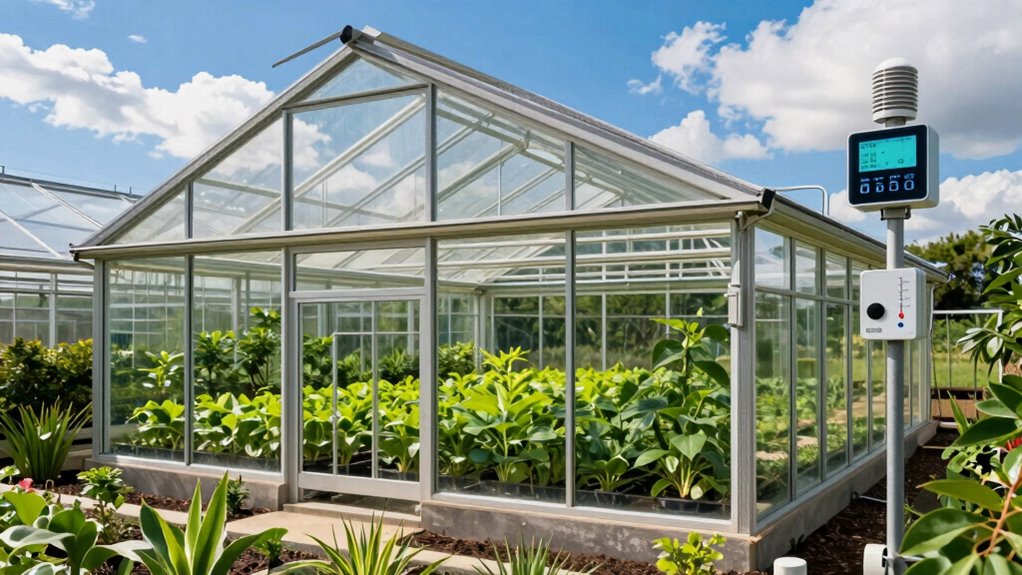
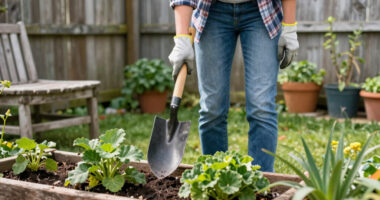
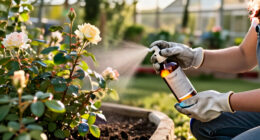
Are you ready to create a greenhouse that maximizes space and productivity? The first step involves understanding your local weather patterns, which directly influence how you’ll plan your greenhouse. Knowing the climate helps you decide on insulation, ventilation, and heating needs. Once you grasp the weather, you can tailor your setup to extend growing seasons and protect plants from extreme conditions. But before planting, you need to focus on soil preparation. Healthy, nutrient-rich soil is the foundation of a successful greenhouse. Start by testing your soil’s pH and nutrient levels. Based on the results, amend the soil with compost, organic matter, or specific nutrients to create an essential environment for your plants. Proper soil preparation boosts plant growth, reduces disease risk, and improves yields. It’s also vital for pest management. Healthy plants are less vulnerable to pests and diseases, so maintaining soil health becomes a natural barrier against infestations. Use crop rotation and cover crops to prevent soil-borne pests and diseases from building up over time. Keep an eye on the soil’s moisture levels as well; overly wet soil can attract pests and foster fungal issues, while dry soil stresses plants and weakens their defenses. Incorporate mulching techniques to help retain moisture and suppress weeds, which can harbor pests. Pest management in a greenhouse starts with good sanitation and prevention. Regularly inspect your plants for early signs of pests or disease, and remove affected foliage immediately. Introducing beneficial insects, such as ladybugs or predatory nematodes, can keep pest populations in check naturally. Avoid chemical pesticides whenever possible—they can harm your beneficial insects and disrupt your soil’s balance. Instead, focus on integrated pest management practices like biological controls, physical barriers, and crop rotation. Because your greenhouse climate varies with weather, it’s important to adapt your pest management strategies accordingly. For instance, during humid periods, fungi and mold become more common, so you might need to increase airflow and reduce excessive moisture. Conversely, during dry spells, monitor for pests that thrive in dry conditions. Recognizing the importance of soil health and its connection to pest resistance can significantly enhance your greenhouse’s resilience. Maintaining a balanced ecosystem within your greenhouse further supports plant health and pest control. Additionally, understanding local weather patterns helps you anticipate and prepare for seasonal fluctuations, ensuring consistent plant growth. By aligning your soil preparation and pest management strategies with the weather, you create a resilient environment that supports healthy plant growth year-round. Creating a comprehensive plan that incorporates both climate considerations and soil management techniques can greatly improve your greenhouse’s overall success. Planning your greenhouse around this foundation ensures you maximize space, reduce pest issues, and achieve consistent productivity. With thoughtful preparation, your greenhouse becomes a sustainable, productive space that adapts seamlessly to changing weather patterns, giving you the best chance at a successful growing season every time.
As an affiliate, we earn on qualifying purchases.
Frequently Asked Questions
How Do I Adjust Plans for Unexpected Weather Changes?
When unexpected weather strikes, adjust your plans by modifying your crop rotation schedule to protect vulnerable plants. Use flexible pest management strategies to address sudden infestations, like targeted releases or organic sprays. Keep a close eye on weather forecasts and adapt your watering and ventilation accordingly. Staying proactive helps you minimize damage and maintain productivity, ensuring your greenhouse remains resilient against unforeseen weather changes.
What Tools Are Best for Tracking Local Climate Data?
Imagine you’re a weather wizard armed with a crystal ball—only it’s a high-tech weather station. Use tools like the Davis Vantage Pro2 or Netatmo Weather Station to monitor local climate data. These devices track soil moisture, pest management conditions, and temperature swings, giving you real-time insights. With accurate data, you can adjust watering, prevent pests, and keep your greenhouse thriving—no magic required, just smart tech.
How Does Seasonal Variation Affect Plant Choice?
Seasonal shifts greatly influence your plant choices, as some plants thrive in specific conditions. By understanding how temperature and sunlight vary throughout the year, you can select plants that are compatible with each season’s climate. This approach guarantees your greenhouse remains productive year-round. Adjust your plant compatibility strategies based on seasonal variation, choosing hardy, adaptable varieties for colder months and more sensitive species when conditions are ideal.
Can Weather Forecasts Improve Greenhouse Energy Efficiency?
Weather forecasts can substantially boost your greenhouse’s energy efficiency, with accurate predictions reducing energy use by up to 20%. By using forecast data, you can adapt your climate control systems proactively, optimizing heating, cooling, and ventilation. This climate adaptation enables smarter crop selection, ensuring you grow the right plants at the right times. Staying ahead of weather changes helps you save energy and maximize yields year-round.
How Often Should I Update My Weather-Based Plans?
You should update your weather-based plans regularly, ideally weekly, to adapt to changing conditions. This helps you optimize plant adaptation and maintain soil moisture levels effectively. Frequent updates guarantee you respond promptly to shifts in temperature, humidity, or rainfall, preventing stress on your plants. By staying on top of weather changes, you can fine-tune watering schedules and climate controls, ensuring healthier growth and better resource use year-round.
Conclusion
By starting with the weather, you gently steer your greenhouse plans toward harmony with nature’s rhythm. This subtle approach helps you avoid common pitfalls and nurtures a thriving, year-round sanctuary. Embrace this gentle method, and you’ll find your gardening journey becomes more rewarding and resilient. With patience and a keen eye on the forecast, you’ll discover the secret to a flourishing greenhouse that works in tune with the seasons—no matter what they bring.
Halloween Picks
halloween
As an affiliate, we earn on qualifying purchases.