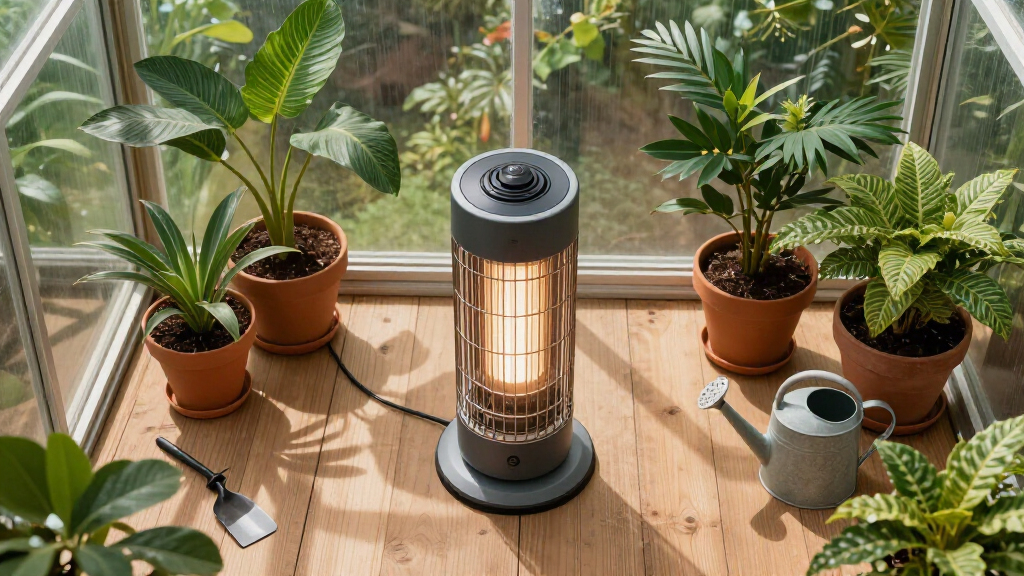

Shopping for greenhouse heating systems in 2026 mostly means comparing a crowded field of 1500W electric heaters that look nearly identical on paper but differ sharply in thermostat quality, moisture protection, and control options. The BioGreen PALMA stands out as the best overall pick because its splashproof stainless steel housing and precise digital thermostat are built specifically for the humid, damp conditions inside a greenhouse rather than a living room. The Kiroto app-controlled heater is the strongest choice if you want to monitor temperatures remotely, while several VEVOR models offer the best value for small grow tents and tight budgets. The main tradeoff across this category is precision versus price: cheap thermostats swing several degrees and can stress plants, while smarter, better-sealed units cost more up front. Read on for the full breakdown of all 12 heaters and which one fits your greenhouse size and climate.

Get garden gear delivered free with Prime
- Fast, free delivery on millions of items
- Prime Video, Amazon Music and more included
- Member-only deals all year
Complete the kit


Key Takeaways
- Every heater in this lineup is rated at 1500 watts, so the real differences are thermostat accuracy, waterproofing, and control features — not raw heating power.
- The BioGreen PALMA earns the top spot because it is the only model engineered specifically for greenhouse humidity, with splashproof stainless steel construction and a digital thermostat that holds tighter temperature bands than the analog-style controls on most VEVOR units.
- Four of the five VEVOR entries overlap heavily; I ranked them by distinguishing features like adjustable angles, three-speed fans, and IPX4 ratings, which means the cheapest VEVOR is only worth it if you truly don’t care about angle adjustment or moisture protection.
- The Kiroto app-controlled heater is the only option with remote monitoring, which matters most for growers who are away from home during cold snaps and can’t check a manual thermostat daily.
- None of these 1500W units will heat a large walk-in greenhouse in deep winter — they are sized for small greenhouses (roughly 6×8 feet or smaller) and grow tents, so buyers with bigger structures need multiple units or a different heating category entirely.


| greenhouse heating system | Power | Heating Method | Weight |
|---|---|---|---|
| BioGreen Electric Greenhouse H | 1500 Watts | — | — |
| VEVOR Greenhouse Heater | 1500W | — | — |
| VEVOR Greenhouse Heater with T | 1500 watts | Forced air (PTC) | 4.5 pounds |
| VEVOR Greenhouse Heater | 1500W | PTC fast heating | Under 5 pounds |
| Greenhouse Heater with Digital | 1500W | PTC ceramic, convection | — |
| Greenhouse Heater with Thermos | 1500W | Convection | 3.5 pounds |
| Kiroto 1500W Greenhouse Heater | 1500W | — | — |
| VEVOR Greenhouse Heater | 1500 watts | Forced air (PTC) | 3.7 pounds |
| VEVOR Greenhouse Heater | 1500 watts | Forced air (PTC) | 2.8 pounds |
| VEVOR Greenhouse Heater | 1500W | PTC with forced air | — |
| Greenhouse Heater with Digital | 1500W | — | 7.7 pounds |
| Greenhouse Heater with Thermos | 1500W max | — | — |
More Details on Our Top Picks
BioGreen Electric Greenhouse Heater & Fan with Digital Thermostat PALMA
The BioGreen PALMA is the pick I’d point most greenhouse owners toward first, and the reason comes down to build quality where it counts. Its stainless steel housing and IPX4 splash-proof rating mean it can live inside a humid greenhouse season after season, something the plastic-bodied VEVOR models aren’t designed to shrug off as gracefully. The digital thermostat is precise enough to hold a narrow temperature band, which prevents the wasted electricity that comes with cheaper dial-based units cycling on and off. Compared with the VEVOR 1500W with Thermostat (B0H4QDB7N1), the PALMA trades away a lower price for better corrosion resistance and tighter temperature control. The 120 ft² coverage ceiling is real, though — anyone heating a large structure will need multiple units or a different category of heater entirely.
Pros:- Stainless steel, IPX4 splash-proof construction built for humid greenhouse environments
- Digital thermostat holds a precise temperature band to avoid wasted energy
- Fan-only mode doubles as air circulation for summer months
- Strong 5800 ft³/h airflow distributes heat evenly
Cons:- Coverage capped at 120 ft², so larger greenhouses need multiple units
- Priced well above the budget VEVOR alternatives
- Requires a dedicated electrical supply, which adds install cost for remote greenhouses
Best for: Serious hobby greenhouse owners with structures up to 120 ft² who want precise, season-long temperature control in damp conditions
Not ideal for: Owners of large greenhouses over 120 ft² — one unit simply can’t cover that footprint
- Power:1500 Watts
- Heating Capacity:5100 BTU/hr
- Air Circulation:5800 ft³/h
- Temperature Range:58–210.2°F
- Coverage Area:Up to 120 ft²
- Housing Material:Stainless Steel
- Water Resistance:IPX4 splash-proof
Our verdict“If your greenhouse is 120 ft² or smaller and you want one heater that survives humidity and holds temperature accurately, this is the one to buy.”
VEVOR Greenhouse Heater, 1500W Electric Space Heater with Thermostat
For buyers who want greenhouse heat without the PALMA’s price tag, this VEVOR unit is the smartest budget play in the lineup. It matches the BioGreen PALMA on headline numbers — 1500W, thermostat control, IPX4 water resistance — while typically costing far less. The 25° adjustable angle lets you direct warm air at benches or seedling trays rather than wasting it at ankle height, and the flame-retardant housing with overheat shutoff covers the safety basics. Where it falls short of the PALMA is control precision: there’s no digital display, so you’re setting temperature more by feel than by number. Compared with the 3-Speed PTC model (B0DG5C5R3V), it earns its spot here with meaningfully better water protection. It’s a tradeoff worth making if your budget is tight.
Pros:- IPX4 splash resistance at a budget price, rare in this tier
- Adjustable 25° angle directs heat exactly where plants need it
- Heating and fan modes make it useful beyond winter
- Overheat shutoff and flame-retardant housing
Cons:- No digital display or remote, so temperature setting is imprecise
- 1500W output limits it to smaller spaces
- Plastic housing is less durable long-term than the PALMA’s stainless steel
Best for: Budget-conscious growers with small greenhouses or grow tents who want splash resistance without paying premium prices
Not ideal for: Growers who want set-and-forget precision — the lack of a digital display makes exact temperature targeting guesswork
- Power:1500W
- Temperature Adjustment:25° adjustable angle
- Protection:IPX4 waterproof, overheat shutoff
- Housing Material:Flame-retardant PP
- Modes:Heating and fan
- Portability:Carry handle, stable grip base
Our verdict“The best price-to-protection ratio here for small damp spaces, as long as you can live without a digital readout.”
VEVOR Greenhouse Heater with Thermostat, 1500W PTC 3-Speed Portable Fan Heater
Not every plant space is a glass greenhouse, and this compact VEVOR is built for the grow tent and enclosed flower room crowd. At just 6.3 inches square and 4.5 pounds, it slots into tent corners where the taller BioGreen PALMA would be awkward, and the three fan speeds give you finer control over air movement than the two-mode PALMA offers — useful for seedlings that hate strong drafts. Its weakness is environmental protection: IP20 means no moisture resistance, so in a condensation-heavy greenhouse it’s a risk, whereas the VEVOR IPX4 model (B0H4QDB7N1) handles splashes without issue. Treat this as a dry-environment heater and it performs well; the PTC element warms fast and the overheat protection is reassuring inside a fabric tent.
Pros:- Very compact footprint fits easily inside grow tents
- Three fan speeds allow gentle airflow for delicate seedlings
- PTC element delivers fast warm-up
- Lightweight at 4.5 pounds for easy repositioning
Cons:- IP20 rating means zero moisture resistance
- Thermostat lacks the precision of digital models like the PALMA
- No smart connectivity or scheduling features
Best for: Indoor grow tent and flower room growers who need a compact, fast-heating unit with adjustable fan speeds
Not ideal for: Humid or condensation-prone greenhouses — the IP20 rating offers no water protection at all
- Power:1500 watts
- Heating Method:Forced air (PTC)
- Fan Speeds:3
- Dimensions:6.29″D x 6.29″W x 8.66″H
- Weight:4.5 pounds
- Protection:IP20, overheat protection
- Mounting:Floor
Our verdict“A strong choice for dry indoor grow spaces where size and fan control matter more than water resistance.”
VEVOR Greenhouse Heater, 1500W PTC Fast Heating with Overheat Protection
Sometimes you don’t need a primary heater — you need a cheap, reliable second unit to cover a cold corner or act as insurance during a hard freeze. That’s the role this VEVOR fills well. The PTC element heats quickly, the hot and cold modes mean it can double as a circulation fan in summer, and at under five pounds with a handle and 25° tilt, moving it between the greenhouse and a workspace takes seconds. Its ETL certification is a genuine plus at this price. But be clear-eyed about the limits: like the 3-Speed model (B0DG5C5R3V), it carries only IP20 protection, so damp greenhouses are out, and VEVOR doesn’t publish a specific temperature range, which makes comparison shopping harder. Against the IPX4 VEVOR (B0H4QDB7N1), you’re giving up water resistance to save a few dollars — only worth it for dry spaces.
Pros:- Very low price for PTC heating with ETL certification
- Hot and cold modes provide year-round utility
- Under 5 pounds with handle and 25° angle adjustment for easy repositioning
Cons:- IP20 rating makes it unsuitable for wet or condensation-heavy environments
- No published temperature range, so sizing it to your plants’ needs is guesswork
- Basic controls with no thermostat precision
Best for: Growers who want an affordable backup or spot heater for dry areas like workplaces, garages, or covered growing spaces
Not ideal for: Humid greenhouses or anyone who needs documented temperature specs — IP20 protection and vague specs limit where it belongs
- Power:1500W
- Heating Method:PTC fast heating
- Protection:Overheat protection, IP20
- Modes:Hot and cold
- Speed Settings:3-speed
- Weight:Under 5 pounds
- Angle Adjustment:25°
- Certification:ETL
Our verdict“Fine as a low-cost backup heater for dry spaces, but spend slightly more for IPX4 protection if moisture is in the picture.”
Greenhouse Heater with Digital Thermostat, 1500W Electric
This heater occupies the middle ground between the budget VEVOR units and the premium PALMA, and it earns that position with two things the cheap models lack: a genuine digital thermostat and an IPX5 water-resistance rating — actually one notch better than the PALMA’s IPX4. That makes it a smart pick for greenhouses where misting systems or heavy condensation are part of the routine. The PTC ceramic core warms a 120 ft² space quickly, and the multiple power modes let you dial energy use up or down as weather shifts. The tradeoff versus the BioGreen PALMA is airflow and circulation capacity — the PALMA moves 5800 ft³/h while this unit relies on convection, so temperature uniformity across a longer greenhouse won’t be as good. The missing warranty details also make long-term confidence harder to justify.
Pros:- IPX5 water resistance, better than the PALMA’s IPX4
- Digital thermostat enables precise, repeatable temperature settings
- Multiple power modes help manage electricity costs
- Versatile enough for greenhouses, garages, and outdoor covered spaces
Cons:- Convection heating distributes heat less evenly than fan-forced models
- No warranty information provided
- Limited to 120 sq ft coverage
Best for: Growers in misting or high-condensation greenhouses who want digital temperature control without paying PALMA prices
Not ideal for: Long or irregularly shaped greenhouses — convection heating without strong airflow leaves uneven temperature zones
- Power:1500W
- Coverage:120 sq ft
- Heating Method:PTC ceramic, convection
- Temperature Control:Digital thermostat
- Water Resistance:IPX5
- Modes:Multiple power modes
- Safety:Overheat shut-off
Our verdict“The pick for damp, misted growing spaces where digital control and water resistance matter more than maximum airflow.”
Greenhouse Heater with Thermostat, 1500W Electric Heater
For growers who want precise digital temperature control without paying a premium, this heater hits a practical sweet spot. The included thermostat kit means it cycles on and off to hold a setpoint, which matters for winter gardening where overnight temperature swings can stress seedlings. Compared with the VEVOR PTC model (B0H4QCKL6W), which offers an adjustable angle but no stated temperature kit, this one gives you better set-and-forget operation for roughly the same footprint. The tradeoff is coverage: it tops out around 120 sq. ft., smaller than the Kiroto’s 150 sq. ft., so anything beyond a compact greenhouse or grow tent is out of reach. Ventilation noise at higher fan speeds is another annoyance if your greenhouse sits near living space.
Pros:- Heats within 3 seconds for quick response to temperature drops
- Digital thermostat kit enables true setpoint automation
- Overheat protection and fireproof materials for safe unattended use
- Works across greenhouses, grow tents, garages, and patios
Cons:- Limited to spaces up to 120 sq. ft.
- No smart or remote control features
- Ventilation can get noisy at higher settings
Best for: Hobby gardeners with small greenhouses or grow tents who want automated temperature control on a budget
Not ideal for: Owners of larger greenhouses over 120 sq. ft. — the coverage simply isn’t there
- Power:1500W
- Heating Method:Convection
- Dimensions:9.45″D x 7.48″W x 8.66″H
- Weight:3.5 pounds
- Controls:Adjustable speed and temperature
- Safety:Overheat protection, fireproof materials
- Mounting:Floor
Our verdict“A sensible buy if you want thermostat-driven automation in a small greenhouse without spending extra on WiFi features.”
Kiroto 1500W Greenhouse Heater with APP Remote Control, Portable Outdoor Winter Heater with Thermostat for Plants, Vegetables, Flowers, Grow Tents, Garage
The Kiroto’s defining advantage is WiFi app control, which none of the three VEVOR units in this roundup offer. Being able to check and adjust temperature from your phone is genuinely useful when your greenhouse sits across the yard and a cold snap rolls in overnight. Its 41–113°F adjustable range and 70° oscillation distribute heat more evenly than the fixed-angle B0H69G57T1, and the dual heater-plus-fan design earns its keep in summer for air circulation. The catch: it depends entirely on electricity and a working WiFi connection, so it’s a poor fit for remote properties with spotty connectivity. Coverage is capped at 150 sq. ft., and with no published weight, builders planning shelf mounting should verify before buying.
Pros:- WiFi app control for remote monitoring and adjustment
- 1-second heat-up covering up to 150 sq. ft.
- 70° oscillation spreads heat more evenly than fixed units
- Dual heater/fan modes plus tip-over and overheat protection
Cons:- Requires constant electricity and WiFi connectivity
- Coverage limited to 150 sq. ft.
- No published weight specification
Best for: Tech-comfortable growers who want to monitor and adjust greenhouse temperature remotely from their phone
Not ideal for: Off-grid or rural setups with unreliable WiFi — the smart features become dead weight
- Power:1500W
- Voltage:110-120V / 60Hz
- Coverage:150 sq ft
- Temperature Range:41°F – 113°F
- Control:WiFi smart app control
- Rotation:70° left and right
- Modes:Heating and fan
- Safety Features:Overheat and tip-over protection
Our verdict“The right choice if remote temperature management is your priority and your WiFi reliably reaches the greenhouse.”
VEVOR Greenhouse Heater, 1500W Electric PTC Space Heater with Fan, Adjustable Angle, Overheat Protection, Portable for Grow Tent and Small Greenhouse
This VEVOR model earns its spot as the workhorse for grow tents, where forced-air circulation matters as much as raw heat. The PTC forced-air design pushes warmth evenly through a tent’s canopy rather than letting it pool at the top, and the 15° adjustable angle lets you aim airflow at problem spots — something the basic B0H69G57T1 convection heater can’t do. At 3.7 pounds with a carry handle and stable base, it moves easily between a tent in winter and a home office in summer using fan-only mode. The compromises are real: it’s rated for indoor use only, so exposed outdoor greenhouses need something like the splash-resistant BioGreen PALMA instead, and there’s no thermostat or remote — you’re managing temperature manually or pairing it with an external controller.
Pros:- PTC forced-air heating delivers fast, even warmth through plant canopies
- Adjustable angle directs heat where it’s needed
- Fan-only mode for year-round air circulation
- Lightweight with handle and stable base for easy repositioning
Cons:- Indoor use only, no water resistance
- No thermostat or smart control features
- Undersized for anything beyond small greenhouses
Best for: Indoor growers running grow tents or enclosed small greenhouses who need air circulation along with heat
Not ideal for: Outdoor or damp greenhouses — indoor-only rating with no weather resistance
- Power:1500 watts
- Voltage:120 volts
- Amperage:8.33 A
- Heating Method:Forced air (PTC)
- Adjustable Angle:15°
- Dimensions:8.27″D x 6.3″W x 8.66″H
- Weight:3.7 pounds
Our verdict“A solid pick for enclosed grow tents and small indoor greenhouses where airflow and portability outweigh smart features.”
VEVOR Greenhouse Heater, 1500W Electric PTC Space Heater with Fan, Adjustable Angle, Overheat Protection, Portable for Grow Tent, Small Greenhouse, Flower Room, Home Office
At 2.8 pounds, this is the lightest heater in the batch, and that alone justifies its role for growers who shuffle equipment between a flower room, grow tent, and home office through the seasons. Compared with its sibling B0H4QCKL6W, it trades a little sturdiness for a wider 40° adjustable angle and a two-speed fan, giving finer control over airflow direction and intensity. What you give up is precision: there’s no detailed temperature control mentioned, unlike the thermostat-equipped B0H61TPCVH, so holding a specific setpoint means adding an external thermostat or watching it manually. Note also the higher 12.5 A draw — on a shared circuit with grow lights, that can trip a breaker.
Pros:- Featherweight 2.8-pound build moves easily between rooms
- Wider 40° adjustable angle for flexible heat targeting
- Two-speed fan plus dual heat modes
- Quick, even heating for tents and small greenhouses
Cons:- No detailed temperature control settings
- Higher 12.5 A draw can overload shared circuits
- Too small for anything beyond compact spaces
Best for: Multi-space growers on a budget who need a light, portable heater they can move between rooms
Not ideal for: Anyone who needs precise temperature setpoints — the lack of thermostat detail makes unattended operation risky
- Power:1500 watts
- Amperage:12.5 A
- Heating Method:Forced air (PTC)
- Adjustable Angle:40°
- Speeds:2
- Dimensions:7.09″D x 6.3″W x 8.46″H
- Weight:2.8 pounds
Our verdict“Choose this if portability and price matter more than precision — just plan on monitoring temperatures yourself.”
VEVOR Greenhouse Heater, 1500W Electric PTC Space Heater with Thermostat, Fan, Adjustable Angle
This model’s cold-rolled steel construction sets it apart in a category dominated by plastic housings, making it the one to pick if your heater will live permanently in a greenhouse where humidity, knocks from watering cans, and daily cycling take their toll. Compared with the lighter B0H4Q84NRH, it adds a separate thermostat, giving genuine setpoint control the cheaper VEVOR units lack, while retaining the heating-plus-fan dual mode for year-round use. One caution from the spec sheet: the 1500W output may overpower very small spaces, cycling frequently in a cramped grow tent where the lighter 2.8-pound unit would be a better match. There’s still no remote or smart control — for that, the Kiroto remains the only option here.
Pros:- Cold-rolled steel body stands up to humid greenhouse conditions
- Separate thermostat for genuine setpoint control
- Dual heating and fan modes for year-round use
- Portable handle and stable grip base despite sturdy construction
Cons:- May be too powerful for small enclosed spaces
- No remote control or smart features
- Steel build makes it heavier than plastic alternatives
Best for: Growers wanting a durable, permanently installed heater with thermostat control for a mid-size greenhouse
Not ideal for: Very small grow tents where full 1500W output causes frequent on-off cycling
- Power:1500W
- Heating Method:PTC with forced air
- Modes:Heating & fan
- Adjustable Angle:15°
- Thermostat:Separate thermostat included
- Material:Cold-rolled steel
- Safety:Overheat protection
- Includes:Portable handle, stable grip base
Our verdict“The pick for a set-and-forget heater built to survive daily greenhouse life with accurate temperature holding.”
Greenhouse Heater with Digital Thermostat, 1500W Grow Tent Heater
Where most heaters in this roundup, like the VEVOR 1500W Electric PTC Space Heater, rely on basic dial thermostats, this model stands out for its adjustable digital temperature range of 41°F to 108°F. That wide band matters for growers running seedlings or tropical plants, where a few degrees can decide whether a crop thrives or stalls. The IPX4 splash resistance puts it in the same moisture-tolerant class as the VEVOR IPX4 models, and its 160 sq. ft. coverage edges out the splash-rated BioGreen PALMA for small-to-mid greenhouses. Setup requires no permanent installation, which makes it a practical plug-and-go choice for rented spaces or seasonal growers.
The tradeoffs are real: there’s no app control like the Kiroto APP Remote Control heater offers, so you’ll be walking out to the greenhouse to adjust settings on cold mornings. Anyone heating beyond 160 sq. ft. will need a second unit or a larger model.
Pros:- Digital thermostat with an unusually wide 41°F–108°F range for crop-specific setpoints
- IPX4 splash resistance suitable for humid greenhouse conditions
- No permanent installation required — works for seasonal or rented setups
- Overheat protection adds safety for unattended overnight use
Cons:- Coverage stops at 160 sq. ft., so larger greenhouses need multiple units
- No smart or Wi-Fi features, so all adjustments are manual
- Single power output with no low-wattage eco mode
Best for: Hobby greenhouse growers running temperature-sensitive crops like seedlings or orchids who need precise, wide-range setpoints without wiring anything in permanently
Not ideal for: Growers with greenhouses larger than 160 sq. ft. or anyone who wants remote monitoring from the house — there’s no Wi-Fi or app connectivity
- Power:1500W
- Temperature Range:41°F–108°F
- Dimensions:7″D x 9.4″W x 12″H
- Weight:7.7 pounds
- Water Resistance:IPX4
- Usage:Indoor/Outdoor
- Mounting:Floor
Our verdict“Buy this if precise temperature setpoints in a small greenhouse or grow tent matter more to you than remote control or large-area coverage.”
Greenhouse Heater with Thermostat, 1500W Fast Heating, Waterproof & Overheat Protection
This option makes the most sense for growers whose greenhouses get genuinely wet rather than merely humid. Its IPX5 waterproof rating is a step above the IPX4 splash resistance on the VEVOR models and the digital thermostat grow tent heater elsewhere in this list, meaning it shrugs off direct water jet exposure — a meaningful difference if you run overhead misting or overhead irrigation. The three power levels (20W, 750W, 1500W) also give it flexibility most single-output rivals lack: the 20W fan-only mode circulates air on mild days without wasting heat, cutting running costs during shoulder seasons.
The compromises are coverage and information. At 120 sq. ft., it heats less area than the 160 sq. ft. grow tent heater above, and the manufacturer publishes nothing about noise — worth noting for anyone working inside the greenhouse for long stretches, since fan heaters in this class can hum noticeably.
Pros:- IPX5 waterproofing handles direct water exposure, not just splashes
- Three power levels including a 20W fan-only mode for cheap air circulation
- Flame-retardant housing adds a safety margin for tight grow tents
- Sturdy carry handle makes repositioning between zones easy
Cons:- 120 sq. ft. coverage is among the smallest in this roundup
- No published noise specification, a gamble for quiet-sensitive spaces
- No remote or smart controls for adjusting settings remotely
Best for: Growers with misting systems or high-humidity setups who need a heater that tolerates direct water exposure and want low-power air circulation between seasons
Not ideal for: Greenhouses larger than 120 sq. ft., or buyers who need documented quiet operation for workspaces attached to the growing area
- Power:1500W max
- Power Levels:20W Low, 750W Medium, 1500W High
- Waterproof Rating:IPX5
- Coverage Area:120 sq ft
- Temperature Control:Digital thermostat
- Material:Flame-retardant raw materials
Our verdict“Pick this if waterproof durability and multi-level power outweigh maximum coverage in a compact, moisture-heavy greenhouse.”
How We Picked
Because every product here shares the same 1500W output, I evaluated them on the factors that actually separate winners from filler in a greenhouse environment. Thermostat type and accuracy came first: a heater that cycles within one or two degrees protects seedlings far better than one that swings five degrees, so digital thermostats (BioGreen PALMA, Kiroto) ranked above basic dial controls. Moisture and safety protection came second — splashproof or IPX4 ratings, stainless steel housings, and overheat shutoffs matter more in a humid greenhouse than in a dry living room. Third, I weighed versatility and airflow, favoring adjustable angles and multi-speed fans that let you circulate air in summer instead of parking the heater in a closet half the year.
The ranking also reflects honest redundancy: several VEVOR models are near-clones of each other, so I ordered them by their differentiating feature rather than pretending they are wildly different products. Budget units without thermostats or waterproofing landed lower even when cheap, because a heater that fails in humid air ends up costing more in dead plants. Where a product only makes sense for a narrow use case — like a grow tent or garage — I say so directly rather than inflating its ranking.
| greenhouse heating system | Heating Method |
|---|---|
| BioGreen Electric Greenhouse H | — |
| VEVOR Greenhouse Heater | — |
| VEVOR Greenhouse Heater with T | Forced air (PTC) |
| VEVOR Greenhouse Heater | PTC fast heating |
| Greenhouse Heater with Digital | PTC ceramic, convection |
| Greenhouse Heater with Thermos | Convection |
| Kiroto 1500W Greenhouse Heater | — |
| VEVOR Greenhouse Heater | Forced air (PTC) |
| VEVOR Greenhouse Heater | Forced air (PTC) |
| VEVOR Greenhouse Heater | PTC with forced air |
| Greenhouse Heater with Digital | — |
| Greenhouse Heater with Thermos | — |
Factors to Consider When Choosing Greenhouse Heating Systems
Before picking a specific model, it helps to understand what actually determines whether a greenhouse heater keeps your plants alive through winter. The factors below go beyond the individual reviews and cover the planning mistakes that cause most heating failures.
Match Wattage to Greenhouse Size, Not Marketing Claims
A 1500W heater — the standard for every model in this roundup — realistically heats a small greenhouse of roughly 6×8 feet or a medium grow tent in mild winter conditions. As a rough planning figure, you want about 10 watts per square foot of greenhouse space in moderate climates, and more in cold regions or poorly insulated structures. A common mistake is buying a single 1500W unit for a 10×12 greenhouse and expecting it to hold temperature during a January cold snap; it will run constantly, stress the element, and still let temperatures dip below safe levels. If your structure is larger, plan for two heaters positioned at opposite ends, or accept that electric units are supplemental rather than primary heat. Also remember that glazing type matters: single-pane glass loses heat far faster than twinwall polycarbonate, so the same heater performs differently depending on your walls.
Thermostat Quality Matters More Than Heater Quality
The thermostat is what actually protects your plants overnight, and it’s where cheap heaters cut corners. Basic dial thermostats on budget models can swing four to six degrees either way, which is enough to stunt seedlings or trigger premature flowering. Digital thermostats like the one on the BioGreen PALMA hold much tighter bands, reducing both plant stress and electricity waste from unnecessary cycling. If you already own a reliable heater with a poor thermostat, a separate plug-in thermostat outlet can sometimes fix the problem for under $30. When comparing prices, ask yourself whether the difference between models is really the heating element — it almost never is — or the control system deciding when that element runs.
Humidity and Water Exposure Will Kill the Wrong Heater
Greenhouses are wet environments: condensation drips, watering splashes, and humidity stays high all winter. A standard indoor space heater placed in these conditions can corrode, short, or trip GFCI outlets repeatedly. Look for IPX4 or splashproof ratings and stainless or coated housings — the PALMA’s stainless steel build exists precisely for this reason, and it’s why it outranks cheaper lookalikes. Position any heater away from misting lines and drip zones, and always plug greenhouse heaters into a GFCI-protected outlet. Grow tent growers have it easier since tents are drier, which is why basic VEVOR models make more sense there than in a wet glass greenhouse.
Running Costs: Electric Heat Is Simple but Expensive
At typical US rates, a 1500W heater running half the time costs roughly $1.50 to $2.50 per night, and that adds up fast over a four-month winter. This is the category’s hidden tradeoff: electric greenhouse heaters are cheap to buy and easy to install, but they are the most expensive heat per BTU you can choose. To control costs, insulate your greenhouse north wall, use bubble wrap on glazing, add thermal mass like water barrels, and set the thermostat to the minimum temperature your plants tolerate rather than a comfortable-sounding number. A good thermostat pays for itself here — tight cycling avoids the long wasteful run times of inaccurate controls. If your winter heating bill projection looks alarming, a small propane or paraffin heater paired with the electric unit as backup is a common hybrid approach.
Don’t Overlook Air Circulation
A heater without airflow creates stratified air: warm at the roof, cold at plant level, which is exactly where you don’t want it. Models with adjustable angles and multi-speed fans — several VEVOR units qualify — let you push warm air down and across the canopy instead of straight up. This matters for disease too, because stagnant humid air is what encourages botrytis and powdery mildew. Ideally your heater doubles as a circulation fan in the off-season, which is a real argument for fan-equipped models over radiant-style alternatives. If you buy a basic unit, budget for a separate small circulating fan positioned above the plants.
Safety Features Are Non-Negotiable Near Plants and Water
Overheat protection and tip-over shutoff are baseline requirements, not bonuses, in a greenhouse where a knocked-over heater sits near flammable pots, dry leaves, and wet floors. Check the power cord length before buying — running heaters on extension cords is a fire risk and often voids warranties, so plan outlet placement or have a proper outdoor-rated circuit installed. Look for grounded plugs and stable bases, especially if you have pets or children with greenhouse access. Cheap unbranded heaters frequently fake their safety certifications, so verify listings for genuine UL, ETL, or CE marks rather than taking the product page at its word. The few dollars saved on an uncertified unit aren’t worth a structure full of plants going up in smoke.
Frequently Asked Questions
Will a 1500W greenhouse heater keep my plants alive through freezing winters?
It depends on your greenhouse size and insulation. A 1500W unit can typically hold a frost-free temperature in a small, well-sealed greenhouse of about 6×8 feet down to around 20°F outside, but performance drops sharply with larger structures, single-pane glass, or drafty panels. For serious cold climates, treat these heaters as frost protection rather than growing-temperature maintenance — keeping the interior above 40°F is realistic, while pushing it to 60°F for tropicals may not be. Improve your odds by insulating the north wall, sealing gaps, and adding thermal mass like water barrels before assuming you need a bigger heater.
Is the BioGreen PALMA worth paying more for than a VEVOR heater with the same 1500W output?
For a genuinely humid greenhouse, yes, because the PALMA’s splashproof stainless construction and tighter digital thermostat are built for that environment, while most VEVOR units are general-purpose heaters adapted for greenhouse use. The PALMA will hold temperature within a tighter band, which reduces plant stress and electricity waste over a full winter. However, if you’re heating a grow tent or a dry, enclosed space, the VEVOR models deliver most of the practical performance at a much lower price, and the durability gap matters less. The premium makes the most sense for permanent installations in wet glass or polycarbonate greenhouses.
Do I really need app control on a greenhouse heater?
Most growers don’t, but it becomes valuable in specific situations. If you travel, commute long hours, or keep high-value plants, remote temperature alerts can save an entire crop when a breaker trips or a cold snap hits at 2 a.m. The Kiroto app-controlled model fills this niche without the cost of a full smart greenhouse controller. If you check your greenhouse daily and it’s steps from your back door, app control is a convenience you’ll rarely use, and the money is better spent on thermostat accuracy or a backup heater. Just confirm any smart model still works manually if your Wi-Fi drops during a storm.
Can I use a regular home space heater in my greenhouse instead?
You can, but it’s a gamble with humidity. Household heaters aren’t sealed against moisture, and greenhouse condensation can corrode components, trip GFCI outlets, or create shock hazards within a season or two. Greenhouse-specific models add splashproof or IPX4 ratings, protected heating elements, and housings designed for damp air — that’s the main reason the PALMA costs more than a big-box space heater. If you do use a household heater temporarily, keep it away from watering zones, mount it off the floor, and inspect the cord and plug regularly for corrosion. For anything beyond short-term use, a moisture-rated unit is cheaper than replacing both the heater and the plants it failed.
Where should I position a heater inside the greenhouse?
Place the heater at plant height near the center or at the end opposite the door, angled so the fan pushes warm air across the growing area rather than straight at plants or up into the roof. Avoid corners where air stagnates, and never position it directly under a dripping roof seam or next to misting lines, since even splashproof units have limits. If you have a fan-ventilated greenhouse, position the heater so its airflow works with the ventilation rather than fighting it. For greenhouses longer than eight feet, two smaller heaters at opposite ends give more even coverage than one unit working overtime. Keep the intake grille clear of leaves and debris, since blocked airflow is the most common cause of overheating shutdowns.
Conclusion
After comparing all 12 heaters, the right choice comes down to your environment and how much control you need. Best overall goes to the BioGreen PALMA: its splashproof stainless steel build and accurate digital thermostat make it the only model here truly engineered for greenhouse conditions, and it’s the one I’d trust with valuable plants through a wet winter. For best value, the VEVOR PTC models with adjustable angles and overheat protection deliver solid performance for grow tents and small dry greenhouses at a fraction of the PALMA’s price — just accept wider temperature swings and skip them for damp structures.
Beginners should start with a simple VEVOR unit or the generic thermostat models, which are cheap enough to learn on and forgiving of mistakes. For premium needs, the Kiroto app-controlled heater is the pick for growers who travel or monitor remotely, pairing remote alerts with thermostat control. If you’re heating a space larger than about 6×8 feet, plan for two units placed at opposite ends rather than one bigger heater. Whatever you choose, remember that in this category the thermostat and moisture protection decide the outcome far more than the wattage on the box.
Fall yard work Picks
leaf blowers
As an affiliate, we earn on qualifying purchases.