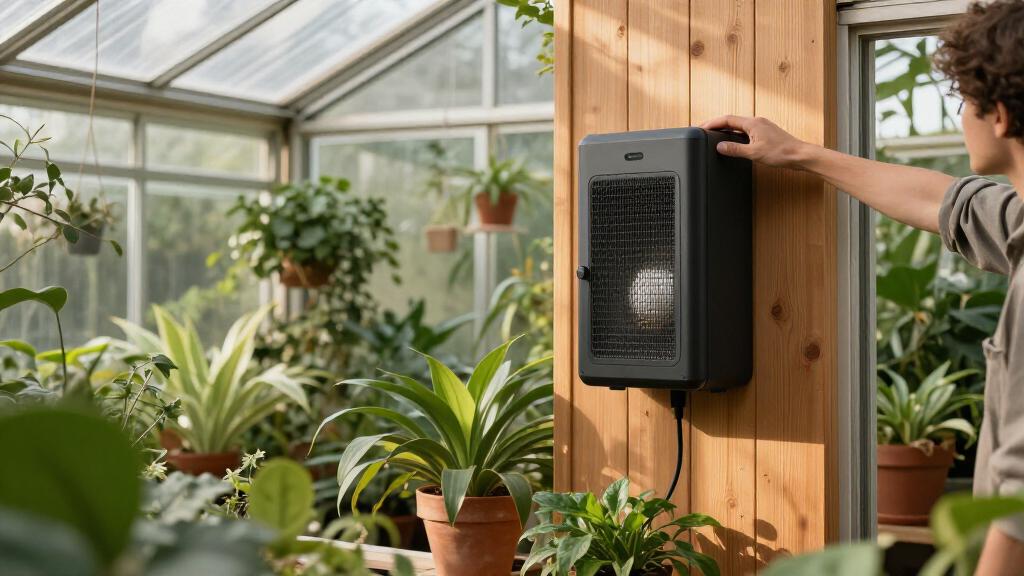

The right greenhouse heater for winter can mean the difference between seedlings that thrive and a February morning of frozen flats. For most growers, the Bio Green PALMA is the best overall pick — it pairs a precise digital thermostat with a heater and circulation fan in one unit, which keeps temperatures stable instead of oscillating between too hot and too cold. If budget leads your decision, the generic 1500W heaters with digital thermostats (several nearly identical models made this list) deliver surprisingly capable temperature control for a fraction of the price, while the Bio Green Phoenix is the premium choice for larger, walk-in greenhouses thanks to its 9,553 BTU output and stainless build. The main tradeoff in this category is accuracy versus price: cheap heaters hold temperature within a loose band, while premium units tighten that band and add durability. Keep reading for the full breakdown of all 14 models, including who each one is for and who should skip it.

Get garden gear delivered free with Prime
- Fast, free delivery on millions of items
- Prime Video, Amazon Music and more included
- Member-only deals all year
Key Takeaways
- The 1500W electric heater category is crowded with near-identical models (picks 1–4, 9, 11, 13); differences came down to thermostat precision, display quality, and waterproofing — not raw heating power.
- Bio Green’s PALMA and Phoenix justified their premium prices through tighter temperature control and better build quality, making them the only picks I’d trust in a large or semi-professional greenhouse.
- APP-controlled models (VIVOSUN AeroFlux, Kiroto) add genuine value for growers who monitor remotely, but their lower wattage or plastic builds make them better supplements than primary heat sources.
- VEVOR‘s PTC-based heaters (picks 7, 8, 10) heated faster than standard coil models and offered the best value tier — ideal for small grow tents under 100 sq ft.
- Waterproofing ratings varied widely across the lineup; only a few models carry an IPX4 rating, which matters more than most buyers realize in a humid winter greenhouse.


| greenhouse heaters for winter | Power |
|---|---|
| Greenhouse Heater with Thermos | 1500W |
| Greenhouse Heater with Digital | 1500W |
| Greenhouse Heater with Thermos | 1500W |
| Greenhouse Heater with Thermos | 1500W |
| Bio Green PHX 2.8/US Phoenix G | 2800W |
| BioGreen Electric Greenhouse H | 1500 Watts |
| VEVOR Greenhouse Heater with T | 1500W |
| VEVOR Greenhouse Heater | 1500W |
| Greenhouse Heater with Thermos | 1500W |
| VEVOR Greenhouse Heater | 1500W |
| Greenhouse Heater with Thermos | 1500W |
| VIVOSUN AeroFlux 700W PTC Grow | 700W |
| Greenhouse Heater with Thermos | 1500W |
| Kiroto 1500W Greenhouse Heater | 1500W |
More Details on Our Top Picks
Greenhouse Heater with Thermostat, 1500W Electric Heater for Grow Tent, Auto Temp Control with Digital Display
Among a crowded field of nearly identical 1500W greenhouse heaters, this model stands out for its IPX5 water resistance — a higher rating than most competitors, including the Greenhouse Heater with Digital Thermostat 1500W (IPX4). For a greenhouse where condensation drips and hose splashes are daily realities, that extra protection is the difference between a heater that survives the season and one that fails by February. The PTC ceramic core delivers quick warm-up, and the digital thermostat holds temperatures steadily enough for seedlings. The tradeoff is coverage: at 120 sq ft, it heats a compact greenhouse or grow tent well but leaves larger structures cold at the far end. It also lacks mounting hardware, so it lives on the floor or a shelf unless you improvise.
Pros:- IPX5 water resistance outclasses typical IPX4 rivals
- PTC ceramic heating warms quickly and resists overheating
- Digital thermostat maintains stable growing temperatures
- Overheat shut-off and flame-retardant housing add peace of mind
Cons:- 120 sq ft coverage is on the small side for this price
- No mounting hardware limits placement options
Best for: Owners of small greenhouses or grow tents who want reliable cold-weather protection with the best splash resistance in this price class
Not ideal for: Anyone heating a structure larger than 120 sq ft — the Bio Green PHX covers nearly double the area
- Power:1500W
- Coverage Area:120 sq ft
- Temperature Control:Digital thermostat
- Water Resistance:IPX5
- Heating Method:PTC ceramic
- Safety Features:Overheat shut-off, flame-retardant materials
Our verdict“If your greenhouse is compact and damp, this is the safest all-around pick in the lineup.”
Greenhouse Heater with Digital Thermostat 1500W for Grow Tents
What separates this heater from the similarly priced Greenhouse Heater with Thermostat 1500W models is its wide 40°F to 108°F thermostat range. That low 40°F floor lets you set a frost-insurance baseline that only kicks in when temperatures genuinely drop — something heaters with higher minimum settings can’t do without overheating tender plants. Coverage is also stronger at 215 sq ft, nearly double the 120 sq ft units, putting it in range of hobby greenhouses rather than just grow tents. Two fan speeds and an energy-saving mode round out a thoughtful control package. The compromises: it’s only IPX4 rated, so it tolerates mist but not direct splashing, and there’s no remote control, so every adjustment means a walk to the unit.
Pros:- 40°F–108°F thermostat range enables true frost-protection settings
- 215 sq ft coverage suits real greenhouses, not just tents
- Energy-saving mode reduces winter electricity bills
- Two fan speeds improve airflow flexibility
Cons:- IPX4 rating is weaker than the IPX5 leader in this roundup
- No remote control requires manual adjustments
Best for: Gardeners growing temperature-sensitive plants like orchids or peppers who need granular, low-threshold thermostat control in a mid-sized greenhouse
Not ideal for: Small grow tent owners — the extra coverage is wasted, and cheaper 120 sq ft models like the VEVOR 1500W do the same job for less
- Power:1500W
- Temperature Range:40°F to 108°F
- Coverage Area:215 sq ft
- Waterproof Rating:IPX4
- Voltage:110V
- Heating Method:Convection
- Fan Speeds:2
Greenhouse Heater with Thermostat, 1500W Electric Heater with Digital Display, Fast Heating, Overheat Protection
This is the heater I’d hand to a first-time greenhouse owner. It’s plug-and-play simple: set a temperature on the digital display, and the 3-second heat-up gets to work with no learning curve. The standout bonus is the fan-only mode, which means it earns its shelf space in summer too — circulating air to prevent fungal issues when heating season ends. Few rivals in this roundup double as a year-round airflow tool; the VEVOR 1500W models offer 3-speed fans but at a busier control layout. Safety basics are covered with tip-over and overheat protection, plus a carry handle for moving between spots. Be realistic about scope though: at 120 sq ft it’s for small structures, and there are no smart or remote features for anyone wanting app control.
Pros:- 3-second heat-up responds fast to temperature drops
- Fan-only mode adds year-round value as a circulation fan
- Tip-over and overheat protection cover the basics well
- Simple digital controls suit inexperienced users
Cons:- 120 sq ft limit restricts it to small structures
- No smart features or remote control
Best for: First-time greenhouse or grow tent owners who want a simple set-and-forget heater they can also use as a summer fan
Not ideal for: Tech-minded growers — no app or remote control, unlike the VIVOSUN AeroFlux or Kiroto app-controlled models
- Power:1500W
- Heating Area:up to 120 sq ft
- Modes:Heating and fan-only
- Heat-Up Time:3 seconds
- Display:Digital
- Safety Features:Overheat protection, tip-over safety, carry handle
Our verdict“A straightforward, safe starter heater that keeps earning its spot after winter ends.”
Greenhouse Heater with Thermostat, Digital Temperature Display, Fast Heating, Overheat Protection, 1500W
Cold spots kill plants as surely as frost, and this heater’s adjustable ventilation addresses that problem more directly than most. Where the Greenhouse Heater with Thermostat 1500W (IPX5 model) focuses on splash protection, this one prioritizes moving warm air around, which matters in greenhouses with dense shelving or tiered plants. The automatic thermostat cuts power once the target is reached, so energy use stays reasonable through long winters, and the fireproof housing plus overheat shutoff are solid fundamentals. Heating in 3 seconds matches the fastest units here. The catch: that active ventilation can get noisy at high settings, which is irrelevant in a backyard greenhouse but annoying if your growing space shares a wall with living areas. Coverage is the standard 120 sq ft for this class.
Pros:- Adjustable ventilation prevents cold pockets in layered growing spaces
- Automatic thermostat stops heating at target temperature to save energy
- Fireproof materials and overheat protection inspire confidence
- 3-second heat-up reacts quickly to sudden drops
Cons:- Ventilation can be noisy at higher settings
- 120 sq ft coverage limits it to small structures
Best for: Growers with multi-tier shelving or dense plant layouts who need even heat distribution, not just raw warmth
Not ideal for: Anyone heating a greenhouse attached to or inside a home — the fan noise at high settings carries
- Power:1500W
- Coverage Area:120 sq ft
- Temperature Control:Digital thermostat
- Heat-Up Time:3 seconds
- Ventilation:Adjustable
- Overheat Protection:Yes
Our verdict“The right choice when even air distribution matters more than silent operation or smart features.”
Bio Green PHX 2.8/US Phoenix Greenhouse Heater – 220-240V, 9553 BTU, Stainless Steel, Electric Heating and Cooling System
The Bio Green Phoenix plays in a different league from the 1500W field. With 2800W of output and 9553 BTU, it delivers nearly double the heating power of models like the Digital Thermostat 1500W, and its stainless steel housing is built to survive years of humid greenhouse conditions where plastic-bodied units eventually crack. The dual heating-and-cooling design means it manages climate across seasons, not just frost nights. Its -58°F to 79°F thermostat range also outmeasures every consumer-grade rival, giving serious growers real calibration headroom. But there’s a structural catch: it requires a 220-240V power supply, meaning most buyers need a dedicated circuit or an electrician before day one. That, plus the higher price, makes it overkill for a 4×8 grow tent where a VEVOR would suffice.
Pros:- 2800W / 9553 BTU output roughly doubles standard 1500W heaters
- Stainless steel housing withstands years of humid greenhouse air
- Heating and cooling modes support year-round climate management
- Extremely wide -58°F to 79°F thermostat range allows precise calibration
Cons:- Requires 220-240V dedicated power supply
- Overpowered and expensive for small grow tents
Best for: Dedicated hobby greenhouse owners with 240V power available who want commercial-grade durability and serious BTU output
Not ideal for: Casual grow tent users or anyone without a 220-240V outlet — the electrical requirement and cost are wasted on small setups
- Power:2800W
- Voltage:220-240V
- Heating Output:9553 BTU
- Coverage Area:215 sq ft
- Thermostat Range:-58°F to 79°F
- Housing Material:Stainless steel
- Modes:Heating, cooling, and air circulation
Our verdict“A long-term investment for dedicated greenhouse growers — if your wiring can support it.”
BioGreen Electric Greenhouse Heater & Fan with Digital Thermostat PALMA
Among the 1500W crowd in this lineup, the BioGreen PALMA stands out for doing everything a winter greenhouse actually demands: precise heating, air circulation, and moisture resistance. Its IPX4 splash-proof rating is a genuine differentiator — the VEVOR models (B0DG5C5R3V and B0D6VFD895) carry only IP20, which is a real weakness in a humid greenhouse where condensation drips constantly. The digital thermostat spanning 32°F to 185°F also outclasses the knob-style controls on most competitors here, letting growers dial in frost protection or germination warmth with actual precision. The fan-only mode means it earns its footprint in summer too, circulating air to prevent fungal issues. Tradeoff: 120 ft² coverage is modest, and running both elements at full 1500W will show on the electric bill.
Pros:- IPX4 splash-proof build survives the constant condensation of a real greenhouse
- Digital thermostat with a wide 32°F–185°F range for precise crop-specific control
- Fan-only mode doubles as summer air circulation, preventing hot spots and fungal problems
- Two adjustable heating elements let you run partial power on milder nights
Cons:- Coverage stops at 120 ft², so larger structures need multiple units
- No remote or smart features — everything is controlled at the unit
- Full 1500W operation can drive up winter electricity costs
Best for: Serious hobby greenhouse growers with small structures (under 120 ft²) who need reliable frost protection through damp winter conditions
Not ideal for: Owners of larger greenhouses or polytunnels — the 120 ft² coverage ceiling means one unit won’t be enough
- Power:1500 Watts
- Heating Output:5100 BTU/hr
- Temperature Range:32°F to 185°F
- Air Circulation:5800 ft³/h
- Coverage Area:up to 120 ft²
- Material:Stainless Steel
- Water Resistance:IPX4 Splash-Proof
Our verdict“If you heat one small greenhouse through a real winter and worry about humidity killing cheaper heaters, this is the pick that justifies its price.”
VEVOR Greenhouse Heater with Thermostat, 1500W PTC Fast Heating, Overheat Protection, 3-Speed Small Grow Tent Heater
At its typically lower price point, this VEVOR model delivers the core winter-heating package — 1500W PTC heat, an adjustable thermostat, and 6800 BTU of output — without the premium attached to the BioGreen PALMA. That BTU figure actually beats the PALMA’s 5100, so buyers get more raw heat per dollar here. The three-speed fan and hot/cold/fan modes make it genuinely usable year-round, similar to the PALMA but at a budget tier. The honest tradeoff is moisture protection: IP20 means zero water resistance, so this unit belongs in grow tents and enclosed flower rooms rather than open, condensation-heavy greenhouses. Compared with its sibling VEVOR (B0D6VFD895), this version’s biggest advantage is the higher BTU output, though both share the same manual-adjustment limitation.
Pros:- Strong 6800 BTU output for the price, beating pricier rivals on raw heat
- Three-speed fan plus hot/cold/fan modes for year-round usefulness
- Overheat protection and ETL certification provide solid baseline safety
- Durable alloy steel construction suited to frequent handling
Cons:- IP20 rating gives no protection against moisture or splashing
- Manual thermostat adjustment means no programming or remote control
Best for: Budget-conscious grow tent and indoor flower room operators who want maximum heat output per dollar in a dry, enclosed space
Not ideal for: Open or poorly sealed greenhouses with heavy condensation — the IP20 rating offers no splash protection
- Power:1500W
- Heating Output:6800 BTU
- Protection:IP20, overheat protection
- Modes:Hot, Cold, Fan
- Speed Settings:3-speed
- Material:High-hardness alloy steel
- Certification:ETL
Our verdict“The smart buy for dry grow tents where humidity isn’t a threat and every dollar of heating budget counts.”
VEVOR Greenhouse Heater, 1500W PTC Fast Heating with Overheat Protection, 3-Speed Small Grow Tent Fan, Portable Electric Heater
Where the other VEVOR heaters in this roundup lean toward stationary placement, this one earns its role by weighing under five pounds with an adjustable angle — it’s the unit you carry between a grow tent, a cold frame, and a garage workbench as winter demands. That flexibility matters for growers who don’t need every space heated simultaneously. PTC heating brings warmth up fast, which is what you want during a sudden cold snap, and hot/cold modes cover shoulder seasons. Compared with the VEVOR B0DG5C5R3V, you trade some heating output and gain mobility; compared with the BioGreen PALMA, you lose the digital thermostat and splash protection entirely. The knob-based temperature control is fine for set-and-forget use but far less precise for sensitive seedlings.
Pros:- Under five pounds with adjustable angles — the most mobile option in this lineup
- PTC element heats up quickly during unexpected cold snaps
- Hot and cold modes make it useful beyond the winter months
- ETL certified with overheat protection despite the compact frame
Cons:- IP20 rating limits safe use to dry, enclosed environments
- Knob-based temperature control is imprecise compared with digital thermostats like the PALMA’s
- No published noise figures, which matters in shared living spaces
Best for: Gardeners and hobbyists who rotate a single heater between multiple small spaces — grow tents, cold frames, sheds, and workspaces
Not ideal for: Anyone needing hands-off precision for delicate seedlings — the knob thermostat and IP20 rating leave too much to chance
- Power:1500W
- Heating Technology:PTC
- Protection:Overheat protection, IP20
- Weight:Under 5 pounds
- Modes:Hot and Cold
- Adjustable Settings:3-speed fan, temperature knob
- Certification:ETL
Our verdict“Buy this if one lightweight heater needs to serve several spaces over the winter; skip it if precision or humidity resistance is non-negotiable.”
Greenhouse Heater with Thermostat, 1500W, Waterproof & Overheat Protection
This heater’s headline feature is an IPX5 waterproof rating, which is rarer than it should be at this price — it out-rates even the BioGreen PALMA’s IPX4 and leaves every IP20 VEVOR model far behind. For growers whose greenhouses drip with condensation all winter, that rating may matter more than any other spec. The three-tier power system (20W / 750W / 1500W) is another smart touch: running at 20W during mild autumn nights keeps energy bills sane in a way single-setting heaters can’t match. The digital thermostat supports precise staging from sprouting through flowering. The honest limitation is coverage — 120 sq ft is the same small-room ceiling as the PALMA, and the brand’s vague documentation on noise and durability means this is more of a calculated bet than the BioGreen’s proven formula.
Pros:- IPX5 waterproof rating — the strongest moisture protection in this batch
- Three power levels (20W/750W/1500W) cut energy waste on milder nights
- Flame-retardant housing plus overheat protection for unattended operation
- No installation required — works straight out of the box
Cons:- Coverage limited to 120 sq ft, same as pricier rivals
- No noise specifications, a concern for attached greenhouses or indoor use
- Less established brand with limited long-term reliability data
Best for: Growers in wet, condensation-heavy greenhouses who want waterproof safety and flexible power settings without the BioGreen price
Not ideal for: Buyers who prioritize brand track record and documented reliability — this is a lesser-known name with thinner support information
- Power:1500W
- Power Levels:20W Low, 750W Medium, 1500W High
- Waterproof Rating:IPX5
- Coverage Area:120 sq ft
- Material:Flame-retardant raw materials
- Safety:Overheat protection
Our verdict“A smart gamble for damp greenhouses where waterproofing and low-power running modes matter more than brand pedigree.”
VEVOR Greenhouse Heater, 1500W Electric Space Heater with Thermostat, Fan & High Heat Modes, 25° Adjustable Angle, IPX4 & Overheat Protection
This VEVOR splits the difference between the budget B0DG5C5R3V and the premium BioGreen PALMA: it matches the PALMA’s IPX4 splash resistance while undercutting it on price, and adds a 25° adjustable angle for directing warm air at plant canopies rather than wasting it overhead. At 7.1 pounds with a carry handle, it’s sturdier than the ultra-portable VEVOR B0D6VFD895 but still easy to reposition as planting layouts change. The 152 CFM airflow is modest against the PALMA’s 5800 ft³/h circulation, so air mixing in taller structures will be weaker. Its most annoying gap is the unspecified temperature range — you get a thermostat, but without documented limits, matching it to specific crops requires trial and error. Cold-rolled steel construction feels durable for the price tier.
Pros:- IPX4 splash protection matches the BioGreen PALMA at a lower price
- 25° adjustable angle directs heat exactly where plants need it
- Fan and high-heat modes plus thermostat cover varied winter conditions
- Flame-retardant housing with overheat protection for safe unattended use
Cons:- No documented temperature range, making crop-specific tuning guesswork
- 152 CFM airflow is weak compared with the PALMA’s circulation capacity
- Performance depends heavily on how well the enclosure retains heat
Best for: Growers who want splash-proof safety and directional heating at a mid-range price, especially for grow tents and small greenhouses with tiered shelving
Not ideal for: Taller greenhouses needing strong air circulation — the modest 152 CFM airflow won’t mix air like the PALMA can
- Power:1500W
- Weight:7.1 lbs
- Dimensions:10.63 x 8.66 x 12.8 in
- Air Speed:3 m/s
- Air Volume:152 CFM / 259 m³/h
- Adjustable Angle:25°
- Material:Cold-rolled steel, flame-retardant housing
- Voltage:AC120V 60Hz
Our verdict“The balanced choice when you want PALMA-level moisture resistance and directional heat without paying the PALMA premium.”
Greenhouse Heater with Thermostat, Digital Display, Fast Heating, Overheat Protection
Not everyone wants to pair a heater with an app before their seedlings stop shivering, and this model skips that step entirely. Set the thermostat, plug it in, and it holds temperature — a straightforwardness the VIVOSUN AeroFlux can’t match, since the AeroFlux needs app setup to unlock its full feature set. This option stands out for its 3-second heat-up, which matters when an unexpected cold snap hits and minutes count for tender plants. The tradeoff is conventional: at 1500W covering only 120 sq. ft., it draws full power from a standard outlet, so continuous winter running will show up on an electric bill. Compared with the Kiroto, you give up WiFi control and oscillation, but you also give up connectivity headaches in a humid greenhouse where WiFi signals struggle.
Pros:- Heats within 3 seconds for rapid cold-snap response
- Automatic thermostat holds temperature without supervision
- Overheat protection and flame-resistant housing
- Works indoors and out without configuration
Cons:- Coverage stops at 120 sq. ft., so larger greenhouses need multiple units
- 1500W draw adds up quickly with continuous winter use
Best for: Growers who want reliable thermostat-controlled heat with zero setup fuss for a small greenhouse or grow tent
Not ideal for: Anyone heating beyond 120 sq. ft. or hoping for remote monitoring — there’s no app and the coverage ceiling is real
- Power:1500W
- Coverage:120 sq. ft.
- Max Temperature:120°F
- Heat-Up Time:3 seconds
- Controls:Digital thermostat with display
- Safety:Overheat protection, flame-resistant materials
- Placement:Floor, indoor/outdoor rated
Our verdict“This is the pick for growers who value simplicity and fast response over smart features in a compact growing space.”
VIVOSUN AeroFlux 700W PTC Grow Tent Heater with Thermostat, APP & VPD
Where the three 1500W models in this roundup treat heat as a blunt instrument, the AeroFlux runs at half the wattage — and for an enclosed grow tent, that restraint is the whole point. PTC heating self-regulates as it warms, so a sealed tent doesn’t swing between hot blasts and cold gaps the way it can with the generic 1500W pedestal heater. The standout feature is VPD (vapor pressure deficit) monitoring through the app, which ties heat output to actual plant transpiration conditions rather than air temperature alone — something no other pick here offers. The compromises are clear: 700W won’t rescue a freestanding greenhouse in a hard freeze, and buyers who skip the app setup lose much of what justifies the price. Compared with the Bio Green Palma, it trades raw BTUs for data-driven control.
Pros:- PTC heating self-regulates for even, stable temperatures
- App-based thermostat and VPD monitoring for precision growing
- 5 adjustable heat levels for fine control
- V0 flame-retardant housing with tip-over and overheat shutoff
Cons:- Full feature set requires app setup and a stable connection
- 700W output limits use to enclosed grow tents
Best for: Indoor grow tent cultivators who track VPD and want heat dialed to plant physiology, not just air temperature
Not ideal for: Detached greenhouse owners in cold climates — 700W simply can’t cover a large or drafty structure
- Power:700W
- Heating Technology:PTC ceramic
- Heat Levels:5 adjustable settings
- Control:App and local
- Smart Monitoring:Temperature and VPD tracking
- Safety Features:Tip-over protection, overheat shutoff, V0 flame-retardant materials
Our verdict“Serious tent growers who already think in VPD terms will get more from this than any 1500W brute-force alternative.”
Greenhouse Heater with Thermostat, Digital Temperature Display, Fast Heating, Overheat Protection, Electric
On paper this looks like a twin of the B0DH4M5SBG heater — same 1500W, same 120 sq. ft., same 3-second claim — but the differences shape who should buy which. This one adds a ventilation/fan function, so it keeps air moving through a stuffy greenhouse on mild days instead of sitting idle all spring, and its pedestal form factor lifts heat output above bench level where plants actually grow. The energy-saving auto power control also cuts draw when the target temperature is reached, softening the running-cost problem that plagues every 1500W unit here. Against the Kiroto, it loses on coverage (120 vs. 150 sq. ft.) and smart features, but it doesn’t depend on WiFi — a genuine advantage in metal-framed or remote structures. Note the 15A outlet requirement before ordering.
Pros:- Heats in 3 seconds with adjustable thermostat
- Fan/ventilation mode doubles year-round usefulness
- Auto power control trims energy waste at target temperature
- Overheat protection for unattended operation
Cons:- Pedestal design is bulkier than compact tent heaters
- Needs a dedicated 15A outlet, limiting placement options
Best for: Hobbyists who want one affordable unit for winter heating and summer air circulation in a small greenhouse or workshop
Not ideal for: Tight grow tents — the pedestal body eats floor space and the 15A requirement rules out some older circuits
- Power:1500W
- Coverage:Up to 120 sq. ft.
- Amperage:15A
- Heating Method:Convection with fan ventilation
- Heat-Up Time:3 seconds
- Dimensions:9.5″D x 8.5″W x 9.5″H
- Form Factor:Pedestal
- Safety:Overheat protection, auto power control
Our verdict“A sensible budget pick if you want heating plus airflow from one box and can live without app control.”
Kiroto 1500W Greenhouse Heater with APP Remote Control
The Kiroto earns its spot by solving the problem the other three create: you can manage it from your phone without walking out to a cold greenhouse at 6 a.m.. Its 150 sq. ft. coverage edges out both 1500W competitors here, and the 70-degree oscillation spreads warmth across benches instead of baking one corner — the fixed-output models above can’t do that. The 41°F–113°F range is also the widest in this batch, low enough to run a frost-protection setpoint without overshooting. Tradeoffs are familiar but real: app control presumes reliable WiFi reaching your greenhouse, which many rural setups can’t provide, and the fan-only mode can’t cool below ambient, so ‘dual mode’ oversells summer use. Compared with the VIVOSUN AeroFlux, it trades precision growing data for broader, smarter coverage of a walk-in structure.
Pros:- WiFi app control enables remote temperature management
- 70-degree rotation distributes heat across the full space
- Widest temperature range in this batch (41°F–113°F)
- Overheat, tip-over, and power failure protection
Cons:- Core smart features depend on a stable WiFi connection
- Fan mode only circulates air — no actual cooling
Best for: Owners of small walk-in greenhouses with reliable WiFi who want to monitor and adjust heat remotely
Not ideal for: Off-grid or rural growers with weak WiFi — the headline feature becomes dead weight without a connection
- Power:1500W
- Voltage:110-120V/60Hz
- Coverage:Up to 150 sq. ft.
- Temperature Range:41°F–113°F (5°C–45°C)
- Rotation:70 degrees left and right
- Modes:Heating and fan
- Control:WiFi app remote
- Safety Features:Overheat, tip-over, and power failure protection
Our verdict“If your greenhouse has WiFi and you check on plants from your couch, this is the most capable all-around 1500W option here.”
How We Picked
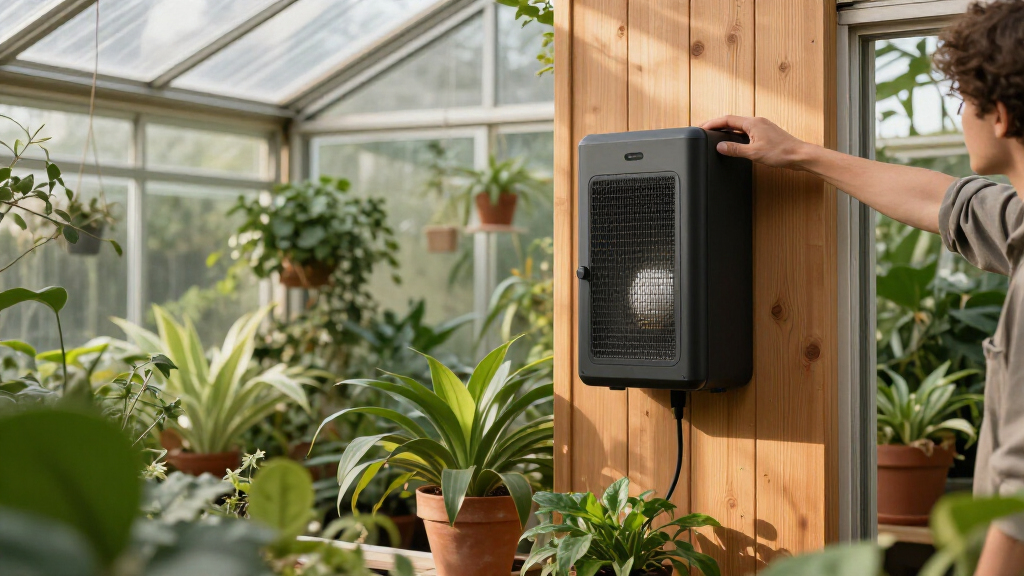
My ranking rested on four buyer-relevant factors. Temperature control precision came first, because a greenhouse heater that overshoots by 10 degrees stresses plants as much as cold does — models with accurate digital thermostats and tight hysteresis ranked above those with basic dial controls. Heating capacity relative to space came second: a 1500W heater is fine for a small grow tent or compact greenhouse, but larger structures need something like the Phoenix’s 9,553 BTU output to hold temperature through a hard freeze.
From there I weighed safety and durability — overheat protection, tip-over shutoff, waterproof ratings, and housing materials — since a greenhouse is a wet, humid environment where cheap heaters corrode or fail. Finally, I considered value and usability: price per watt, remote monitoring features, fan-only modes for summer circulation, and how noisy each unit runs in a small enclosed space. Models that duplicated another pick’s specs without a price or feature advantage landed lower, while units that solved a distinct grower problem earned a clear role in the lineup.
Factors to Consider When Choosing Greenhouse Heaters For Winter
Before settling on a specific heater, it helps to understand how greenhouse heating actually works in practice — because the most common mistakes happen at the buying stage, not the operating stage.Match Wattage to Your Greenhouse Size and Climate
The single biggest mistake buyers make is undersizing. A rough rule of thumb is 10 watts per square foot of greenhouse in mild winter climates, and closer to 15–20 watts in regions with hard freezes — which means a single 1500W heater realistically covers only 75–150 sq ft. Glass and single-layer polyethylene greenhouses lose heat far faster than twin-wall polycarbonate, so the same structure can need double the wattage depending on glazing. If your math lands between two heater sizes, size up: a heater running at 60% duty cycle lasts years longer than one cycling constantly at max output. Also remember that wattage is heat output, not temperature guarantee — an undersized heater will simply run nonstop and still lose to a cold night. Finally, check your circuit: most 1500W heaters draw near the limit of a standard 15-amp outlet, so you can’t safely run two on the same circuit.
Thermostat Quality Matters More Than Heater Quality
Almost every heater on this list produces roughly the same heat; what separates a good winter from a lost crop is how tightly the thermostat holds your setpoint. Cheap thermostats have wide hysteresis — the gap between when the heater shuts off and kicks back on — which can swing a small greenhouse 8–10 degrees. That’s why models with external or precise digital probes, like the Bio Green units, justify their price for serious growers. Placement matters too: a thermostat mounted near the heater reads warm air and short-cycles, while a probe at plant level responds to what your plants actually feel. If you buy a budget heater with a loose built-in thermostat, a separate plug-in thermostat controller costing $25–40 often fixes the problem for less than upgrading the heater itself.
Waterproofing and Safety Features Are Non-Negotiable
A winter greenhouse is one of the wettest environments you can put an electric appliance in — condensation drips constantly, and watering splashes are inevitable. Look for at least an IPX4 splash-resistant rating, a grounded plug, and overheat shutoff; tip-over protection is a bonus if the heater sits on a bench. Corrosion is the quieter threat: heaters with painted steel housings may look fine in year one but rust at the terminals by year two or three, which is where stainless steel models like the Phoenix earn their premium. Avoid household heaters marketed for bedrooms — they lack the moisture protection and often have plastic grilles that degrade under UV exposure near greenhouse glazing. Also keep clearances in mind: most manufacturers want 3 feet between the heater and combustible material, which shapes where you can actually place the unit.
Fan-Only Mode Doubles Your Annual Value
Heaters that include a fan-only circulation setting effectively give you two tools for one purchase. Air circulation prevents the fungal diseases and damping-off that stagnant greenhouse air invites in spring and fall, and it evens out the temperature gradient between a sunny ridge vent and a cold floor — often a 10-degree spread in a tall greenhouse. Units like the PALMA and several VEVOR models are designed with this dual role in mind, which is why they rank above pure winter heaters at similar prices. When comparing, check whether the fan runs independently or only with the heat on; that single design difference changes how useful the unit is for nine months of the year. For small structures, a heater with a decent circulation mode may eliminate the need for a separate fan entirely.
Smart Features: Genuine Convenience or Gimmick?
APP control and remote monitoring (as on the VIVOSUN AeroFlux and Kiroto) sound like luxuries until the first night you’re away and a cold snap hits — then real-time temperature alerts on your phone become genuinely valuable. The honest assessment is that smart features are monitoring tools, not heating upgrades: they tell you your heater is failing but can’t add capacity. They make the most sense for growers propagating expensive seedlings or running a small business, where losing a flat of plants costs more than the price premium. For a hobby greenhouse a few steps from the back door, the same money is better spent on a more robust heater or a backup unit. One practical note: Wi-Fi signals often struggle through greenhouse glazing and metal frames, so confirm signal reach before relying on remote alerts.
Plan for Redundancy Before You Need It
Every experienced greenhouse grower eventually learns this lesson the hard way: a single heater is a single point of failure. If the power flickers or the unit dies on the coldest night of the year, plants can be damaged within hours. Rather than buying one large heater, many growers run two smaller units — one on a thermostat as the primary, one on a backup freeze-protection thermostat set a few degrees lower. This also extends heater life, since neither unit runs at full duty constantly. Thermal mass helps too: water barrels or stone flooring absorb heat during the day and release it at night, smoothing temperatures and cutting runtime. Budget for this redundancy from the start; two mid-priced heaters with a spare outlet circuit often cost less than one premium unit and protect far better.
Frequently Asked Questions
Can a 1500W greenhouse heater really protect plants through a hard freeze?
It depends almost entirely on your greenhouse size and insulation, not the heater itself. A 1500W unit can hold a 5–10 degree lift over outdoor temperature in a well-sealed small greenhouse of roughly 80–120 sq ft, but during a night in the teens that may still leave you below freezing if you’re growing tender plants. Twin-wall polycarbonate, sealed gaps, and a thermal mass like water barrels dramatically improve what the same heater can achieve. If your winters regularly drop below 20°F and your structure is larger than a small grow tent, a higher-output unit like the Bio Green Phoenix — or a pair of 1500W heaters on separate circuits — is the safer plan. Treat 1500W as the baseline, not the ceiling, for serious winter growing.
Why are there so many nearly identical 1500W greenhouse heaters, and does it matter which one I buy?
Most of the generic 1500W models on the market come from a small number of OEM factories and share the same heating element and basic housing — which is why so many appeared in this comparison with near-matching specs. The differences that actually matter are the thermostat probe quality, display legibility, waterproof rating, and warranty support, since those vary even between visually identical units. A model with a tight digital thermostat will hold temperature within 2–3 degrees, while a sibling unit with the same wattage may swing 8 degrees either way. I’d also weigh seller reputation for returns and replacements, because aftermarket support for rebranded units can be inconsistent. In short: yes, the choice matters, but read the thermostat and safety details rather than the wattage number.
Is it worth paying premium prices for Bio Green heaters over budget electric models?
For small hobby greenhouses and grow tents, probably not — a $40–60 thermostat-equipped heater does the same fundamental job, and the Bio Green premium buys precision you may not need at that scale. The calculus changes with larger or permanent structures. Bio Green’s tighter temperature control, stainless and durable construction, and circulation-fan design are built for daily duty across many seasons, where budget units typically corrode or lose thermostat accuracy within a couple of winters. If you’re overwintering valuable plants, running a propagation schedule, or heating a walk-in greenhouse through real winter, the premium pays for itself in plant survival and heater longevity. Hobby growers with a small cold frame should save the money and put it toward a backup heater instead.
Where should I position my greenhouse heater for the best results?
Placement affects performance as much as the heater you buy. Position the heater low and central if possible, because cold air pools at the floor and heat rises — a heater mounted high will warm the ridge while roots stay cold. Point the airflow across the growing area rather than directly at plants, since a concentrated hot stream can desiccate foliage and stunt seedlings even when overall air temperature is fine. Keep the thermostat probe at plant height and away from the direct airflow, or it will read artificially warm and shut the heater off too early. Maintain at least three feet of clearance from combustible bench materials and plastic glazing, and keep the unit off wet floors — a brick or raised platform works well. Finally, pair placement with a small circulation fan to break up temperature stratification.
Do I need a heater with APP control for winter greenhouse growing?
Not for basic freeze protection — a reliable thermostat does that job on its own, and APP features add cost without adding heat. Where remote monitoring earns its price is in situations where early warning prevents losses: vacation trips, expensive seedling batches, or greenhouses far from the house where a heater failure might go unnoticed for a day. The VIVOSUN AeroFlux and Kiroto models in this roundup also track temperature history and, in the AeroFlux’s case, VPD, which is useful data for growers dialing in propagation conditions. Just verify your Wi-Fi reaches the greenhouse, since glazing and metal frames weaken signals. If none of those scenarios apply to you, skip the smart features and spend the difference on heating capacity or a backup unit.
Conclusion
After comparing all 14 models, the right choice depends less on specs and more on what you’re growing and where. For the best overall pick, the Bio Green PALMA stands out for combining precise digital temperature control, a true circulation fan, and durable construction — the most complete package for a serious hobby greenhouse. The best value goes to the VEVOR 1500W PTC heaters, which deliver fast heating and three-speed control at a price that makes buying two for redundancy genuinely affordable.
If budget is your main constraint, the generic 1500W thermostat-equipped models (picks 1–4) are perfectly serviceable for small grow tents — just verify the waterproof rating and don’t expect surgical temperature accuracy. The best premium option is the Bio Green Phoenix, the only heater here with enough output (9,553 BTU) to carry a large walk-in greenhouse through a hard freeze, backed by stainless construction that survives humid winters. For beginners, the VIVOSUN AeroFlux 700W is the gentlest entry point — low wattage that’s hard to misuse, APP alerts that catch mistakes early, and VPD data that teaches good growing habits. And for growers who want remote peace of mind on a mid-size structure, the Kiroto 1500W with APP control splits the difference between smart features and real heating power. Whatever you choose, size honestly, protect against failure with a backup, and your plants will come through winter ready to grow.
Fall Picks
fall essentials
As an affiliate, we earn on qualifying purchases.