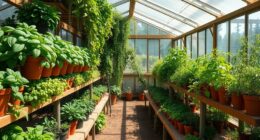
A true 12×20 greenhouse kit is a roomy footprint for starting seedlings, extending the growing season, or keeping a larger plant collection sheltered, but many options in this roundup are close in size rather than exactly 12 by 20 feet. My best overall pick is the CDCASA 20x10x10 FT polycarbonate greenhouse, which pairs a tall walk-in layout with a rigid panel covering and four windows. For flexible airflow, the VEVOR tunnel greenhouse has 12 windows, while the 10×18 aluminum greenhouse suits growers who prefer polycarbonate panels and an adjustable roof vent. The main tradeoffs are rigid panels versus lighter covers, peak height versus usable floor area, and ventilation versus weather protection. Read on for the full comparison and guidance on choosing a footprint that fits your site and growing plans.

Get garden gear delivered free with Prime
- Fast, free delivery on millions of items
- Prime Video, Amazon Music and more included
- Member-only deals all year
Complete the kit


Key Takeaways
- Only some listings approach the requested footprint: most are roughly 20 by 10 feet, while the CDCASA and AMERLIFE options have different dimensions or layouts, so check the actual measurements before planning beds.
- The CDCASA 20x10x10 FT model leads on stated height and panel construction: its polycarbonate panels and four windows make it a stronger match for growers seeking a tall, more enclosed structure than a fabric-covered tunnel.
- Ventilation varies more than the similar footprints suggest: VEVOR lists 12 windows, Outsunny has six roll-up windows, and several rigid-panel models rely on fewer openings or roof ventilation.
- Cover type shapes the ownership tradeoff: PE-covered tunnel kits such as Quictent, KING BIRD, and VEVOR emphasize a lighter, flexible structure, while polycarbonate models favor rigid panels and a more permanent greenhouse feel.
- Layout can matter more than raw floor area: AMERLIFE’s T-shaped design offers a different traffic pattern from a rectangular tunnel, while taller 10-foot models may better suit vertical growing than lower 6.5- to 6.6-foot tunnels.
| Quictent 20x10x6.6FT Tunnel Greenhouse for Outdoors with 2 Hinged Doors |  | Best for Hinged-Door Access | Dimensions: 20 x 10 x 6.6 ft | Coverage area: 193.7 sq ft | Frame material: Galvanized steel | VIEW ON AMAZON | See Our Full Breakdown |
| CDCASA 12x10x10 FT Polycarbonate Greenhouse for Outdoors with 2 Windows |  | Best for Panel Durability | Dimensions: 148.3 x 122 x 119.4 in | Frame: Rust-resistant aluminum | Panels: 4 mm twin-wall polycarbonate | VIEW ON AMAZON | See Our Full Breakdown |
| KING BIRD 20x10x6.6 ft Greenhouse for Outdoors – Large Walk-in Garden House |  | Best for Ventilation | Dimensions: 20 x 10 x 6.6 ft | Frame material: Galvanized steel | Cover: 150 g/sqm UV-protected PE | VIEW ON AMAZON | See Our Full Breakdown |
| 10×18 FT Aluminum Greenhouse with Adjustable Roof Vent and Polycarbonate Panels |  | Best for Roof Venting | Size: 10 x 18 ft | Frame: Powder-coated aluminum | Panels: 4 mm UV-resistant polycarbonate | VIEW ON AMAZON | See Our Full Breakdown |
| VEVOR Walk-in Tunnel Greenhouse, 19.4×9.7×6.5 ft Hoop House Greenhouse Tunnel, Plant Hot House with Galvanized Steel Frame, Green PE Cover, Roll-up Zipper Door and 12 Windows for Outdoor |  | Best for Maximum Window Ventilation | Dimensions: 19.36 x 9.68 x 6.50 ft | Item dimensions: 236.22 x 118.11 x 78.74 in | Weight: 70.6 lb | VIEW ON AMAZON | See Our Full Breakdown |
| 20x10x10 ft Extra Large Greenhouse for Outdoors, Heavy Duty |  | Best for Tall, All-Season Growing | Dimensions: 20 x 10 x 10 ft | Panel thickness: 4 mm | Panel material: Twin-wall polycarbonate | VIEW ON AMAZON | See Our Full Breakdown |
| AMERLIFE 16.8 x 12 x 7-Ft T-Shaped Walk-in Greenhouse |  | Best for Separate Growing Zones | Dimensions: 16.8 x 12 x 7 ft | Weight: 252 lb | Frame material: Aluminum | VIEW ON AMAZON | See Our Full Breakdown |
| Outsunny 20′ x 10′ x 9′ Walk-in Greenhouse with 6 Roll-up Windows, White |  | Best for Seasonal Growing and Ventilation | Dimensions: 19.7 x 9.8 x 9.2 ft | Floor area: 197 sq ft | Weight: 35.2 lb | VIEW ON AMAZON | See Our Full Breakdown |
| CDCASA 20x10x10 FT Polycarbonate Greenhouse with 4 Windows |  | Best for Specified Light and UV Performance | Dimensions: 247.1 x 123 x 119.4 in | Panel thickness: 4 mm | Panel material: Polycarbonate | VIEW ON AMAZON | See Our Full Breakdown |
| 12×20 greenhouse kit | Dimensions | Frame material | Color |
|---|---|---|---|
| Quictent 20x10x6.6FT Tunnel Gr | 20 x 10 x 6.6 ft | Galvanized steel | White |
| CDCASA 12x10x10 FT Polycarbona | 148.3 x 122 x 119.4 in | — | — |
| KING BIRD 20x10x6.6 ft Greenho | 20 x 10 x 6.6 ft | Galvanized steel | Green |
| 10×18 FT Aluminum Greenhouse w | — | — | Black |
| VEVOR Walk-in Tunnel Greenhous | 19.36 x 9.68 x 6.50 ft | — | Green |
| 20x10x10 ft Extra Large Greenh | 20 x 10 x 10 ft | Aluminum | — |
| AMERLIFE 16.8 x 12 x 7-Ft T-Sh | 16.8 x 12 x 7 ft | Aluminum | Black |
| Outsunny 20′ x 10′ x 9′ Walk-i | 19.7 x 9.8 x 9.2 ft | Alloy steel | — |
| CDCASA 20x10x10 FT Polycarbona | 247.1 x 123 x 119.4 in | Aluminum | — |
More Details on Our Top Picks
Quictent 20x10x6.6FT Tunnel Greenhouse for Outdoors with 2 Hinged Doors
The Quictent suits gardeners who want a near-20-by-10-foot growing area and prefer hinged doors to zipper openings. Its 0.7 mm galvanized steel frame and 150 GSM tear-resistant PE cover give it a sturdier stated frame specification than the KING BIRD, while the two doors make moving trays and tools in and out more straightforward. The white cover is described as UV-inhibited and high-transmission, supporting a bright growing space. Compared with the VEVOR, though, this model has fewer specified ventilation points: the listing highlights its doors rather than a dozen roll-up windows. Its 6.6-foot peak height also limits headroom compared with taller polycarbonate options such as the CDCASA 12×10. Assembly may take patience, and the available details do not quantify its weather-load limits.
Pros:- 20×10-foot footprint provides substantial growing space
- 0.7 mm galvanized steel frame is a clearly stated structural specification
- Two hinged doors ease access and can support airflow
- 150 GSM tear-resistant, UV-inhibited PE cover
Cons:- Assembly may be complex for a greenhouse of this size
- No quantified wind or snow-load limits are provided
- Fewer specified ventilation openings than the VEVOR’s 12 windows
Best for: Gardeners who want a large tunnel footprint, sturdier stated frame tubing, and wide access through two hinged doors
Not ideal for: Buyers who need a tall greenhouse, detailed snow-load ratings, or frequent side ventilation through multiple windows
- Dimensions:20 x 10 x 6.6 ft
- Coverage area:193.7 sq ft
- Frame material:Galvanized steel
- Frame thickness:0.7 mm
- Cover:150 GSM tear-resistant PE mesh
- Doors:2 hinged doors
- Color:White
Our verdict“Choose the Quictent if hinged access and a reinforced frame matter more than extra windows or greater headroom.”
CDCASA 12x10x10 FT Polycarbonate Greenhouse for Outdoors with 2 Windows
The CDCASA is the lineup’s panel-based choice for growers who value a more permanent-feeling enclosure over the larger footprint of the Quictent or KING BIRD tunnels. Its 4 mm twin-wall polycarbonate panels transmit 70% of light while blocking 99.9% of UV rays, and the aluminum frame avoids the flexible-cover format used by the PE models. The 10-foot height offers more vertical room than the 6.6-foot tunnels, but its roughly 12-by-10-foot dimensions cover far less ground than a true 20-by-10-foot kit. Two windows, adjustable vents, and rain gutters add practical climate and water management features. The tradeoff is weather exposure: the stated 56 mph wind resistance and 20 PSF snow support are finite, and the listing calls for added reinforcement in hurricane-prone areas. Assembly may also be easier with help.
Pros:- 4 mm twin-wall panels provide a rigid alternative to PE covers
- 10-foot height offers more vertical clearance than the tunnel models
- Two windows, adjustable vents, and rain gutters are included
- Specified 70% light transmission and 99.9% UV blockage
Cons:- Footprint is much smaller than the 20×10 tunnel options
- Requires extra reinforcement in hurricane-prone locations
- Assembly may be challenging without assistance
Best for: Gardeners with limited ground area who want rigid polycarbonate panels, extra height, and built-in rain gutters
Not ideal for: Buyers seeking a true 12×20 or 20×10 growing footprint, or those in severe-weather areas who cannot add reinforcement
- Dimensions:148.3 x 122 x 119.4 in
- Frame:Rust-resistant aluminum
- Panels:4 mm twin-wall polycarbonate
- Light transmission:70%
- UV blockage:99.9%
- Wind resistance:56 mph
- Snow load support:20 PSF
- Windows and doors:2 windows; 1 door
- Additional features:Rain gutters and adjustable vents
Our verdict“Pick this CDCASA when rigid panels and vertical space matter more than a near-20-foot-long growing area.”
KING BIRD 20x10x6.6 ft Greenhouse for Outdoors – Large Walk-in Garden House
The KING BIRD keeps the broad 20×10-foot tunnel footprint found on the Quictent, but gives airflow more emphasis. Eight roll-up screen windows and two dual-zipper screen doors let growers adjust ventilation at several points, a useful distinction for warm climates or crops that need steady air movement. Its 150 g/sqm UV-protected PE cover and galvanized steel frame suit seasonal protection without the cost and rigidity of the CDCASA polycarbonate structure. Two added stiffeners and included stakes and ropes support setup, although the listing does not provide a wind or snow-load rating. Compared with the VEVOR, it has four fewer listed windows but offers dual doors rather than one. The low 6.6-foot height can feel limiting for taller gardeners, and a large frame needs open space and routine cover upkeep.
Pros:- 20×10-foot footprint suits substantial beds and plant rows
- Eight roll-up screen windows provide adjustable ventilation
- Two dual-zipper screen doors give access at both ends
- Galvanized frame, added stiffeners, stakes, and ropes are specified
Cons:- 6.6-foot height may feel cramped for taller users
- No specific wind or snow-load capacity is listed
- PE cover may need regular inspection and maintenance
Best for: Growers who want a large tunnel house with multiple screened openings for managing airflow
Not ideal for: Gardeners who need a tall structure, rigid panels, or published weather-load ratings
- Dimensions:20 x 10 x 6.6 ft
- Frame material:Galvanized steel
- Cover:150 g/sqm UV-protected PE
- Windows:8 roll-up screen windows
- Doors:2 dual-zipper screen doors
- Stiffeners:2 added stiffeners
- Color:Green
Our verdict“Choose the KING BIRD if screened ventilation across a large tunnel matters more than rigid panels or extra height.”
10×18 FT Aluminum Greenhouse with Adjustable Roof Vent and Polycarbonate Panels
This 10×18-foot greenhouse is a useful middle ground for buyers who want rigid panels but do not need a full 20×10 tunnel. Its adjustable roof vent releases rising heat from above, unlike the side-window-focused ventilation on the KING BIRD and VEVOR. The 4 mm UV-resistant polycarbonate panels and powder-coated aluminum frame also create a different kind of enclosure from the PE-covered Quictent: less like a seasonal hoop house, though the listing does not provide panel light-transmission or structural load figures. At 18 feet long, it offers substantial planting space, but remains shorter and narrower than a 20×10 footprint. The stated assembly instructions and labeled parts may help organize a large build, yet the size can call for multiple people. Buyers should also note that the listing specifies one roof vent, not a broad ventilation system.
Pros:- 4 mm UV-resistant polycarbonate panels
- Adjustable roof vent allows heat to escape at roof level
- Powder-coated aluminum frame
- Labeled parts and instructions are described as assembly aids
Cons:- 18-foot length is shorter than the 20-foot tunnel options
- Only one ventilation feature is specified
- No wind or snow-load figures are provided
Best for: Gardeners seeking a rigid-panel greenhouse with an adjustable roof vent and a footprint under 20 feet long
Not ideal for: Buyers who need a full 20×10 growing area, multiple ventilation windows, or published wind and snow ratings
- Size:10 x 18 ft
- Frame:Powder-coated aluminum
- Panels:4 mm UV-resistant polycarbonate
- Ventilation:Adjustable roof vent
- Color:Black
Our verdict“Choose this model if rigid panels and roof-level venting outweigh the need for a full 20×10 footprint.”
VEVOR Walk-in Tunnel Greenhouse, 19.4×9.7×6.5 ft Hoop House Greenhouse Tunnel, Plant Hot House with Galvanized Steel Frame, Green PE Cover, Roll-up Zipper Door and 12 Windows for Outdoor
The VEVOR comes closest to a 20×10 tunnel while offering the most specified window ventilation in this group: 12 mesh windows plus a roll-up zipper door. That makes it more adaptable for airflow than the KING BIRD’s eight windows, particularly when heat builds up across a long growing space. Its 1-inch galvanized pipes, diagonal bars, U-shaped stakes, and tie-downs add reinforcement details, while the 140 g/m² PE cover has double-stitched seams and extended edges that can be weighted or buried. At about 19.4 by 9.7 feet, it is slightly smaller than the Quictent and KING BIRD, and its 6.5-foot height is similarly modest. The listing gives pipe wall thickness but no wind or snow-load rating, so buyers in exposed sites should not treat the reinforcement details as a verified severe-weather rating.
Pros:- 12 mesh windows provide extensive ventilation options
- Near-20×10-foot walk-in growing area
- Galvanized pipes with diagonal bars, stakes, and tie-downs
- Double-stitched PE cover seams and extended edges
Cons:- 6.5-foot height offers limited headroom
- PE cover is less rigid than the polycarbonate panels on the CDCASA or aluminum greenhouse
- No quantified wind or snow-load rating is provided
Best for: Growers who want a near-20×10 tunnel with frequent adjustable ventilation and mesh-screened openings
Not ideal for: Buyers needing a tall greenhouse, rigid polycarbonate panels, or confirmed wind and snow-load limits
- Dimensions:19.36 x 9.68 x 6.50 ft
- Item dimensions:236.22 x 118.11 x 78.74 in
- Weight:70.6 lb
- Frame:Galvanized pipes, 1 in diameter and 0.02 in wall thickness
- Cover:140 g/m² polyethylene
- Windows:12 mesh windows
- Door:1 roll-up zipper door
- Color:Green
Our verdict“Pick the VEVOR if plentiful screened airflow is your priority and a low-profile PE tunnel fits your site.”
20x10x10 ft Extra Large Greenhouse for Outdoors, Heavy Duty
This is a strong fit for growers who want the full 20-by-10-foot footprint of a 12×20-style kit but also need extra headroom: its 10-foot peak is taller than the 9.2-foot Outsunny and the 7-foot AMERLIFE. 4 mm twin-wall polycarbonate transmits up to 70% of light while blocking UV rays, and the aluminum frame is rated for snow loads up to 20 PSF, giving it a more substantial enclosure than the Outsunny’s polyethylene cover. Four adjustable vents and rain gutters add useful airflow and water management. The tradeoff is a bigger assembly project: it may take two people several hours, and the kit arrives in four packages. Choose it over the shorter tunnel-style options when height and rigid panels matter more than a quick, lightweight setup.
Pros:- 10-foot peak provides more working and growing clearance than shorter options such as the AMERLIFE.
- 4 mm twin-wall polycarbonate panels transmit up to 70% of light and block UV rays.
- Rust-resistant aluminum frame is rated to support snow loads up to 20 PSF.
- Four adjustable vents and included rain gutters support airflow and runoff management.
Cons:- Large 20-by-10-foot footprint needs substantial yard space.
- Assembly may take several hours and may require two people.
- Delivered in four separate packages, which can complicate setup planning.
Best for: Gardeners with room for a large permanent structure who grow tall crops or want a 10-foot peak and rigid polycarbonate panels.
Not ideal for: Small-yard growers or anyone seeking a lightweight, quick-to-assemble seasonal shelter; its footprint, multi-package delivery, and assembly demands may be a poor fit.
- Dimensions:20 x 10 x 10 ft
- Panel thickness:4 mm
- Panel material:Twin-wall polycarbonate
- Frame material:Aluminum
- Snow-load support:Up to 20 PSF
- Vents:4 adjustable vents
- Door type:Swing door
- Package count:4
Our verdict“Choose this kit if you want a tall, rigid-panel greenhouse with a large footprint and can accommodate a demanding assembly.”
AMERLIFE 16.8 x 12 x 7-Ft T-Shaped Walk-in Greenhouse
The AMERLIFE takes a different approach to a large greenhouse: its T-shaped layout divides the growing area into two functional zones rather than using the long, uniform footprint of the 20-by-10 CDCASA models. That arrangement can help gardeners keep seedlings, tools, or different crops apart, while two swing doors offer access from more than one point. Quick-lock aluminum connectors are appealing if you want to avoid screw-heavy framing, though the 252-pound package still calls for help during setup and assembly may take several hours. Its 7-foot height is a clear compromise: the 20-by-10-by-10-foot options provide more overhead room and list a snow-load rating, while this product’s supplied details do not. I’d pick it for layout flexibility, not maximum height or documented load capacity.
Pros:- T-shaped plan provides two functional growing zones.
- Two swing doors make access possible from separate sides.
- Quick-lock aluminum connectors avoid screw-heavy assembly.
- UV-protected polycarbonate panels are described as suitable for year-round outdoor use.
Cons:- Seven-foot height offers less headroom than the 10-foot CDCASA greenhouses.
- At 252 pounds, the structure may need several people to position during setup.
- Assembly can still take several hours despite the quick-lock connectors.
Best for: Gardeners who want distinct areas for seedlings, tools, and established plants, plus access through two doors.
Not ideal for: Growers who need a 10-foot-high structure, a straightforward rectangular layout, or a stated snow-load capacity.
- Dimensions:16.8 x 12 x 7 ft
- Weight:252 lb
- Frame material:Aluminum
- Cover material:Polycarbonate
- Doors:2 swing doors
- Vents:2 roof vents
- Layout:T-shaped, with two functional zones
- Color:Black
Our verdict“Pick the AMERLIFE if two distinct growing zones matter more to you than a taller, conventional 20-by-10 layout.”
Outsunny 20′ x 10′ x 9′ Walk-in Greenhouse with 6 Roll-up Windows, White
If your priority is a broad growing area and flexible ventilation rather than rigid panels, the Outsunny offers a practical alternative to the aluminum-and-polycarbonate CDCASA kits. Its roughly 197-square-foot floor area sits close to the 20-by-10 footprint, while six screened roll-up windows make it easier to adjust airflow across the enclosure. The polyethylene cover and steel frame also keep the listed weight to 35.2 pounds, far below the 252-pound AMERLIFE, which may make handling less cumbersome. That lighter construction comes with real limits: the listing says the cover is not water resistant, and its weather protection is less reassuring than the rigid polycarbonate panels on the taller CDCASA models. I’d treat it as a seasonal shelter and plan for rain protection rather than assume it matches a permanent greenhouse.
Pros:- About 197 square feet of floor area gives room for substantial planting.
- Six roll-up windows with screens allow adjustable ventilation.
- Listed weight of 35.2 pounds is much lower than the AMERLIFE’s 252 pounds.
- Ground stakes are included for setup.
Cons:- The cover is listed as not water resistant, so heavy rain may require extra protection.
- Polyethylene cover offers a less rigid enclosure than the CDCASA polycarbonate panels.
- UV protection is not specified in the supplied product details.
Best for: Seasonal growers who want a near-20-by-10 walk-in area, frequent ventilation, and a lighter structure than a rigid-panel greenhouse.
Not ideal for: Gardeners seeking a year-round, rain-ready enclosure or a clearly specified UV and snow-load rating.
- Dimensions:19.7 x 9.8 x 9.2 ft
- Floor area:197 sq ft
- Weight:35.2 lb
- Frame material:Alloy steel
- Cover material:Polyethylene
- Ventilation:6 roll-up windows with screens
- Door size:69.25 x 82 in
- Warranty:1 year
Our verdict“Choose the Outsunny for a lighter, ventilated seasonal grow space, but skip it if you need a rain-ready rigid-panel structure.”
CDCASA 20x10x10 FT Polycarbonate Greenhouse with 4 Windows
This CDCASA model earns its place for buyers who want the same large, tall format as the 20x10x10 Extra Large Greenhouse but prefer a listing that spells out panel performance: 70% light transmission and over 99.9% UV protection. Both use 4 mm twin-wall polycarbonate, an aluminum frame rated for 20 PSF of snow load, four vents, and rain gutters, so their core growing and weather-related features are closely matched. The CDCASA also includes a video guide alongside written assembly instructions, which may help with a project of this scale. Its four windows and four vents are specified separately, but the overall footprint still takes considerable room, and assembly may challenge solo builders. Compared with the Outsunny, it offers a more substantial rigid-panel enclosure, at the cost of a heavier setup.
Pros:- 4 mm twin-wall panels are specified to transmit 70% of light and block over 99.9% of UV.
- Aluminum frame is rated for snow loads up to 20 PSF.
- Four windows and four vents support airflow management.
- Rain gutters, written instructions, and a video guide are included in the product description.
Cons:- The 20-by-10-foot footprint requires substantial outdoor space.
- Assembly may be challenging and is a sizable project.
- Rigid panels and framing make it less suited to buyers seeking a lightweight seasonal shelter like the Outsunny.
Best for: Growers who want a 20-by-10-by-10-foot polycarbonate greenhouse and value explicit light-transmission and UV-protection specifications.
Not ideal for: Gardeners with limited yard space or anyone who needs a lightweight shelter that can be set up without significant assembly effort.
- Dimensions:247.1 x 123 x 119.4 in
- Panel thickness:4 mm
- Panel material:Polycarbonate
- Frame material:Aluminum
- Light transmission:70%
- UV protection:Over 99.9%
- Snow-load support:Up to 20 PSF
- Windows and vents:4 windows and 4 vents
Our verdict“Choose this CDCASA kit if you want a tall polycarbonate greenhouse with clearly stated light and UV figures and have room for a substantial build.”

How We Picked
I compared the nine listings against the practical needs behind a 12×20 greenhouse kit: usable footprint, headroom, covering and frame materials, ventilation, access, and how clearly the listed features support everyday growing. Since several products are close to 20 by 10 feet rather than exactly 12 by 20, I treated dimensions as a fit question rather than assuming the title’s target size matched every kit. I also separated rigid polycarbonate structures from PE-covered tunnel designs because they suit different levels of permanence, weather exposure, and maintenance.
The ranking favors options with a useful combination of space, height, airflow, and clearly stated construction, then assigns narrower roles where a product’s layout or feature set suits a particular buyer. The CDCASA 20x10x10 FT model ranks first for its stated tall profile and polycarbonate panels; the VEVOR tunnel stands out for ventilation, and the 10×18 aluminum model offers a rigid-panel alternative with a roof vent. Listings with less specific construction details or a more specialized layout rank lower for general-purpose use, not because they cannot work, but because buyers have less information or a narrower fit to assess.
| 12×20 greenhouse kit | Frame material | Color |
|---|---|---|
| Quictent 20x10x6.6FT Tunnel Gr | Galvanized steel | White |
| CDCASA 12x10x10 FT Polycarbona | — | — |
| KING BIRD 20x10x6.6 ft Greenho | Galvanized steel | Green |
| 10×18 FT Aluminum Greenhouse w | — | Black |
| VEVOR Walk-in Tunnel Greenhous | — | Green |
| 20x10x10 ft Extra Large Greenh | Aluminum | — |
| AMERLIFE 16.8 x 12 x 7-Ft T-Sh | Aluminum | Black |
| Outsunny 20′ x 10′ x 9′ Walk-i | Alloy steel | — |
| CDCASA 20x10x10 FT Polycarbona | Aluminum | — |
Factors to Consider When Choosing 12×20 Greenhouse Kit
Before choosing a kit, I would match the structure to the site and growing routine—not just the headline dimensions. These factors help prevent common fit, climate, and setup mismatches that product feature lists alone cannot resolve.
Check the Full Footprint, Not Just the Search Phrase
Many greenhouse listings use nearby dimensions, and a 20-by-10-foot base is not interchangeable with a 12-by-20-foot base once you plan paths, shelving, and access. Measure the outside footprint, then reserve room around the structure for assembly, door clearance, and upkeep. Check whether listed dimensions refer to the frame, the cover, or the usable interior. A long, narrow layout can fit a side yard but may limit crosswise beds; a wider layout can make central access easier. Draw the beds and a walking path on paper before ordering, and include space for tools or water storage. This step matters even if the total square footage looks similar.
Match Covering and Frame to How Permanent the Greenhouse Should Be
Rigid polycarbonate panels and PE covers serve different ownership needs, so I would choose based on how long the structure will stay in place and how much upkeep I can handle. A panel greenhouse tends to feel more like a fixed structure, while a covered tunnel is generally a more flexible format with fewer rigid components. Neither material alone tells you how well a kit will handle local wind, snow, or sun; frame details, anchoring, and assembly quality matter too. Review the included anchoring method and the manufacturer’s guidance for your climate. A frequent mistake is treating a greenhouse kit as a complete foundation or weatherproof building when those needs may require separate preparation. Ask how replacement covering or panels can be sourced before committing to a design.
Plan Ventilation Around Heat and Humidity
Window count is only part of airflow: placement, opening size, door position, and roof vents all affect how heat and moisture leave the greenhouse. A structure with many side windows may offer more adjustable airflow, while a roof vent can let rising hot air escape. For warm or humid growing conditions, plan how you will ventilate on days when you cannot stand by to open and close vents. Screens, if included, also matter if you need to limit pests while maintaining airflow. Do not assume a tall greenhouse will stay cool simply because it has more air volume. Think through summer operation before prioritizing winter enclosure.
Treat Height as Usable Growing Space
Peak height affects more than comfort: it can make room for hanging baskets, trellised crops, and taller plants, and it may improve headroom along the center aisle. Yet a tall peak does not guarantee the full interior has standing height, especially in a hoop-shaped tunnel where the sides slope down. Compare wall height, peak height, door opening, and the shape of the roof rather than relying on one height figure. Consider where shelves and beds will sit so they do not block the path or reduce access to lower plants. If your main crops stay low, extra height may be less useful than wider doors or a better ventilation layout. For vertical growing, check the frame’s support guidance before hanging heavy loads.
Account for Anchoring, Drainage, and Site Preparation
A greenhouse needs a level, well-drained site, and a large kit can be difficult to reposition after assembly. Check for overhead branches, nearby fences that block airflow, and low areas where rainwater collects. Decide whether you need a prepared base, ground anchors, or another foundation solution, then verify what the kit includes rather than assuming the frame can be secured directly to any surface. Wind exposure can be especially important for broad structures and lightweight covers. Keep access to the doors clear after accounting for paths, garden beds, and snow or debris buildup. Site preparation may take more effort than choosing between two similar greenhouse footprints.
Budget for the Whole Growing Setup, Not Only the Frame
The kit is only one part of a working greenhouse: shelving, beds, irrigation, shade cloth, fans, and temperature monitoring can all affect how useful the space becomes. Decide which items are essential for your climate and crops before comparing packages. Paying more for a rigid structure can make sense when you want a more permanent enclosure, while a tunnel may suit seasonal use or a simpler setup. Conversely, a lower-cost frame can require additional spending on anchoring, ventilation, or interior organization. Check what tools and assembly help are needed, particularly for a large structure. A realistic total plan is a better guide than the greenhouse dimensions alone.
Frequently Asked Questions
Are any of these kits exactly 12 by 20 feet?
Most of the listed options are close to 20 by 10 feet, not exactly 12 by 20, and the CDCASA 12×10 model is a different footprint altogether. The AMERLIFE T-shaped design also differs from a simple rectangle. I would confirm the assembled exterior dimensions and interior clearance with the seller before purchasing. If your site has a strict 12-by-20 limit, allow room for anchors, doors, and any overhanging cover. Do not rely on a product title or a rounded measurement alone.
Is a PE-covered tunnel or a polycarbonate greenhouse a better fit for year-round use?
The answer depends on local weather, how permanent the structure needs to be, and the kit’s frame and anchoring—not just the covering. Polycarbonate models in this lineup offer rigid panels, while the Quictent, KING BIRD, and VEVOR listings describe PE-covered tunnel formats. A rigid panel structure may better suit buyers seeking a more fixed enclosure, but it still needs suitable support and climate-specific care. A flexible tunnel can suit seasonal growing, though cover upkeep and exposure deserve attention. Check the manufacturer’s limits for wind, snow, and temperature before treating either format as year-round shelter.
How much ventilation should I look for in a greenhouse this size?
There is no single window count that fits every climate or crop, because vent placement and opening area matter alongside the number of openings. The VEVOR listing names 12 windows, while the Outsunny has six roll-up windows and the CDCASA 20x10x10 model lists four. In a hot climate, prioritize crossflow and a practical way to release heat near the roof. In a cooler area, you may value adjustable openings that can be closed when needed. Plan for temperature control on days when you are away, rather than assuming manual vents will always be enough.
Can I assemble a greenhouse of this size by myself?
A structure near 20 by 10 feet has enough frame pieces and covering or panels that a solo build may be slow and awkward. A second person can help hold sections square, manage long components, and fit the cover or panels without strain. Check the instructions for crew recommendations, tool requirements, and whether the kit needs a prepared base. Choose a calm, dry assembly day, especially for a lightweight cover that can catch wind. If you cannot recruit help, ask the seller about assembly support before ordering.
What should I confirm before ordering a kit for a windy or snowy location?
Look for manufacturer guidance on wind exposure, snow load, anchoring, and whether seasonal removal of a cover is recommended. The product names and listed features here do not provide enough information to confirm suitability for every harsh-weather site. Ask what anchors are included and whether they match your ground or foundation. Also check how the frame connects and whether replacement covers or panels are available. If the specifications do not address your local conditions, get written guidance from the seller rather than relying on the greenhouse’s size or material as a proxy.
Conclusion
For most buyers seeking a roomy, tall greenhouse, I would start with the CDCASA 20x10x10 FT polycarbonate greenhouse as the best overall match in this lineup. The VEVOR tunnel is my best value-style pick for growers who prioritize numerous ventilation openings in a flexible covered format, while the 10×18 aluminum greenhouse is the best premium-style choice for those drawn to rigid panels and an adjustable roof vent. Beginners may prefer a simpler tunnel layout such as the Quictent, provided its lower listed height and cover style fit their climate and plans. For specific needs, choose the AMERLIFE T-shaped greenhouse when its layout suits your site, or the taller CDCASA model when vertical growing space matters most. Before placing an order, verify the exact footprint and weather guidance: none of these listings should be assumed to measure exactly 12 by 20 feet.
Halloween Picks
halloween
As an affiliate, we earn on qualifying purchases.