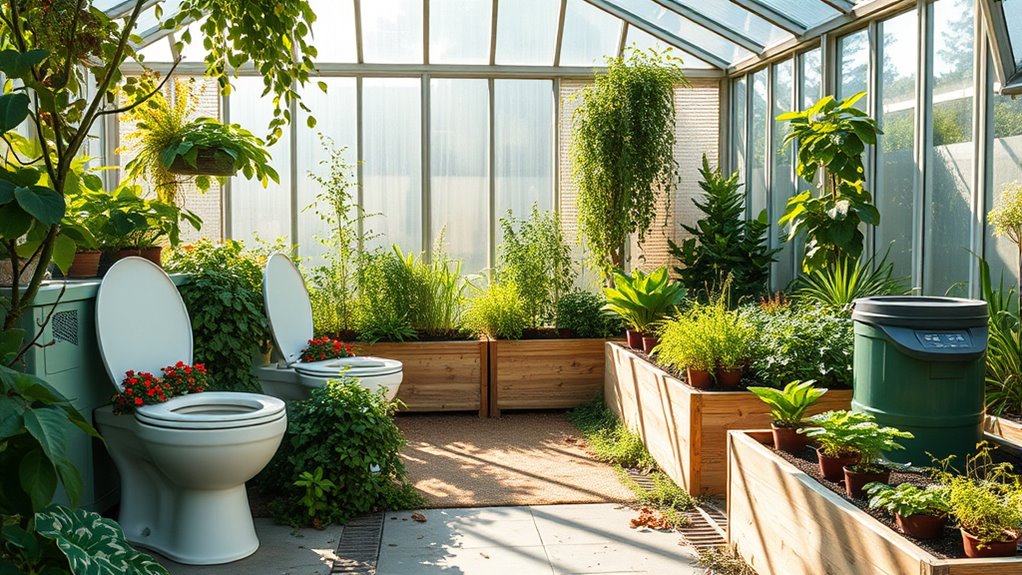

A greenhouse changes the composting toilet equation more than most buyers expect. You are working with a structure that swings between humid and dry, that may lack electricity or plumbing, and that often serves as a seasonal workspace rather than a daily bathroom. That means the best greenhouse composting toilet is rarely the same model you would pick for an RV or a cabin. After comparing the options available, I settled on four picks that cover the realistic greenhouse scenarios.

Get garden gear delivered free with Prime
- Fast, free delivery on millions of items
- Prime Video, Amazon Music and more included
- Member-only deals all year
The Separett Villa earns my top spot because its high-capacity, wall-mounted design suits a permanent greenhouse setup better than any portable unit here. If your greenhouse is small or you only need a toilet during planting season, the OGO NOMAD offers the simplest, no-power, bag-based approach. The TROBOLO WandaGO splits the difference with an adjustable-height seat and spill-proof containers, while the TROBOLO DIY set is the right call if you want to build a custom enclosure that blends into your greenhouse benching. The main tradeoff throughout is capacity versus portability, with odor control and emptying frequency determining which side you should favor.
Complete the kit


Key Takeaways
- The Separett Villa is the only option here built for permanent, high-frequency greenhouse use; everything else is a portable or semi-portable compromise.
- Urine diversion is the single feature that matters most in a humid greenhouse, because mixed waste is what creates odor problems around plants.
- The OGO NOMAD is the cheapest entry point but requires bag handling and frequent emptying, so it suits light or seasonal use only.
- The TROBOLO DIY set lets you build a toilet into your own greenhouse bench or cabinet, but you supply all the carpentry and enclosure yourself.
- Greenhouse heat accelerates evaporation and odor, so capacity ratings from the manufacturer assume milder conditions than a sunny glass structure delivers.
| Separett Villa Urine-Separating Compost Toilet |  | Best Overall for a Permanent Greenhouse | Dimensions: 26.5″ D x 18″ W x 21.3″ H | Weight: 34 lbs | Installation: Wall mounted | VIEW ON AMAZON | See Our Full Breakdown |
| OGO NOMAD Portable Composting Toilet |  | Best Value for Seasonal Greenhouse Use | Dimensions: 15.4″ D x 13″ W x 12.38″ H | Weight: 12 lbs | Installation: Free standing | VIEW ON AMAZON | See Our Full Breakdown |
| TROBOLO WandaGO Portable Composting Toilet |  | Best Compact and Comfort Pick | Dimensions: 12.3″ H x 15.0″ D x 13.4″ W | Weight: 10.4 lbs | Seat height: Adjustable, 12.0″ or 17.2″ | VIEW ON AMAZON | See Our Full Breakdown |
| TROBOLO DIY Composting Toilet Set |  | Best for Custom Greenhouse Builds | Diverter dimensions: 6.7″ H x 14.8″ D x 12.7″ W | Inner diameter: 12.2″ longitudinal x 9.5″ transverse | Solids container: 2.9 gallons | VIEW ON AMAZON | See Our Full Breakdown |
| composting toilets in greenhouse | Dimensions | Weight | Installation | Capacity |
|---|---|---|---|---|
| Separett Villa Urine-Separatin | 26.5" D x 18" W x 21.3" H | 34 lbs | Wall mounted | High-capacity container system for extended use |
| OGO NOMAD Portable Composting | 15.4" D x 13" W x 12.38" H | 12 lbs | Free standing | — |
| TROBOLO WandaGO Portable Compo | 12.3" H x 15.0" D x 13.4" W | 10.4 lbs | — | 10-20 liquid uses / 8-12 solid uses |
| TROBOLO DIY Composting Toilet | — | — | — | — |
More Details on Our Top Picks
Separett Villa Urine-Separating Compost Toilet
The Separett Villa earns the top spot because it is the only unit in this lineup designed as a fixed, high-capacity installation rather than a movable convenience. Wall mounting means it consumes almost no precious greenhouse floor space, which matters when every square foot under glass could hold a grow bench. Its urine-separating design also skips the additives and constant mixing that bag-based systems demand, so day-to-day operation is closer to a conventional toilet than any competitor here.
Compared with the OGO NOMAD, the difference is structural: the NOMAD is something you carry out at the end of the season, while the Villa is something you plan around. That permanence is also its drawback. At 34 pounds and requiring wall mounting, it presumes your greenhouse has a wall section you are willing to dedicate, and a 26.5-inch depth means it will protrude into walkways in narrow hoop houses. It is the most involved install in this guide, and the least forgiving if you change your greenhouse layout later.
Where this model pulls away is capacity. Portable units in this comparison are rated in uses before emptying; the Villa is built so that solids compost in interchangeable containers over weeks. For a greenhouse you work in daily, that gap between emptying every few days and emptying every few weeks is the difference between a system you live with and one you eventually abandon.
Pros:- High-capacity design means far fewer emptying trips than any portable option here
- Wall-mounted install frees up floor space for growing
- No additives or mixing required thanks to effective urine separation
- Built for permanent, long-term installation rather than occasional use
Cons:- Requires wall mounting and a dedicated installation spot
- Heaviest unit in the lineup at 34 pounds and not meant to be moved
- Overkill in cost and complexity for occasional or seasonal greenhouse use
Best for: Owners of a permanent greenhouse or homestead who want a set-and-forget toilet used daily
Not ideal for: Anyone with a small hoop house, a seasonal structure, or no suitable wall to mount against
- Dimensions:26.5″ D x 18″ W x 21.3″ H
- Weight:34 lbs
- Installation:Wall mounted
- Waste separation:Urine-separating, no additives needed
- Power/water required:No water connection; designed for fixed installation
- Seat material:PVC
- Capacity:High-capacity container system for extended use
Our verdict“If your greenhouse is a permanent structure you use year-round, this is the only pick here built to match that commitment.”
OGO NOMAD Portable Composting Toilet
The OGO NOMAD takes a completely different approach, and that is exactly why it earns the value slot. There is no electricity, no plumbing, and no proprietary consumables; it runs on standard 8-gallon bags and a composting medium of your choosing. For a greenhouse that only needs a toilet during spring propagation or autumn harvest marathons, this simplicity is the whole point. Unbox it, set it in a corner, and it works.
The urine-diverting design is what separates it from a bucket-and-sawdust setup. Keeping liquids away from solids is what prevents the ammonia smell that would otherwise drift straight into your seedlings. Still, the NOMAD cannot match the Separett Villa on capacity or the TROBOLO WandaGO on containment: it is fundamentally a bag system, so emptying frequency depends entirely on how disciplined you are with covering solids after each use.
Its 12-pound weight and 15.4-inch footprint make it the easiest unit here to move in and out with the seasons, and the rugged polypropylene build tolerates the dust and humidity a greenhouse produces. The tradeoff is comfort and ergonomics; at roughly 12 inches tall it sits lower than a standard toilet, and the seat is functional rather than pleasant. As a working tool for a working space, though, that is a compromise I would accept at this tier.
Pros:- Fully off-grid with no power, plumbing, or chemicals required
- Uses inexpensive standard 8-gallon bags instead of proprietary liners
- Lightweight at 12 pounds and easy to store between seasons
- Urine diversion keeps odor down without any additives
Cons:- Bag-based system needs more frequent emptying than fixed units
- Low seat height is less comfortable than taller options like the WandaGO
- No level indicator, so you have to check fill status manually
Best for: Budget-minded growers who need an off-grid toilet for seasonal or occasional greenhouse visits
Not ideal for: Daily, long-term use where a low seat and frequent bag changes would become tiring
- Dimensions:15.4″ D x 13″ W x 12.38″ H
- Weight:12 lbs
- Installation:Free standing
- Waste handling:Uine-diverting, standard 8-gallon bags
- Power required:None
- Material:Polypropylene
- Maintenance:Add medium, tie off bag, dispose per local guidelines
Our verdict“The most sensible low-cost way to add sanitation to a greenhouse you only use part of the year.”
TROBOLO WandaGO Portable Composting Toilet
The TROBOLO WandaGO sits in an interesting middle position, and its standout feature for greenhouse work is the adjustable seat height: 12 inches for storage or shorter users, 17.2 inches for a near-standard toilet experience. If you spend long days potting and pruning, that taller setting matters more than you might think, especially compared with the fixed low seat of the OGO NOMAD.
Its containment engineering is also a step up. The SafeShell system and firmly closing lid guard against spills and odor escape, and there is a fastening system for transport, which neither the NOMAD nor the Separett offers. A built-in urine level indicator removes the guesswork from emptying, which the NOMAD lacks entirely. TROBOLO rates it at 10 to 20 urinations and 8 to 12 solid uses before containers need emptying, which is respectable for something weighing just over 10 pounds.
Where it falls short is flexibility. It is a closed, finished appliance; unlike the TROBOLO DIY set, you cannot rebuild it into a bench or cabinet, and unlike the Separett it is not intended as a permanent fixture. It also costs more than the NOMAD for capacity that is ultimately in the same portable ballpark. This model makes the most sense for growers who want the convenience of a portable unit without the rough edges of a bag system, and who value ergonomics enough to pay for it.
Pros:- Adjustable seat height from 12″ to 17.2″ for real ergonomic comfort
- Spill-proof SafeShell system and firmly closing lid contain odor well
- Urine level indicator shows fill status at a glance
- Rated to support up to 330.7 lbs with a travel fastening system
Cons:- Priced above simpler portable options like the NOMAD
- Fixed appliance design cannot be customized or built in
- Container capacity still limits it to short stretches of regular use
Best for: Growers who want portable convenience with genuine comfort, spill protection, and clear fill monitoring
Not ideal for: Buyers wanting the lowest cost, or anyone planning a built-in permanent installation
- Dimensions:12.3″ H x 15.0″ D x 13.4″ W
- Weight:10.4 lbs
- Seat height:Adjustable, 12.0″ or 17.2″
- Capacity:10-20 liquid uses / 8-12 solid uses
- Weight limit:330.7 lbs
- Waste handling:Urine-diverting dry toilet, no water or electricity
- Special features:Level indicator, travel fastening system, diverter holder in lid
Our verdict“The most refined portable option here, best for comfort-focused growers who still want to move it seasonally.”
TROBOLO DIY Composting Toilet Set
The TROBOLO DIY set is the choice for a specific kind of buyer: someone who wants their greenhouse toilet to disappear into the structure itself. This is not a finished toilet; it is a urine diverter plus a 2.9-gallon solids container and a 2.6-gallon liquids container, compatible with any standard toilet seat. You build the enclosure, whether that is a cedar cabinet matching your potting bench or a simple plywood box in the corner, and the set provides the functional core.
In a greenhouse, that integration advantage is real. A freestanding unit like the WandaGO or NOMAD always looks like gear parked in the room, whereas a DIY build can double as shelf or seating space. The adapter system adds another greenhouse-specific benefit: urine can drain into the container as normal, or be routed externally via hose, which lets you divert diluted urine to a dedicated compost area as a nitrogen source. None of the other picks here offer that flexibility.
The obvious cost is labor and skill. You supply the wood, hardware, seat, and assembly time, and a poorly sealed enclosure will leak odors in a way a factory unit never would. Compared with the Separett Villa, you trade capacity and refinement for total design freedom, and compared with the NOMAD you trade plug-and-play simplicity for a weekend project. Buyers comfortable with basic carpentry get the most tailored outcome in this guide; everyone else should stick with a finished unit.
Pros:- Full design freedom to integrate the toilet into greenhouse cabinetry
- Hose adapter allows external urine diversion to a compost area
- Works with all standard toilet seats for familiar comfort
- Anatomical diverter fits a wide range of body types
Cons:- Requires you to supply enclosure, seat, hardware, and assembly labor
- Small containers (under 3 gallons each) need frequent emptying
- Odor performance depends heavily on the quality of your build
Best for: Handy growers who want to build a toilet into a custom bench or cabinet and route urine externally
Not ideal for: Anyone who wants a working toilet out of the box without tools or building time
- Diverter dimensions:6.7″ H x 14.8″ D x 12.7″ W
- Inner diameter:12.2″ longitudinal x 9.5″ transverse
- Solids container:2.9 gallons
- Liquids container:2.6 gallons
- Drainage:Container or external hose connection via adapter
- Seat compatibility:All standard toilet seats
- Material:Polypropylene
Our verdict“The best pick if you can build it in, and the wrong pick if you cannot or will not pick up a saw.”

How We Picked
I judged every product through one specific lens: performance inside a working greenhouse. That meant prioritizing urine diversion quality, since a glass or poly-covered structure traps humidity and amplifies any odor issue. I also weighed capacity against emptying frequency, because a greenhouse toilet that needs daily attention becomes a chore that discourages use.
Next came power and plumbing independence. Many greenhouses have no reliable electricity, so units that function fully off-grid ranked ahead of anything needing a fan or heater, with the Separett as the partial exception since it is designed for that infrastructure. I then considered footprint, since floor space in a greenhouse is growing space, and finally build quality relative to how long the unit will live in a damp, sun-exposed environment. I did not rank on price or popularity, only on fit for this specific setting.
| composting toilets in greenhouse | Installation | Waste handling |
|---|---|---|
| Separett Villa Urine-Separatin | Wall mounted | — |
| OGO NOMAD Portable Composting | Free standing | Uine-diverting, standard 8-gallon bags |
| TROBOLO WandaGO Portable Compo | — | Urine-diverting dry toilet, no water or electricity |
| TROBOLO DIY Composting Toilet | — | — |
Factors to Consider When Choosing Composting Toilets In Greenhouses
Choosing a greenhouse composting toilet comes down to how you use the space, what utilities you have, and how much maintenance you will realistically perform. Here is how I would think through the decision.Permanent Structure vs. Seasonal Space
The first question is whether your greenhouse exists year-round in your routine. A permanent, daily-use structure justifies the Separett Villa, where a seasonal or weekend greenhouse is better served by a portable unit you can store away. Buying a fixed high-capacity toilet for a structure you visit monthly wastes money, while a bag-based portable used every day will burn you out on maintenance.
Urine Diversion Quality
Every pick here separates liquids from solids, and that is deliberate: in the humid, warm air of a greenhouse, mixed waste produces ammonia odor quickly and it lingers among your plants. Look at how each model handles diversion and containment. The TROBOLO SafeShell system and the Separett’s separation design are the most robust; the DIY set’s performance depends on your build quality.
Capacity and Emptying Frequency
Manufacturer use ratings assume mild ambient temperatures. Greenhouse heat accelerates evaporation and odor, so I would derate every capacity figure by a quarter or more. If a unit claims ten uses before emptying, plan for seven. The Villa is the only option where emptying becomes an occasional rather than routine chore.
Power, Plumbing, and Placement
Most greenhouses lack drains and reliable electricity, which is why three of my four picks are fully passive. Placement matters too: the Villa needs wall space, the DIY set needs a built enclosure, and the two portables just need a level corner. Measure your available spot, including the space needed to open the lid and access containers, before committing.
Handling the Output
Decide in advance where waste goes. The NOMAD’s tied-off bags suit municipal disposal; the TROBOLO DIY set can route urine to an external compost pile as a diluted fertilizer; the Villa and WandaGO produce separated solids that can compost in a dedicated outdoor bin. Local rules on composting human waste vary, so check before you build your whole system around one disposal method.
Frequently Asked Questions
Will a composting toilet smell up my greenhouse?
Not if urine and solids stay separated, which is the one feature every pick in this guide shares. Odor in composting toilets comes almost entirely from liquids mixing with solids and breaking down anaerobically. In a greenhouse, warmth and humidity amplify that process, so separation quality matters more here than in a cool cabin. Keep a cover medium like coco coir or peat on solids after each use, empty the urine container promptly, and odor should stay comparable to a normal bathroom or better. The bigger risk is neglect; any of these units will smell if containers overflow.
Can I compost the waste directly in my greenhouse?
I would advise against composting raw waste inside the growing structure itself. Human waste needs a dedicated, managed compost pile that reaches adequate temperatures over an extended period before it is safe for use, and a greenhouse compost bin rarely achieves that reliably while sharing air with your plants. The better approach is emptying into an outdoor composting system, which is exactly what the TROBOLO DIY set’s external hose routing supports by sending urine to a separate area. Finished, fully processed compost from a proper two-bin system can be used on ornamentals, but food-safety guidelines suggest keeping it off vegetables.
Do I need electricity or plumbing for any of these toilets?
The OGO NOMAD, TROBOLO WandaGO, and TROBOLO DIY set all operate completely passively with no power or plumbing, which suits the average off-grid greenhouse. The Separett Villa is the one fixed installation in the group; while its separating design avoids water connections, being wall-mounted and built for permanent placement means you should plan the install properly, including any ventilation it requires. If your greenhouse has no electricity at all, the three portable options are the safe choices.
How often will I need to empty a greenhouse composting toilet?
For a single regular user, expect to empty the portable units every few days to a week: the WandaGO is rated for roughly 8 to 12 solid uses, and the TROBOLO DIY containers hold under three gallons each. The OGO NOMAD depends on bag size and your usage habits. The Separett Villa stretches that interval dramatically because solids compost in place over weeks before the container is rotated out. Remember that greenhouse heat increases evaporation and odor, so I would plan conservatively rather than trusting the upper end of any rating.
Is a DIY set worth it compared with a ready-made toilet?
It depends entirely on your willingness to build. The TROBOLO DIY set costs less than finished units and gives you the only option here that can be integrated into custom cabinetry, with the bonus of external urine routing for greenhouse composting. But you supply the enclosure, seat, and labor, and the finished result is only as odor-tight as your carpentry. If the thought of measuring, cutting, and sealing a box sounds like a chore rather than a project, a ready-made unit like the WandaGO or NOMAD will serve you better from day one.
Conclusion
The right pick depends on what your greenhouse means to you. If it is a permanent structure you work in daily, the Separett Villa is worth the installation effort; nothing else here matches its capacity or longevity. If you are a seasonal or budget-conscious grower, the OGO NOMAD delivers off-grid sanitation with minimal fuss. The TROBOLO WandaGO fits the comfort-focused buyer who wants an adjustable seat, spill-proof containers, and a fill indicator in a still-portable package. And if you are handy with tools and want the toilet built into your greenhouse design, the TROBOLO DIY set offers integration no factory unit can match. Whichever route you take, prioritize urine separation and honest capacity planning over any other feature; in a warm greenhouse, those two factors decide whether the system succeeds.