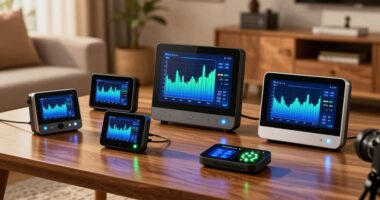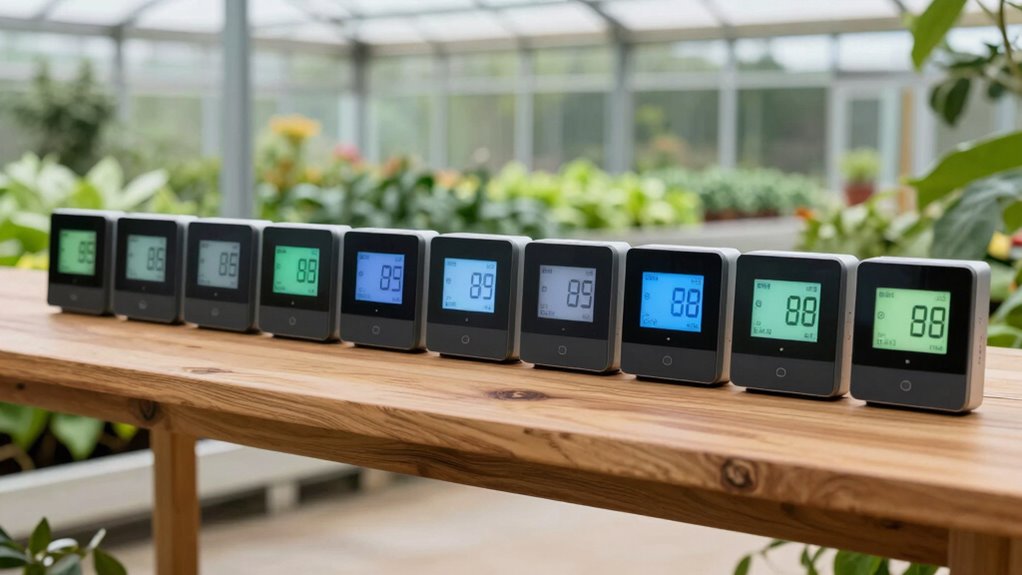

A WiFi greenhouse thermostat lets you monitor temperature remotely and switch compatible heaters or coolers as conditions change. My best overall pick is the Inkbird WiFi ITC-308, which pairs app access with separate heating and cooling control. The TURBRO Smart Temperature Controller stands out for timer and monitoring features, while the WiFi Temperature Controlled Outlet is a simpler choice for one compatible device. The main tradeoffs are single-outlet simplicity versus two-stage control, app-based access versus local operation, and electrical capacity versus the demands of your equipment. Read on for the full comparison and advice on matching a controller to your greenhouse setup.

Get garden gear delivered free — and shop member deals
- Fast, free delivery on millions of items
- Access to Prime Big Deal Days deals on October 6–7
- Prime Video, Amazon Music and more included
Complete the kit


Key Takeaways
- The WiFi Inkbird ITC-308 is the strongest all-round fit among these picks when remote monitoring and separate heating and cooling control matter more than a basic plug-in setup.
- The TURBRO adds timer and temperature-monitoring functions, making it a better match for buyers who want scheduling alongside temperature control.
- The WiFi Temperature Controlled Outlet is the simpler route for controlling one compatible appliance, but it does not serve the same role as a clearly specified two-stage controller.
- Three Inkbird listings make model verification especially important: compare the WiFi and non-WiFi versions and check voltage, load limits, and included probes before buying.
- Electrical fit matters as much as app access: confirm your heater or cooler’s voltage and current draw, since a controller’s listed capacity can limit which greenhouse equipment it can safely switch.
| WiFi Temperature Controlled Outlet with APP for Heater, Freezer 16A |  | Best for Higher-Power Single Devices | Voltage: 110V | Maximum power/current: 1800W / 16A | Temperature range: -40°F to 212°F | VIEW ON AMAZON | See Our Full Breakdown |
| Inkbird WiFi ITC-308 Digital Temperature Controller Thermostat |  | Best for Familiar Plug-and-Play Dual-Stage Control | Controller type: Push-button digital controller | Temperature control: Heating and cooling | Connectivity: WiFi; app control for iOS and Android | VIEW ON AMAZON | See Our Full Breakdown |
| WiFi Temperature Controller, Thermostat for Greenhouse 110-230V |  | Best for Dual-Voltage Installations | Input voltage: 110–230V | Input frequency: 50/60Hz | Input/output current: 10A | VIEW ON AMAZON | See Our Full Breakdown |
| TURBRO Smart Temperature Controller Heating Cooling, WiFi-Enabled Thermostat with Timer and Temperature Monitoring |  | Best Overall for Broad-Range Greenhouse Control | Model: TC01 | Power support: AC 100–240V, 50/60Hz | Maximum output: 15A; up to 1800W at 120V or 3000W at 240V | VIEW ON AMAZON | See Our Full Breakdown |
| Inkbird ITC-308 Digital Temperature Controller Thermostat |  | Best Basic Controller Without WiFi | Controller type: Push-button digital controller | Display: LCD with dual windows | Temperature control: Heating and cooling | VIEW ON AMAZON | See Our Full Breakdown |
| Inkbird WiFi Temperature Controller ITC-308 (2‑Stage, 1100W, 110V) for Reptiles, Freezers, Heaters & Coolers |  | Best for App-Based Heating and Cooling | Model: ITC-308-WIFI-LW | Connectivity: Wi-Fi | Control: App control and push buttons | VIEW ON AMAZON | See Our Full Breakdown |
| wifi greenhouse thermostat | Display | Dimensions | Voltage | Temperature range |
|---|---|---|---|---|
| WiFi Temperature Controlled Ou | — | 3.6 × 3.5 × 5.3 inches | 110V | -40°F to 212°F |
| Inkbird WiFi ITC-308 Digital T | Digital | — | 110V | — |
| WiFi Temperature Controller | Dual digital display | — | — | 61–75°F adjustable |
| TURBRO Smart Temperature Contr | LCD | 8.4 × 5.7 × 2.7 inches | — | 14°F to 212°F |
| Inkbird ITC-308 Digital Temper | LCD with dual windows | 1.3 × 2.68 × 5.51 inches | 110V | — |
| Inkbird WiFi Temperature Contr | LCD | 1.2 × 2.6 × 6.7 inches | — | — |
More Details on Our Top Picks
WiFi Temperature Controlled Outlet with APP for Heater, Freezer 16A
For a greenhouse setup centered on one heater or cooling appliance, this outlet pairs app-based temperature monitoring with a 16A, 1800W limit—more headroom than the 1100W Inkbird ITC-308 WiFi. Its IP67 waterproof probe suits damp growing spaces, while cycle control and scheduling can automate equipment without constant adjustments. Smart memory is a practical safeguard: settings return after a power interruption, reducing the chance that the controller stays in the wrong mode. The tradeoff is that this is an outlet-style controller rather than a dual-output heating-and-cooling unit like the TURBRO TC01. It also needs 2.4GHz WiFi, and its temperature limits and bulky dimensions may constrain unusual installations. I’d choose it for a single higher-load device, not a multi-equipment climate system.
Pros:- 16A capacity offers more load headroom than the 1100W Inkbird WiFi ITC-308.
- IP67 waterproof probe is suited to humid greenhouse conditions.
- App monitoring, alerts, timers, and cycle control support remote automation.
- Smart memory restores settings after a power outage.
Cons:- Controls a single outlet rather than providing separate heating and cooling outputs.
- Remote features require a 2.4GHz WiFi connection.
- Bulky dimensions may be awkward in crowded outlets or compact control boxes.
Best for: Greenhouse growers who need app monitoring and scheduled control for one heater or freezer drawing up to 16A.
Not ideal for: Growers who want separate heating and cooling outputs from one controller, or whose equipment exceeds the stated temperature or power limits.
- Voltage:110V
- Maximum power/current:1800W / 16A
- Temperature range:-40°F to 212°F
- Material:ABS
- Dimensions:3.6 × 3.5 × 5.3 inches
- Warranty:2 years
Our verdict“Choose this outlet if your greenhouse needs app control for one higher-power device and you value a waterproof probe over dual-output control.”
Inkbird WiFi ITC-308 Digital Temperature Controller Thermostat
The Inkbird WiFi ITC-308 is a straightforward pick for growers who want remote monitoring and separate heating and cooling control without moving to a larger controller. Its digital display and plug-and-play design make local temperature checks simple, while app access adds oversight when you’re away. Compared with the non-WiFi Inkbird ITC-308, this version adds remote access; compared with the TURBRO TC01, it has a lower stated maximum load of 1100W at 110V. That limit matters when selecting a greenhouse heater, so check the appliance label before connecting it. The controller is also restricted to 110V, and its WiFi-dependent features won’t help during a network outage. I’d favor it for modest-load equipment and familiar controls, not high-power setups or growers needing broad voltage support.
Pros:- Dual relay outputs support both heating and cooling equipment.
- App control provides remote temperature monitoring and adjustment.
- Digital display and plug-and-play format keep routine local operation accessible.
- Works with iOS and Android devices.
Cons:- 1100W maximum output may rule out some greenhouse heaters.
- Designed for 110V rather than broader-voltage installations.
- Remote features require a WiFi connection.
Best for: Greenhouse growers with 110V heating and cooling equipment below 1100W who want app access alongside a simple digital controller.
Not ideal for: Buyers using higher-load heaters or 230V equipment, or anyone who needs remote control independent of WiFi.
- Controller type:Push-button digital controller
- Temperature control:Heating and cooling
- Connectivity:WiFi; app control for iOS and Android
- Voltage:110V
- Maximum output load:1100W at 110V
- Display:Digital
- Mounting:Wall mount
- Power source:Corded electric
Our verdict“Pick this WiFi Inkbird for familiar dual-stage control of modest 110V greenhouse equipment, but choose a higher-capacity controller for demanding heaters.”
WiFi Temperature Controller, Thermostat for Greenhouse 110-230V
This controller’s clearest distinction is its 110–230V input and output support, which can fit greenhouse equipment beyond the 110V-only range of both Inkbird ITC-308 controllers. It combines app control with heating and cooling outlets, temperature alarms, and compressor delay protection, giving growers a single unit for more than one climate-control task. That compressor delay is particularly relevant when the cooling equipment cycles, since it helps protect the connected system from rapid restarts. There is a significant limitation: the supplied temperature range is only 61–75°F, far narrower than the TURBRO TC01’s stated 14–212°F range. Its 10A output rating also calls for careful appliance matching. I’d shortlist it for a dual-voltage greenhouse with a mild target range, but skip it if your crop needs colder or hotter control points.
Pros:- Supports 110–230V applications, unlike the 110V-only Inkbird models.
- Dual outlets provide heating and cooling control.
- High- and low-temperature alarms add remote climate alerts.
- Compressor delay protection helps limit rapid cooling-equipment restarts.
Cons:- Specified adjustment range of 61–75°F is restrictive for many greenhouse uses.
- 10A output limit requires checking equipment load carefully.
- App-based features require WiFi, and the controls may take more setup for less technical users.
Best for: Growers with compatible 110V or 230V equipment who want app-controlled heating and cooling within a 61–75°F adjustment range.
Not ideal for: Greenhouse owners who need temperature settings outside 61–75°F, or whose connected equipment exceeds the 10A output limit.
- Input voltage:110–230V
- Input frequency:50/60Hz
- Input/output current:10A
- Maximum output power:1200W at 120V; 2300W at 230V
- Temperature range:61–75°F adjustable
- Display:Dual digital display
- Shell material:Fire-resistant ABS
- Outputs:Dual outlets for heating and cooling
Our verdict“Choose it for dual-voltage greenhouse equipment that can operate within 61–75°F, but look elsewhere if you need a wider setpoint range.”
TURBRO Smart Temperature Controller Heating Cooling, WiFi-Enabled Thermostat with Timer and Temperature Monitoring
The TURBRO TC01 earns my broad-use pick because it pairs WiFi monitoring with automatic heating and cooling, programmable timing, and a stated range from 14°F to 212°F. That range gives it more flexibility than the 61–75°F window listed for the dual-voltage controller, while its output rating exceeds the 1100W limit of the Inkbird WiFi ITC-308 at 120V. Safety alarms and sensor-malfunction alerts add useful oversight when equipment runs unattended. The tradeoff is physical size: at 8.4 inches long, it takes more room than the compact non-WiFi Inkbird ITC-308. The TC01 also needs 2.4GHz WiFi for remote functions, and its plastic housing and broad application list do not replace checking that your particular heater or cooler matches the output rating. For growers seeking one versatile connected controller, it’s the strongest fit here.
Pros:- Broad 14–212°F stated temperature range suits varied control needs.
- Heating and cooling management, timers, and app monitoring combine in one unit.
- 15A output supports up to 1800W at 120V or 3000W at 240V.
- Safety alarms include sensor-malfunction alerts.
Cons:- Requires a 2.4GHz WiFi network for connected features.
- Larger dimensions may make installation harder than with the compact Inkbird ITC-308.
- Maximum output ratings still require matching the connected appliance and supply voltage.
Best for: Greenhouse owners who want WiFi monitoring, heating and cooling automation, and a wide stated temperature range in one controller.
Not ideal for: Growers with tight installation space, incompatible 2.4GHz network access, or equipment that exceeds the controller’s stated output limits.
- Model:TC01
- Power support:AC 100–240V, 50/60Hz
- Maximum output:15A; up to 1800W at 120V or 3000W at 240V
- Temperature range:14°F to 212°F
- Display:LCD
- Dimensions:8.4 × 5.7 × 2.7 inches
- Material:Plastic
- Connectivity:WiFi; 2.4GHz network required
Our verdict“Choose the TURBRO TC01 if you want the most flexible stated temperature range and connected heating-and-cooling control in this group.”
Inkbird ITC-308 Digital Temperature Controller Thermostat
The non-WiFi Inkbird ITC-308 suits a grower who wants local heating and cooling control without depending on an app or wireless network. Its LCD, high- and low-temperature alarms, and adjustable compressor delay cover useful day-to-day functions, while the compact 5.51-inch height makes it less imposing than the TURBRO TC01. It shares the 1100W maximum load and 110V supply limit of the WiFi Inkbird ITC-308, but gives up remote monitoring in exchange for a simpler connected-free setup. That distinction matters in a greenhouse: you can see and adjust conditions at the controller, but you won’t get app alerts when away. Wall mounting is also part of the installation, and the load ceiling may exclude larger heaters. I’d choose it for a nearby greenhouse where hands-on checks are acceptable, not for remote oversight.
Pros:- Heating and cooling modes support two types of climate-control equipment.
- LCD with dual windows makes local readings easy to check.
- High- and low-temperature alarms provide local warnings.
- Adjustable compressor delay adds control for cooling equipment.
Cons:- No WiFi or app access, unlike the WiFi Inkbird ITC-308.
- 110V supply and 1100W maximum load limit equipment choices.
- Wall mounting is required for installation.
Best for: Growers who can check the controller in person and want straightforward 110V heating and cooling control with local alarms.
Not ideal for: Greenhouse owners who need app alerts or remote adjustments, or who plan to run equipment above 1100W.
- Controller type:Push-button digital controller
- Display:LCD with dual windows
- Temperature control:Heating and cooling
- Voltage:110V
- Maximum output load:1100W
- Alarms and protections:Buzzer alarm and safety protections
- Dimensions:1.3 × 2.68 × 5.51 inches
- Weight:1.1 pounds
Our verdict“Pick this Inkbird for a nearby greenhouse where local alarms and simple dual-stage control matter more than remote access.”
Inkbird WiFi Temperature Controller ITC-308 (2‑Stage, 1100W, 110V) for Reptiles, Freezers, Heaters & Coolers
The Inkbird ITC-308 WiFi is a practical pick for greenhouse growers who want to monitor temperatures remotely and control both a heater and a cooler from one controller. Its dual relay outputs can switch between heating and cooling needs, while high- and low-temperature alarms can flag conditions that call for attention. Compared with the non-WiFi Inkbird ITC-308 Digital Temperature Controller Thermostat, this model adds app monitoring and adjustment, a useful difference for growers who cannot check the greenhouse in person throughout the day.
The tradeoff is capacity: its 1100W limit at 110V may not suit larger spaces or high-draw equipment, and a power outage stops regulation because there is no battery backup. I’d choose it for a modest setup with compatible loads, not as a solution for a large greenhouse or backup-dependent control.
Pros:- Wi-Fi app support allows monitoring and adjustments on Android and iOS.
- Dual relays can control heating and cooling equipment.
- High- and low-temperature alarms help flag unwanted greenhouse conditions.
- Plug-and-play format includes a temperature probe.
Cons:- The 1100W maximum load may be too low for larger or more demanding setups.
- No battery backup means regulation stops when power is lost.
- The 110V rating limits suitability for other electrical systems.
Best for: Greenhouse growers with modest 110V heater and cooler loads who want remote temperature checks, app adjustments, and alarm alerts.
Not ideal for: Owners of large greenhouses or high-wattage equipment, and growers who need temperature regulation to continue during a power outage.
- Model:ITC-308-WIFI-LW
- Connectivity:Wi-Fi
- Control:App control and push buttons
- Temperature modes:Heating and cooling
- Maximum load:1100W at 110V
- Power source:Corded electric
- Display:LCD
- Dimensions:1.2 × 2.6 × 6.7 inches
- Included components:Temperature controller and probe
Our verdict“Choose this Inkbird for app-connected heating and cooling in a modest 110V greenhouse, but skip it if your equipment exceeds its load limit or needs outage backup.”

How We Picked
I ranked these controllers by how well their stated features support real greenhouse temperature management: remote monitoring, heating and cooling control, electrical compatibility, and ease of setup. A WiFi connection is useful only if the controller can safely operate the equipment and the app gives the grower meaningful temperature information. I also weighed practical functions such as timers and the difference between a single controlled outlet and a two-stage design.
The WiFi Inkbird ITC-308 leads because its listed two-stage control and WiFi focus offer a useful balance for growers managing temperature from a distance. TURBRO ranks highly for its added timer and monitoring tools, while the WiFi outlet is better suited to a simpler, one-device job. The other Inkbird variants rank according to their stated connectivity and electrical details; I treat the non-WiFi model as a local-control alternative, not a substitute for app access. Product names alone do not confirm greenhouse suitability, so I give weight to checking voltage, load, probe arrangement, and supported equipment before purchase.
| wifi greenhouse thermostat | Connectivity | Display |
|---|---|---|
| WiFi Temperature Controlled Ou | — | — |
| Inkbird WiFi ITC-308 Digital T | WiFi; app control for iOS and Android | Digital |
| WiFi Temperature Controller | — | Dual digital display |
| TURBRO Smart Temperature Contr | WiFi; 2.4GHz network required | LCD |
| Inkbird ITC-308 Digital Temper | — | LCD with dual windows |
| Inkbird WiFi Temperature Contr | Wi-Fi | LCD |
Factors to Consider When Choosing Wifi Greenhouse Thermostat
Choosing a greenhouse controller starts with the equipment it must switch, not the app screen. These broader checks can prevent a thermostat that connects successfully but cannot control your setup safely or reliably.
Match the controller to your heating and cooling plan
Decide whether the greenhouse needs heat only or whether you also plan to run a fan, cooler, or other temperature-control device. A two-stage controller can manage separate heating and cooling outputs, while a single controlled outlet is a better fit for one appliance. Avoid assuming that two outlets mean two independent temperature stages; check how the product assigns each outlet. If you use heating and cooling at the same time of year, compare the setpoint logic and switching behavior in the manual. For a small space with one heater, extra control may add setup effort without much benefit. Choose based on the devices you actually need to operate.
Check voltage, current, and appliance compatibility
Compare the controller’s rated voltage and maximum current with the heater or cooler label before connecting anything. The listed 16A outlet and the 110V, 1100W Inkbird variant do not represent interchangeable capacity claims. A motor-driven fan or compressor can have startup demands that differ from its normal running draw, so check the appliance documentation as well as the controller rating. Do not rely on a broad product title such as “heater and freezer” as proof that a specific device is supported. If the electrical details are unclear, ask the manufacturer or a qualified electrician rather than guessing. This check can rule out an otherwise appealing WiFi model.
Treat WiFi as a monitoring feature, not a backup plan
Remote temperature alerts can help you respond when greenhouse conditions move outside your target range, but app access depends on a working network and compatible setup. Check whether the controller supports the WiFi band and app requirements available at the greenhouse. Consider what happens during a router outage or loss of internet: local thermostat operation may continue, but remote monitoring may not. For a greenhouse far from the house, test signal strength where the controller will sit before relying on app updates. Keep a separate thermometer or alarm if plant loss from a missed temperature swing would be costly. That backup is more useful than assuming a connected thermostat will always send a warning.
Plan sensor placement and greenhouse conditions
A thermostat can only respond to the temperature its probe measures, so probe location affects how well its settings represent plant conditions. Place the sensor near the growing area, away from direct heater airflow, cold glazing, and direct sun. In a tall or divided greenhouse, temperature can vary by height and distance from the heat source; one probe may not capture every zone. Check the probe cable length and whether the sensor is designed for the humidity and conditions where it will be placed. Avoid mounting the controller where condensation or splashes can reach it unless its documentation supports that environment. Better placement can improve control without changing the thermostat.
Compare app convenience with local controls
App functions differ: some products emphasize temperature readings, while others add schedules or timers. Decide whether you need alerts and remote adjustments or mainly want automatic switching at a set temperature. A timer can help coordinate equipment schedules, but it should not replace temperature-based control when conditions can change quickly. Physical buttons or a readable display are useful when WiFi is unavailable or someone needs to adjust settings on site. Check how easy it is to set a temperature range and whether the app shows the current reading clearly. If several people manage the greenhouse, confirm whether account sharing is supported.
Choose a model listing you can verify
This roundup includes several Inkbird products with similar ITC-308 names, including WiFi and non-WiFi versions. Before ordering, compare the exact model number, connectivity, voltage, wattage, plug type, and included accessories on the listing and package. A non-WiFi controller may suit a grower who wants local temperature control, but it does not meet a need for remote app monitoring. Likewise, a model described for reptiles or freezers may still require careful compatibility checks before greenhouse use. Save the manual and wiring or setup instructions for the specific version you buy. Accurate model identification reduces the chance of receiving a controller with the wrong features for your plan.
Frequently Asked Questions
Can a WiFi greenhouse thermostat control both a heater and a fan?
It can if the model has separate heating and cooling outputs and supports the electrical requirements of both devices. A single smart outlet generally controls one connected appliance, so it may not provide independent temperature responses for a heater and fan. Check whether the controller uses separate settings for heating and cooling rather than assuming its outlet count tells the whole story. Also verify voltage and current limits for each device. For this lineup, the two-stage Inkbird options are the clearer fit for separate heating and cooling control.
Will the thermostat keep working if my greenhouse WiFi goes down?
Many connected controllers can continue switching equipment based on saved local settings when the network is unavailable, but behavior varies by model. Remote readings, notifications, and app changes may stop until the connection returns. Check the manual for offline operation and power-loss behavior before relying on a specific controller. If your greenhouse is vulnerable to sudden cold or heat, add an independent thermometer or alarm rather than treating app access as a safety system. Test the setup before leaving it unattended for a long period.
Is a 110V, 1100W controller suitable for my greenhouse heater?
Only if the heater’s voltage and electrical draw fall within the controller’s stated limits, and the product’s plug and outlet match your setup. Check the heater nameplate and the controller’s exact model documentation; do not infer capacity from the ITC-308 name alone. Some equipment can draw more current at startup than during normal operation, so include that in the compatibility check. If the heater exceeds the controller rating, use an appropriately rated control solution selected with qualified guidance. A larger greenhouse does not automatically require a higher-rated thermostat, but its chosen equipment may.
Should I choose a WiFi model or the non-WiFi Inkbird ITC-308?
Choose WiFi if remote temperature checks or app-based adjustments are part of your greenhouse routine. The non-WiFi version may make sense if you only need local automatic control and prefer a simpler connected-device setup. Similar names can obscure meaningful differences, so verify the exact model and features before selecting one. WiFi does not by itself improve temperature accuracy or electrical capacity. Put more weight on control stages, sensor needs, and appliance compatibility if you rarely need remote access.
Do I need a timer if the thermostat already controls temperature?
A timer can add scheduling, but it solves a different problem from temperature-based switching. Temperature control responds to changing greenhouse conditions; a timer follows a schedule even when the temperature does not call for equipment to run. The TURBRO’s timer may suit routines that combine scheduled operation with temperature monitoring, but confirm how those functions interact. For heaters, avoid a schedule that prevents needed heating during a cold period. If temperature protection is your only goal, prioritize reliable thermostat control over extra scheduling options.
Conclusion
For most growers who want app access and separate heating and cooling control, I recommend the WiFi Inkbird ITC-308 as the best overall. The WiFi Temperature Controlled Outlet is my best-value-style pick for a simple one-device setup, provided its electrical rating fits the appliance; it is not a like-for-like replacement for a two-stage controller. The TURBRO is my premium-feature choice for buyers who want timer functions alongside temperature monitoring. Beginners with one compatible heater may find the outlet-style controller easier to match to a basic setup, while growers who want local control without WiFi can look at the non-WiFi Inkbird. For a specific need such as a 110V, 1100W device, compare the exact Inkbird variant’s limits with the equipment label before choosing. In every case, check the model number, probe placement, and electrical ratings before purchase.
Fall yard work Picks
leaf blowers
As an affiliate, we earn on qualifying purchases.