The “One Plant” newbie challenge helps you pick, care for, and monitor a single, easy-care plant over 30 days, boosting your confidence and gardening skills step by step. By focusing on just one plant, you avoid feeling overwhelmed and can track your progress, learn carefully from daily experiences, and see tangible results. As you succeed, you’ll build belief in your gardening abilities—stick around to discover how to make your plant journey even more rewarding.

Get garden gear delivered free with Prime
- Fast, free delivery on millions of items
- Prime Video, Amazon Music and more included
- Member-only deals all year
Key Takeaways
- Focus on selecting a beginner-friendly plant with easy care needs to build confidence gradually.
- Maintain consistent daily care routines like watering, inspecting, and cleaning to observe growth.
- Track progress through journals or photos to recognize improvements and troubleshoot issues early.
- Celebrate small successes to boost motivation and reinforce gardening skills over 30 days.
- Join online communities or local groups for support, encouragement, and sharing progress throughout the challenge.
beginner indoor plant starter kit
As an affiliate, we earn on qualifying purchases.
As an affiliate, we earn on qualifying purchases.
What Is the “One Plant” Challenge and How Does It Help Beginners

If you’re new to gardening, the “One Plant” challenge is a simple way to build confidence and develop your skills. It focuses on plant selection—choosing just one plant to care for over a set period. This approach helps you avoid feeling overwhelmed by too many options and allows you to master basic gardening tasks. The challenge encourages beginner tips like understanding your plant’s needs, watering properly, and observing growth patterns. By concentrating on a single plant, you gain hands-on experience and see tangible results, boosting your motivation. It’s a manageable way to learn the fundamentals without stress. Over time, you’ll develop the patience and knowledge needed to care for more plants confidently. This focused approach makes gardening accessible and enjoyable for newcomers. Additionally, understanding the specific requirements of your plant, such as light and soil preferences, enhances your ability to provide optimal care.
How to Choose a Beginner-Friendly Plant for Your First Month
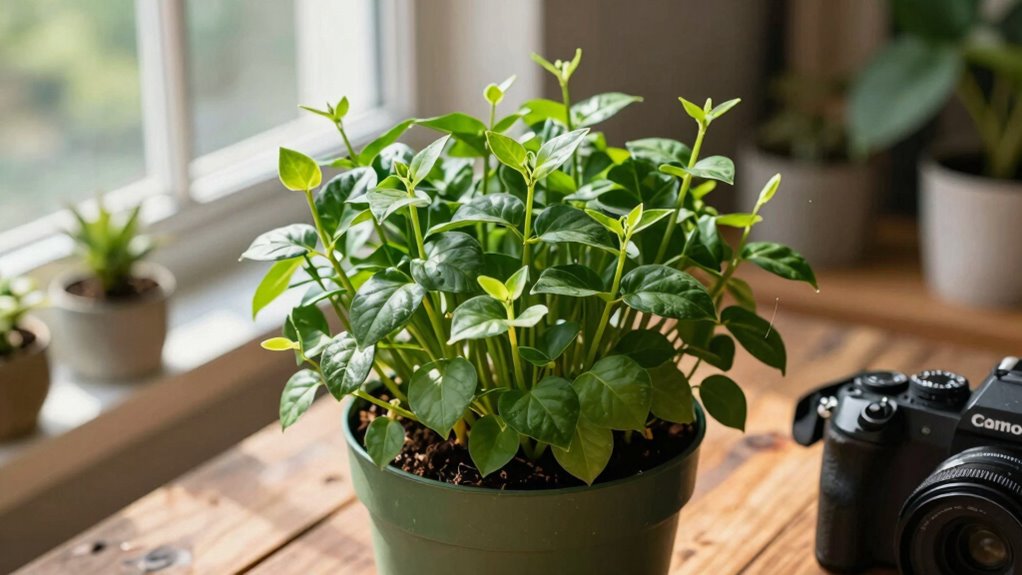
When selecting a beginner-friendly plant, look for one with easy care requirements that fit your schedule. Choose plants that tolerate low light conditions, so you don’t need special lighting setups. This way, you’ll have a better chance of success during your first month. Additionally, selecting plants known for low maintenance can reduce frustration and increase your confidence as a new plant parent.
Easy Care Requirements
Choosing a beginner-friendly plant starts with finding one that requires minimal care. Look for plants with simple watering habits—plants that thrive with infrequent or moderate watering—and don’t demand constant attention. Consider their sunlight needs; many beginner plants are adaptable and tolerate a range of light conditions, making them easier to care for. Avoid plants that require specific or intense light or frequent watering, as these can be challenging for new plant owners. Instead, opt for plants that are forgiving if you forget to water or if sunlight varies throughout the day. By selecting plants with low-maintenance requirements, you reduce the risk of over- or under-watering and ensure your first month of plant care is enjoyable and stress-free. Proper plant care is essential for building confidence and fostering a lasting connection with your new greenery.
Low Light Tolerance
Since light conditions can vary in your home, selecting a plant that tolerates low or indirect light makes caring for it much easier during your first month. Many beginner-friendly plants thrive in indoor gardening setups with limited sunlight, reducing the risk of overexposure. When choosing your plant, focus on easy care and reliable low light tolerance, which simplifies plant identification and care routines. Plants like pothos, snake plant, and ZZ plant are excellent options because they adapt well to shaded areas. Additionally, considering sustainability initiatives in your plant choices can enhance your gardening experience by aligning it with eco-friendly practices. By picking a plant that handles low light, you’ll build confidence as you learn how to care for it without stressing over perfect lighting conditions. This approach helps you develop a consistent routine, making your indoor gardening journey more enjoyable and successful.
How to Prepare Your Space for Your New Plant
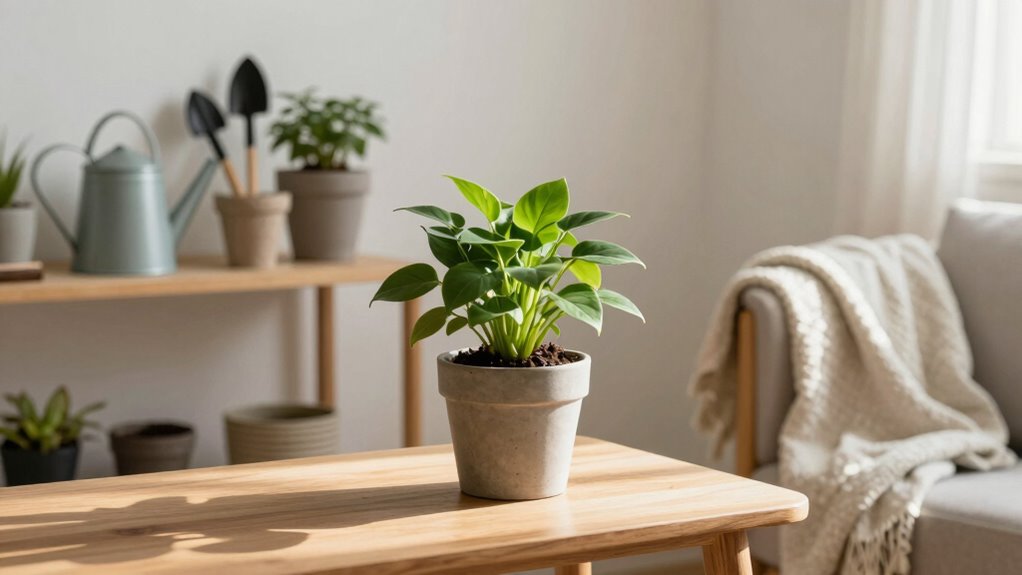
Before bringing your new plant home, it’s important to prepare a suitable space that promotes healthy growth. Choose a spot with the right lighting conditions, based on your plant’s needs. Next, consider your watering schedule and how often your plant needs moisture—this varies depending on the plant and environment. Proper soil selection is also key; use well-draining soil suited for your plant type to prevent overwatering and root rot. Clear the area of clutter and place your pot on a stable surface. Keep the space consistent, avoiding drafts or sudden temperature changes. Additionally, utilizing energy-efficient cloud servers can help you manage your plant care routine more effectively through smart home integrations. By setting up the right environment, you create a strong foundation for your plant’s health and growth, making it easier to care for and enjoy your new green companion.
Daily Tips for Keeping Your Plant Healthy and Thriving
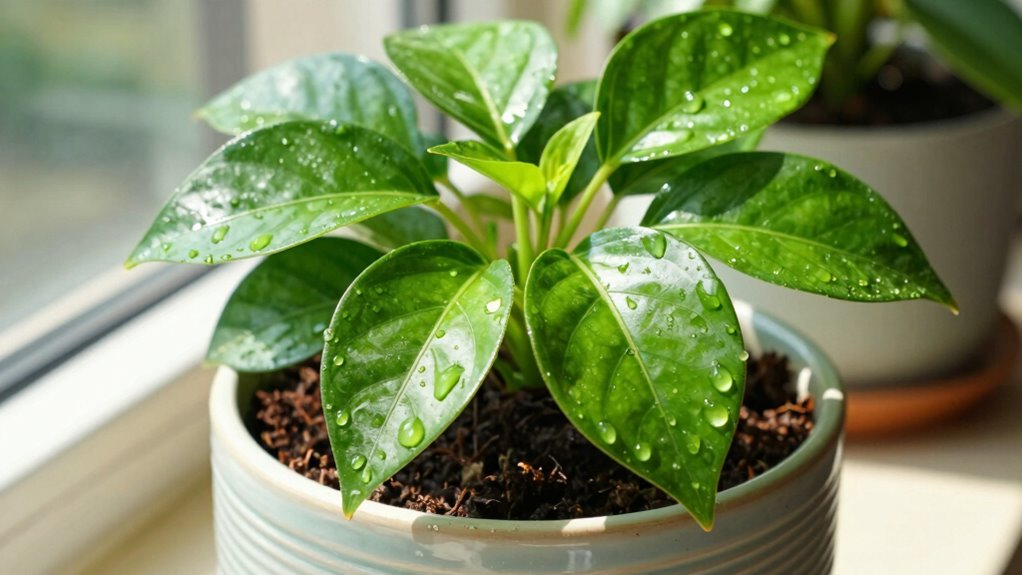
To keep your plant healthy and thriving, it’s essential to establish a simple daily routine. Consistent care helps maintain ideal plant nutrition and prevents pests. Every day, check for signs of pests or disease, and ensure the soil stays moist but not overwatered. Adjust watering based on your plant’s needs, avoiding both drought and overwatering. Use natural pest prevention methods like introducing beneficial insects or removing pests by hand. Additionally, gently wipe leaves to keep them dust-free, which improves photosynthesis. By staying attentive and proactive, you create a strong foundation for your plant’s growth. Regular plant maintenance promotes long-term health and vitality. Here’s a quick daily checklist:
| Task | Purpose |
|---|---|
| Inspect leaves and soil | Detect pests or issues early |
| Water as needed | Provide plant nutrition |
| Wipe leaves | Improve photosynthesis |
| Remove dead foliage | Prevent disease |
| Check for pests | Pest prevention |
How to Track Your Plant’s Growth and Learn Gardening Skills
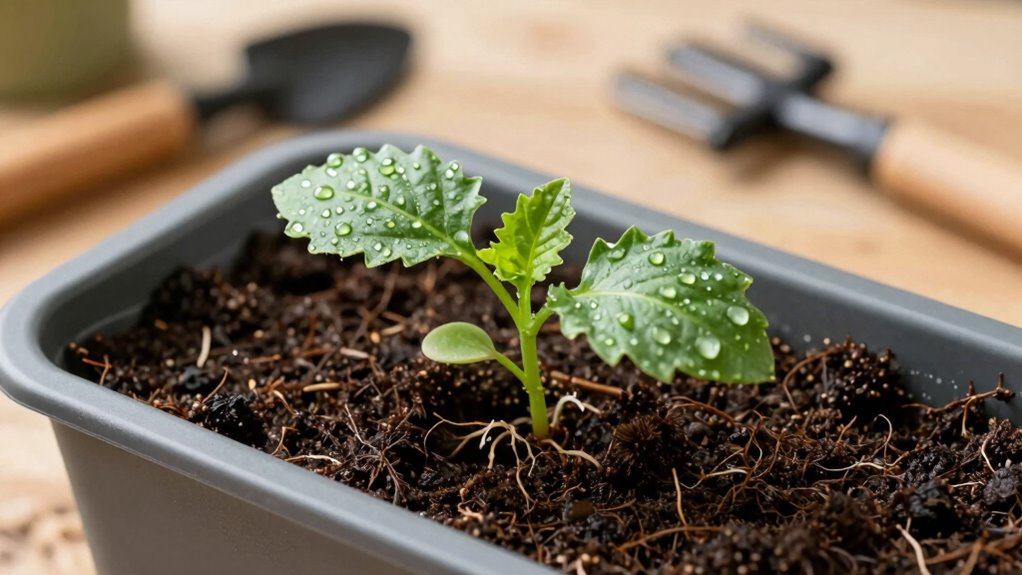
Keeping track of your plant’s growth helps you see how it’s doing and what adjustments might be needed. Make a habit of recording your gardening lessons to remember what works best. This way, you’ll improve your skills and give your plant the care it needs to thrive. Regularly observing plant health indicators can also help you identify early signs of issues before they become serious.
Monitoring Growth Progress
Wondering how to effectively track your plant’s progress? Start by observing its growth regularly, noting changes in height, leaf size, and overall health. Keep a simple journal or take photos weekly to see patterns over time. Monitoring your watering routines ensures your plant stays hydrated without overwatering, which can hinder growth. Pay attention to signs of pest prevention, like holes in leaves or sticky residue, so issues are caught early. Tracking these details helps you learn what your plant needs and builds your confidence in gardening. Consistent observation also helps you catch problems early, preventing setbacks. Understanding your plant’s natural growth cycle and Free Floating tendencies allows you to adapt your care accordingly. Over time, you’ll understand your plant’s unique growth pattern and develop better gardening habits, making the process more rewarding and less intimidating.
Recording Gardening Lessons
Recording your gardening lessons is essential for tracking your plant’s growth and improving your skills. Keep a notebook or digital log to document your watering schedule, noting how often you water and how the plant responds. Record details about soil selection, such as soil type, amendments, and drainage quality, to understand what works best. Take photos regularly to visually compare progress over time. Write down observations about leaf color, height, and overall health. Tracking these details helps you identify patterns and adjust your care routine accordingly. Consistent records make it easier to learn from mistakes and celebrate successes. With clear documentation, you’ll develop a deeper understanding of your plant’s needs and cultivate gardening confidence. Additionally, understanding battery lifecycle and performance metrics can help you optimize your tools and equipment for better results.
Common Plant Care Mistakes and How to Fix Them
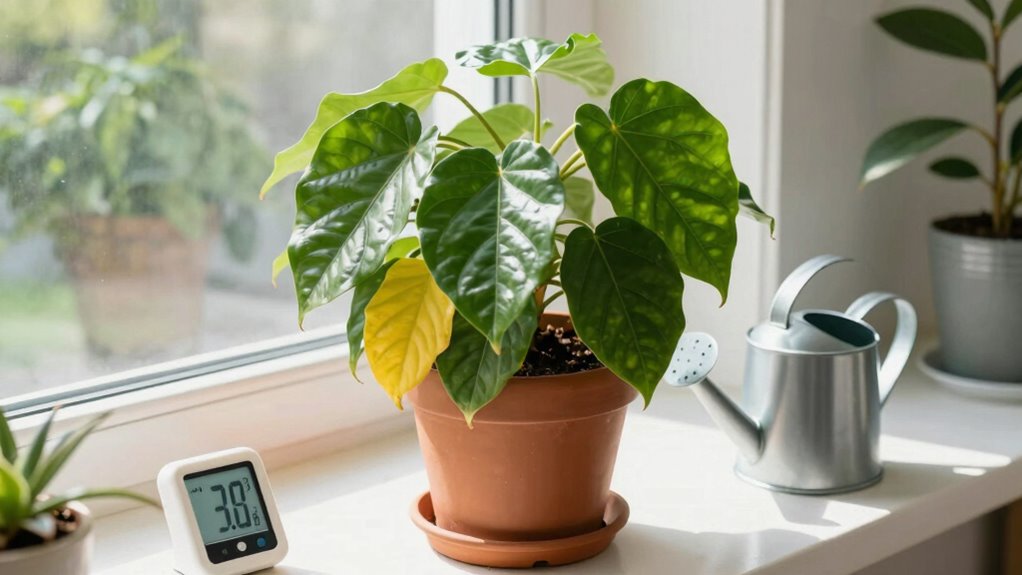
Even experienced plant owners make mistakes, but recognizing common pitfalls can help you avoid them. One frequent error is neglecting your watering schedule, either overwatering or underwatering. Consistency is key—check your plant’s needs and adjust accordingly. Overwatering can lead to root rot, while underwatering causes stress and droopiness. Another mistake is neglecting pest prevention; pests can quickly damage your plant if not caught early. Regularly inspect leaves and stems for signs of pests, and act immediately if you notice any. Proper watering and proactive pest prevention are essential for healthy growth. Remember, small adjustments make a big difference, and learning from these mistakes will improve your confidence as a new gardener.
How Completing the Challenge Builds Your Gardening Confidence
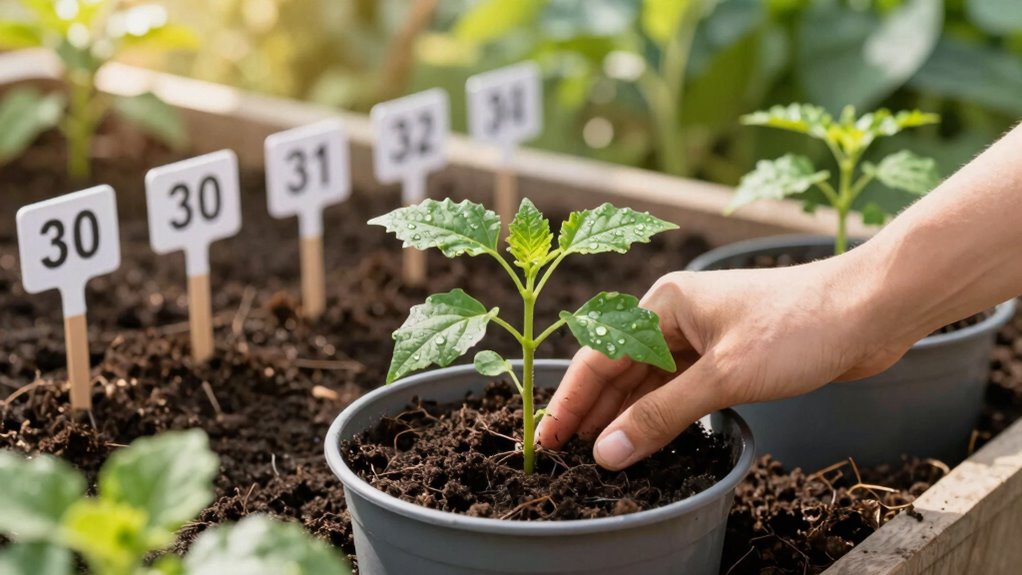
Completing the One Plant Challenge gives you tangible proof of your growing gardening skills, which considerably boosts your confidence. You see firsthand how your watering techniques support plant resilience, making your plant healthier and more vigorous. As you care for your plant, you recognize that small adjustments—like proper watering—can lead to big results. This success fuels your belief in your gardening abilities. To highlight key points:
| Plant Resilience | Watering Techniques | Confidence Boost |
|---|---|---|
| Adapts to care | Proper watering | Sense of achievement |
| Recovers quickly | Consistent schedule | Encourages growth |
| Thrives with care | Prevents overwatering | Motivates learning |
| Builds skills | Increases success | Builds gardening confidence |
Additionally, understanding sleep hygiene principles can help you stay energized and motivated as you pursue your gardening goals.
How to Grow Your Gardening Skills Beyond One Plant

Once you’ve mastered caring for a single plant, you can start expanding your gardening skills by experimenting with different types of plants and growing conditions. Try plant propagation techniques like taking cuttings or dividing roots to grow new plants from existing ones. This not only boosts your confidence but also helps you learn about plant biology. To improve your soil, incorporate soil amendments such as compost or organic matter, which provide essential nutrients and improve drainage. As you expand, observe how different plants respond to varying light, water, and soil needs. Keep notes on your successes and challenges. This hands-on approach deepens your understanding and prepares you for more complex gardening projects, making your gardening journey more rewarding and diverse.
How to Share Your Plant Progress and Connect With Other Beginners
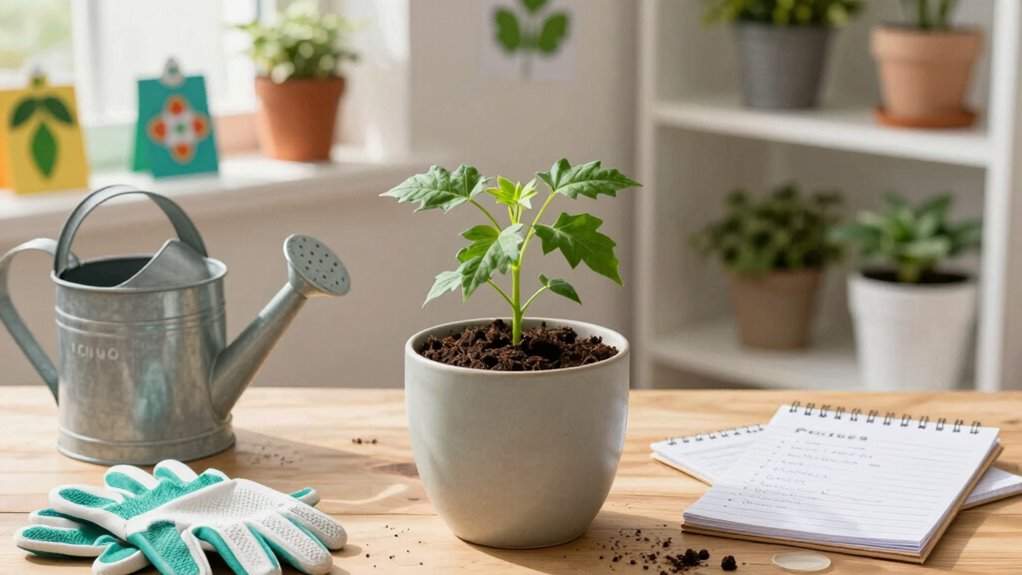
Sharing your plant progress with others is a great way to stay motivated and learn from fellow beginners. Community sharing and social gardening create a supportive environment where you can exchange tips, celebrate wins, and troubleshoot challenges. To connect effectively:
- Join online forums or social media groups focused on beginner gardening.
- Post regular updates with photos of your plant’s growth and any issues.
- Engage by commenting on others’ posts and offering encouragement.
- Attend local gardening meetups or workshops to build face-to-face connections.
These activities foster a sense of belonging and help you gain new insights. By actively participating in social gardening, you’ll boost your confidence and stay inspired throughout your plant care journey.
Final Tips for Making Your Plant Care Journey Fun and Sustainable
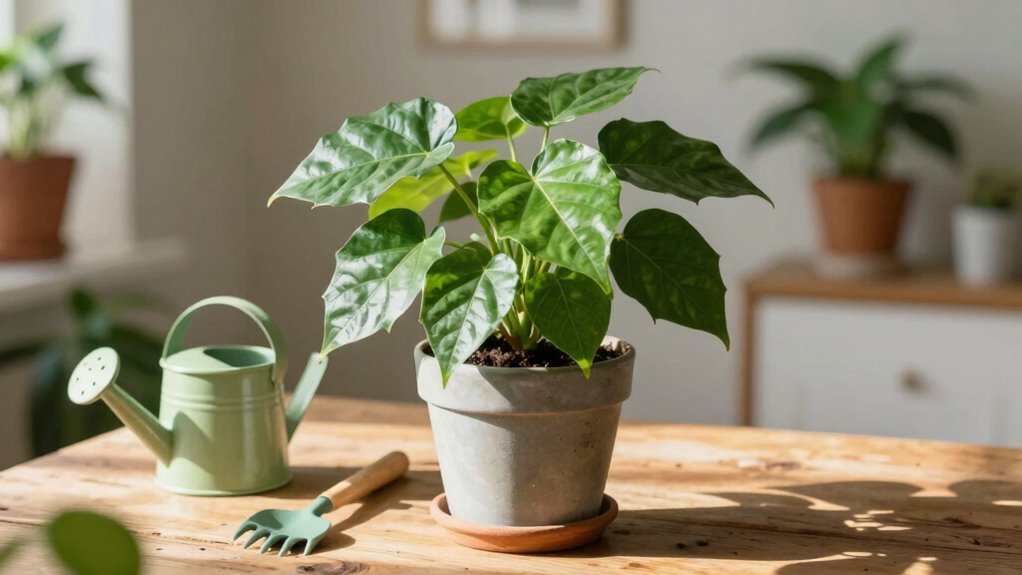
To keep your plant care journey both fun and sustainable, focus on incorporating simple routines and enjoyable activities that motivate you to stay engaged. Enhancing your plant’s aesthetics can make caring for it more satisfying, encouraging you to notice its growth and beauty regularly. Create a relaxing hobby by setting aside a dedicated time each week to tend to your plant, turning it into a calming ritual rather than a chore. Celebrate small wins, like a new leaf or vibrant bloom, to boost your confidence. Keep your environment lively with decorative touches or creative plant displays. Remember, the goal is to make plant care a joyful part of your routine, helping you stay motivated while enjoying the calming benefits of hobby relaxation.
Frequently Asked Questions
Can I Choose Multiple Plants for the Challenge?
You can choose multiple plants for the challenge, but it’s best to focus on one plant variety at a time. This way, you can give each plant the proper attention and care it needs. Selecting different plant varieties can be exciting, but it might make tracking your progress harder. If you’re just starting out, sticking with one plant helps build confidence and guarantees you learn the basics effectively.
What if My Plant Doesn’t Thrive During the Challenge?
Did you know that about 70% of plant failures are due to improper watering or sunlight? If your plant doesn’t thrive, don’t worry—adjust your watering schedule and make sure it gets the right sunlight. Observe your plant closely, and tweak care routines accordingly. Remember, patience is key. Sometimes, a small change makes a big difference in helping your plant bounce back and flourish.
How Much Time Should I Dedicate Daily to Plant Care?
You should dedicate about 10-15 minutes daily to plant care. Focus on maintaining a consistent watering schedule, ensuring your plant isn’t over or underwatered, and adjust based on its needs. Also, check its sunlight requirements—some plants thrive in direct sun, others in indirect light. Regularly observe your plant’s response, and you’ll build confidence and develop a strong connection with your plant.
Are There Specific Tools Recommended for Beginners?
A stitch in time saves nine, so start with the right tools. For plant care beginners, basic tools like a small watering can, pruning shears, and a soil meter make all the difference. These beginner tools help you care for your plant confidently and prevent common mistakes. Keep it simple and invest in quality essentials—they’ll serve you well as you nurture your plant’s growth and confidence.
How Do I Know When It’s Time to Repot My Plant?
You’ll know it’s time to repot your plant when roots start to grow out of the drainage holes or become visible on the soil surface. Also, if your watering schedule becomes tricky—either overwatering or underwatering—it’s a sign to upgrade to a larger pot with better soil drainage. Repotting helps refresh the soil, prevents root rot, and gives your plant room to grow healthy and strong.
Conclusion
Taking on the “One Plant” challenge is a great way to build your confidence and develop essential gardening skills. Did you know that over 80% of new gardeners find success when they start small? By focusing on just one plant, you’ll learn the basics without feeling overwhelmed. Stick with it, keep learning, and soon you’ll be growing multiple plants with ease. Your gardening journey starts here—enjoy every step!
Fall Picks
fall essentials
As an affiliate, we earn on qualifying purchases.