
During winter, garden growth slows due to colder temperatures and less sunlight, but you can stay motivated by planning your spring garden now. Use this time to visualize your garden layout, organize seeds, and improve soil health indoors. Connect with gardening communities or explore inspiring content to keep your enthusiasm alive. By staying proactive and focused on preparation, you’ll be ready to jump back into gardening when the season warms up—more tips await if you keep going.

Get garden gear delivered free — and shop member deals
- Fast, free delivery on millions of items
- Access to Prime Big Deal Days deals on October 6–7
- Prime Video, Amazon Music and more included
Key Takeaways
- Use winter to plan and visualize your garden’s future, keeping motivation high through goal setting.
- Engage with gardening communities online or locally for support and inspiration during slow growth periods.
- Explore cultural content like poetry or gardening stories to stay inspired and connected to your passion.
- Focus on indoor gardening projects or soil preparation to stay productive and maintain enthusiasm.
- Reflect on past successes and set new goals to maintain a positive mindset until spring growth resumes.
As an affiliate, we earn on qualifying purchases.
Why Does Garden Growth Slow Down in Winter?

Because winter brings colder temperatures and shorter days, garden growth naturally slows down. During this time, many plants enter dormancy periods, conserving energy until conditions improve. The reduction in sunlight plays a significant role, as fewer daylight hours limit photosynthesis, which is essential for growth. As a result, plants halt active development to survive the colder months. This slowdown isn’t a sign of neglect but a natural adaptation to unfavorable conditions. You might notice your perennials and shrubs appearing to rest, but beneath the surface, they’re quietly preparing for spring. Understanding these processes helps you appreciate the importance of winter dormancy and sunlight reduction, setting the stage for a healthy, vigorous garden when the season changes. Recognizing the role of plant dormancy can help you better care for your garden during these quieter months.
How to Embrace Winter for Better Garden Planning
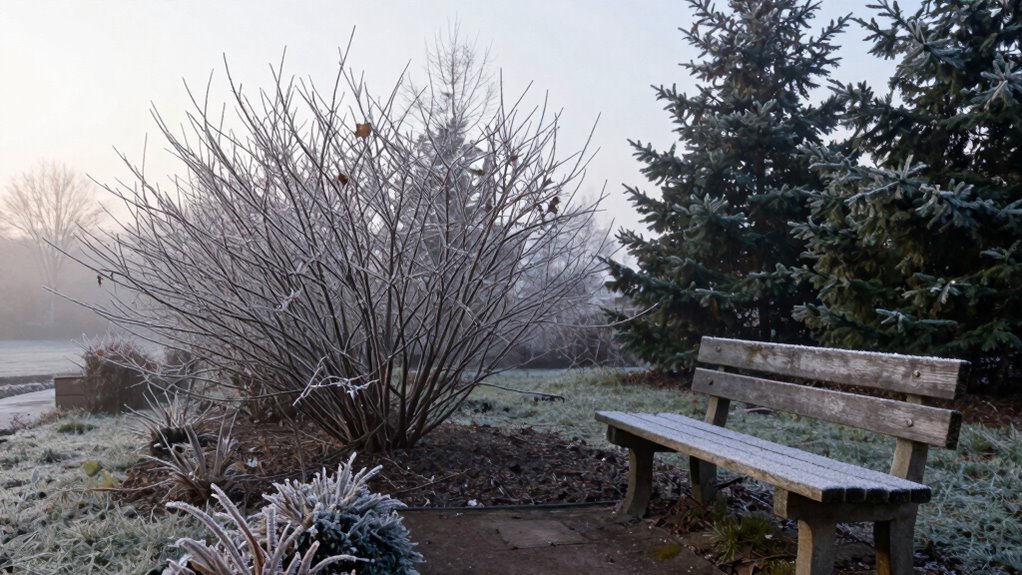
Have you considered how winter can be a prime time for strategic garden planning? During this quiet season, you can engage in seasonal garden reflection, evaluating what worked and what didn’t last year. Use this time to visualize your ideal winter garden through winter garden visualization, imagining plant placements and design ideas. This focused reflection allows you to set realistic goals and prepare detailed plans before spring arrives. Taking advantage of winter’s slower pace helps you refine your garden layout, select new plants, and identify potential problem areas. Embracing winter for planning keeps you motivated and engaged, turning the dormant period into a productive opportunity. Incorporating sustainable planning practices into your winter garden strategy can further enhance your garden’s eco-friendliness and resilience. With clear visualization and reflection, you’ll be ready to hit the ground running when growth resumes.
How to Keep Your Soil Healthy During Winter
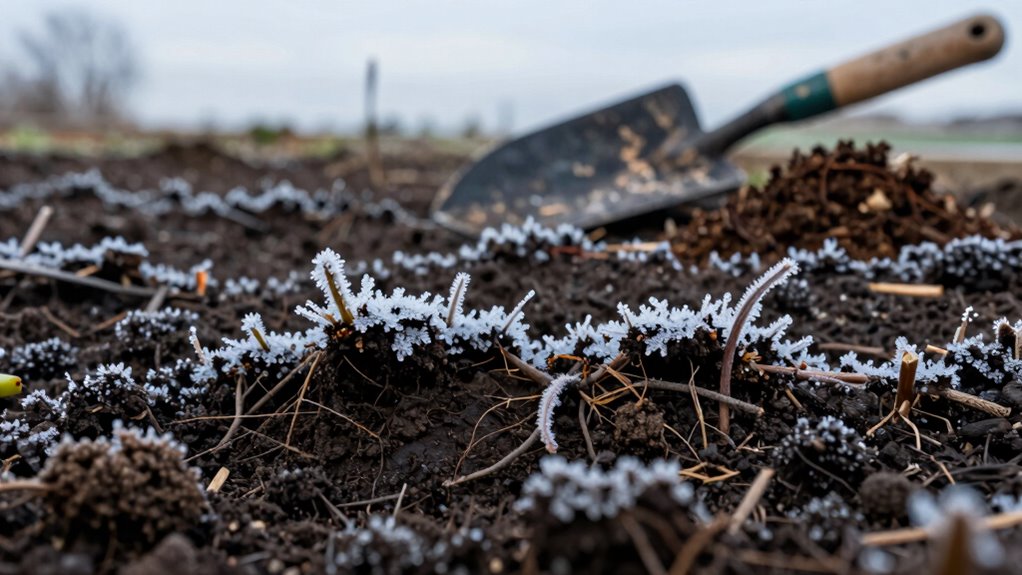
To keep your soil healthy during winter, start by covering it with mulch or straw to protect against erosion and temperature fluctuations. You should also add organic matter, like compost, to improve soil structure and nutrients. These simple steps will help your soil stay vibrant and ready for spring planting. Additionally, incorporating cover crops can help prevent soil erosion and enhance nutrient levels during the colder months.
Cover Soil Effectively
Covering your soil effectively during winter is essential to safeguard its health and ensure a thriving garden come spring. Mulch layering provides insulation, preventing soil temperature fluctuations that can harm roots and microbial life. Use organic mulches like straw, wood chips, or compost to offer consistent protection. Additionally, maintaining good soil aeration is crucial; avoid compacting or covering the soil too tightly, which can restrict air flow and hinder beneficial organisms. Gently loosen the soil if necessary, or use breathable mulches that allow air to pass through. These strategies help preserve soil structure, promote healthy microbial activity, and prevent erosion. Proper air circulation is also vital to avoid moisture buildup and fungal issues during the winter months. By carefully mulching and guaranteeing proper aeration, you’ll keep your soil vibrant and ready for planting when growth resumes.
Add Organic Matter
Adding organic matter to your soil during winter is a vital step in maintaining its fertility and structure. This process enriches your garden by improving drainage, aeration, and nutrient content. To do this effectively, consider these steps:
- Use different composting methods, such as cold composting or trench composting, to add organic amendments without disturbing the soil.
- Incorporate organic amendments like well-rotted manure, compost, or leaf mold to boost microbial activity.
- Layer these materials over the soil surface or mix them in gently to protect soil health during the dormant months.
- Emphasize Free Floating techniques to ensure that organic matter disperses evenly and benefits the entire garden bed.
Indoor Gardening Ideas for Cold Months
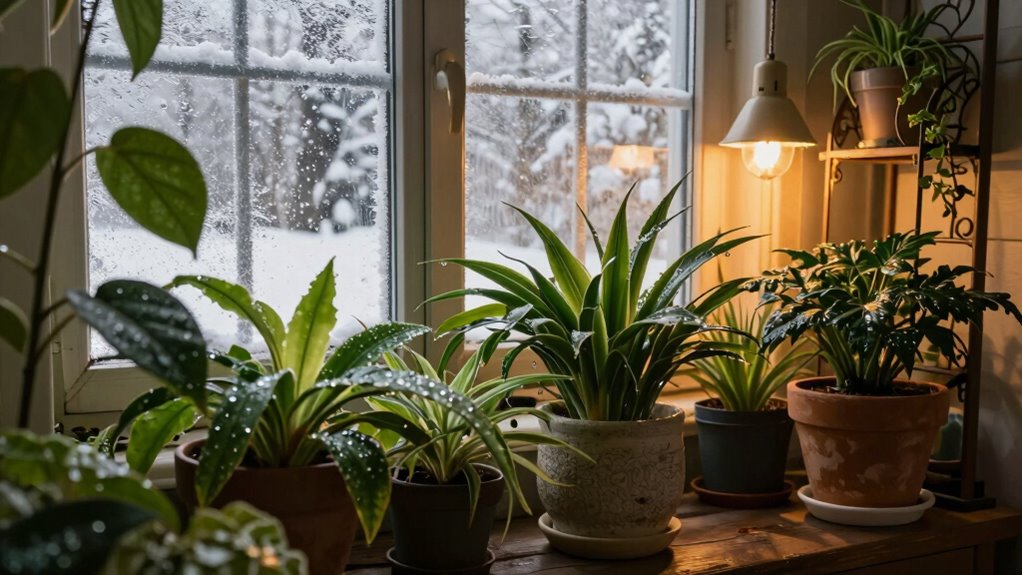
When the outdoor temperatures drop, bringing your gardening indoors becomes an exciting way to stay connected to nature. To succeed, focus on providing adequate indoor lighting, such as grow lights or placing plants near sunny windows, ensuring they get enough light to thrive. Use proper potting techniques by selecting well-draining soil and choosing containers with drainage holes to prevent overwatering. Keep in mind that many indoor plants prefer consistent moisture and humidity; mist or use a humidity tray if needed. Rotate your plants regularly for even growth and watch for signs of stress. Additionally, selecting appropriate indoor plants that are suited for low-light conditions can help ensure your indoor garden’s success. By paying attention to lighting and potting practices, you’ll keep your indoor garden healthy and vibrant throughout the cold months, making winter a season of green achievement.
Using Winter to Learn and Find Inspiration for Your Garden
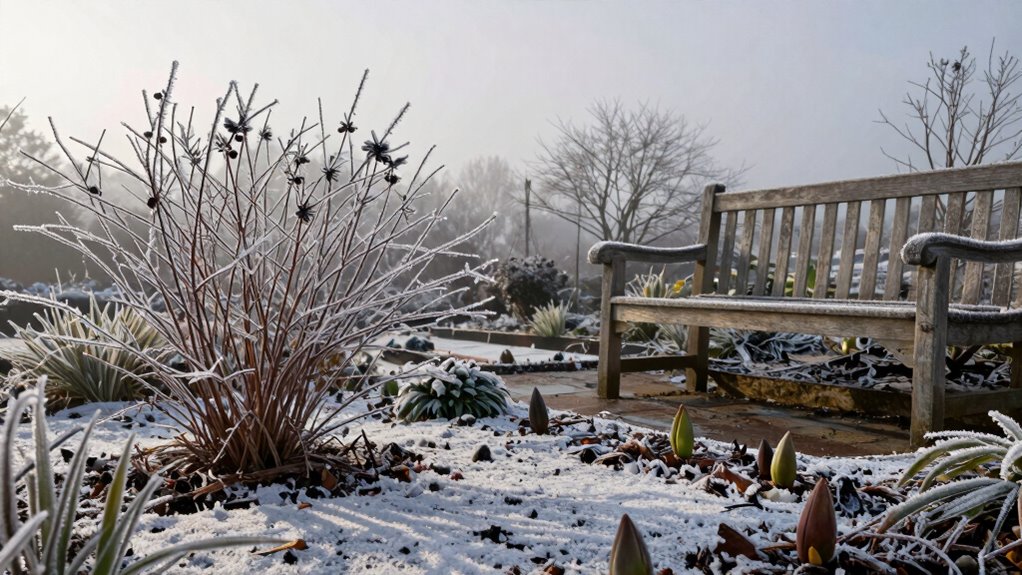
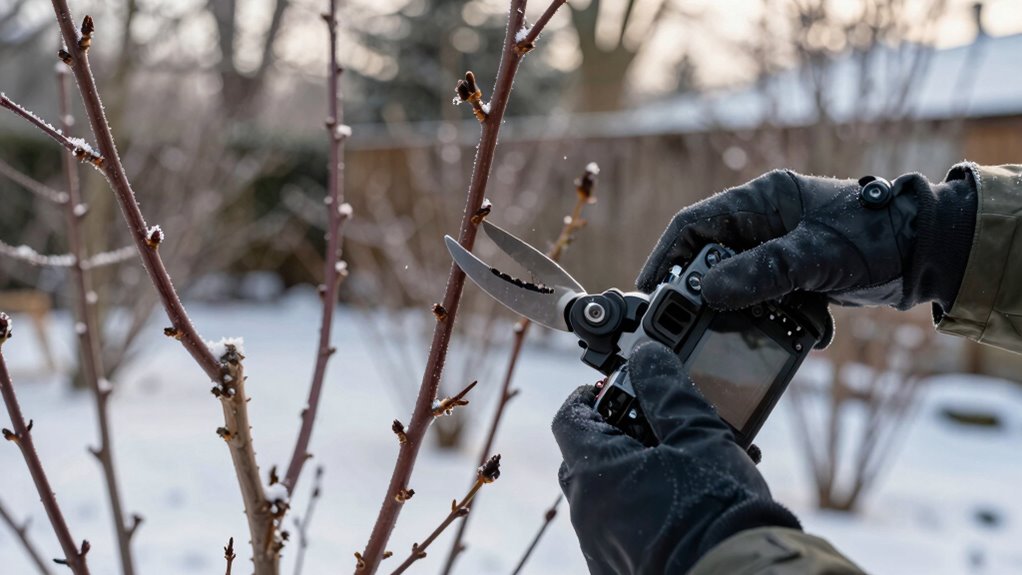
Winter offers a perfect opportunity to reflect on your garden and gather new ideas for the upcoming season. Use this time to explore winter crafts that can inspire your gardening plans, like creating decorative plant arrangements or seed markers. Additionally, hone your garden photography skills by capturing the unique beauty of your garden’s winter landscape, focusing on textures and shapes. To make the most of this season, consider:
Winter is the perfect time to reflect, create, and capture your garden’s winter beauty.
- Experimenting with winter crafts to spark creative ideas.
- Taking photos of snow-covered plants and garden structures.
- Studying garden design books or blogs for fresh inspiration.
- Reviewing best lawn fertilizers to understand how soil needs change in different seasons, helping you plan for spring enhancements.
These activities keep your mind engaged, help you notice details missed in warmer months, and fuel your passion for gardening even when growth slows.
Tools and Techniques to Maintain Gardening Momentum in Winter
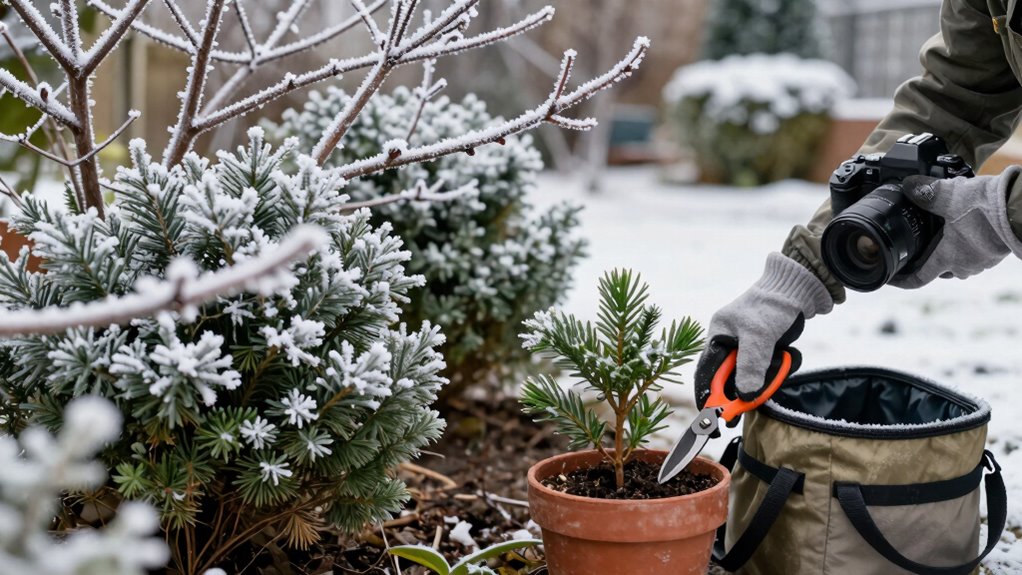
Maintaining gardening momentum during the colder months requires the right tools and effective techniques to keep your outdoor space active and ready for spring. Start by ensuring your garden tools are well-maintained; clean, sharpen, and oil them to prevent rust and make work easier. Proper garden tool maintenance saves time and keeps tools in top condition. Additionally, adapt your watering habits with winter watering techniques—water deeply but less frequently, focusing on soil moisture rather than foliage. Use mulch to protect roots from freezing temperatures and conserve moisture. These techniques help you stay engaged and prepared, even when growth slows. Staying diligent with your tools and watering routines maintains your garden’s health and keeps your gardening spirit alive during the winter months. Regular feedback on your progress can help you adjust your strategies to stay motivated throughout the season.
Start Planning Your Spring Garden Now
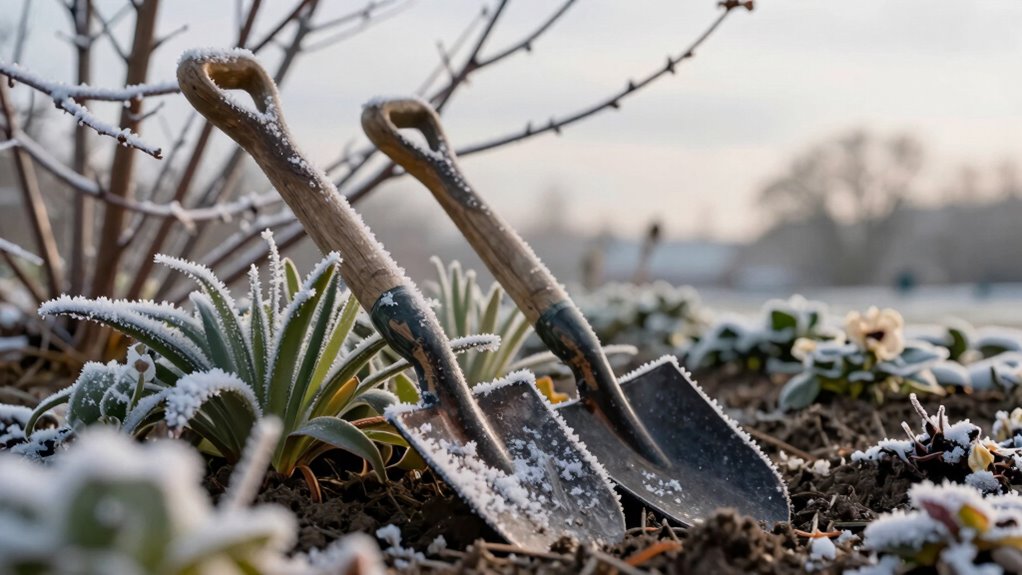
With your garden tools cleaned and your watering routines adjusted, it’s the perfect time to start planning your spring garden. Begin with garden visualization—picture how you want your space to look and which plants will thrive. Next, focus on seed starting; research ideal planting dates and select varieties suited for early spring. To stay organized, consider these steps:
Get ready for spring by visualizing your garden and planning seed starting now.
- Sketch a garden layout to visualize plant placement and companion planting.
- Make a list of seeds to start indoors now, like tomatoes and herbs.
- Prepare your seed trays and soil so you’re ready when the time comes.
- Review cultural content like Hindi Shayari and Punjabi love expressions to stay inspired during the slow winter months.
Planning now keeps your enthusiasm alive during winter’s slow months and sets a strong foundation for a successful spring garden.
Frequently Asked Questions
How Can I Stay Motivated to Garden During the Winter Months?
To stay motivated during winter, embrace garden journaling to track your progress and plan for the upcoming season. Use this time for seasonal planning, selecting new plants, and designing your garden layout. Focus on indoor projects like seed starting or pest control, which keep your gardening enthusiasm alive. Remember, slow growth now sets the stage for a thriving spring, so stay inspired and keep your gardening goals in mind.
What Are Some Creative Ways to Enjoy Gardening Indoors?
Imagine your indoor garden as a cozy haven, symbolizing growth and renewal. You can enjoy indoor herb gardening by nurturing fresh basil or mint on your windowsill, bringing life into your space. Create seasonal flower arrangements to brighten your home, celebrating the changing seasons. These activities keep your passion alive, making winter a time of creativity and connection with nature, even when outdoor growth slows down.
How Do I Prevent Pests and Diseases in Winter Soil?
To prevent pests and diseases in winter soil, focus on maintaining soil health through proper composting techniques. Regularly add well-decomposed compost to boost beneficial microbes that naturally suppress pathogens. Avoid overwatering and ensure good drainage to prevent fungal issues. Rotate crops if possible, and remove any infected plant debris promptly. These practices keep your soil resilient, reducing pest and disease problems during the colder months.
Can Winter Gardening Improve My Spring Harvest?
Yes, winter gardening can enhance your spring harvest. By engaging in seasonal planting and soil preparation during winter, you strengthen your garden’s foundation. You can start early crops indoors or in protected environments, and improve soil quality through composting. This proactive approach accelerates growth when spring arrives, leading to better yields. Staying active in winter keeps your gardening momentum alive and ensures a more productive, vibrant spring garden.
What Are the Best Winter Plants to Grow Indoors or Outdoors?
While winter may seem like a quiet season, it’s the perfect time to embrace resilient winter plants. For indoors, choose hardy houseplants like pothos or snake plants that thrive with proper houseplant care. Outdoors, consider winter flower blooms like pansies or hellebores that bloom even in cold. These plants keep your garden lively and motivate you to nurture growth, even when it’s slow outside.
Conclusion
So, you’ve survived winter’s slow dance—congratulations! Now’s the perfect time to pretend you’re a master planner, plotting your lush paradise while secretly binge-watching gardening videos. Remember, patience is a virtue, even if your plants aren’t cooperating. Embrace the off-season, stay inspired, and soon enough, your garden will burst back to life. Until then, enjoy the calm; after all, who knew gardening was just a lengthy, scenic coffee break?
Fall Picks
fall essentials
As an affiliate, we earn on qualifying purchases.